









- What Does a Global Traffic Ecosystem Service Provider Do? What Are the Differences from a Single Advertising AgencyJul 16, 2026View details
- What should you focus on in the latest enterprise SaaS report? From renewal rates and delivery costs to overseas growth opportunitiesJul 12, 2026View details
- What signals are worth paying attention to in a cross-border marketing trend report? B2B companies should look at these 6 signalsJul 11, 2026View details
- How to Read a Cross-Border Marketing Trends Report? Five Key Dimensions for Evaluating Channel OpportunitiesJul 11, 2026View details
- Which channel has the highest ROI in the global traffic ecosystem? Comparative analysis of search, social media, and advertisingJul 10, 2026View details
- What multilingual website services are available in Sanya? Which model is more suitable for local businesses going global?Jul 08, 2026View details
Why Should B2B Export Companies Build Independent Websites? 3 ROI Pitfalls Overlooked by 90% of Business Owners
Why Should Export Companies Build Independent Websites? 90% of Business Owners Only Calculate Website Costs but Overlook 3 Hidden ROI Traps — Does a Multilingual Website Benefit SEO? Is AI Translation Reliable? How to Efficiently Manage Multilingual Content? EasyYunbao Shares 10 Years of Practical Experience: An Independent Website Isn't About 'Having One Is Enough' but 'Doing It Right to Win.'
1. ROI Trap #1: Treating 'Website Building' as a Cost While Ignoring the Long-Term Depreciation of 'Traffic Ownership'
Many export business owners remain stuck in the 'platform dependency mindset': Annual spending of ¥500,000 on Alibaba International, ¥30,000 monthly on Google Ads, ¥8,000 per month on social media operations... These are visible expenses, while the cost of an independent website (typically ¥10,000–50,000) is seen as an 'extra burden.' The truth is: Platform traffic is essentially rented rights—algorithm changes or rule adjustments can reset your exposure to zero. An independent website is a true digital asset, offering full control over user data, behavioral paths, and conversion funnels.
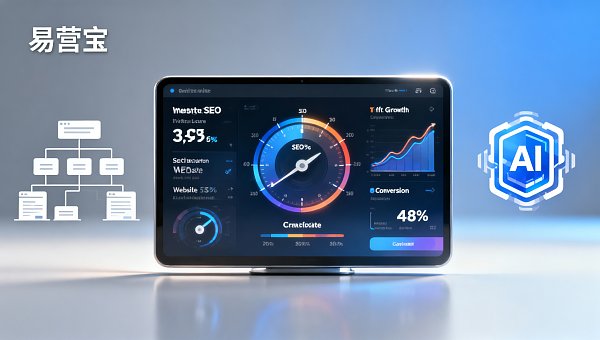
According to Statista's 2024 Global B2B Purchasing Behavior Report, 68% of overseas buyers proactively search for a brand name + official website before first contact with a supplier. Companies with professional multilingual websites achieve 42% lower customer acquisition costs (CAC) and 3.1x higher customer lifetime value (LTV) compared to those relying solely on platform channels. This reflects the compound effects of 'traffic ownership.'
More critically, single-language websites are rapidly losing competitiveness. When German clients encounter an all-English page, their average dwell time is under 12 seconds, while localized German pages reduce bounce rates by 57% and increase inquiry conversion by 2.3x. This isn't just UX optimization—it's a market entry threshold.
2. ROI Trap #2: 'Multilingual = Machine Translation + Copy-Paste,' Undermining SEO and Trust
'What’s the difference between multilingual and single-language websites?' Superficially, it's just language switching, but it actually involves semantic adaptation, cultural translation, and localized SEO—a triple-layered process. Crude use of free AI tools often leads to technical mistranslations (e.g., 'industrial grade' rendered as '工业等级' instead of '工业级标准'), awkward phrasing, and missing keywords, directly harming Google rankings.
Do multilingual websites help SEO? Absolutely, but only if they comply with hreflang tags, regional server deployment, localized TDK (Title/Description/Keywords), and content depth. Otherwise, Google may flag pages as duplicate content, triggering penalties.
EasyYunbao's smart CMS integrates an NLP semantic engine supporting 127 languages with contextual awareness. It not only translates accurately but also auto-adapts to industry glossaries (e.g., 32,000+ mechanical terms), local search habits (e.g., French users preferring long-tail question formats), and compliant expressions (e.g., GDPR privacy statements). Real-world tests show AI-powered keyword expansion + auto-generated TDK boosts multilingual sites' average SEO scores by 35% and first-screen load speeds by 40%.
3. ROI Trap #3: Manual 'Brick-by-Brick' Content Management, Efficiency Black Holes Devouring Growth Windows
'How to manage multilingual website content?' This is operations teams' biggest headache. Traditional methods require per-page translation, repeated proofing, and manual updates—3–5 days per product update, stretching launch cycles to 2+ weeks. Meanwhile, overseas markets move fast: TikTok trends last ~14 days; LinkedIn industry insights spread in under 72 hours.
EasyYunbao's AI Marketing Engine pioneers 'atomic content management': Maintain a single Chinese source in the backend; AI deconstructs it into structured fields (titles, specs, USPs, FAQs), then reassembles them into webpages, social posts, and ad creatives per target language rules. One-click sync to Facebook, LinkedIn, and Instagram slashes update cycles from 'days' to 'minutes.'
Below compares mainstream multilingual content management models' actual performance:
4. Multilingual Website Implementation: From 'Should We?' to 'How to Do It Right'
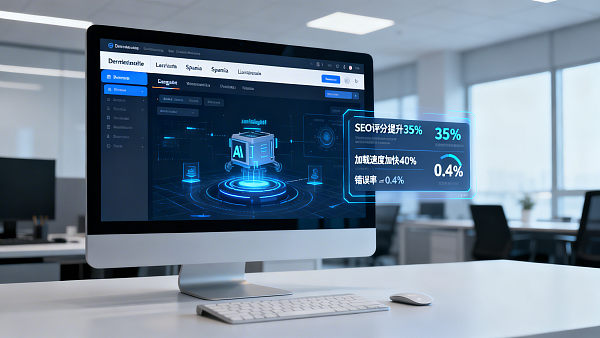
'How to build a multilingual website?'—The core isn't tech but strategy. EasyYunbao's experience serving 100,000+ export companies reveals a 'three-step path':
- Step 1: Precision Language Layering—More isn't better. Start with 3–5 core markets (e.g., English + Spanish + German + French + Arabic), covering 85%+ target clients; expand dynamically via Google Trends and local search volume.
- Step 2: Architecture = SEO—Use subdirectories (example.com/es/) or subdomains (es.example.com) with hreflang tags and localized sitemaps to ensure Google recognizes regional intent.
- Step 3: Closed-Loop Validation—Within 72 hours post-launch, complete: ① Auto-issued SSL certificates for multilingual pages; ② Global CDN load testing (<200ms latency); ③ AI site health diagnostics (SEO score ≥85, 100% mobile-friendly).
Notably, 'How many languages does a multilingual site need?' has no standard answer, but a golden formula:
Base languages = Key export countries × (Local internet penetration ÷ English usage) × Industry localization sensitivity (1.8 for machinery, 1.2 for FMCG).
5. Why Choose EasyYunbao? Turning Independent Sites into Growth Engines
Founded in 2013, EasyYunbao (Beijing) InfoTech Co., Ltd. is an AI- and big data-driven global digital marketing service provider. We don’t offer 'one-time website builds' but end-to-end 'build-traffic-convert' intelligent services:
- ✅ AI-Powered Multilingual Websites: Supports 127 languages with semantic AI translation, eliminating 'Google Translate' errors;
- ✅ Global Performance: 7-continent server clusters + AWS + AliCloud CDN cut first-screen loads by 40%, zero DDoS downtime;
- ✅ True SEO-Friendly Architecture: Auto-deploys hreflang, localized TDK, and structured data markup, boosting SEO scores 35%;
- ✅ Unified Operations Dashboard: Integrates website, social, ads, and analytics, halving manual coordination costs;
- ✅ Local Navigation Capabilities: U.S./Singapore branches connect clients to local payment, logistics, and legal services, ensuring compliance.
In 2023, EasyYunbao ranked among 'China’s Top 100 SaaS Companies,' averaging 30%+ annual growth. We helped a Zhejiang auto parts supplier increase German site inquiries by 217% and a Guangdong home goods brand achieve 4.8x ROAS via AI Ad Manager. These results stem from one belief: Paving the way for Chinese brands globally.
If you’re evaluating independent website solutions or struggling with ROI—contact EasyYunbao’s consultant team now for a Multilingual Website ROI Diagnostic Report (covering SEO scores, load speeds, language adaptation, and ad account health). China’s strength, global reach—starting with one precise diagnosis.
- SSL Certificate
- Mobile-friendly
- Inquiry-to-order conversion rate improvement
- Meta Ads
- TikTok
- Yiyingbao
- SEO
- Independent Website
- Smart website builder system
- Smart Website Building
- AI Translation
- EasySite Intelligent Website Builder
- AI Marketing Engine
- AI Translation Engine
- Multilingual website
- Global Digital Marketing
- Multilingual Website Building
- How many languages does a multilingual website generally require?
- How to manage content for a multilingual website?
- What is the difference between a multilingual website and a single-language website?
- Why should foreign trade enterprises build independent websites?
- EYB AI Marketing
- Multilingual Website for Foreign Trade
- AI Marketing
- Digital Marketing Services
Related Articles

Related Products
 EasyCamp SaaS Smart Website Marketing SystemE-Yingbao SaaS Smart Website Marketing System: AI-powered, zero-code website building. Rapidly launch multilingual independent e-commerce sites in just 10 minutes. Global server acceleration and AI-driven SEO optimization empower businesses to efficiently connect with global markets. The seamless integration of technology and user-friendly operation makes building e-commerce sites incredibly simple.
 AI+SEM Intelligent Advertising Marketing SystemAI+SEM drives intelligent ad creation, empowering full-funnel precision advertising marketing. The system automatically generates weekly/monthly reports, AI recommends keywords and target countries, monitors core metrics in real-time with intelligent alerts, and enables one-click high-conversion ad solutions to help quickly acquire customers and improve ROI.
 AI+SEO Dual Engine Optimization ServiceEasyWin AI+SEO Dual Engine Optimization System leverages AI-powered keyword mining, content generation, and comprehensive technical optimization to help foreign trade enterprises acquire high-quality organic traffic, significantly improving search rankings and conversion rates.
 AI+SNS Social Media Marketing SystemYingbao AI+SNS Social Media Marketing System - Precision social capture for the social media era. Supports one-click content synchronization across major platforms like Facebook and LinkedIn. AI intelligently rewrites posts for enhanced relevance. 24/7 AI customer service and user profiling analysis empower businesses to efficiently expand into global markets.
 AI+SEO营销解决方案易营宝AI+SEO营销解决方案,通过AI批量写作、智能生成TDK、精准关键词扩词等功能,全面优化网站SEO效果,提升流量与转化率。助力企业构建高效智能网站新生态。
 AI+SEM Advertising Marketing SolutionsAI+SEM Advertising Marketing Solution leverages AI technology to deeply empower SEM ad campaigns. It automatically generates weekly/monthly reports using AI, presenting account data across multiple dimensions for comprehensive insights into campaign performance and trends. The system precisely recommends keywords and target countries, intelligently generates high-conversion ad copy, and enables one-click activation of efficient campaign plans to help businesses rapidly acquire customers. Simultaneously, it monitors core metrics in real time, intelligently identifies abnormal fluctuations, and issues timely alerts to ensure stable, high-return advertising results.
 Domain Name ServicesEasyWin provides professional domain name services, including intelligent queries, one-stop registration, brand protection, and full lifecycle management, helping businesses build a digital brand image.
 EasyOperate B2C Cross-Border E-Commerce Platform & Independent WebsiteEasyStore B2C Cross-border E-commerce Independent Store is an intelligent website building and cross-border e-commerce integrated solution independently developed by EasyStore Information Technology (Beijing) Co., Ltd. The system is specially designed for small and medium-sized as well as large export enterprises, integrating 'website building, operation, marketing, advertising, and conversion' into one, helping enterprises quickly establish cross-border e-commerce independent stores to achieve brand globalization and global sales growth.
The platform supports multiple languages, multiple currencies, and multi-channel marketing, with built-in AI intelligent translation and SEO optimization systems, suitable for mainstream markets such as Southeast Asia, Europe and America, Latin America, and the Middle East, assisting Chinese manufacturing enterprises in efficiently deploying international e-commerce strategies. SSL证书易营宝提供专业SSL安全证书服务,包括单域名和泛域名证书,确保网站数据传输加密、身份验证和完整性保护,助力企业建立安全可信的在线业务环境。









