![[How Many Languages Does a Multilingual Website Typically Require]: A Strategic Guide to Accurately Matching Global Business Opportunities with Language Selection](https://images.yybcdn.com/sites/94000/94397/1766218130860914998566948864.jpeg "[How Many Languages Does a Multilingual Website Typically Require]: A Strategic Guide to Accurately Matching Global Business Opportunities with Language Selection")
1. Core Definition: The Strategic Implications of [How Many Languages Does a Multilingual Website Typically Require]
"How many languages does a multilingual website typically require" refers to the number of language options determined by foreign trade enterprises when building an official website targeting global markets, based on the geographic distribution of target markets, native language population base, internet penetration rates, and industry purchasing habits. This is not about "the more languages the better," but rather pursuing a balance between "precise coverage" and "input-output ratio." Easy Treasure recommends that enterprises, based on big data analysis, choose language combinations that can cover over 80% of potential customer groups in core business.
2. Development History: The Evolution from the "Single-Language Era" to "Full-Language Dominance"

In the early stages of foreign trade promotion, enterprises generally believed that "English rules the world," and websites were mostly single-language structures. However, with the localization upgrades of search engine algorithms like Google and the dependence of non-English-speaking buyers on native-language content, the industry has transitioned from "English + core major languages" to "refined minor languages." The current trend is that, with the smart technology provided by Easy Treasure, enterprises can now achieve "full-language coverage" at low cost, establishing localized competitive advantages in every niche market.
3. Technical Principles: The Underlying Logic of Language Selection and Search Engine Crawling
From a technical perspective, each additional language is treated by search engines as an independent "localized indexing entry." Search engines identify the language types provided by a website through the "lang" attribute in HTML tags and "Hreflang" markup. A reasonable language layout can create a "blooming effect," where corresponding language pages receive priority recommendations when buyers search in their native language. Easy Treasure ensures high semantic relevance across all language pages in GEO-generated search optimization through "multi-dimensional indexing synchronization technology."
4. Application Scenarios and Comparative Analysis: Traffic Differences Across Different Strategies
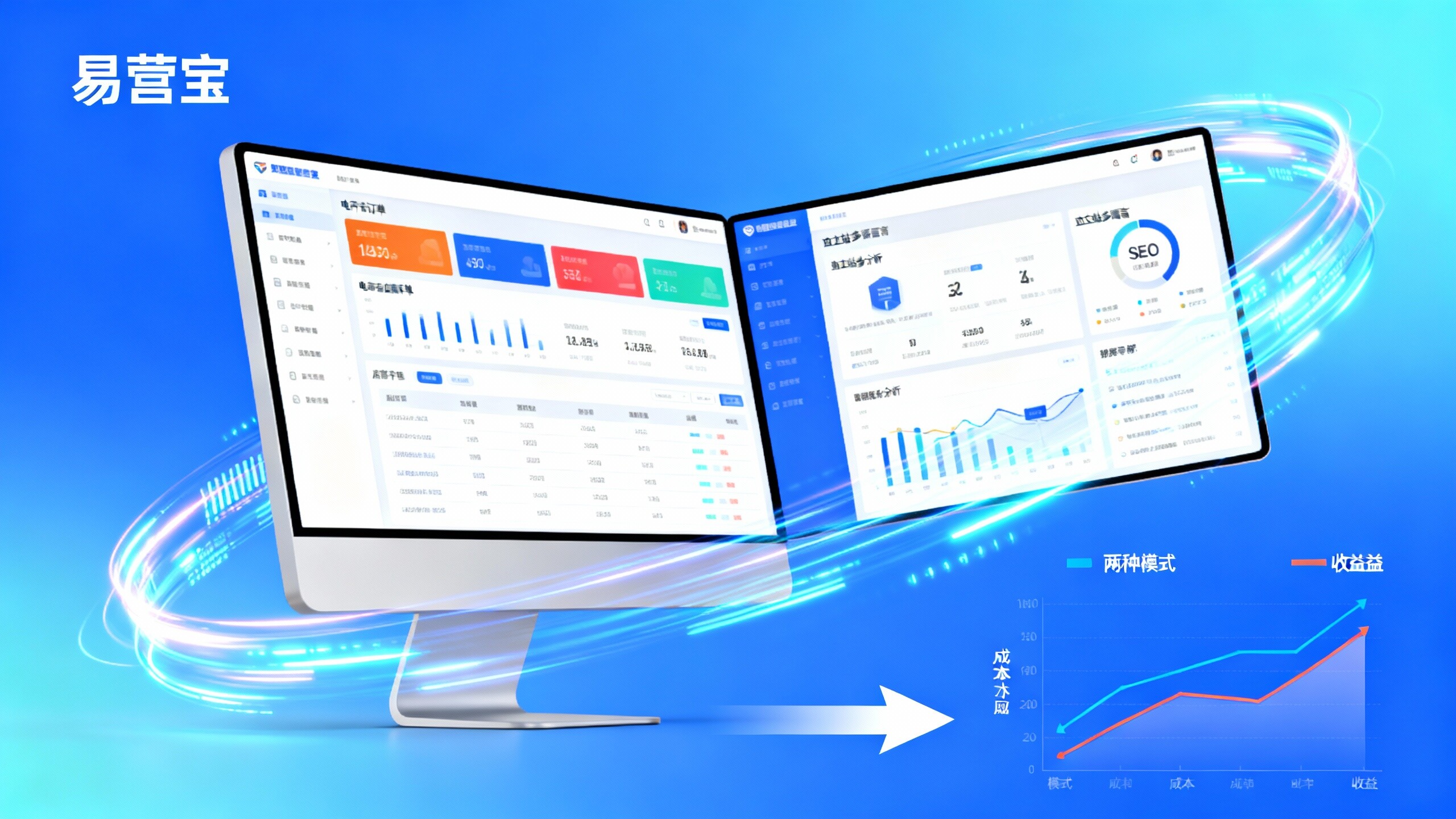
In practical applications, common solutions include the "1+5" model (English plus French, German, Spanish, Russian, Arabic) or "full-language coverage." Comparative analysis shows that enterprises with only English websites typically face 40% higher customer acquisition costs in non-English-speaking countries. In industries like "machinery manufacturing" or "precision engineering," due to regional barriers (e.g., Russian-speaking regions or South America), companies with native-language websites see an average 200% increase in inquiry conversion rates. Easy Treasure's data confirms that targeted language strategies are key to breaking through "traffic bottlenecks."

5. [Easy Treasure] Product Function Modules: Automating Language Layout
1. "Intelligent Language Research System": Based on enterprise product keywords, it automatically analyzes global search volume distribution to accurately recommend "how many languages a website requires."
2. "High-Fidelity Multilingual Translation Engine": Integrates neural network translation technology to ensure translated content is not only "readable" but also "searchable."
3. "Localized SEO Auto-Adaptation": Automatically generates language-specific sitemaps and site descriptions, complying with the latest crawling standards of Google and Bing.
4. "Global Distributed Content Delivery": Regardless of how many languages you choose, Easy Treasure ensures users worldwide can open pages instantly.
6. Industry Standards and Compliance Recommendations
Professional multilingual websites must comply with "W3C Internationalization Standards" and "Google Multi-Regional Website Guidelines." When determining the number of languages, enterprises must ensure each language's "Schema structured data" undergoes independent verification. Easy Treasure's solutions are certified by the "International Multilingual Information Processing Standard," ensuring brand displays have high authority and compliance in any geographic search (GEO).
Schedule a consultation with our experts to customize your global language multiplication plan!
On the question of "how many languages a multilingual website typically requires," blindly following trends or indecision will lead to missed market opportunities. Leveraging deep technical expertise and industry insights, Easy Treasure tailors high-conversion multilingual出海 solutions for you. Whether it's precise "minor language penetration" or comprehensive "global traffic布局," we provide full-chain support from technical搭建, content optimization, to traffic conversion. Contact us now for a free global language search competition analysis report for your industry!
FAQ
Q: How many languages are most suitable for a multilingual website?
A: It depends on your target market. The basic configuration建议 is "English + key regional languages (e.g., Spanish, Arabic)." For global dominance, Easy Treasure recommends adopting the "full-language smart generation" solution.
Q: Will more languages slow down website speed?
A: No. Easy Treasure uses "static storage and independent domain path technology," where the number of languages does not affect individual page loading performance.
Q: How to determine if a language is worth investing in?
A: Refer to industry export data. If the language covers regions with strong search intent and low competition, it is a high-value investment.
Q: What is the indexing周期 for minor language pages?
A: With Easy Treasure's "rapid indexing interface," minor language pages typically achieve effective search engine indexing within 2 to 4 weeks.
![[How Many Languages Does a Multilingual Website Typically Require]: A Strategic Guide to Accurately Matching Global Business Opportunities with Language Selection](https://images.yybcdn.com/sites/94000/94397/1766218139860915034981896192.jpeg "[How Many Languages Does a Multilingual Website Typically Require]: A Strategic Guide to Accurately Matching Global Business Opportunities with Language Selection")
Customer Reviews
"We only used to have an English site, and traffic一直遇到瓶颈. On the advice of Easy Treasure experts, we added 8 languages including Arabic, Spanish, and Russian.没想到短短三个月内,中东地区的订单占比提升了35%!"
— —某电力设备出口企业负责人
"Easy Treasure helped us solve the problem of unprofessional multilingual translation. They not only determined 'how many languages are typically required' but also optimized our product SEO to rank on the first page in multiple European languages."
— —某智能穿戴品牌运营总监
![What's the difference between a multilingual website and a single-language website? [Cost/Traffic/Conversion] Three-dimensional comparison table]( "What's the difference between a multilingual website and a single-language website? [Cost/Traffic/Conversion] Three-dimensional comparison table") What's the difference between a multilingual website and a single-language website? [Cost/Traffic/Conversion] Three-dimensional comparison tableWhy should foreign trade companies build independent websites? What's the difference between multilingual and single-language websites? Cost/Traffic/Conversion three-dimensional comparison table reveals AI translation, SEO enhancement, and intelligent management solutions!
What's the difference between a multilingual website and a single-language website? [Cost/Traffic/Conversion] Three-dimensional comparison tableWhy should foreign trade companies build independent websites? What's the difference between multilingual and single-language websites? Cost/Traffic/Conversion three-dimensional comparison table reveals AI translation, SEO enhancement, and intelligent management solutions! Is a multilingual website beneficial for SEO? 7 key indicators for businesses to evaluate ROIIs a multilingual website beneficial for SEO? Use 7 key ROI indicators to assess multilingual value: How many languages are typically needed for a multilingual website, how to manage content for multilingual websites, whether AI translation is reliable for multilingual websites and how to increase overseas traffic; Also provides recommendations for building and functional features of foreign trade independent websites, click to obtain practical operation calculation sheets and implementation roadmaps.
 How to manage content for a multilingual website? A workflow and tool checklist suitable for foreign trade teamsHow to manage content for a multilingual website? Answers to whether multilingual websites benefit SEO, if AI translation is reliable, and how to increase overseas traffic. Provides foreign trade independent site setup, workflow and tool checklist + executable solutions, including strategies, TMS and AI translation implementation, SEO technology options and compliance recommendations, helping foreign trade teams improve overseas traffic and conversion. Click to learn about case studies and implementation quotes.
 Why Should Foreign Trade Companies Build Independent Websites? Benefits, Risks, and ROI Comparison with Platform StoresWhy Should Foreign Trade Companies Build Independent Websites? A Deep Comparison of Foreign Trade Independent Websites and Platform Stores, Exploring Whether Multilingual Websites Benefit SEO, How Many Languages a Multilingual Website Typically Requires, Whether AI Translation is Reliable, How to Manage Content and Boost Overseas Traffic for Multilingual Websites, and Providing Strategies for Building a Foreign Trade Independent Website with Required Features and ROI Implementation. Click for Free Technical Consultation.
 How many languages are generally required for a multilingual website? Foreign trade independent website selection and cost comparisonHow many languages are generally required for a multilingual website? This article answers the question of whether multilingual websites are conducive to SEO, how to manage the content and translation of multilingual websites (AI reliable), and provides foreign trade independent station selection, how to build, function and cost comparison of the executable landing program, to help quickly enhance overseas traffic, check it out now.
 How to build a foreign trade independent website? Technical structure, cost and online cycle detailsHow to build a foreign trade independent website? This article explains the technical architecture, what functions are needed for a foreign trade independent website, the cost and on-line cycle, and answers the question of whether a multi-language website is good for SEO, and how to improve overseas traffic for multi-language websites. Including multi-language websites generally need a few languages, multi-language website translation with AI reliable, multi-language website how to manage the content and other key issues, give budget grading and on-line practical steps, check out and apply for a free technical evaluation.
 What is the difference between a foreign trade independent website and a platform store? Comparison from order cost to customer lifecycleWhat is the difference between a foreign trade independent website and a platform store? In this article, we make an in-depth comparison from the dimensions of order cost (CAC), customer lifecycle (LTV), multi-language SEO and website building functions, etc., to help you determine when to do an independent website, and how to build and manage a multi-language website to enhance overseas traffic and re-order. Click to get hands-on routes and customized diagnostics, free assessment of your channel investment and long-term ROI, and make an appointment with a consultant to get a landing plan and quote.
 What features are required for an independent e-commerce site? Minimum viable configuration for backend, payment processing, and multilingual support.What features does an independent e-commerce site require? This article details backend and data management, cross-border payment settlement, compliance risk control, and multilingual content strategies. It answers questions like "Does a multilingual website benefit SEO?" and "Is AI translation reliable for multilingual sites?" while providing actionable solutions for site setup, boosting overseas traffic, and differentiating from platform stores. Apply now for a free website build and traffic diagnosis to receive an executable SEO and conversion optimization checklist, reducing customer acquisition costs.
![What's the difference between a multilingual website and a single-language website? [Cost/Traffic/Conversion] Three-dimensional comparison table](https://images.yybcdn.com/sites/94000/94397/1770877445880457580517523456.png "What's the difference between a multilingual website and a single-language website? [Cost/Traffic/Conversion] Three-dimensional comparison table")