









- Will GEO change its SEO strategy?Jun 04, 2026View details
- What types of businesses are end-to-end solutions suitable for?Jun 03, 2026View details
- 2026 Global Growth Channel TrendsJun 02, 2026View details
- Changes in Search Engine Ranking Factors in 2026Jun 06, 2026View details
- Which stages is the brand visibility enhancement service suitable forMay 29, 2026View details
- What Are the Key Modules of International Digital Marketing ServicesMay 29, 2026View details
How to Manage Content for Multilingual Websites? Cross-Team Collaboration and Version Control Solutions
Introduction
How to manage content for multilingual websites? This article combines cross-team collaboration and version control to provide actionable workflows and tool recommendations, helping businesses efficiently operate global sites. In the context of enterprise globalization and international marketing, decision-makers, project managers, and maintenance teams often face challenges such as content synchronization delays, localization quality discrepancies, and uncontrollable publishing risks. This article targets users/operators, procurement personnel, and quality control teams, focusing on cross-team collaboration mechanisms, content version control, and publishing governance while balancing SEO and conversion goals. It offers executable workflow and tool selection suggestions to help businesses reduce maintenance costs while improving multilingual site search engine rankings and user experience.
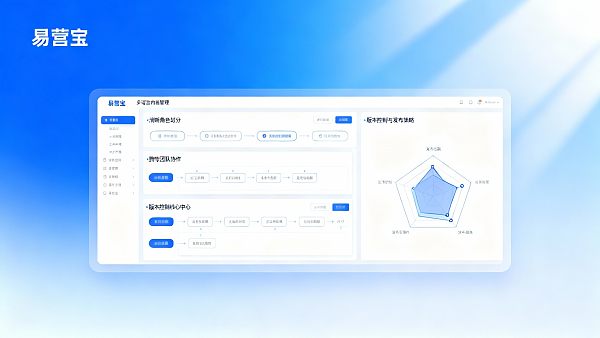
Cross-team Collaboration: Role Allocation, Workflows, and Governance Mechanisms
In multilingual website projects, clear roles and governance mechanisms are paramount. It's recommended to divide teams into content source teams, translation/localization teams, SEO/growth teams, development/operations teams, and quality/compliance teams. Each role should have defined SLAs and deliverables—for example, content sources are responsible for original text standardization and keyword prioritization; translation teams handle language-specific outputs with cultural adaptation notes; SEO teams optimize TDK and multilingual structures; development teams implement multilingual URLs and technical solutions; and QC teams conduct pre-publish validation and security audits. Establish standardized collaboration workflows: content submission → translation scheduling → localized proofreading → SEO optimization → pre-publish testing → staged rollout → full deployment. For urgent fixes, set up rapid channels with defined rollback conditions and response timelines. Simultaneously, build a knowledge base and style guide (terminology, brand terms, prohibited items, localization examples) and store these as versioned assets in a content repository for quick replication in new markets. This governance effectively answers "Why should businesses build multilingual websites?"—standardized collaboration significantly reduces error rates, ensures brand consistency, shortens launch cycles, and enhances global landing efficiency and commercial returns.
Version Control and Content Publishing: Strategies, Tools, and Rollback Mechanisms
Multilingual content versioning differs from single-branch code management. Adopt a content-branching + timestamp strategy, where major changes generate independent version numbers with metadata recording language, change summaries, associated task IDs, and responsible parties. Recommended tools include CMS or PIM systems supporting multilingual versions and approval flows, combined with Git-like history tracking for phased rollbacks and diff comparisons. For publishing, use phased deployments: first test environment crawls and SEO simulations, then small-language or low-traffic rollouts, followed by full deployment. This validates multilingual search engine indexing while measuring conversion and behavioral changes. Technically, ensure independent URL structures (domain/subdomain/directory strategies) and complete hreflang markup to prevent duplicate content issues and boost positive outcomes for "Do multilingual websites help SEO?" Integrate automated CI/CD pipelines to synchronize content publishing with cache refreshes, CDN invalidations, sitemap updates, and search engine push notifications—enabling instant visibility and rollback capability. For compliance and security, version control must include audit logs and signatures to meet corporate audit requirements.
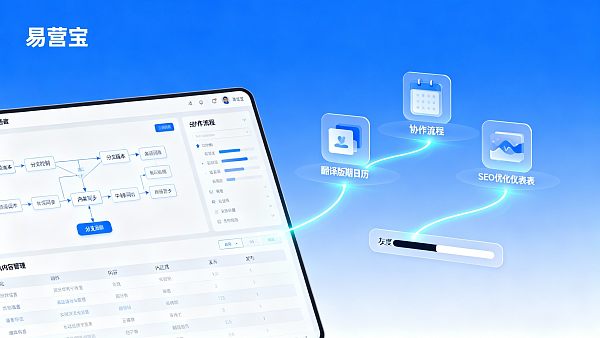
Multilingual Translation Workflow: Best Practices for AI Translation and Human Localization
Regarding "Can AI reliably handle multilingual website translation?",实践证明 AI translation combined with human localization balances efficiency and quality. Adopt a three-tier workflow: machine pre-translation → terminology/context proofreading → localized cultural adaptation. Use AI for bulk content and initial versions, reserving human review for commercial-sensitive pages, marketing copy, and legal compliance. To ensure SEO effectiveness, align AI outputs with keyword strategies—SEO teams should provide target-language keyword pools for post-processing long-tail optimizations. AI-powered site-building excels in auto-generating TDK, templated landing pages, and rapid multilingual deployments. Compared to traditional methods, AI site-building automates base content production, URL generation, and preliminary SEO but still requires human refinement for brand tone and high-value pages. Through data-driven iterations (A/B testing, conversion tracking), high-frequency pages can transition to semi-automated management, boosting productivity without compromising quality.
Technology and Platform Selection: Implementation Tools, Metrics, and Product Integration
Prioritize platforms supporting multilingual content sync, independent URL structures, automated SEO, and version management. Evaluation criteria include language coverage, page load speed (<1.5s), server nodes (2500+), bandwidth (120T), and automated translation quality—directly impacting user experience and crawl efficiency. Recommended features: auto-multilingual SEO, TDK generation with keyword mapping, content sync alerts, visual version comparison/rollback, and automated sitemap pushes with crawl analytics. For implementation, integrate these capabilities with existing AI site-builders and smart marketing platforms, such as EasyTrade's Global Super Website, offering multilingual management and global CDN acceleration. Achieve closed-loop workflows from site-building to deployment: auto-translate 98 languages, synchronize PC/mobile sites with full-stack SEO optimization—empowering manufacturing, cross-border e-commerce, and B2B enterprises to rapidly build high-availability global sites.
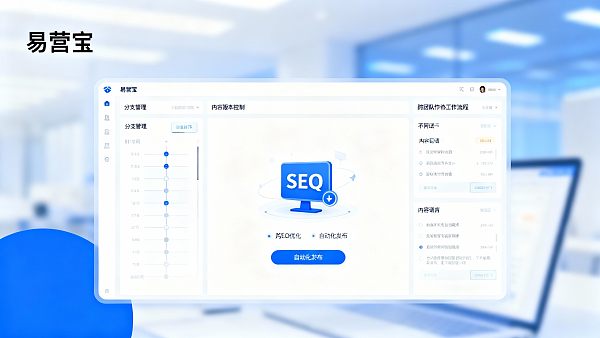
Summary and Action Guide
In summary, multilingual website management requires organizational, procedural, and technological synergy: define cross-team roles/SLAs, implement strict versioning with staged rollouts, combine AI translation with human quality refinement, and choose platforms supporting independent URLs, multilingual SEO, and automated publishing. This answers strategic questions like "How to build a multilingual website?" and "How many languages are typically needed?" while ensuring post-launch visibility in search engines and local markets. For rapid validation or POC testing, partner with providers offering global CDN, auto-multilingual SEO, and AI site-building capabilities for small-scale phased testing. Explore more templates and technical details, or request customized solutions for manufacturing, cross-border e-commerce, and brand globalization: EasyTrade Global Super Website. Contact us for implementation pathways to start your global site construction and content governance.
- Website Development
- Global server acceleration
- Yiyingbao
- SEO
- SEO Optimization
- AI Translation
- Multilingual website
- AI Website Building
- cross-border e-commerce
- Global Marketing
- How to build a multilingual website?
- Why should businesses create multilingual websites?
- What is the difference between AI website building and traditional website construction?
- Does a multilingual website benefit SEO?
- How many languages does a multilingual website generally require?
- How to manage content for a multilingual website?
- Can AI be relied upon for multilingual website translation?
Related Articles
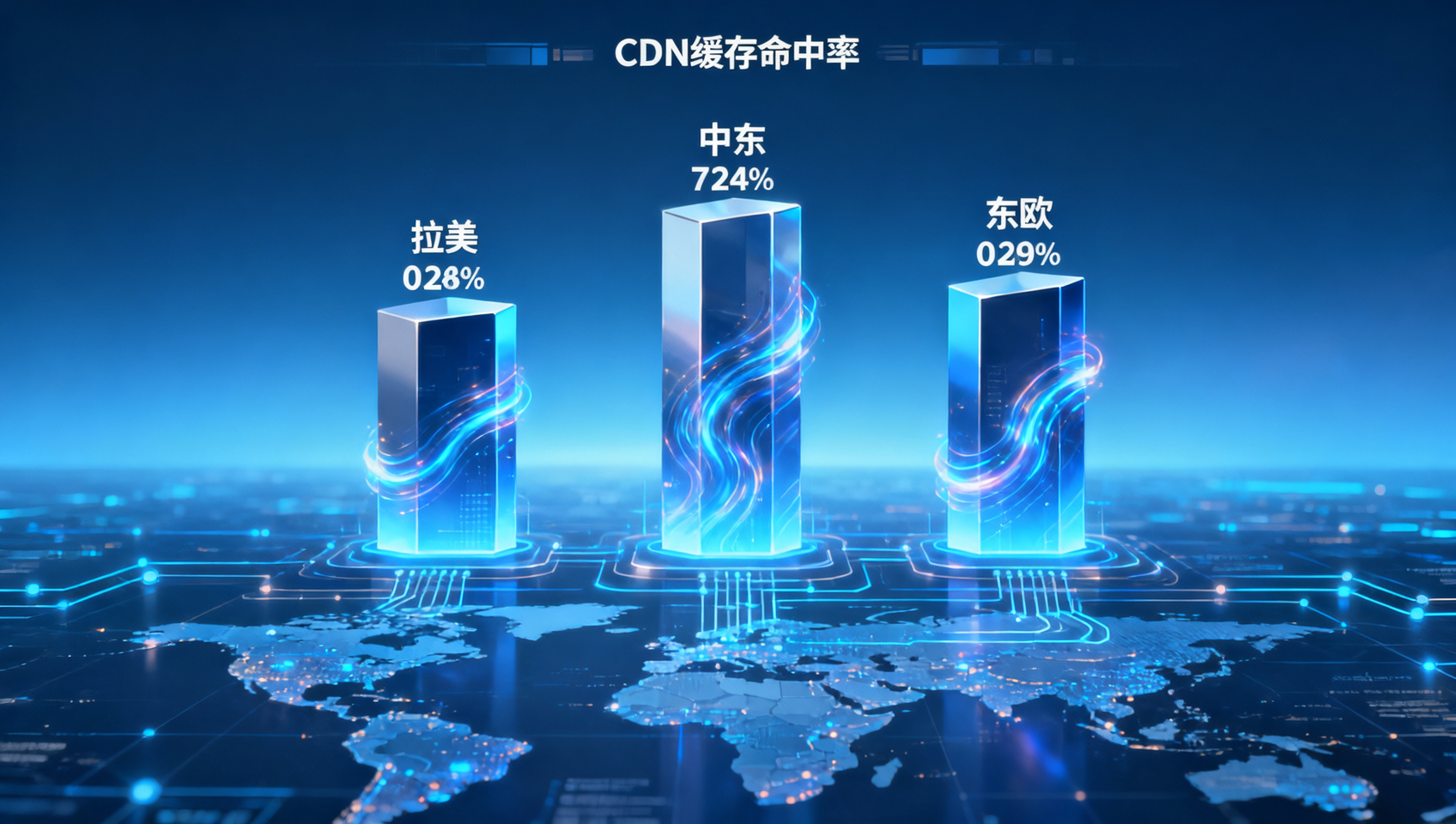
 In Yiyingbao's security and performance architecture, what are the cache hit rates for CDN edge nodes in Latin America, the Middle East, and Eastern Europe?
 How many working days were shortened in the PCI DSS compliance audit cycle for enterprises using Yiyingbao's technology platform for multilingual websites?
 Yiyingbao Security and Performance White Paper Reveals: How Many Milliseconds Does the Average Multilingual Website Homepage Load Time Stay Within?

Related Products
 EasyCamp SaaS Smart Website Marketing SystemE-Yingbao SaaS Smart Website Marketing System: AI-powered, zero-code website building. Rapidly launch multilingual independent e-commerce sites in just 10 minutes. Global server acceleration and AI-driven SEO optimization empower businesses to efficiently connect with global markets. The seamless integration of technology and user-friendly operation makes building e-commerce sites incredibly simple.
 AI+SEM Intelligent Advertising Marketing SystemAI+SEM drives intelligent ad creation, empowering full-funnel precision advertising marketing. The system automatically generates weekly/monthly reports, AI recommends keywords and target countries, monitors core metrics in real-time with intelligent alerts, and enables one-click high-conversion ad solutions to help quickly acquire customers and improve ROI.
 AI+SEO Dual Engine Optimization ServiceEasyWin AI+SEO Dual Engine Optimization System leverages AI-powered keyword mining, content generation, and comprehensive technical optimization to help foreign trade enterprises acquire high-quality organic traffic, significantly improving search rankings and conversion rates.
 AI+SNS Social Media Marketing SystemYingbao AI+SNS Social Media Marketing System - Precision social capture for the social media era. Supports one-click content synchronization across major platforms like Facebook and LinkedIn. AI intelligently rewrites posts for enhanced relevance. 24/7 AI customer service and user profiling analysis empower businesses to efficiently expand into global markets.
 AI+SEO营销解决方案易营宝AI+SEO营销解决方案,通过AI批量写作、智能生成TDK、精准关键词扩词等功能,全面优化网站SEO效果,提升流量与转化率。助力企业构建高效智能网站新生态。
 AI+SEM Advertising Marketing SolutionsAI+SEM Advertising Marketing Solution leverages AI technology to deeply empower SEM ad campaigns. It automatically generates weekly/monthly reports using AI, presenting account data across multiple dimensions for comprehensive insights into campaign performance and trends. The system precisely recommends keywords and target countries, intelligently generates high-conversion ad copy, and enables one-click activation of efficient campaign plans to help businesses rapidly acquire customers. Simultaneously, it monitors core metrics in real time, intelligently identifies abnormal fluctuations, and issues timely alerts to ensure stable, high-return advertising results.
 Domain Name ServicesEasyWin provides professional domain name services, including intelligent queries, one-stop registration, brand protection, and full lifecycle management, helping businesses build a digital brand image.
 EasyOperate B2C Cross-Border E-Commerce Platform & Independent WebsiteEasyStore B2C Cross-border E-commerce Independent Store is an intelligent website building and cross-border e-commerce integrated solution independently developed by EasyStore Information Technology (Beijing) Co., Ltd. The system is specially designed for small and medium-sized as well as large export enterprises, integrating 'website building, operation, marketing, advertising, and conversion' into one, helping enterprises quickly establish cross-border e-commerce independent stores to achieve brand globalization and global sales growth.
The platform supports multiple languages, multiple currencies, and multi-channel marketing, with built-in AI intelligent translation and SEO optimization systems, suitable for mainstream markets such as Southeast Asia, Europe and America, Latin America, and the Middle East, assisting Chinese manufacturing enterprises in efficiently deploying international e-commerce strategies. SSL证书易营宝提供专业SSL安全证书服务,包括单域名和泛域名证书,确保网站数据传输加密、身份验证和完整性保护,助力企业建立安全可信的在线业务环境。









