









- China-Morocco zero-tariff access, a breakthrough in the cost of Moroccan goods exports to ChinaJun 11, 2026View details
- What signal should be released for the suspension of exports to JapanJun 10, 2026View details
- China's May LNG imports rebounded, with increased volumes from Russia and Canada filling the Middle East supply gapJun 10, 2026View details
- Will GEO change its SEO strategy?Jun 04, 2026View details
- What types of businesses are end-to-end solutions suitable for?Jun 03, 2026View details
- 2026 Global Growth Channel TrendsJun 02, 2026View details
A Guide to Post-Build O&M for Multilingual Websites: Version Iteration, Backups, and Failure Response Processes
introduction
This article provides a practical guide for operations and maintenance personnel and decision-makers, answering the questions: How to build a multilingual website? In a globalized context, enterprises often face conflicts between language, performance, security, and compliance: How to ensure that version iterations do not disrupt the localized experience? How to achieve reliable backup and rapid recovery in different regions? How to set up fault response processes to meet SLA and business continuity requirements? This article is aimed at users/operators, enterprise decision-makers, quality control and safety managers, project managers, and after-sales maintenance personnel. Combining best practices in the general internet service field with the technical capabilities of EasyOperation, it provides executable processes and templates to facilitate team implementation and gradual optimization of the operations and maintenance system. Subsequent sections will gradually outline the key points of architecture, iteration, backup, and fault response, and provide quantifiable metrics and recommended tools.

Multilingual website architecture design and version iteration strategy
When answering the question "How to build a multilingual website?", the first step is to focus on architecture and version management. It is recommended to adopt a strategy of independent language domain names or subdirectories (such as example.com/zh/, /en/), and manage localization features at the code level using Feature Flags and branching strategies. Version iterations should follow these principles: Continuous Integration (CI) + Continuous Deployment (CD), phased releases in different environments, separation of localized content from front-end presentation, and decoupling of the translation engine from the business code flow. Key practical points include: 1) Performing complete language regression testing and SEO checks in the staging environment for each iteration; 2) Using semantic version numbers and change logs to record changes in localized fields; 3) Establishing rollback mechanisms and automated regression scripts to avoid broken links to business pages due to language pack mismatches. Taking YiYingBao's AI translation engine as an example, it can achieve real-time adaptation and automatic TDK generation, shortening the language launch cycle while maintaining search engine friendliness, and improving launch stability and traceability.
Backup strategies and data recovery practices (including examples and tool recommendations)
A robust backup system is the foundation for the operation and maintenance of multilingual websites. Backups should cover static files, databases, search indexes, and language pack metadata, employing a multi-layered, multi-regional strategy: combining local incremental backups, cloud mirroring, and cold backup storage. RPO (Recovery Point Objective) and RTO (Recovery Time Objective) should be differentiated by business line; for example, the RPO for e-commerce product pages should be ≤ 5 minutes, while information pages can have a longer RPO. Recommended technical practices: 1) Daily snapshots + hourly incremental backups; 2) Parallel logical and physical backups for the database; 3) Enable off-site replication for critical resources and verify index rebuild time in recovery drills. In terms of tools, AWS/Alibaba Cloud snapshots, object storage lifecycles, and CI pipelines can be used to trigger backup verification. For industry-specific solutions, such as large product catalogs required for laser engraving machine industry solutions , product display data, standardized attributes, and multilingual descriptions should be incorporated into the backup strategy to ensure consistency between display and retrieval after recovery.

Fault response process and SLA settings (from detection to closed loop)
Fault response should be a closed-loop mechanism from automatic detection to manual handling and post-incident review. The core processes include: 1) Detection and Alarming: Joint judgment using front-end synthetic monitoring, Real User Monitoring (RUM), logs, and metrics (Prometheus/Grafana); 2) Classification and Routing: Classifying by impact scope and user impact (P0~P3), and automatically assigning alarms to appropriate roles; 3) Rapid Switchover and Degradation: Supporting regional degradation and traffic switching in global multi-node deployments to ensure critical business availability; 4) Recovery and Verification: Performing traffic reversal and end-to-end verification after recovery; 5) Review and Optimization: Production issues must be reported and improvement plans developed within 72 hours. When setting SLAs, global CDN, automated SSL, and DDoS protection capabilities must be considered, clearly defining availability, recovery time, and compensation terms. Through pre-rehearsals (quarterly) and automated recovery scripts, response time for common faults can be reduced by more than 50%, improving customer trust and business continuity.
Key aspects of operations automation, security, and compliance (continuous optimization and monitoring metrics)
For scalable multilingual website operation and maintenance, automation and security are long-term competitive advantages. Automation covers content synchronization, translation and publishing, SEO metadata generation, health checks, and rollback strategies; security includes identity authentication, access control, key management, and compliance auditing. It is recommended to establish key performance indicators (KPIs): average page load time, first byte time to first page (TTFB), search engine crawlability, number of multilingual page indexes, backup success rate, and recovery drill pass rate. Regarding compliance, cross-border businesses need to focus on data sovereignty and GDPR/local privacy regulations, establishing mechanisms for minimizing data access and ensuring transparent user consent. Combining AI-driven intelligent website building and marketing engines can achieve automatic generation of title, description, and keywords (TDK) and multilingual SEO diagnostics, continuously identifying and correcting semantic issues in localized content, thereby improving search rankings and conversion rates.
Summary and Action Guidelines
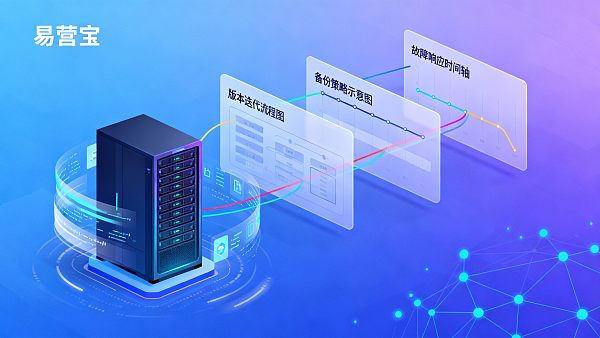
In summary, answering the question "How to build a multilingual website?" is not just a matter of technology selection, but also requires establishing an executable operations and maintenance system for version iteration, backup, and fault response. This involves adopting CI/CD and canary releases to manage language iterations, building multi-layered backups and regularly rehearsing recovery processes, establishing a tiered fault response and continuous review mechanism, and building a long-term foundation of automation and security compliance. E-Creator, driven by AI and big data, provides a closed-loop capability from intelligent website building to global CDN and security protection, helping enterprises transform multilingual operations and maintenance from passive maintenance to proactive operation. If you are planning or optimizing your multilingual website operations and maintenance system, please contact us immediately to learn more about practical applications and solutions, or to obtain a customized assessment and implementation plan for your industry and business. Contact us now to learn more about our solutions and arrange a demonstration.
Related Articles
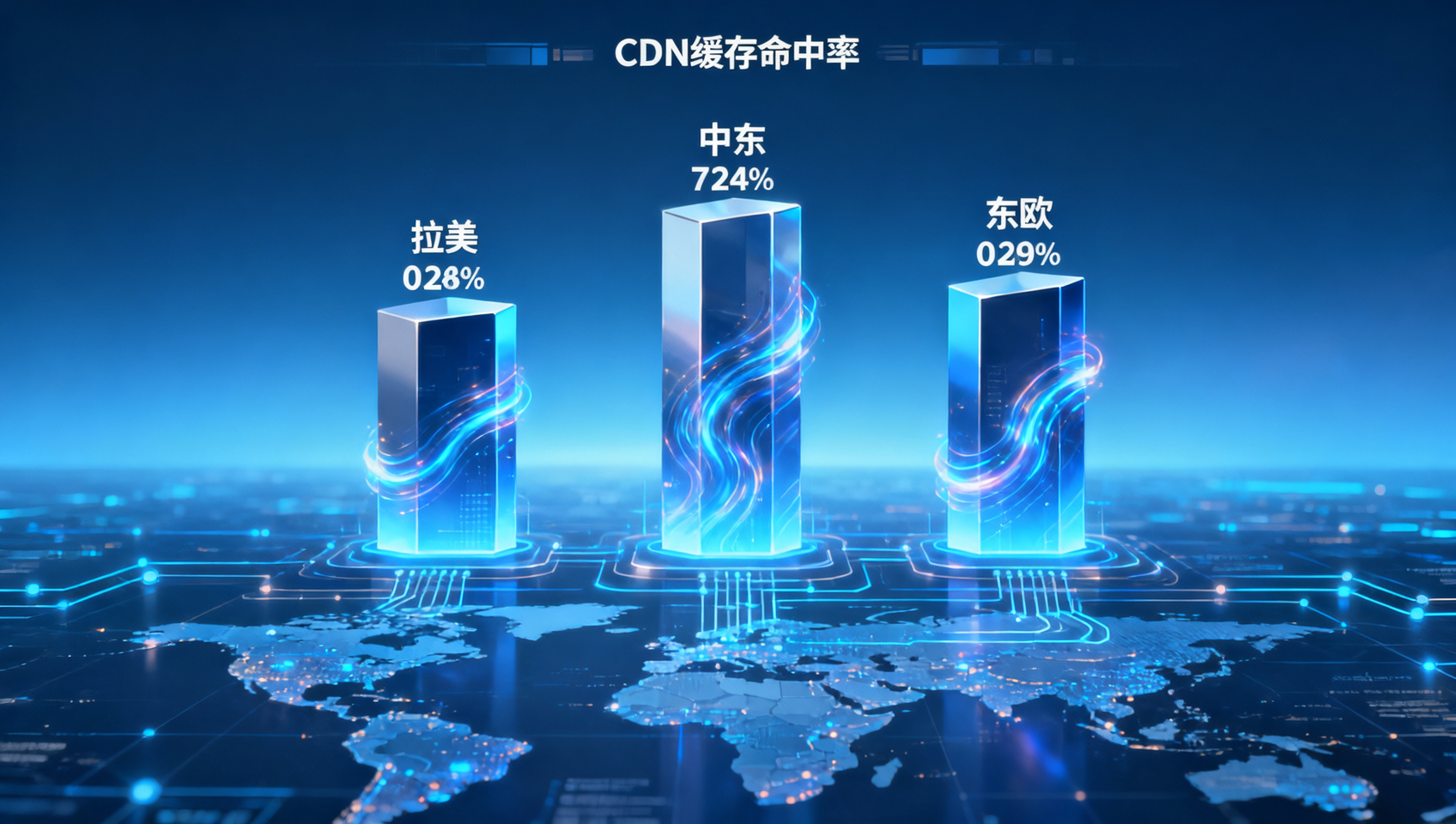
 In Yiyingbao's security and performance architecture, what are the cache hit rates for CDN edge nodes in Latin America, the Middle East, and Eastern Europe?
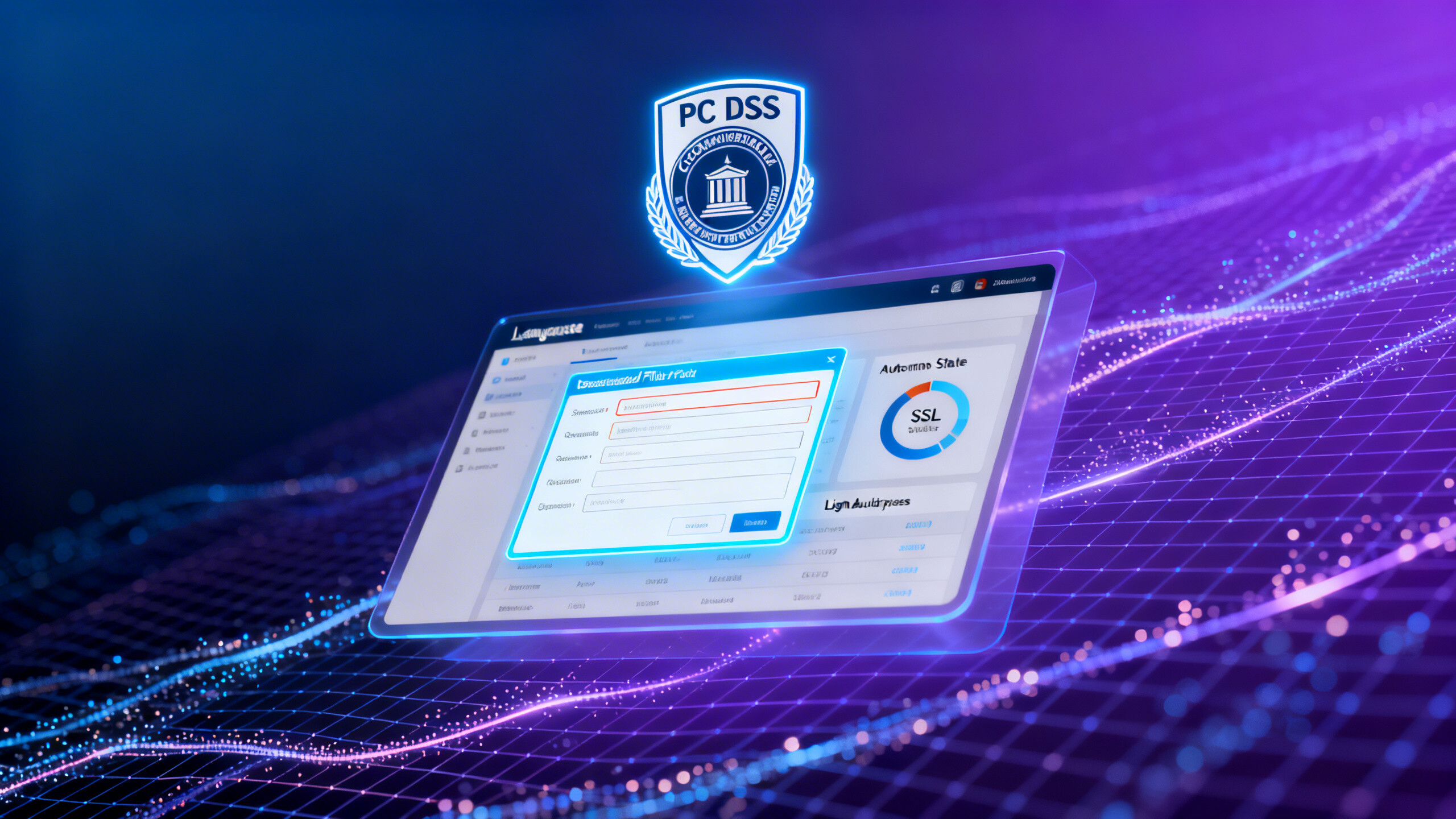
 How many working days were shortened in the PCI DSS compliance audit cycle for enterprises using Yiyingbao's technology platform for multilingual websites?
 Yiyingbao Security and Performance White Paper Reveals: How Many Milliseconds Does the Average Multilingual Website Homepage Load Time Stay Within?

Related Products
 EasyCamp SaaS Smart Website Marketing SystemE-Yingbao SaaS Smart Website Marketing System: AI-powered, zero-code website building. Rapidly launch multilingual independent e-commerce sites in just 10 minutes. Global server acceleration and AI-driven SEO optimization empower businesses to efficiently connect with global markets. The seamless integration of technology and user-friendly operation makes building e-commerce sites incredibly simple.
 AI+SEM Intelligent Advertising Marketing SystemAI+SEM drives intelligent ad creation, empowering full-funnel precision advertising marketing. The system automatically generates weekly/monthly reports, AI recommends keywords and target countries, monitors core metrics in real-time with intelligent alerts, and enables one-click high-conversion ad solutions to help quickly acquire customers and improve ROI.
 AI+SEO Dual Engine Optimization ServiceEasyWin AI+SEO Dual Engine Optimization System leverages AI-powered keyword mining, content generation, and comprehensive technical optimization to help foreign trade enterprises acquire high-quality organic traffic, significantly improving search rankings and conversion rates.
 AI+SNS Social Media Marketing SystemYingbao AI+SNS Social Media Marketing System - Precision social capture for the social media era. Supports one-click content synchronization across major platforms like Facebook and LinkedIn. AI intelligently rewrites posts for enhanced relevance. 24/7 AI customer service and user profiling analysis empower businesses to efficiently expand into global markets.
 AI+SEO营销解决方案易营宝AI+SEO营销解决方案,通过AI批量写作、智能生成TDK、精准关键词扩词等功能,全面优化网站SEO效果,提升流量与转化率。助力企业构建高效智能网站新生态。
 AI+SEM Advertising Marketing SolutionsAI+SEM Advertising Marketing Solution leverages AI technology to deeply empower SEM ad campaigns. It automatically generates weekly/monthly reports using AI, presenting account data across multiple dimensions for comprehensive insights into campaign performance and trends. The system precisely recommends keywords and target countries, intelligently generates high-conversion ad copy, and enables one-click activation of efficient campaign plans to help businesses rapidly acquire customers. Simultaneously, it monitors core metrics in real time, intelligently identifies abnormal fluctuations, and issues timely alerts to ensure stable, high-return advertising results.
 Domain Name ServicesEasyWin provides professional domain name services, including intelligent queries, one-stop registration, brand protection, and full lifecycle management, helping businesses build a digital brand image.
 EasyOperate B2C Cross-Border E-Commerce Platform & Independent WebsiteEasyStore B2C Cross-border E-commerce Independent Store is an intelligent website building and cross-border e-commerce integrated solution independently developed by EasyStore Information Technology (Beijing) Co., Ltd. The system is specially designed for small and medium-sized as well as large export enterprises, integrating 'website building, operation, marketing, advertising, and conversion' into one, helping enterprises quickly establish cross-border e-commerce independent stores to achieve brand globalization and global sales growth.
The platform supports multiple languages, multiple currencies, and multi-channel marketing, with built-in AI intelligent translation and SEO optimization systems, suitable for mainstream markets such as Southeast Asia, Europe and America, Latin America, and the Middle East, assisting Chinese manufacturing enterprises in efficiently deploying international e-commerce strategies. SSL证书易营宝提供专业SSL安全证书服务,包括单域名和泛域名证书,确保网站数据传输加密、身份验证和完整性保护,助力企业建立安全可信的在线业务环境。









