









- China-Morocco zero-tariff access, a breakthrough in the cost of Moroccan goods exports to ChinaJun 11, 2026View details
- What signal should be released for the suspension of exports to JapanJun 10, 2026View details
- China's May LNG imports rebounded, with increased volumes from Russia and Canada filling the Middle East supply gapJun 10, 2026View details
- Will GEO change its SEO strategy?Jun 04, 2026View details
- What types of businesses are end-to-end solutions suitable for?Jun 03, 2026View details
- 2026 Global Growth Channel TrendsJun 02, 2026View details
Case Study: How a B2B Company Built a Multilingual Website and Achieved Overseas Sales Growth Within Six Months
Case Study: How to Build a Multilingual Website for a Business? A 6-Month Practical Path and Key Points to Achieve Significant Overseas Sales Growth. This document is aimed at users/operators, corporate decision-makers, quality control and security management personnel, project managers, and after-sales and distribution networks, focusing on the actionable implementation steps, technical highlights, and performance validation for "How to Build a Multilingual Website?" From a general internet service perspective, we break down the workflow for building a multilingual standalone website with growth capabilities from scratch, covering dimensions such as site architecture, content localization, performance and security, social media and advertising synergy, and highlighting risk control and measurable conversion metrics to help decision-makers assess ROI and executors develop implementation plans.
1. Pre-Strategy and Needs Analysis: Why Multilingual? How to Define Market Priorities
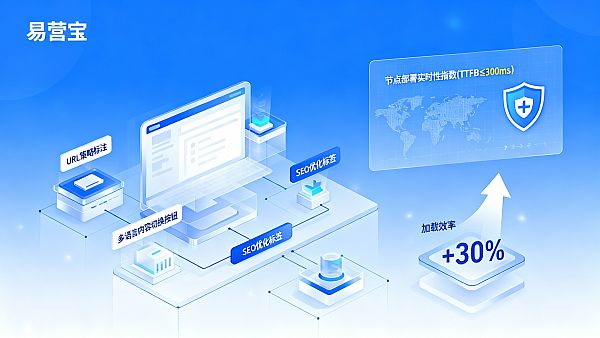
Before launching a multilingual site, the first challenge is precise market and user persona positioning. A common mistake is "launching all markets simultaneously." A more suitable approach is prioritizing based on historical inquiries, channel performance, and traffic acquisition cost analysis. Evaluation metrics include target country search volume, keyword competition, CPC vs. projected LTV, compliance and payment/logistics barriers. Collaboration with legal and security teams is also needed to assess data compliance (e.g., GDPR/CCPA) and local legal restrictions. After prioritizing markets, develop a content strategy matrix: the main language site handles branding and core value delivery, while sub-language pages focus on localized product catalogs, pricing, and certification information. Operations must define content production cadence and approval workflows, while the technical side needs URL strategies (independent domains, subdomains, or subdirectories) to balance SEO and user trust. Practical evidence shows that deep cultivation in 1-2 high-value markets yields visible conversion returns within 6 months more easily than superficial multilingual coverage.
2. Technical Selection and Performance Assurance: Site Architecture Highlights and Global Deployment
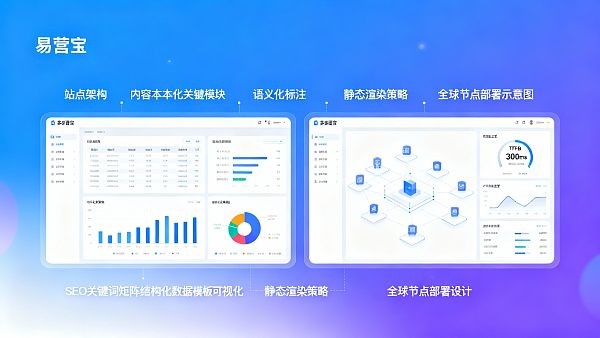
Multilingual standalone sites demand higher technical and performance standards than single-language sites, with core goals being global accessibility and search engine crawl efficiency. Key technical aspects include: 1) Semantic markup (hreflang, structured data) to avoid duplicate content penalties; 2) Static rendering or SSR with caching to ensure TTFB under 300ms; 3) Multilingual image and resource replacement with lazy loading; 4) API layer and third-party payment/local logistics fault tolerance and fallback solutions. Additionally, global node deployment and smart routing are critical for overseas user experience. For example, a 7-node global deployment with intelligent load balancing and edge computing can reduce Latin American or Middle Eastern access speeds from seconds to milliseconds, significantly lowering bounce rates and increasing Google crawl frequency. In actual projects, we use cloud architecture and enterprise-grade web servers with daily automated backups and smart DDoS protection to form a "high-availability + compliant + secure" infrastructure, ensuring stability during post-launch operational fluctuations.
3. Content and SEO Execution: From AI-Driven Keywords to Localized Implementation Workflows
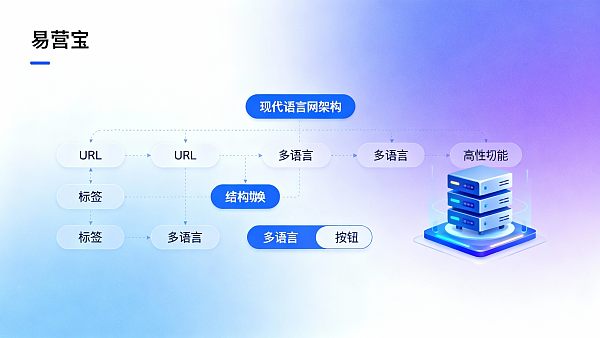
Content is the core of multilingual site lead generation, making the closed-loop of "keyword matrix → semantic clusters → page templates" crucial. Recommended workflow: Step 1) Use AI keyword expansion tools to build target market keyword pools, incorporating long-tail and user intent classification; Step 2) Develop TDK and structured data templates, ensuring localized expression rather than mechanical translation during content generation; Step 3) Continuously optimize landing page copy and form fields via A/B testing to reduce form friction. Automation tools significantly boost efficiency—AI-generated TDK and batch image creation can cover massive long-tail landing pages quickly while maintaining stylistic consistency. SEO must also focus on crawl budget and indexing speed, leveraging sitemaps and distribution strategies, and improving Google crawl frequency via local servers or CDN nodes to rapidly accumulate organic traffic.
4. Performance, Security, and Compliance Enhancements: Case Study Solutions and Quantifiable Results
In actual case implementations, we deployed end-to-end performance and security loops for clients. Through global node deployment and smart routing, average TTFB was controlled at ≤300ms, with page load efficiency improving ~30% after enabling HTTP/3 and edge acceleration. Security-wise, financial-grade encryption and smart DDoS protection achieved 1.2Tbps anti-DDoS peak capacity, paired with daily automated backups and high-availability SLAs to significantly reduce operational risks. Such capabilities can be realized via specialized products—e.g., a globally deployed solution reduced South American user PDF catalog download times from 8s to 1.2s while lowering ad bounce rates by 72%. This section also integrates dedicated deployment services for speed and reusability: EasyWin Global Server Deployment, covering 7 global nodes, intelligent load balancing, and enterprise-grade security for quantifiable performance and compliance metrics.
5. Marketing Synergy and Conversion Optimization: Advertising, Social Media, and Localized Customer Service Coordination
Post-launch, technology and content are merely foundations—commercial growth relies on ad campaigns, social media matrices, and localized customer service synergy. The ad layer uses AI diagnostic tools to continuously optimize account structures, keyword performance, and creatives. Automated high-CTR ad copy and multilingual asset generation can significantly boost conversion efficiency. Social media requires localized accounts with scheduled posting and data feedback to form a "content → traffic → conversion" loop. Customer service and logistics must synchronize multilingual support and local payment options to reduce transaction friction. Through full-funnel optimization, typical businesses observe dual growth in organic traffic and paid conversions within 6 months, with lower CPCs alongside higher inquiry quality, driving significant overseas sales growth.
Summary and Action Guide
In summary, the key to "How to Build a Multilingual Website?" lies in parallel advancement along four lines: strategy-first, technical safeguards, content localization, and marketing synergy. Supported by data-driven campaigns and automated content production, combined with global deployment and compliance capabilities, measurable overseas sales growth can be achieved within 6 months. EasyWin leverages its AI-driven all-in-one smart marketing platform and global deployment capabilities to provide closed-loop services from site building to content, campaigns, and operations, helping businesses enter overseas markets faster and at lower cost. To replicate this case’s results, contact us immediately for solution details and implementation plans, or click service links on the page to launch your multilingual growth strategy.
Related Articles
 Responsive website development: which key metrics matter? Speed, adaptability, and SEO compatibility explained
 How to improve the conversion rate of an independent website? First check these 8 high-traffic and high-loss pages
 How to Design a B2B Landing Page: Practical Methods from Information Architecture to Form Conversion
Related Products
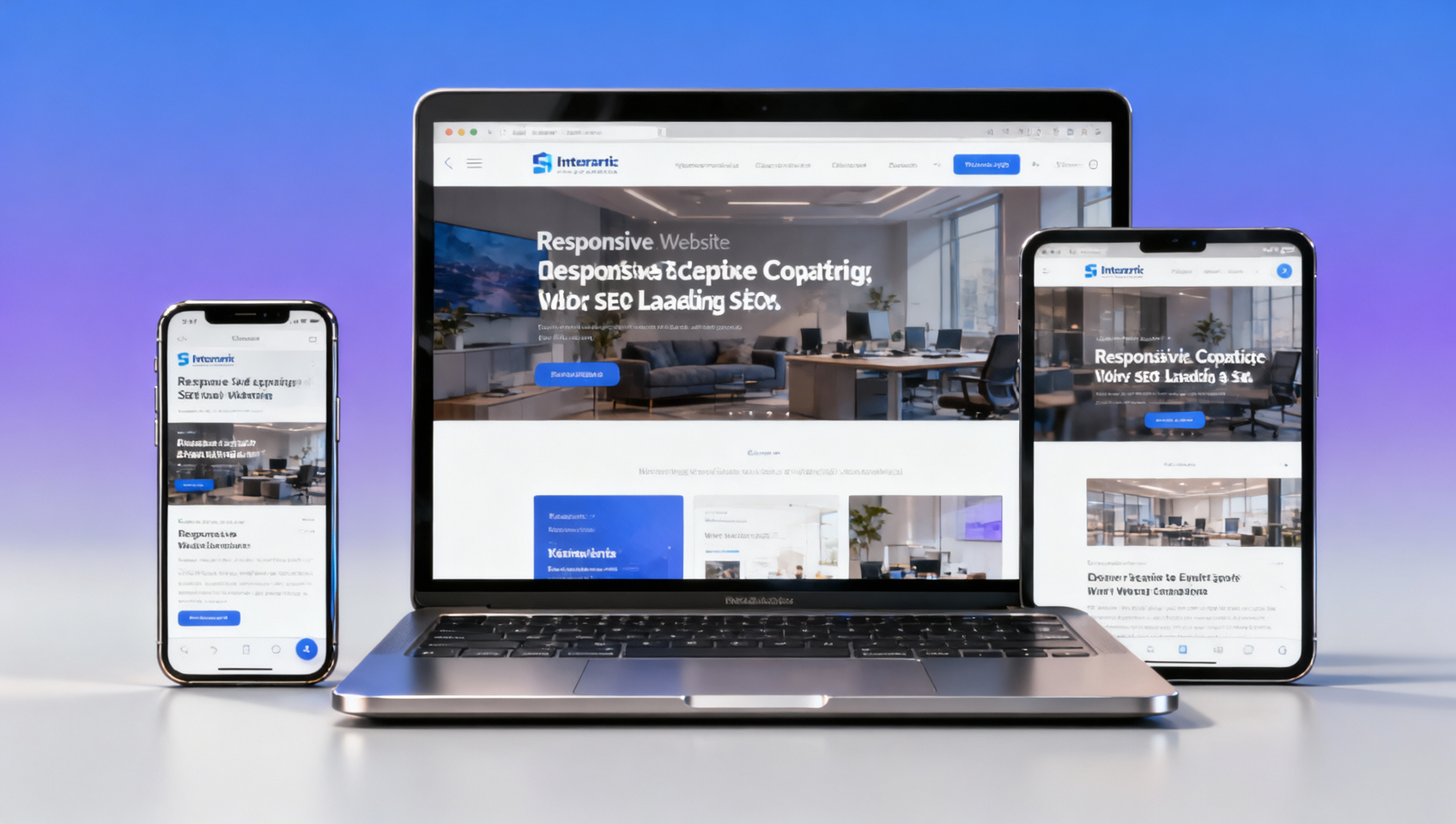
 EasyCamp SaaS Smart Website Marketing SystemE-Yingbao SaaS Smart Website Marketing System: AI-powered, zero-code website building. Rapidly launch multilingual independent e-commerce sites in just 10 minutes. Global server acceleration and AI-driven SEO optimization empower businesses to efficiently connect with global markets. The seamless integration of technology and user-friendly operation makes building e-commerce sites incredibly simple.
 AI+SEM Intelligent Advertising Marketing SystemAI+SEM drives intelligent ad creation, empowering full-funnel precision advertising marketing. The system automatically generates weekly/monthly reports, AI recommends keywords and target countries, monitors core metrics in real-time with intelligent alerts, and enables one-click high-conversion ad solutions to help quickly acquire customers and improve ROI.
 AI+SEO Dual Engine Optimization ServiceEasyWin AI+SEO Dual Engine Optimization System leverages AI-powered keyword mining, content generation, and comprehensive technical optimization to help foreign trade enterprises acquire high-quality organic traffic, significantly improving search rankings and conversion rates.
 AI+SNS Social Media Marketing SystemYingbao AI+SNS Social Media Marketing System - Precision social capture for the social media era. Supports one-click content synchronization across major platforms like Facebook and LinkedIn. AI intelligently rewrites posts for enhanced relevance. 24/7 AI customer service and user profiling analysis empower businesses to efficiently expand into global markets.
 AI+SEO营销解决方案易营宝AI+SEO营销解决方案,通过AI批量写作、智能生成TDK、精准关键词扩词等功能,全面优化网站SEO效果,提升流量与转化率。助力企业构建高效智能网站新生态。
 AI+SEM Advertising Marketing SolutionsAI+SEM Advertising Marketing Solution leverages AI technology to deeply empower SEM ad campaigns. It automatically generates weekly/monthly reports using AI, presenting account data across multiple dimensions for comprehensive insights into campaign performance and trends. The system precisely recommends keywords and target countries, intelligently generates high-conversion ad copy, and enables one-click activation of efficient campaign plans to help businesses rapidly acquire customers. Simultaneously, it monitors core metrics in real time, intelligently identifies abnormal fluctuations, and issues timely alerts to ensure stable, high-return advertising results.
 Domain Name ServicesEasyWin provides professional domain name services, including intelligent queries, one-stop registration, brand protection, and full lifecycle management, helping businesses build a digital brand image.
 EasyOperate B2C Cross-Border E-Commerce Platform & Independent WebsiteEasyStore B2C Cross-border E-commerce Independent Store is an intelligent website building and cross-border e-commerce integrated solution independently developed by EasyStore Information Technology (Beijing) Co., Ltd. The system is specially designed for small and medium-sized as well as large export enterprises, integrating 'website building, operation, marketing, advertising, and conversion' into one, helping enterprises quickly establish cross-border e-commerce independent stores to achieve brand globalization and global sales growth.
The platform supports multiple languages, multiple currencies, and multi-channel marketing, with built-in AI intelligent translation and SEO optimization systems, suitable for mainstream markets such as Southeast Asia, Europe and America, Latin America, and the Middle East, assisting Chinese manufacturing enterprises in efficiently deploying international e-commerce strategies. SSL证书易营宝提供专业SSL安全证书服务,包括单域名和泛域名证书,确保网站数据传输加密、身份验证和完整性保护,助力企业建立安全可信的在线业务环境。









