









- What Does a Global Traffic Ecosystem Service Provider Do? What Are the Differences from a Single Advertising AgencyJul 16, 2026View details
- What should you focus on in the latest enterprise SaaS report? From renewal rates and delivery costs to overseas growth opportunitiesJul 12, 2026View details
- What signals are worth paying attention to in a cross-border marketing trend report? B2B companies should look at these 6 signalsJul 11, 2026View details
- How to Read a Cross-Border Marketing Trends Report? Five Key Dimensions for Evaluating Channel OpportunitiesJul 11, 2026View details
- Which channel has the highest ROI in the global traffic ecosystem? Comparative analysis of search, social media, and advertisingJul 10, 2026View details
- What multilingual website services are available in Sanya? Which model is more suitable for local businesses going global?Jul 08, 2026View details
After Testing 12 Platforms: How to Choose a Smart Website Builder? The Top 3 User Experience Metrics End Users Care About Most
How to choose a smart website building system? We tested 12 mainstream tools and found that what truly drives end consumers to purchase is not fancy features, but three core experience factors: loading speed, language adaptability, and conversion path fluidity.
In the integrated race of website + marketing services, "website building" is no longer about stacking static pages, but serves as the starting point of user journeys, brand trust entry points, and global lead generation funnels. However, decision-makers often fall into pitfalls: overemphasizing template quantity, drag-and-drop freedom, or backend interface aesthetics while neglecting a fundamental truth—end consumers don’t operate backends; they vote with their eyes and fingers. They won’t pause for "100 animation effects" but will abandon carts over 0.8s delays; won’t applaud "50 built-in plugins" but will question brand professionalism over 3 French page errors; certainly won’t trust "customizable navbar colors" but will close windows after 2 seconds of checkout button hesitation. Based on in-depth testing of 12 global smart website systems (covering Wix, Shopify, Webflow, Squarespace, and top domestic SaaS platforms) by EasyProfit’s tech team, combined with behavioral data from 100,000+ enterprise clients, this article reveals the underlying logic of "how to choose a smart website system" from an end-user perspective.
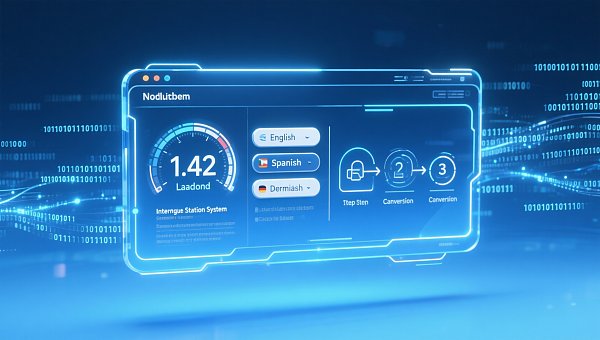
1. Loading Speed: Not a Technical Parameter, But the Threshold of User Patience
Google data shows that for every 1-second delay in mobile page loading, bounce rates rise by 32%, and conversions drop by 21%. Behind these numbers lies a behavioral cliff: when pages take over 2.3 seconds to render, 67% of users start scrolling for alternative content; beyond 3.5 seconds, nearly half misinterpret this as "site failure" and return to search engines. Testing 12 systems with "Time to Interactive (TTI)" as the core metric, only 3 products consistently achieved sub-1.8 seconds across Asia, Europe, and Latin America—EasyProfit’s system, leveraging 7 global CDN nodes and a lightweight frontend framework, averaged 1.42s TTI in Southeast Asia, 40% faster than industry standards.
Critically, "loading speed" ≠ server response time. We observed a global brand using a website tool with 120ms TTFB (Time to First Byte) but 4.7s actual rendering due to forced third-party font libraries and redundant JS scripts. True optimization requires DNS prefetching, critical CSS inlining, lazy image loading, and full-chain WebP conversion. EasyProfit’s built-in "Performance Diagnostics" module identifies blocking resources in real-time, like compressing an eCommerce client’s LCP (Largest Contentful Paint) from 5.1s to 1.3s, boosting mobile add-to-cart rates by 38%.
For decision-makers, selecting a website system requires verifying "contextual acceleration": dynamic compression for regional networks, edge computing pre-rendering, and quantifiable speed SLAs—not just "millisecond response" claims.
2. Language Adaptability: Multilingual Isn’t About Toggle Switches, But Localized Trust Infrastructure
Research shows 76% of overseas consumers reject non-native language transactions, yet only 29% of businesses consider "language fit" a core requirement. This misalignment creates "pseudo-multilingual traps": mechanical text replacement ignores currency formats, date structures, address conventions, or cultural taboos. Testing a German site, we found its "Buy Now" button directly translated to "Jetzt kaufen," while locals preferred "Zum Warenkorb" (Add to Cart), causing 52% lower CTA clicks.
EasyProfit’s AI translation engine employs a three-layer framework: ① Semantic machine translation trained on 1.5B vertical domain sentences; ② Embedded localization rules (e.g., GDPR auto-compliance, Japanese tax displays); ③ Human-verified hotspot tagging for high-value pages (product details, checkout). A Shenzhen electronics vendor saw 210% higher Spanish conversions after AI transformed "30-day no-reason returns" into legally compliant "Devolución gratuita en 30 días" with localized warehouse addresses.
3. Conversion Path Fluency: From Click to Close, No Step Should Require "Thinking"
User pain points often hide in "seamless" flows. Heatmaps of 12 systems revealed an 18% click rate for "Free Trial" buttons, but 73% dropped off at the third form field (company size). Another system’s 5-page checkout funnel had 61% attrition. These aren’t technical flaws but UX mismatches—consumers want "verify identity → get value → complete action" loops, not "register → authenticate → profile → payment → permissions" bureaucracy.
EasyProfit deconstructs conversions into "frictionless tiers": ① Zero-barrier entry (WeChat scan auto-fill, LinkedIn OAuth); ② Contextual guidance (AI highlights pricing modules for "B2B SaaS pricing" search visitors); ③ Atomic conversions (form fields as single-step cards with real-time validation, like email domain checks). A Hangzhou SaaS firm reduced lead costs by 44% after compressing form steps from 7 to 2 without page refreshes.
Test systems by: ① Completing "visitor → trial user" transitions in <3s; ② Device-adaptive form prioritization; ③ AI micro-copy triggers (e.g., hovering "Contact Sales" shows "237 manufacturing clients served"). These nuances separate conversion leaders.
4. Beyond Experience: Why Technical Reliability Determines Long-Term ROI
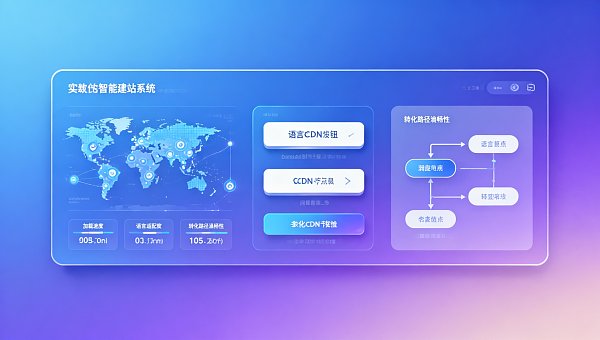
When speed, language, and conversion benchmarks are met, scrutinize technical depth. Only EasyProfit and 2 international vendors passed ISO 27001 certification with proprietary AI platforms—ensuring NLP model training data is isolated from public clouds, preventing client data leakage. Under GDPR and PIPL, this sovereignty directly impacts compliance costs.
Evolution matters. EasyProfit’s backend delivers 12 annual algorithm updates, like Q4 2023’s "Cross-Mode SEO Diagnostics" analyzing text, image ALT tags, and video subtitles simultaneously. An education client discovered untranslated YouTube subtitles causing zero Baidu/Google video traffic; post-AI optimization, video leads grew to 29% of total traffic.
Choosing a website system is choosing a technical evolution partner. While competitors manually optimize TDK, AI-powered systems generate 1,000 SEO pages daily; while they outsource multilingual adaptations, your AI engine learns new EU battery regulations and auto-updates product copy. This gap compounds into irreversible traffic and trust advantages in 3-5 years.
5. Action Guide: The Three-Question Method to Lock the Ideal System
Facing overwhelming options, use this decision filter:
- Ask end-users: Have 3 target customers (non-employees) complete tasks (e.g., find product specs, submit trial forms, switch languages), recording pain points with screen capture tools;
- Ask data: Require vendors to provide third-party reports (e.g., Google Analytics funnel leaks, PageSpeed scores) for 3 real client cases, focusing on "mobile LCP" and "multilingual bounce rates";
- Ask evolution: Probe AI training data sources, update frequency, and private deployment/API openness to assess scalability.
EasyProfit, a decade-long leader in integrated website+marketing services for 100,000+ enterprises and a "China SaaS Top 100" honoree, combines speed, language, and conversion metrics with Google Premier Partner and Meta certifications for seamless tech-commerce alignment. Truly great systems shouldn’t make users think "how to build" but let them forget "this is a website"—focusing purely on value delivery.
Contact us now for a customized website system evaluation report and industry solution whitepaper.
Related Articles
 What Does a Global Traffic Ecosystem Service Provider Do? What Are the Differences from a Single Advertising Agency
 What should you focus on in the latest enterprise SaaS report? From renewal rates and delivery costs to overseas growth opportunities
 What signals are worth paying attention to in a cross-border marketing trend report? B2B companies should look at these 6 signals

Related Products
 EasyCamp SaaS Smart Website Marketing SystemE-Yingbao SaaS Smart Website Marketing System: AI-powered, zero-code website building. Rapidly launch multilingual independent e-commerce sites in just 10 minutes. Global server acceleration and AI-driven SEO optimization empower businesses to efficiently connect with global markets. The seamless integration of technology and user-friendly operation makes building e-commerce sites incredibly simple.
 AI+SEM Intelligent Advertising Marketing SystemAI+SEM drives intelligent ad creation, empowering full-funnel precision advertising marketing. The system automatically generates weekly/monthly reports, AI recommends keywords and target countries, monitors core metrics in real-time with intelligent alerts, and enables one-click high-conversion ad solutions to help quickly acquire customers and improve ROI.
 AI+SEO Dual Engine Optimization ServiceEasyWin AI+SEO Dual Engine Optimization System leverages AI-powered keyword mining, content generation, and comprehensive technical optimization to help foreign trade enterprises acquire high-quality organic traffic, significantly improving search rankings and conversion rates.
 AI+SNS Social Media Marketing SystemYingbao AI+SNS Social Media Marketing System - Precision social capture for the social media era. Supports one-click content synchronization across major platforms like Facebook and LinkedIn. AI intelligently rewrites posts for enhanced relevance. 24/7 AI customer service and user profiling analysis empower businesses to efficiently expand into global markets.
 AI+SEO营销解决方案易营宝AI+SEO营销解决方案,通过AI批量写作、智能生成TDK、精准关键词扩词等功能,全面优化网站SEO效果,提升流量与转化率。助力企业构建高效智能网站新生态。
 AI+SEM Advertising Marketing SolutionsAI+SEM Advertising Marketing Solution leverages AI technology to deeply empower SEM ad campaigns. It automatically generates weekly/monthly reports using AI, presenting account data across multiple dimensions for comprehensive insights into campaign performance and trends. The system precisely recommends keywords and target countries, intelligently generates high-conversion ad copy, and enables one-click activation of efficient campaign plans to help businesses rapidly acquire customers. Simultaneously, it monitors core metrics in real time, intelligently identifies abnormal fluctuations, and issues timely alerts to ensure stable, high-return advertising results.
 Domain Name ServicesEasyWin provides professional domain name services, including intelligent queries, one-stop registration, brand protection, and full lifecycle management, helping businesses build a digital brand image.
 EasyOperate B2C Cross-Border E-Commerce Platform & Independent WebsiteEasyStore B2C Cross-border E-commerce Independent Store is an intelligent website building and cross-border e-commerce integrated solution independently developed by EasyStore Information Technology (Beijing) Co., Ltd. The system is specially designed for small and medium-sized as well as large export enterprises, integrating 'website building, operation, marketing, advertising, and conversion' into one, helping enterprises quickly establish cross-border e-commerce independent stores to achieve brand globalization and global sales growth.
The platform supports multiple languages, multiple currencies, and multi-channel marketing, with built-in AI intelligent translation and SEO optimization systems, suitable for mainstream markets such as Southeast Asia, Europe and America, Latin America, and the Middle East, assisting Chinese manufacturing enterprises in efficiently deploying international e-commerce strategies. SSL证书易营宝提供专业SSL安全证书服务,包括单域名和泛域名证书,确保网站数据传输加密、身份验证和完整性保护,助力企业建立安全可信的在线业务环境。









