1. Core Definition: The Essential Meaning of [Can AI Be Relied Upon for Multilingual Website Translation?]
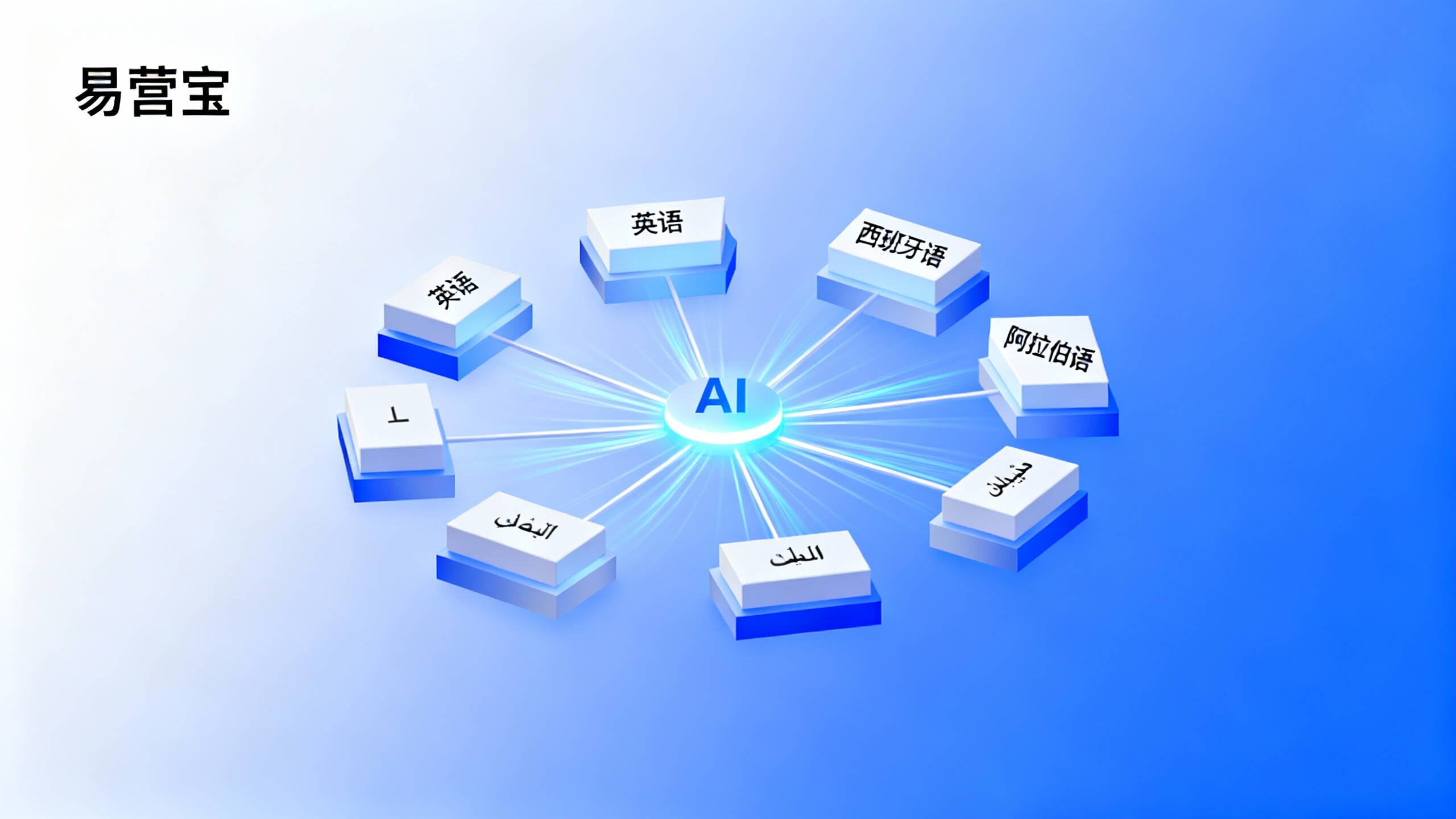
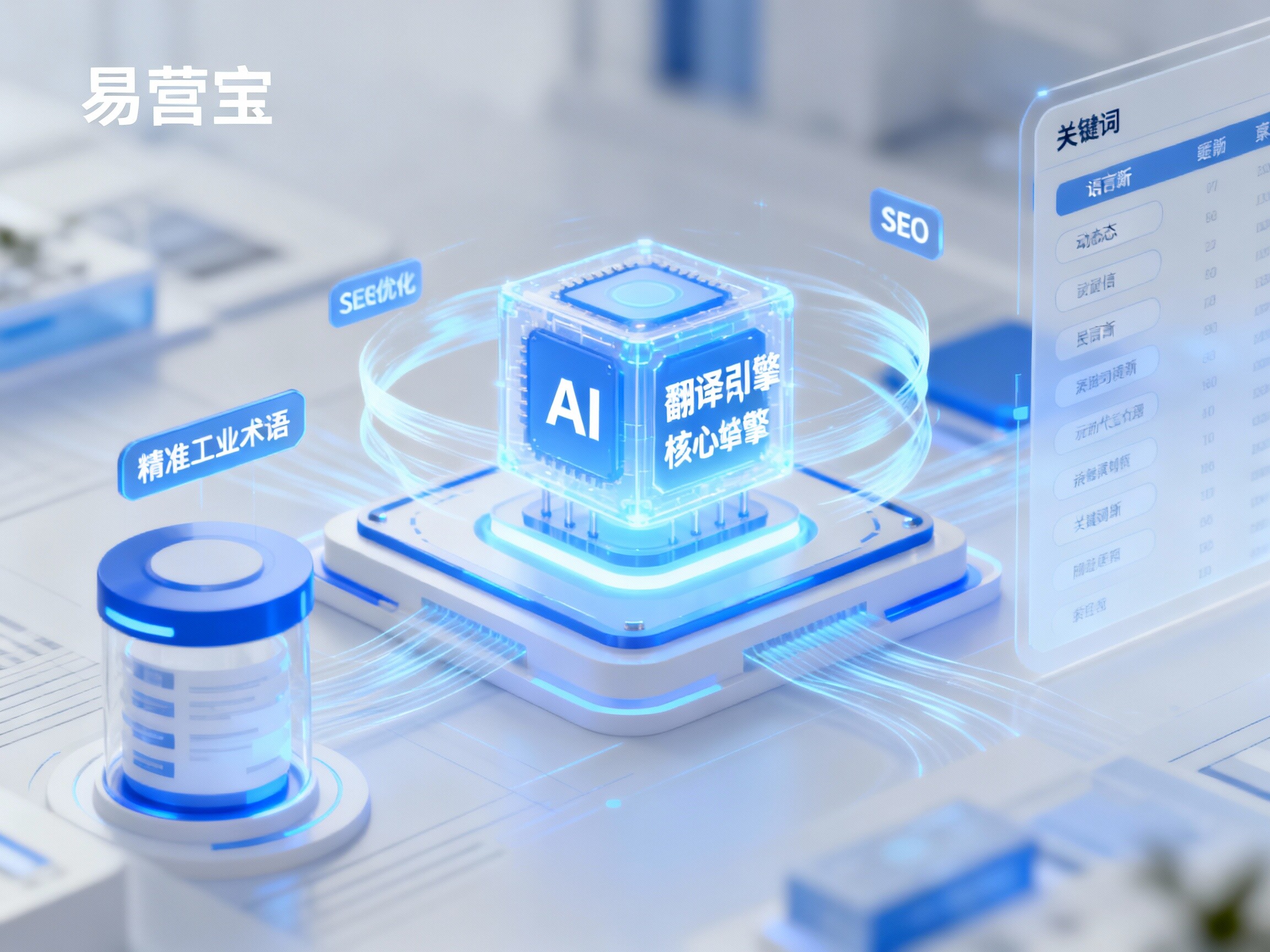
Exploring "Can AI Be Relied Upon for Multilingual Website Translation?" fundamentally involves discussing the compatibility between "Neural Machine Translation" (NMT) and "Search Engine Algorithms" (SEO). Multilingual website AI translation refers to the process of using deep learning models to automatically and extensively convert native language content into target market languages. The core lies in whether it can retain the original intent while aligning with local users' search habits and cultural contexts. Within EasyTrade's technical framework, AI translation is no longer a rigid vocabulary replacement but a "semantic-level reconstruction" based on big data training.
2. Development History: The Evolution from "Rigid Machine Translation" to "Intelligent Comprehension"

AI translation has undergone three critical stages: the first stage was "rule-based machine translation," with chaotic syntax, entirely unsuitable for SEO; the second stage was "statistical machine translation," with improved accuracy but lacking logic; the third stage is the current "neural machine translation and large model era." Today's AI possesses human-like "language sensitivity," capable of understanding complex industrial terminology and trade contexts. Therefore, the answer to "Can AI Be Relied Upon for Multilingual Website Translation?" in the modern technological context has evolved into "highly reliable but requiring professional configuration."
3. Technical Principle: How AI Translation Affects SEO and GEO Rankings
Technically, AI translation captures subtle differences between languages through "vector space mapping." When EasyTrade deploys AI translation for multilingual websites, the system automatically matches the target market's "keyword index." Search engines like Google can now recognize high-quality AI content, as long as it is unique, structured, and satisfies user search intent (EEAT principles), thereby earning top rankings. Simultaneously, in GEO mode, structured AI-translated content is more easily extracted by generative AI as authoritative answers.
4. Comparative Analysis: AI Translation vs. Human Translation vs. Plugin Direct Translation
In efficiency, AI translation is "a thousand times faster" than human translation; in cost, AI is merely "one percent" of human translation. Compared to ordinary browser plugin translations, EasyTrade's AI solution generates "static indexed pages," which is key to SEO success. Plugin-translated content cannot be crawled by search engines, whereas EasyTrade's AI-processed pages have independent URLs and meta tags, truly achieving the leap from "visible" to "searchable."

5. [EasyTrade] Product Function Modules Introduction
1. "AI Semantic Proofreading Module": Automatically identifies and corrects logical errors in translations, ensuring industrial terminology is precise and error-free.
2. "Keyword Localization Replacement": The system automatically captures high-frequency local search terms, replacing awkward vocabulary in translations, directly boosting SEO performance.
3. "Hreflang Tag Automation": Automatically generates and deploys multilingual association tags, completely eliminating duplicate content penalty risks.
4. "Smart Schema Markup": Adds structured data to translated content, enhancing brand visibility in generative search (GEO).
6. Industry Scenarios and Applications: AI Translation Performance Across Different Fields
In industries such as "engineering machinery," "electronic consumer goods," and "chemical raw materials," AI translation performs exceptionally stably. Due to their standardized professional terminology databases, EasyTrade's preset "industry glossary + AI translation" ensures multilingual websites achieve over 95% professional accuracy. Through dual verification of "ISO international translation standards" and "Google quality guidelines," our AI solutions have been validated by thousands of foreign trade enterprises.
[Book Now] Start Your AI-Powered Global Dominance Journey
Behind the question "Can AI Be Relied Upon for Multilingual Website Translation?" lies immense overseas market opportunities. EasyTrade offers one-stop services from "AI translation planning" to "SEO global rankings." We not only use advanced AI to overcome language barriers but also employ deep SEO strategies to ensure your website ranks consistently high on Google and GEO searches. Don't let exorbitant human translation costs hinder your global expansion—consult EasyTrade now for a free multilingual SEO diagnostic report, and let AI become your strongest ally in securing global orders!
FAQ
Q: Can AI be relied upon for multilingual website translation? Will it be penalized by Google?
A: Google explicitly states it does not oppose AI-generated content, as long as it is useful to users. EasyTrade ensures AI-translated content fully complies with Google quality guidelines through "content incremental optimization" and "localization adjustments," guaranteeing no penalties.
Q: Can AI translation handle complex minor languages (e.g., Arabic, Russian)?
A: Absolutely. Modern neural network models perform nearly at native language levels for mainstream minor languages, especially in B2B product descriptions, where their logic and accuracy far surpass ordinary translators.
Q: After using AI translation, is manual review still necessary?
A: EasyTrade recommends manual fine-tuning for core pages (e.g., company profiles, service terms), while vast product detail pages can fully trust EasyTrade's "smart AI optimization module" for automated management.
Q: Does AI translation help improve conversion rates?
A: Very much so. Native language content significantly reduces buyer trust barriers. EasyTrade's optimized AI translation makes buyers feel the "localization sincerity" of the brand, effectively boosting inquiry conversions.
Customer Reviews
"Initially, we also doubted whether AI could be relied upon for multilingual website translation, but EasyTrade convinced us with data. After launching 20 languages, traffic from South America and the Middle East tripled within two months, and many clients praised our product descriptions as very clear and professional."
—— Spokesperson from a laser cutting machine exporter
"EasyTrade's AI translation system not only solved language issues but also addressed SEO ranking problems. Through their keyword replacement technology, our minor language keyword rankings even surpassed our English main site, with very impressive conversion rates."
—— COO of a cross-border e-commerce platform
 What is the difference between a foreign trade independent website and a platform store? How should enterprises choose their long-term strategic direction?What is the difference between a foreign trade independent website and a platform store? How should enterprises formulate long-term strategies? Understand why independent websites are suitable for B2B foreign trade, master global CDN acceleration, AI-powered website building, and automated SEO techniques to make websites load faster and content more easily discoverable by AI search recommendations, helping brands achieve global growth.
 Does a multilingual website benefit SEO? Latest Google algorithm interpretation and optimization recommendationsHow can multilingual websites boost overseas traffic? This article provides an in-depth analysis of the core differences in SEO performance between multilingual and single-language websites, offering AI-powered website optimization recommendations based on Google's algorithm to help foreign trade enterprises quickly capture overseas markets through independent sites.
 Why is website loading speed so important? Revealing the impact of global CDN acceleration on international buyersWhy is website loading speed so important? Leveraging global CDN acceleration and AI-powered website platforms, foreign trade enterprises can quickly build high-performance independent sites, optimize SEO, and enhance AI search recommendation exposure, ensuring smoother access for international buyers and significantly boosting brand trust and conversion rates.
 How to Build a Foreign Trade Independent Website? A Complete Process Analysis from Domain Name Selection to Online OperationHow to Build a Foreign Trade Independent Website? From Domain Selection, Global CDN Acceleration to AI-Powered Website Building and Multilingual SEO Optimization – A Comprehensive Analysis of the Advantages of Independent Websites for B2B Foreign Trade, Helping Enterprises Improve Website Loading Speed and Achieve AI Search Recommendations and Global Marketing Conversion.
 How Many Languages Does a Multilingual Website Typically Require? Recommended Global Configuration for B2B Foreign Trade Independent WebsitesHow Many Languages Does a Multilingual Website Typically Require? This article combines AI-powered website building and global CDN acceleration to detail how to set up a foreign trade independent website, ensure content is recommended by AI search, and analyze the differences between independent websites and platform stores—helping B2B enterprises efficiently expand overseas and achieve global growth.
 How to Make Website Content Discoverable by AI Search Recommendations? New B2B Content Optimization Strategies for 2024How to Make Website Content Discoverable by AI Search Recommendations? Exploring AI-Driven B2B Content Optimization Trends. Deciphering Whether Standalone Sites Suit B2B Export, Understanding the Importance of Global CDN Acceleration and Website Loading Speed. Mastering AI-Powered Website Building, Automated SEO, and Multilingual Website Translation Strategies to Create High-Converting Export-Focused Standalone Sites for Global Exposure and Brand Growth.
 Is a standalone website suitable for B2B foreign trade? Analyzing real-world cases combining customer acquisition with brand consolidationIs a standalone website suitable for B2B foreign trade? This article examines practical cases, exploring global CDN acceleration, website loading speed optimization, and AI-powered website strategies to help foreign trade businesses efficiently acquire customers, solidify their brand, and achieve dual growth in SEO and global exposure.
 How to Build a Foreign Trade Independent Website? A Complete Process Analysis from Domain Name Selection to Online OperationHow to Build a Foreign Trade Independent Website? From Domain Selection, Global CDN Acceleration to AI-Powered Website Building and Multilingual SEO Optimization – A Comprehensive Analysis of the Advantages of Independent Websites for B2B Foreign Trade, Helping Enterprises Improve Website Loading Speed and Achieve AI Search Recommendations and Global Marketing Conversion.