









- How to assess foreign trade website development trends?Looking at 2026 changes from multilingual,AI content to conversion pathsJul 04, 2026View details
- What are the new trends in multilingual marketing data analytics tools in 2026? Focus on attribution、automation and complianceJul 04, 2026View details
- Is Brand Globalization Marketing Consulting Worth Buying? At What Stage Should Companies Bring It InJul 01, 2026View details
- Cross-Border Marketing Trend Research: Why More and More Companies Are Starting to Deploy AI Search and GEO OptimizationJun 30, 2026View details
- Cross-Border Marketing Trend Research: How Independent Sites, AI Content, and Short-Video Customer Acquisition Are ChangingJun 30, 2026View details
- How Can a Brand Updates Page Be Made More SEO-Friendly? Analysis of Update Frequency, Content Structure, and Internal Linking StrategyJun 28, 2026View details
What is the difference between a foreign trade independent website and a platform store? Comparison from order cost to customer lifecycle

This article answers: What are the differences between a foreign trade independent website and a platform store? It also compares order acquisition costs and customer lifecycle value in detail, helping you choose the optimal customer acquisition path.
In the decision-making process for overseas and cross-border marketing, business decision-makers, project leaders, and operations teams are most concerned about customer acquisition costs, order stability, and customer lifecycle value. Whether you are a manufacturing export company, a B2B service provider, or a cross-border seller targeting end consumers, understanding "What are the differences between a foreign trade independent website and a platform store?" is the first step in formulating channel strategies. This article adopts a data-driven and practical perspective, comparing key dimensions such as customer acquisition cost (CAC), repurchase rates and customer lifecycle value (LTV), traffic controllability, brand control, and multilingual SEO. It helps project managers evaluate investment returns and long-term growth paths.
1. Differences in Order Costs and Acquisition Channels
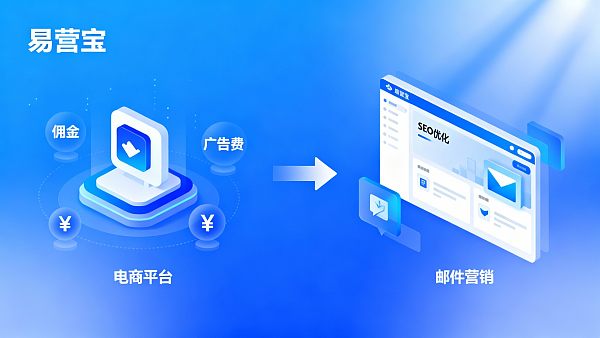
Platform stores (e.g., large e-commerce platforms) have ready-made traffic pools for initial customer acquisition. Search exposure and built-in recommendation mechanisms can quickly generate orders, but platform commissions, ad placement fees, and on-site competition lead to variable and rising per-order costs. In contrast, foreign trade independent websites require higher upfront investment and setup costs but can reduce single-customer acquisition costs over time through SEO, content marketing, and social media matrices. When evaluating order costs, break them down into: platform store commission rates, paid traffic CPA, logistics and return costs, and the spillover effects of repurchases. Typically, platform stores appear to have lower CAC early on, but this excludes risks from passive traffic fluctuations and rule changes. Independent website investments yield more stable long-term returns in brand and data ownership. Here, we should also consider the question: "Why should foreign trade companies build independent websites?" The answer lies in mastering customer data, building email/member pools, and improving repurchase rates, thereby enhancing customer lifecycle value.
2. Customer Lifecycle Value (LTV) and Repurchase Mechanism Comparison
Extending the customer lifecycle directly determines long-term channel ROI. Platform stores typically rely on platform promotional tools, on-site messages, and discount campaigns, with brand-customer interactions mediated by the platform. Foreign trade independent websites, however, can leverage their own membership systems, email marketing, and CRM to create paths from initial touchpoints to sustained repurchases. When optimizing LTV, independent websites can implement more granular personalized recommendations, lifecycle segmentation, and automated outreach to reduce repeat purchase costs. Data-driven approaches include: allocating CAC and LTV by channel, establishing KPI matrices for first purchase -> repurchase -> loyalty, and optimizing conversion leaks through A/B testing. For businesses aiming for content-driven growth, investing in content and SEO for long-term output (e.g., organic search traffic) significantly increases per-customer value, further proving that independent websites offer greater controllability in LTV in the comparison of "What are the differences between a foreign trade independent website and a platform store?"
3. Multilingual, SEO, and Global Traffic Acquisition Strategies
In overseas scenarios, multilingual strategies are key to steadily acquiring international organic traffic. Addressing questions like "Are multilingual websites beneficial for SEO? How many languages are typically needed for a multilingual website? How to manage content for multilingual websites? Can AI translations be relied upon for multilingual websites? How to boost international traffic for multilingual websites?" practical experience shows that multilingual websites improve keyword coverage, user experience, and page relevance, benefiting SEO. However, technical implementation (hreflang, site structure, server proximity) and content localization are essential. Generally, start with 3-5 primary languages covering major target countries and secondary markets. For content management, establish multilingual content pools and synchronized publishing workflows, leveraging translation memory, glossaries, and local review to avoid semantic errors and search match declines from pure machine translation. Modern AI translation is reliable for efficiency but requires human review to ensure commercial context and industry terminology accuracy. To accelerate SEO execution, businesses can integrate tools similar to SEO optimization, using AI for keyword expansion, automated TDK generation, and semantic scaling for large-scale content production and ranking monitoring, thereby more efficiently boosting international traffic.
4. How to Build and Operate a Foreign Trade Independent Website: Functional and Implementation Paths
For practical questions like "How to build a foreign trade independent website? What functionalities are needed for a foreign trade independent website?" we recommend phased implementation: Stage 1 is the Minimum Viable Product (MVP), including multilingual pages, product catalogs, payment and settlement, basic SEO templates, and SSL security; Stage 2 adds CRM, email automation, cross-border logistics, and tax integration; Stage 3 implements personalized recommendations, A/B testing, and data dashboards. Core functionalities should include: multilingual support, on-site search and categorization, mobile optimization, fast loading and CDN, SEO-friendly URLs and structured data, order and inventory sync, localized payment and return processes, customer accounts, and membership systems. Operational advice: Start with content strategy, building 20-50 high-value landing pages + industry guides, then test traffic with social media and paid channels. Technically, choose platforms with global CDN, auto-SSL, and DDoS protection capabilities, and establish SLAs and monitoring strategies to ensure operational stability.
5. Operations and Management: Practical Implementation Advice from Teams to Tools
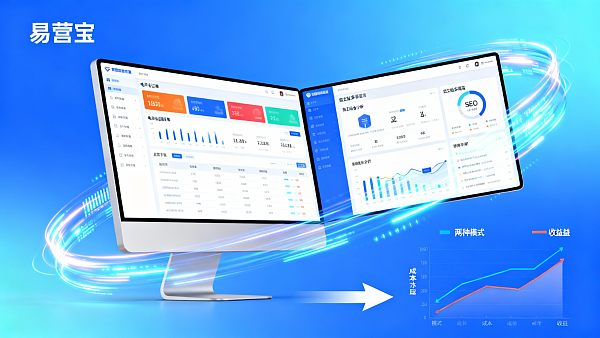
Organizationally, foreign trade independent websites require cross-department collaboration: marketing for traffic and content, product for listings and pricing, tech for speed and security, and customer service and logistics for pre- and post-sale support. Content management can adopt centralized strategies (CMS + translation memory) combined with local editing teams to avoid fragmented multilingual content. For metrics, establish weekly/monthly dashboards tracking organic traffic, paid traffic CAC, conversion rates, average order value, and LTV. Tool-wise, use systems with AI writing, keyword expansion, ranking monitoring, and diagnostic capabilities to improve SEO efficiency and reduce labor costs. Finally, don’t overlook risk management: platform rule changes, payment compliance, and data privacy are common variables, requiring pre-established response mechanisms and legal compliance workflows.
Summary and Action Guide
In summary, platform stores are suitable for quickly validating products and short-term scaled exposure, while foreign trade independent websites are better for brands seeking control, long-term CAC reduction, and LTV improvement. Choices should be based on business lifecycle, budget, operational capabilities, and market goals: If the goal is to build a sustainable global traffic matrix, prioritize independent websites and SEO/content capability building. EasyTrade offers an integrated solution of "smart website + AI marketing engine + global traffic ecosystem" to help businesses achieve efficiency amplification and compliant localization in multilingual and SEO aspects. If you want to evaluate current channel strategies or need a practical independent website implementation roadmap, contact us immediately for customized diagnostics and solutions. To learn more about solutions, request demos, or consult technically, click to access services and quotes or schedule a project consultation. Contact us now to embark on the path to global growth.
- AI Writing
- Cross-border Marketing
- Yiyingbao
- SEO
- Independent Website
- SEO Optimization
- Smart Website Building
- AI Translation
- AI Marketing Engine
- Multilingual SEO
- Independent foreign trade website
- Multilingual website
- Global Traffic Ecosystem
- Does a multilingual website benefit SEO?
- How many languages does a multilingual website generally require?
- How to manage content for a multilingual website?
- Can AI be relied upon for multilingual website translation?
- How can a multilingual website increase overseas traffic?
- Why should foreign trade enterprises build independent websites?
- What is the difference between an independent foreign trade website and a platform store?
- How to build a foreign trade independent station?
- What features are needed for a foreign trade independent website?
Related Articles
 What are the promotion channels for independent websites in Russian-speaking regions? How to choose search, social media, and local platform advertising
 Is B2B social media lead generation really faster than SEO? Comparison of lead quality, cycle, and input costs
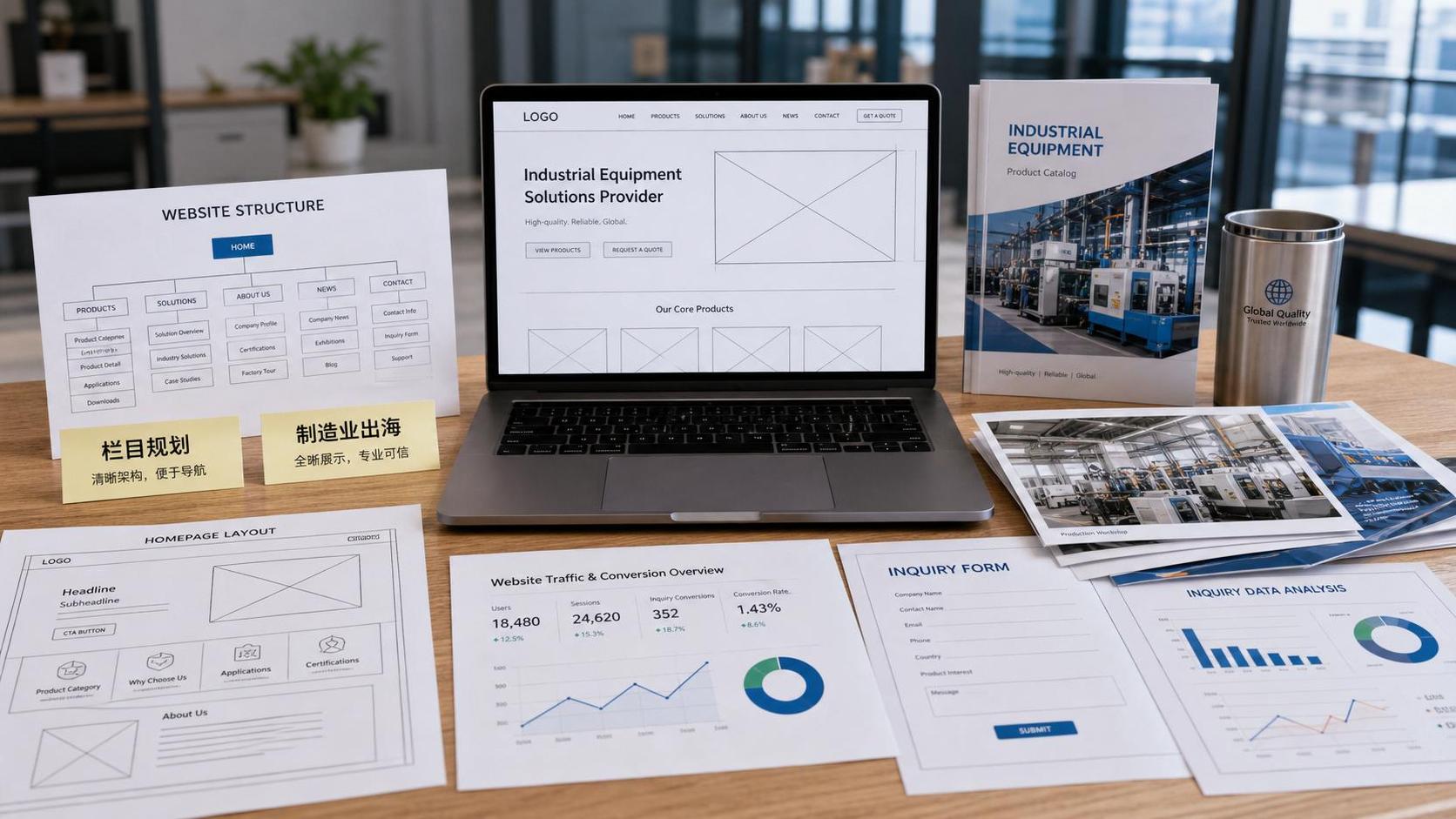
 How should manufacturing enterprises build an official foreign trade website? Detailed explanation of section planning and inquiry conversion thinking


Related Products
 EasyCamp SaaS Smart Website Marketing SystemE-Yingbao SaaS Smart Website Marketing System: AI-powered, zero-code website building. Rapidly launch multilingual independent e-commerce sites in just 10 minutes. Global server acceleration and AI-driven SEO optimization empower businesses to efficiently connect with global markets. The seamless integration of technology and user-friendly operation makes building e-commerce sites incredibly simple.
 AI+SEM Intelligent Advertising Marketing SystemAI+SEM drives intelligent ad creation, empowering full-funnel precision advertising marketing. The system automatically generates weekly/monthly reports, AI recommends keywords and target countries, monitors core metrics in real-time with intelligent alerts, and enables one-click high-conversion ad solutions to help quickly acquire customers and improve ROI.
 AI+SEO Dual Engine Optimization ServiceEasyWin AI+SEO Dual Engine Optimization System leverages AI-powered keyword mining, content generation, and comprehensive technical optimization to help foreign trade enterprises acquire high-quality organic traffic, significantly improving search rankings and conversion rates.
 AI+SNS Social Media Marketing SystemYingbao AI+SNS Social Media Marketing System - Precision social capture for the social media era. Supports one-click content synchronization across major platforms like Facebook and LinkedIn. AI intelligently rewrites posts for enhanced relevance. 24/7 AI customer service and user profiling analysis empower businesses to efficiently expand into global markets.
 AI+SEO营销解决方案易营宝AI+SEO营销解决方案,通过AI批量写作、智能生成TDK、精准关键词扩词等功能,全面优化网站SEO效果,提升流量与转化率。助力企业构建高效智能网站新生态。
 AI+SEM Advertising Marketing SolutionsAI+SEM Advertising Marketing Solution leverages AI technology to deeply empower SEM ad campaigns. It automatically generates weekly/monthly reports using AI, presenting account data across multiple dimensions for comprehensive insights into campaign performance and trends. The system precisely recommends keywords and target countries, intelligently generates high-conversion ad copy, and enables one-click activation of efficient campaign plans to help businesses rapidly acquire customers. Simultaneously, it monitors core metrics in real time, intelligently identifies abnormal fluctuations, and issues timely alerts to ensure stable, high-return advertising results.
 Domain Name ServicesEasyWin provides professional domain name services, including intelligent queries, one-stop registration, brand protection, and full lifecycle management, helping businesses build a digital brand image.
 EasyOperate B2C Cross-Border E-Commerce Platform & Independent WebsiteEasyStore B2C Cross-border E-commerce Independent Store is an intelligent website building and cross-border e-commerce integrated solution independently developed by EasyStore Information Technology (Beijing) Co., Ltd. The system is specially designed for small and medium-sized as well as large export enterprises, integrating 'website building, operation, marketing, advertising, and conversion' into one, helping enterprises quickly establish cross-border e-commerce independent stores to achieve brand globalization and global sales growth.
The platform supports multiple languages, multiple currencies, and multi-channel marketing, with built-in AI intelligent translation and SEO optimization systems, suitable for mainstream markets such as Southeast Asia, Europe and America, Latin America, and the Middle East, assisting Chinese manufacturing enterprises in efficiently deploying international e-commerce strategies. SSL证书易营宝提供专业SSL安全证书服务,包括单域名和泛域名证书,确保网站数据传输加密、身份验证和完整性保护,助力企业建立安全可信的在线业务环境。









