









- Cross-Border Marketing Trend Research: Why More and More Companies Are Starting to Deploy AI Search and GEO OptimizationJun 30, 2026View details
- Cross-Border Marketing Trend Research: How Independent Sites, AI Content, and Short-Video Customer Acquisition Are ChangingJun 30, 2026View details
- How Can a Brand Updates Page Be Made More SEO-Friendly? Analysis of Update Frequency, Content Structure, and Internal Linking StrategyJun 28, 2026View details
- What stages does the cross-border services ecosystem include? How do website building, promotion, payment, and compliance work togetherJun 22, 2026View details
- How will email marketing costs change in 2026Jun 22, 2026View details
- The China-US tariff arrangement has reached a preliminary consensus, and the trade association will be establishedJun 15, 2026View details
How many languages does a multilingual website generally require? Language prioritization methods for different markets
How many languages does a multilingual website generally require? This article combines market priorities with AI website building practices to help businesses determine language quantity, improve website SEO, and enhance global conversion.
How many languages a multilingual website generally requires is a primary question faced by many overseas enterprises and decision-makers. Targeting users/operators, procurement personnel, business decision-makers, and project managers, this article provides actionable methodologies from three dimensions: market priority, traffic and conversion data, and technical maintainability. We will combine practical experience in the general internet services industry to explain how to prioritize languages based on data, balance SEO with localization conversion rates, and achieve high-quality multilingual support at minimal cost in AI website building scenarios. The goal is to help you answer the core question: How to build a multilingual website? And how many languages does a multilingual website generally require?

How to Determine Priority Languages: A Data-Driven Market Prioritization Methodology
Identifying the first batch of supported languages should be based on business metrics. The first step is to analyze existing traffic and potential markets: Use Google Search Console, site analytics, and ad backend to review visitor geographic distribution and conversion rates, prioritizing countries/regions contributing traffic or showing clear conversion potential. The second step evaluates commercial value: rank by revenue share, order value, long-term customer lifetime value (LTV); when a language market contributes over 10% of total potential value or is projected to increase conversion rates by more than 20%, it's recommended for launch. The third step considers operational costs: quantify translation and localization, payment and compliance modules, technical maintenance cycles, and legal compliance costs. Practical experience shows that for most Chinese overseas enterprises, starting with Chinese (native language) + English + one or two target market languages (e.g., Spanish, Portuguese, or Russian) is a stable approach, covering 70% to 85% of cross-border traffic and potential orders. This logic directly answers the practical question "How many languages does a multilingual website generally require?": prioritize narrowing language quantity with data to quickly validate market hypotheses with limited resources.
How Multilingual Websites Assist Foreign Trade and SEO: Technical Solutions and SEO Essentials

Many procurement personnel and SEO managers ask, "How does a multilingual website assist foreign trade? Are multilingual websites beneficial for SEO?" The answer is affirmative, but implementation details determine effectiveness. Multilingual pages can cover more long-tail keywords, improve local search visibility, and enhance user experience, thereby boosting conversion rates and search ranking stability. Technically, correctly implement hreflang tags, language/region subdirectories (e.g., example.com/es/), or subdomains, combined with sitemaps and server geolocation optimization to improve crawl efficiency. Site performance is equally critical: for example, global CDN and multi-region server nodes can increase page load speed by 40%, leading to an average 35% SEO score improvement. Additionally, structured data, localized meta descriptions, and automated title/description (TDK) generation can significantly improve click-through rates and index coverage. When answering "What is a multilingual website?", emphasize that it’s not just translated pages but a comprehensive strategy integrating content and technical implementations for different regions.
AI vs. Traditional Website Building: Evaluating Reliability in Multilingual Translation
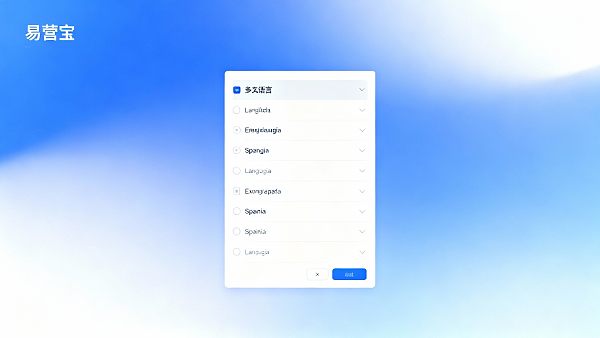
Businesses often ask, "What’s the difference between AI and traditional website building? Is AI translation for multilingual websites reliable?" AI’s core advantage lies in automation and scalability: it can auto-generate TDK, expand keywords, quickly produce draft copies, and optimize creativity based on historical data, which is crucial for rapid testing. However, AI doesn’t fully replace human input; best practice is a "AI + manual review" hybrid. Machine translation requires terminology databases and translation memory (TM) support for industry jargon, compliance texts, etc. We recommend using AI for initial drafts followed by industry-savvy local editors to ensure accuracy and brand consistency. To reduce operational costs and enable sustainable deployment, establish translation style guides, terminology management, and automated review workflows. Simultaneously, consider integrating mature marketing systems for decision support (e.g., combining ad投放 with content performance systems to adjust language priorities based on market signals). For such needs, our platform offers smart keyword and region recommendations, automated投放 strategies, and high-conversion ad copy generation to help businesses maintain efficiency in new market entry and long-term customer acquisition (Reference product: AI+SEM Smart Marketing System).
Multilingual Website Content Management and Operations: An Executable Checklist from Architecture to Maintenance
Answering "How to manage multilingual website content?" requires full-cycle strategies: URL strategy (subdirectories over subdomains for maintainability), unified content models, translation workflows, version control, and quality monitoring. Recommended steps: 1) Create independent content sets per language in CMS with translation status tracking; 2) Use translation memory and terminology databases for consistency; 3) Implement automated SEO and performance alerts to ensure compliance and speed checks; 4) Build localized QA checklists covering payments, logistics, customer service, and legal info; 5) Drive iterations with metrics, tracking each language’s traffic, bounce rates, page conversions, and ad ROI. Differentiate content for distributors/resellers versus end consumers, avoiding single templates. Operationally, audit core pages quarterly while dynamically updating product/promotional pages with A/B testing as standard.

Summary and Next Steps
In summary, determining how many languages a multilingual website requires should be data and commercial-value driven: prioritize markets with actual traffic and conversions, typically starting with native language + English + one or two target languages. Technically, correct URL strategies, hreflang configurations, and performance optimizations are SEO foundations. Content-wise, AI building significantly improves efficiency but requires manual review and terminology management for quality assurance. With 10 years of industry expertise, AI website building, global CDN, and automated marketing capabilities, we help businesses validate language priorities within budget and expand markets rapidly. To evaluate your language priorities or experience our AI投放闭环 capabilities, contact us immediately for customized solutions and trial recommendations, or learn more about our solutions.
- Website Development
- Yiyingbao
- SEO
- AI Translation
- Multilingual website
- AI+SEM Smart Advertising Marketing System
- AI Website Building
- How to build a multilingual website?
- How can a multilingual website help with foreign trade?
- What is a multilingual website?
- What is the difference between AI website building and traditional website construction?
- Does a multilingual website benefit SEO?
- How many languages does a multilingual website generally require?
- How to manage content for a multilingual website?
- Can AI be relied upon for multilingual website translation?
Related Articles
 TrustLink 2.0 Incorporates Independent E-commerce Site Credit Scores into the Review Process for Cross-Border Market Entry in Southeast Asia
 How Is the Price of Building a Zhejiang Foreign Trade Website Calculated? Features, Number of Languages, and Promotion Needs Are Key
 How should Chinese companies choose overseas marketing solutions?An evaluation from channel planning to local execution

Related Products
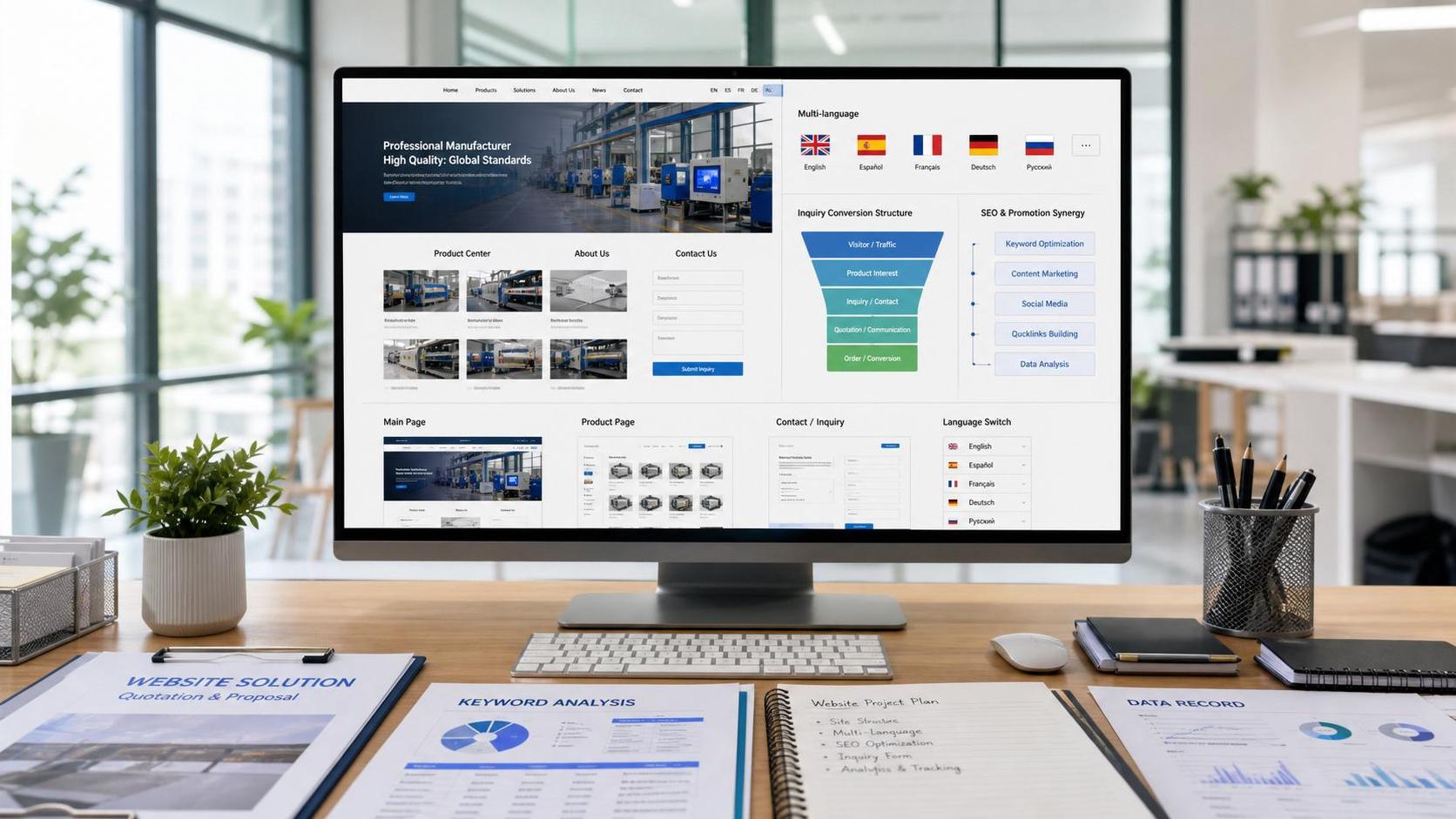
 EasyCamp SaaS Smart Website Marketing SystemE-Yingbao SaaS Smart Website Marketing System: AI-powered, zero-code website building. Rapidly launch multilingual independent e-commerce sites in just 10 minutes. Global server acceleration and AI-driven SEO optimization empower businesses to efficiently connect with global markets. The seamless integration of technology and user-friendly operation makes building e-commerce sites incredibly simple.
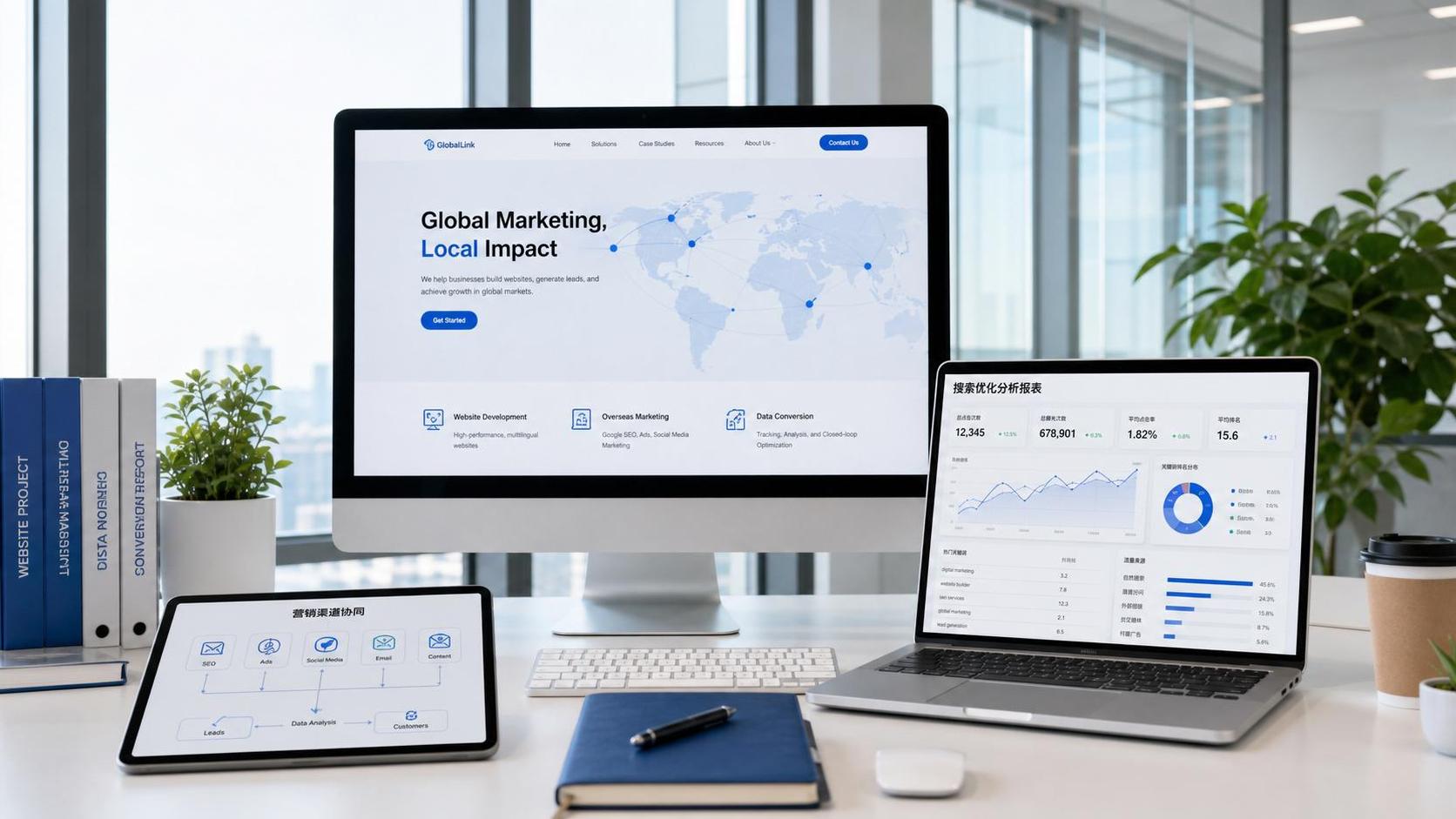
 AI+SEM Intelligent Advertising Marketing SystemAI+SEM drives intelligent ad creation, empowering full-funnel precision advertising marketing. The system automatically generates weekly/monthly reports, AI recommends keywords and target countries, monitors core metrics in real-time with intelligent alerts, and enables one-click high-conversion ad solutions to help quickly acquire customers and improve ROI.
 AI+SEO Dual Engine Optimization ServiceEasyWin AI+SEO Dual Engine Optimization System leverages AI-powered keyword mining, content generation, and comprehensive technical optimization to help foreign trade enterprises acquire high-quality organic traffic, significantly improving search rankings and conversion rates.
 AI+SNS Social Media Marketing SystemYingbao AI+SNS Social Media Marketing System - Precision social capture for the social media era. Supports one-click content synchronization across major platforms like Facebook and LinkedIn. AI intelligently rewrites posts for enhanced relevance. 24/7 AI customer service and user profiling analysis empower businesses to efficiently expand into global markets.
 AI+SEO营销解决方案易营宝AI+SEO营销解决方案,通过AI批量写作、智能生成TDK、精准关键词扩词等功能,全面优化网站SEO效果,提升流量与转化率。助力企业构建高效智能网站新生态。
 AI+SEM Advertising Marketing SolutionsAI+SEM Advertising Marketing Solution leverages AI technology to deeply empower SEM ad campaigns. It automatically generates weekly/monthly reports using AI, presenting account data across multiple dimensions for comprehensive insights into campaign performance and trends. The system precisely recommends keywords and target countries, intelligently generates high-conversion ad copy, and enables one-click activation of efficient campaign plans to help businesses rapidly acquire customers. Simultaneously, it monitors core metrics in real time, intelligently identifies abnormal fluctuations, and issues timely alerts to ensure stable, high-return advertising results.
 Domain Name ServicesEasyWin provides professional domain name services, including intelligent queries, one-stop registration, brand protection, and full lifecycle management, helping businesses build a digital brand image.
 EasyOperate B2C Cross-Border E-Commerce Platform & Independent WebsiteEasyStore B2C Cross-border E-commerce Independent Store is an intelligent website building and cross-border e-commerce integrated solution independently developed by EasyStore Information Technology (Beijing) Co., Ltd. The system is specially designed for small and medium-sized as well as large export enterprises, integrating 'website building, operation, marketing, advertising, and conversion' into one, helping enterprises quickly establish cross-border e-commerce independent stores to achieve brand globalization and global sales growth.
The platform supports multiple languages, multiple currencies, and multi-channel marketing, with built-in AI intelligent translation and SEO optimization systems, suitable for mainstream markets such as Southeast Asia, Europe and America, Latin America, and the Middle East, assisting Chinese manufacturing enterprises in efficiently deploying international e-commerce strategies. SSL证书易营宝提供专业SSL安全证书服务,包括单域名和泛域名证书,确保网站数据传输加密、身份验证和完整性保护,助力企业建立安全可信的在线业务环境。









