I. The authoritative definition, key indicators, and development history of improving inquiry conversion rates
1. The authoritative definition of inquiry conversion rate improvement (CRO)
Inquiry Conversion Rate Optimization (CRO) is a systematic, data-driven improvement process designed to increase the percentage of website visitors who perform targeted actions (i.e., send inquiries, download materials, request quotes, etc.). Its core focus is not on increasing website traffic, but on **optimizing the monetization capabilities of existing website traffic**, thereby enhancing the value of that traffic.
2. Core Formula and Key Performance Indicators
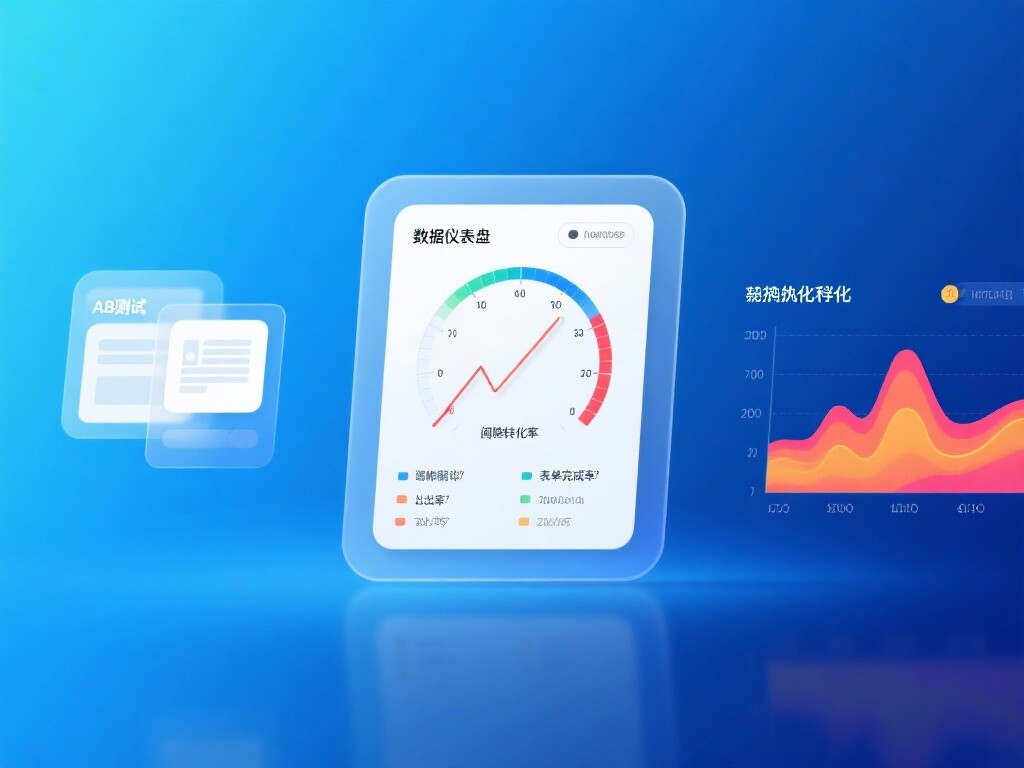
Inquiry conversion rate = (Number of completed inquiries / Total website visits) * 100%. Key metrics include:
- **Bounce Rate:** This measures the percentage of visitors who leave after viewing a single page. A high bounce rate is a primary goal for CROs.
- **Exit Rate:** Measures the percentage of visitors who leave the website on a specific page in the conversion path, indicating the bottleneck of the funnel.
- **Form Completion Rate:** Measures the percentage of visitors who start filling out a form but ultimately submit it successfully.
3. The historical development of improving inquiry conversion rates
The concept of CRO originated from early online marketing data analysis. Early stage (2000s): Primarily relied on **experience-based judgment** and **simple page redesigns**. Mid-stage (2010s): **A/B testing tools** were introduced, and optimization began to rely on statistical principles. Modern stage (2020s to present): CRO is deeply integrated with **AI/ML, user behavior analysis (heatmaps, screen recordings) and marketing automation systems**, becoming a scientific profit-making system with **a closed-loop data system and continuous iteration**.
II. Five Core Techniques for Improving Inquiry Conversion Rates: Based on the principles of data, testing, and psychology.
The achievement of high conversion rates is based on rigorous scientific principles and technological support:
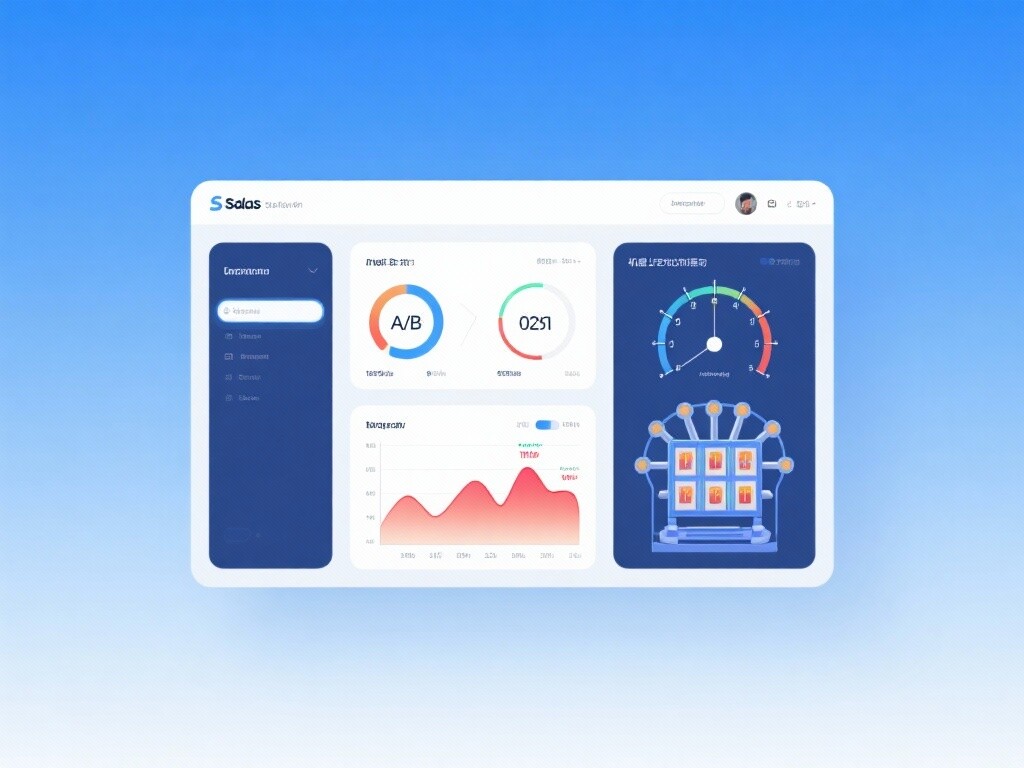
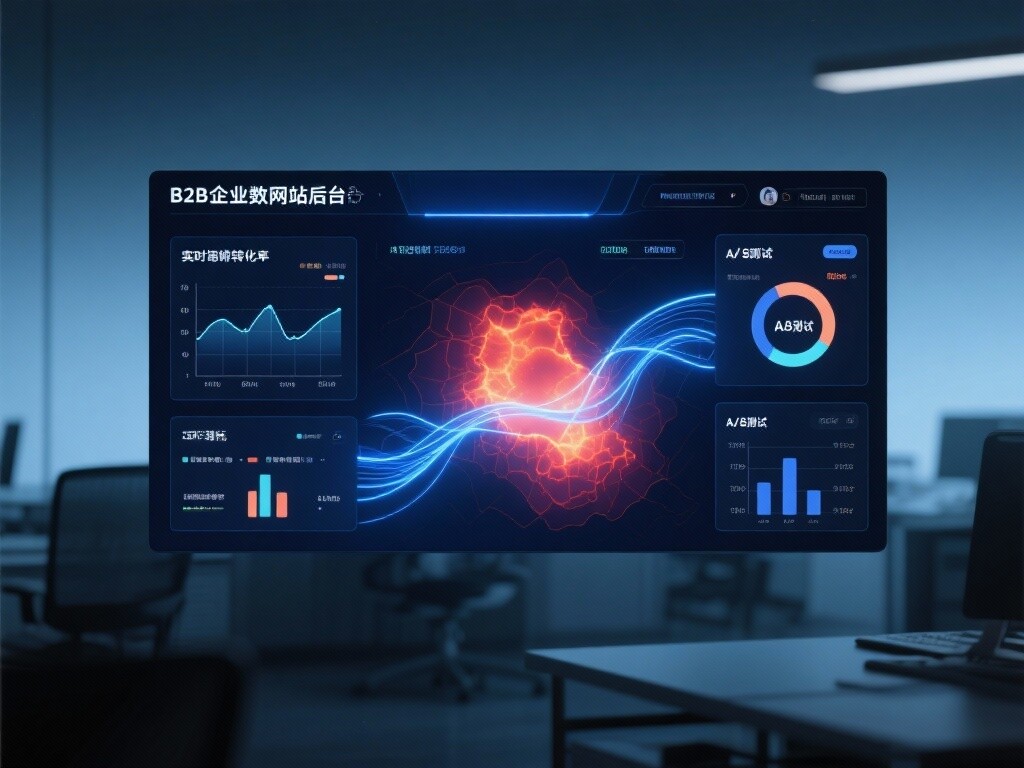
1. A/B testing and the principle of statistical significance
Principle: By simultaneously displaying two or more versions of a page to different visitor groups, the conversion rate of each version can be scientifically evaluated. Technical Application: Relying on **professional A/B testing tools** (such as Google Optimize, Optimizely, or built-in tools on SaaS platforms) and **statistical principles**, the experimental results are ensured to have **statistical significance** (typically requiring 95% or higher), avoiding misinterpreting random fluctuations as optimization successes.
2. Machine Learning (ML)-Driven CRO Optimization Principles
Principle: Utilizing machine learning algorithms to accelerate the efficiency and accuracy of A/B testing. Technology Application: Advanced CRO tools employ a **Multi-Armed Bandit** algorithm, which intelligently allocates more traffic to better-performing page versions based on real-time conversion data, thereby converging to the optimal solution more quickly and maximizing conversion revenue.
3. User behavior tracking and heatmap principles
Principle: Visual tools are used to record user behaviors on the page, such as mouse movement, clicks, and swipe depth. Technical Applications: Heatmaps and visitor screen recording technologies visually reveal users' focus of attention and points of confusion on the page (e.g., users repeatedly clicking on an unclickable element). This qualitative data is the key basis for proposing optimization hypotheses.
4. The "Trust and Scarcity" Principles of Marketing Psychology
Principle: Human purchasing and decision-making behavior is influenced by specific psychological factors. Application: CRO experts utilize psychological elements such as **social proof (e.g., customer testimonials, industry certifications), scarcity (e.g., limited-time offers, inventory alerts), and authority (e.g., professional certificates, partner logos)** to optimize CTAs and copywriting, reducing users' perceived risk and thus encouraging inquiry submissions.
5. Principles of End-to-End Data Attribution and Conversion Funnel Analysis
Principle: Track every step of a user's journey from **first contact** to **final inquiry**. Technology Application: Through the integration of Google Analytics 4 (GA4) and CRM, a detailed **conversion funnel model** is built to accurately identify where users drop off the most, thus focusing optimization efforts on the pages and steps with the greatest potential for improvement.
III. Four Core Technological Features and Applications for Improving Inquiry Conversion Rates
1. Technical Features: Optimized inquiry forms for B2B foreign trade.
Features: B2B inquiries require high-quality information, but overly long forms reduce completion rates. Application: The CRO strategy uses techniques such as **multi-step forms, progress bars, and dynamic fields** to break down complex information and reduce user anxiety. Simultaneously, it utilizes **form abandonment analysis tools** to accurately identify which fields users stop filling out and to provide targeted optimization or help information.
2. Application Practice: Optimizing High-Intent Landing Pages
Application: For traffic targeting paid advertising or specific high-value SEO keywords, landing pages must be **highly focused**. CROs require landing pages to **remove all distracting elements (such as unnecessary navigation, external links)**, ensuring a **clear value proposition, prominent and unique CTA**, and a high degree of alignment with the advertising or search intent.
3. Application Practice: Exit-Intent Techniques and Retention Strategies
Application: **Exit-Intent technology** monitors the user's mouse movement trajectory and intelligently pops up a retention window when it determines that the user is about to leave the page. The retention message is usually a high-value CTA such as a limited-time offer, free download, or expert consultation, aiming to convert waning traffic into leads.
4. Application Practice: Intelligent Deployment of Live Chat
Application: Live chat tools are a crucial tool for improving inquiry conversion rates. CRO experts optimize the **trigger rules** of Live Chat to ensure that **proactive pop-ups** offer assistance when users are most confused (e.g., spending too much time on the price page) or most critical (e.g., on the inquiry form page), quickly turning questions into inquiries.
IV. Comparative Analysis and Industry Application Scenarios for Improving Inquiry Conversion Rates
1. Comparative Analysis of CRO and Traditional "Increase Traffic" Strategies
2. Typical industry application scenarios for improving inquiry conversion rates
CRO strategies have different focuses in different industries:
- **B2B Industrial Manufacturing/Large Projects:** Focus on **reducing the complexity of information retrieval**. Optimize landing pages, provide tiered CTAs (e.g., "Request a Quote" vs. "Download Parameter Sheet"), and specifically optimize forms.
- **High-Value SaaS Software Services:** Focus on **building trust and demonstrating ROI**. Optimize free trial/demo request pages, use extensive customer case studies and statistics to support the value proposition, and reduce user concerns about subscriptions.
- **Cross-border B2C (High-priced products):** Focus on **eliminating doubts**. Include customer service contact information, return and exchange guarantees, and authoritative certifications in key positions on the product page, leveraging scarcity strategies to drive micro-conversions to "add to cart".
3. Standards, certifications, and tools for improving inquiry conversion rates
Professional CRO optimization should adhere to the following standards:
- **Certifications:** Team members should possess CRO certifications issued by authoritative organizations such as CXL and Optimizely.
- **Tools:** The core technology stack includes: **GA4** for data attribution; **Hotjar/Clarity** for heatmap and screen recording analysis; **Google Optimize/VWO** for A/B testing; and **CRM system** for lead quality tracking.
- **Statistical Standards:** Strictly adhere to the **95% or 99% statistical significance** standard to ensure that all optimizations are based on reliable data.
V. Start CRO optimization immediately to convert your website traffic into high-value leads!
Are you investing heavily in traffic acquisition, but your inquiry volume is stagnating? This means your website has a serious conversion funnel bottleneck! Let experienced international trade marketing experts customize an **Inquiry Conversion Rate (CRO) Improvement Strategy** for you. Through **ML-driven A/B testing and in-depth user behavior analysis**, we accurately pinpoint conversion obstacles, helping you increase the value of your existing traffic by over 30% in the fastest and lowest cost. **Schedule a free "Inquiry Conversion Funnel Diagnosis" today** to receive a professional conversion optimization report and usher in a new era of profitability!
Click to get a free conversion funnel diagnostic report.FAQ
1. What is the relationship between inquiry conversion rate improvement (CRO) and SEO?
Answer: SEO solves the problem of "how to acquire traffic," while CRO solves the problem of "how to monetize traffic." They complement each other: SEO brings high-quality, intent traffic, while CRO ensures that this traffic is converted efficiently. Excellent websites must simultaneously prioritize both SEO and CRO to achieve a dual-engine drive of "traffic and conversion."
2. What should be optimized first in CRO optimization?
Answer: CRO optimization should follow the principle of "high impact, easy implementation." It typically starts with the **bottleneck points of the conversion funnel**, such as the **landing page with the highest bounce rate, the inquiry form fields with the most abandoned users**, or the **copy/placement of key CTAs**. Data analysis (GA4, heatmaps) is crucial for determining optimization priorities.
3. How long does an A/B test need to run to obtain reliable results?
Answer: The duration of an A/B test depends on the **traffic volume** and the **expected conversion rate difference**. It generally requires **statistical significance** (typically 95% or 99%) and **business cycle integrity** (at least 1-2 complete marketing cycles), typically between **2-4 weeks**. Ending the test prematurely may lead to poor decision-making.
4. Does improving inquiry conversion rates mean simplifying the inquiry form and leaving only an email field?
Answer: Not at all. While simplifying forms can increase quantity, it **decreases lead quality**. The goal of a B2B inquiry CRO is to **balance quantity and quality**. The strategy is to **optimize the way forms are presented (e.g., step-by-step, dynamic)**, rather than sacrificing necessary filtering information (e.g., company name, requirement details), ensuring that the leads obtained are high-value.
Customer Reviews
Mr. Zhang, CEO of European Automation Equipment Supplier
"Our website has always had high traffic, but the number of inquiries never increased. Through professional CRO optimization services, they used **heatmaps and A/B testing** to identify and resolve major information leakage points on our landing page, and optimized the multi-step inquiry form. **Without increasing any advertising costs, our inquiry conversion rate increased by 48% within 3 months, and the quality of inquiry leads also improved significantly.**"
Ms. Wang, Marketing Director of North American Medical Device Exporter
"We used the built-in CRO tools of our all-in-one website platform, following ML algorithm recommendations to test different versions of CTAs and pop-up retention strategies. **The system automatically directed traffic to the best-performing version, helping us capture a large number of high-intent customers who were about to leave.** The most direct benefit was that **our overall cost per lead (CPL) decreased by 32%, and the ROI of our marketing budget reached unprecedented levels.**"
") Essential Reading for Exporters: How to Use Google Ads for Precise Targeting of International Buyers and Boost Inquiry Conversion Rates? (Part 1)Essential Reading for Exporters! This article explains how to leverage Google Ads remarketing and data analysis to accurately target international buyers and effectively improve inquiry conversion rates. Master strategies such as dynamic remarketing and video remarketing to optimize ad performance and drive sales growth.
Essential Reading for Exporters: How to Use Google Ads for Precise Targeting of International Buyers and Boost Inquiry Conversion Rates? (Part 1)Essential Reading for Exporters! This article explains how to leverage Google Ads remarketing and data analysis to accurately target international buyers and effectively improve inquiry conversion rates. Master strategies such as dynamic remarketing and video remarketing to optimize ad performance and drive sales growth.") Essential Guide for Semi-Trailer Exporters: Mastering Google Ads for Precise Global Buyer Targeting & Higher Lead Conversion (Part 2)Unlock the power of keyword optimization, geo-targeting, and remarketing to supercharge your Google Ads ROI. Equip semi-trailer exporters with data-driven techniques to engage global buyers and enhance lead conversion. Shareable实战strategies to elevate campaigns and capture untapped markets.
Essential Guide for Semi-Trailer Exporters: Mastering Google Ads for Precise Global Buyer Targeting & Higher Lead Conversion (Part 2)Unlock the power of keyword optimization, geo-targeting, and remarketing to supercharge your Google Ads ROI. Equip semi-trailer exporters with data-driven techniques to engage global buyers and enhance lead conversion. Shareable实战strategies to elevate campaigns and capture untapped markets. Charging pile orders booked until 2026? How Chinese smart manufacturing conquered European and American markets!China's charging pile orders fully booked until 2026! Policy incentives + technological breakthroughs + global rigid demand—green energy export is perfectly timed!
 Beijing multilingual website construction, helping enterprises to go globalThis article introduces in detail the importance of Beijing multilingual website construction to the international development of enterprises, covering the core advantages, construction process and successful cases of multilingual websites. It also provides multilingual website production service information in many places across the country (such as Dongguan, Foshan, Zhongshan, etc.) to help enterprises expand into the global market.
 SSL Certificate for Foreign Trade Independent Website: The Cornerstone of Security and TrustThis article systematically explains the core value of SSL certificates for foreign trade independent websites, including key functions such as data encryption, trust establishment, and SEO improvement. Combined with the automated SSL deployment solution of YiYinBao's AI-powered website building platform, it provides a one-stop security compliance solution for overseas enterprises.
 Rapidly deploy multilingual websites, empowering global expansion for B2B export enterprises!This system outlines the technical approaches and marketing values in multilingual website development, combining practical case studies from Easymp AI website-building platform to provide comprehensive solutions for foreign trade enterprises—from site construction to traffic acquisition.
 Complete Analysis of SEO Optimization Solutions: A Must-Read for Business Decision Makers!This article provides a comprehensive breakdown of enterprise-level SEO optimization strategies and implementation pathways. Leveraging 10 years of industry expertise from EasyCamp and AI technological advantages, it details end-to-end solutions from website architecture optimization and AI-powered content generation to global traffic acquisition. A practical search engine optimization guide for decision-makers.
 Customized SEO Solutions: How to Meet Personalized Business Needs?This article systematically elaborates on the implementation path of enterprise-level SEO optimization personalization, covering key aspects such as multilingual website construction, AI content generation, and global traffic acquisition. Leveraging the technical advantages of EasyInbox's intelligent marketing platform, it provides actionable optimization methodologies and practical case studies for reference.