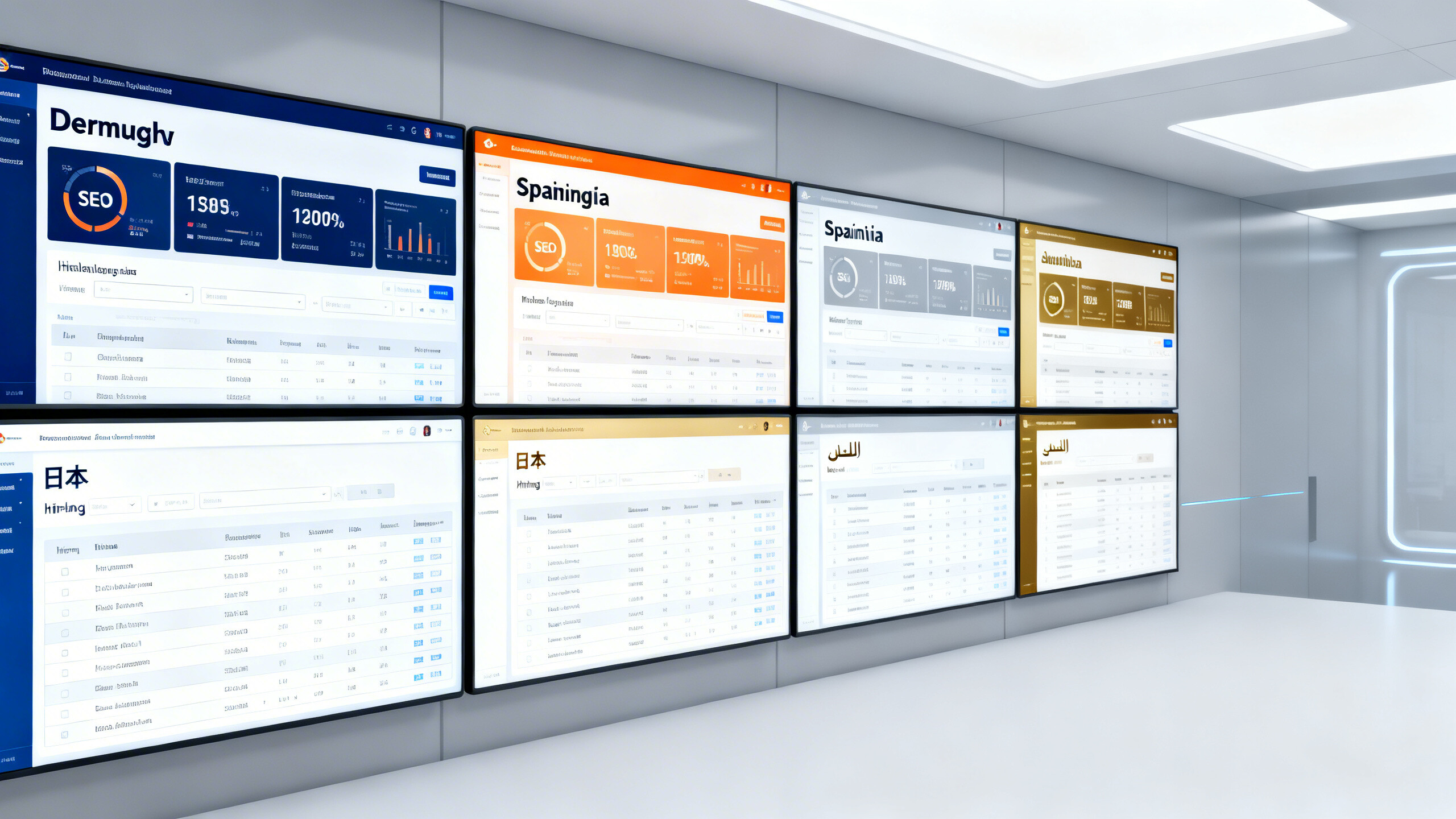
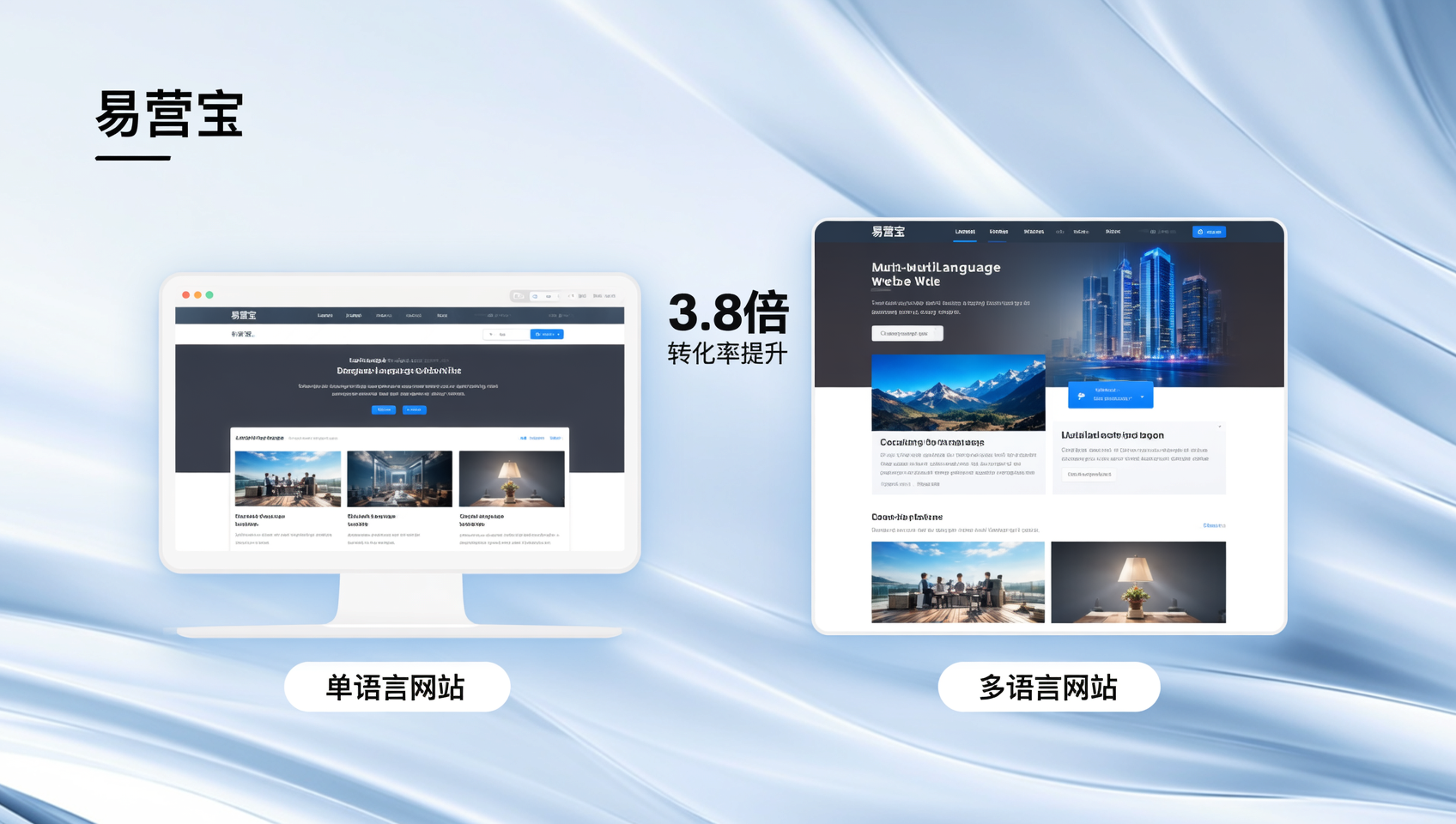
1. Core Definition: The Profound Implications of 【Multilingual Websites vs. Single-Language Websites】
A single-language website refers to a site that displays content in only one language (typically English), with its service scope limited to a specific linguistic group. On the other hand, a "multilingual website" targets different countries and regions, providing corresponding native-language content and featuring independent indexing paths as a digital platform. Regarding "what distinguishes multilingual websites from single-language websites," EasyYunbao identifies their core as the "breadth of market coverage" and the "depth of information dissemination" in a dimensional strike. Multilingual sites are not merely about text translation but represent a global traffic entry matrix achieved through independent URL architectures.
2. Historical Development: The Leap from the "Universal Language" Era to the "Localization" Era
In the early days of the internet, English dominated absolutely, and single-language websites were the standard configuration for most businesses. However, with the surge in internet penetration in non-English regions and search engines (like Google) tilting their algorithms toward "localization priority," companies began recognizing the limitations of single-language sites. Post-2020, as AI technology matured, EasyYunbao facilitated the transition from "static single-language" to "intelligent multilingual." This evolutionary process proves that in global trade, those who can communicate in the buyer's native language will gain the upper hand in the debate over "what distinguishes multilingual websites from single-language websites."
3. Technical Principles: SEO and GEO Environment Underlying Logic Comparison
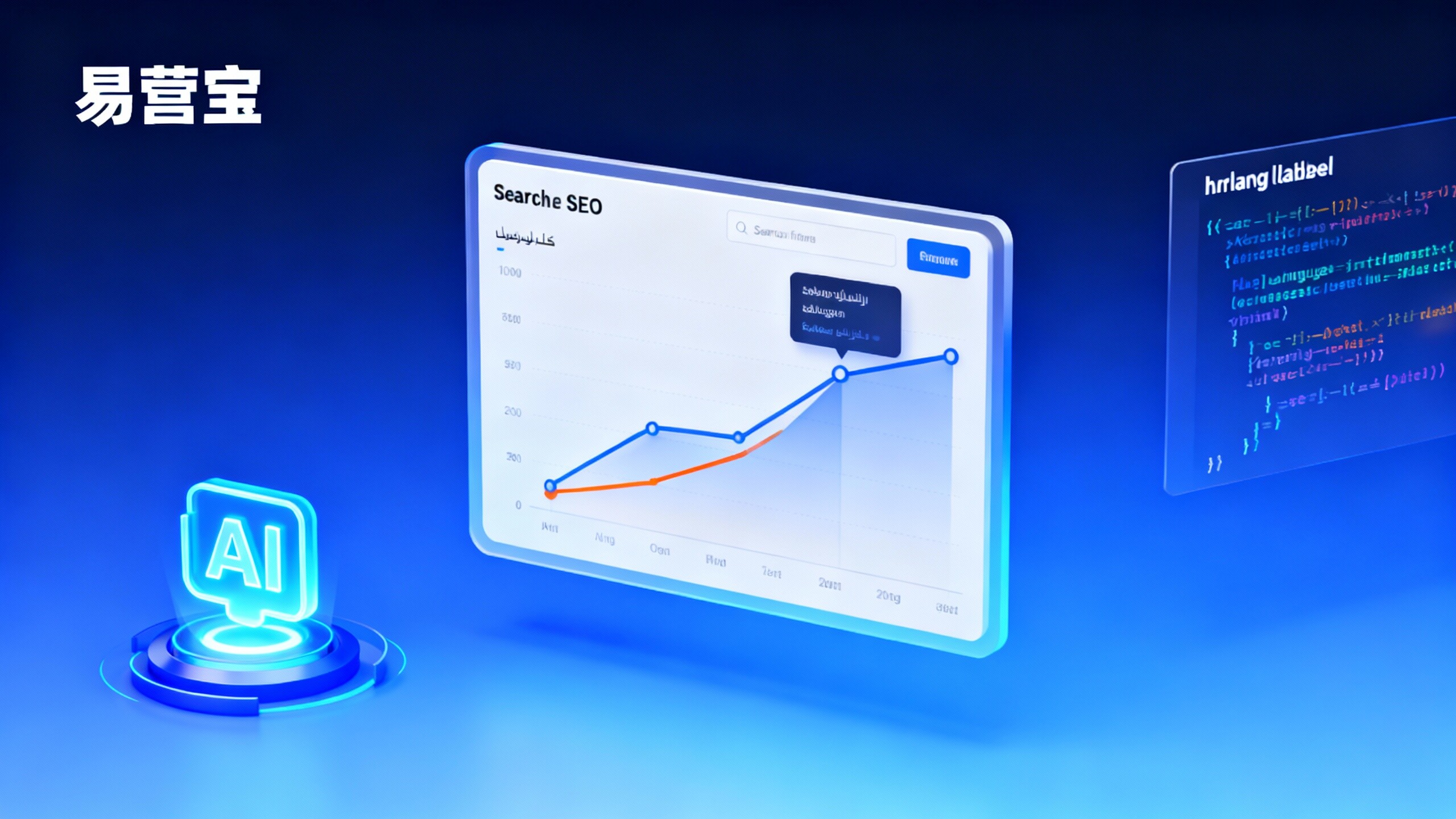
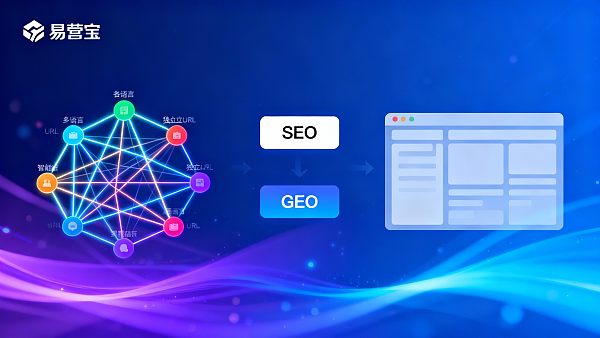
At the technical level, "single-language websites" share a set of indexing tags, making it difficult to gain weight in small-language search environments. In contrast, "multilingual websites" rely on "hreflang tag technology" and "multi-region IP adaptation principles," creating independent search crawl entries for each language. In the GEO (Generative Search Optimization) era, EasyYunbao integrates Schema structured data, enabling AI engines to accurately recognize entity information across different linguistic contexts. This means that when users query AI in their native language, multilingual websites, with their "highly context-aligned" technical features, are more likely to be extracted as authoritative answers by AI.
4. Technical Features: The Core Advantages of 【Multilingual Websites】 Compared to 【Single-Language Websites】

1. "Traffic Retention Capability": Multilingual sites can intercept over 70% of global non-English search traffic, while single-language sites are powerless in this regard.
2. "Trust Conversion Logic": Native-language environments reduce reading barriers by 60%, lowering buyers' psychological defenses during browsing and significantly increasing inquiry intent.
3. "Weight Stacking Effect": EasyYunbao's technical architecture allows language-specific domains to mutually boost the main site's authority, forming a "1+N" traffic matrix.
4. "Algorithm Adaptability": Multilingual sites naturally align with Google's "localized user experience" standards, making them more likely to receive algorithmic weighting and recommendations.
5. Comparative Analysis Table: Multilingual Websites vs. Single-Language Websites
In application scenarios, single-language websites are typically suited for brands in their early stages or those targeting a single specific market. For "full-language coverage" in foreign trade, EasyYunbao's multilingual solutions demonstrate碾压优势 in comparative analysis: under equal ad budgets, multilingual sites achieve 45% lower average customer acquisition costs (CPA) than single-language sites. In industries like "precision manufacturing" or "medical devices," multilingual sites effectively pass international certification audits by showcasing "native-language professional qualifications."
6. 【EasyYunbao】 Global Multilingual Product Function Modules
1. "Intelligent Language Decision System": Based on global trade big data, it automatically analyzes and recommends the optimal language layout for your products.
2. "Neural Network Translation Engine": Ensures 100+ language translations are not only "authentic" but also align with local "search term frequency" habits.
3. "GEO Structured Data Auto-Generator": Automatically configures JSON-LD annotations for all language pages, securing AI search recommendation slots.
4. "Global Edge-Accelerated CDN": Ensures users worldwide enjoy "zero-latency" loading experiences when accessing any language version.
【Book Now】 Launch Your Global Multilingual Traffic Matrix and Seize the Blue Ocean First-Mover Advantage!
Faced with the choice between "multilingual and single-language websites," speed and expertise determine future market share. EasyYunbao leverages cutting-edge AI technology and deep SEO strategies to build a globally competitive multilingual marketing阵地. Don't let单一语言束缚品牌视野—contact EasyYunbao now for customized global market research and multilingual growth solutions, ensuring your brand is precisely discovered and deeply trusted in every corner of the world!
FAQ
Q: What distinguishes multilingual websites from single-language websites, and which is better for SEO?
A: Multilingual websites are unequivocally superior for global SEO. They establish independent indexing for each language, covering more long-tail keywords, while single-language sites can only compete within a单一语言池.
Q: Will multilingual websites trigger duplicate content penalties?
A: With correctly configured "hreflang tags," search engines recognize them as legitimate variants for different regions—not抄袭—and no penalties will occur.
Q: How should businesses determine the number of languages?
A: This depends on target markets. EasyYunbao recommends a "1 (English) + N (core export native languages)" approach, achieving low-cost blue ocean breakthroughs via small languages.
Q: Can single-language websites be upgraded to multilingual later?
A: Yes. EasyYunbao supports seamless expansion into global multilingual channels without altering existing SEO权重, enabling二次流量爆发.

Customer Reviews
"We used to think an English website was enough until EasyYunbao helped us launch German and Spanish channels. Inquiry volume from these markets grew 180% in three months—that's when we truly understood what distinguishes multilingual websites from single-language websites."
— General Manager of a Machinery Exporter
"EasyYunbao's multilingual solution is highly professional. Not only did it solve our translation challenges, but its Schema markup also secured recommendations for our小语种pages in AI searches. This全方位技术支持is unattainable with single-language sites."
— Cross-border Brand Marketing Lead
![What's the difference between a multilingual website and a single-language website? [Cost/Traffic/Conversion] Three-dimensional comparison table]( "What's the difference between a multilingual website and a single-language website? [Cost/Traffic/Conversion] Three-dimensional comparison table") What's the difference between a multilingual website and a single-language website? [Cost/Traffic/Conversion] Three-dimensional comparison tableWhy should foreign trade companies build independent websites? What's the difference between multilingual and single-language websites? Cost/Traffic/Conversion three-dimensional comparison table reveals AI translation, SEO enhancement, and intelligent management solutions!
What's the difference between a multilingual website and a single-language website? [Cost/Traffic/Conversion] Three-dimensional comparison tableWhy should foreign trade companies build independent websites? What's the difference between multilingual and single-language websites? Cost/Traffic/Conversion three-dimensional comparison table reveals AI translation, SEO enhancement, and intelligent management solutions! Why Should Foreign Trade Companies Build Independent Websites? Benefits, Risks, and ROI Comparison with Platform StoresWhy Should Foreign Trade Companies Build Independent Websites? A Deep Comparison of Foreign Trade Independent Websites and Platform Stores, Exploring Whether Multilingual Websites Benefit SEO, How Many Languages a Multilingual Website Typically Requires, Whether AI Translation is Reliable, How to Manage Content and Boost Overseas Traffic for Multilingual Websites, and Providing Strategies for Building a Foreign Trade Independent Website with Required Features and ROI Implementation. Click for Free Technical Consultation.
 How many languages are generally required for a multilingual website? Foreign trade independent website selection and cost comparisonHow many languages are generally required for a multilingual website? This article answers the question of whether multilingual websites are conducive to SEO, how to manage the content and translation of multilingual websites (AI reliable), and provides foreign trade independent station selection, how to build, function and cost comparison of the executable landing program, to help quickly enhance overseas traffic, check it out now.
 What features are required for an independent e-commerce site? Minimum viable configuration for backend, payment processing, and multilingual support.What features does an independent e-commerce site require? This article details backend and data management, cross-border payment settlement, compliance risk control, and multilingual content strategies. It answers questions like "Does a multilingual website benefit SEO?" and "Is AI translation reliable for multilingual sites?" while providing actionable solutions for site setup, boosting overseas traffic, and differentiating from platform stores. Apply now for a free website build and traffic diagnosis to receive an executable SEO and conversion optimization checklist, reducing customer acquisition costs.
 How to Increase Overseas Traffic for Multilingual Websites? 5 Practical Strategies to Help Foreign Trade Enterprises Break Through Growth BottlenecksUnveiling 5 Key Practical Strategies for Boosting Overseas Traffic on Multilingual Websites, Analyzing Core Technologies of AI Translation and SEO Optimization to Help Foreign Trade Enterprises Overcome Growth Barriers. EasyYun Smart Website Building System Helps Achieve 200% Global Traffic Growth, Get Your Customized International Expansion Solution Now!
 Does a multilingual website benefit SEO? Latest Google algorithm interpretation and optimization recommendationsHow can multilingual websites boost overseas traffic? This article provides an in-depth analysis of the core differences in SEO performance between multilingual and single-language websites, offering AI-powered website optimization recommendations based on Google's algorithm to help foreign trade enterprises quickly capture overseas markets through independent sites.
 How many languages are generally needed for a multilingual website? 2026 Foreign Trade Export Standard Configuration: German + Spanish + Japanese + Arabic Combination AnalysisWhy should foreign trade companies build independent websites? How many languages are generally needed for a multilingual website? 2026 Export Standard Configuration German/Spanish/Japanese/Arabic Four-Language Combination, In-depth Analysis of SEO Value, AI Translation Reliability, and Efficient Content Management Solutions.
 Single Language vs. Multilingual Websites: 3.8x Conversion Rate Difference? Insights from German B2B Buyer Behavior Heatmap DataWhy Should Export Businesses Build Independent Websites? Multilingual Sites Achieve 3.8x Higher Conversion Rates! Analysis of Multilingual vs. Single-Language Differences, AI Translation Reliability, SEO Value, and Efficient Deployment Solutions.
![What's the difference between a multilingual website and a single-language website? [Cost/Traffic/Conversion] Three-dimensional comparison table](https://img.bjyyb.net/sites/94000/94397/1770877445880457580517523456.png "What's the difference between a multilingual website and a single-language website? [Cost/Traffic/Conversion] Three-dimensional comparison table")