









- How to view pricing in the global traffic ecosystem? Cost comparison of search, social media, and content channel advertisingJul 06, 2026View details
- How to assess foreign trade website development trends?Looking at 2026 changes from multilingual,AI content to conversion pathsJul 04, 2026View details
- What are the new trends in multilingual marketing data analytics tools in 2026? Focus on attribution、automation and complianceJul 04, 2026View details
- Is Brand Globalization Marketing Consulting Worth Buying? At What Stage Should Companies Bring It InJul 01, 2026View details
- Cross-Border Marketing Trend Research: Why More and More Companies Are Starting to Deploy AI Search and GEO OptimizationJun 30, 2026View details
- Cross-Border Marketing Trend Research: How Independent Sites, AI Content, and Short-Video Customer Acquisition Are ChangingJun 30, 2026View details
Cross-border e-commerce station building common pit and avoidance strategy: SaaS station building system implementation case study
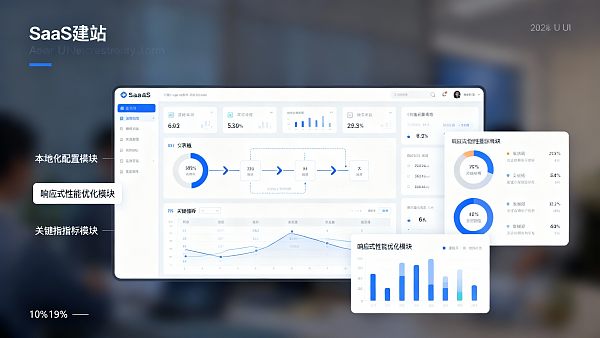
This article uses a SaaS website system implementation case study to analyze common pitfalls in cross-border e-commerce website development and strategies for avoiding them in foreign trade independent websites.
Targeting users/operators, enterprise decision-makers, quality control and security managers, project leaders, and distributors/agents, this article focuses on four key pain points in the cross-border website development process: technology, compliance, operations, and conversion. These include inconsistent multilingual and multi-region user experiences, misconfigured SaaS website systems leading to SEO damage, performance bottlenecks in responsive design and mobile optimization, and disconnected advertising and inquiry conversion loops. Combining SaaS implementation case studies and product solution analyses, the article provides actionable avoidance strategies and diagnostic checklists to help foreign trade teams master key aspects of independent website development and improve inquiry conversion efficiency.
Common Pitfall 1: Inadequate Multilingual Localization Leading to Traffic and Conversion Loss
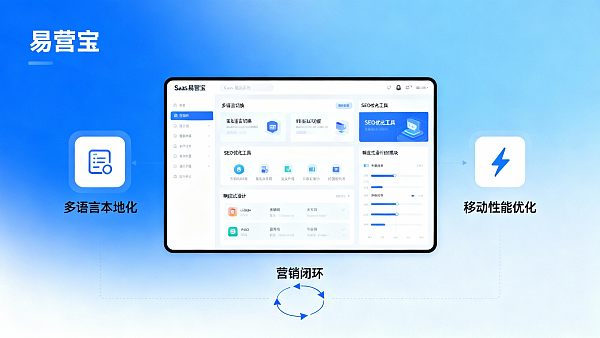
In cross-border e-commerce website development, foreign trade multilingual websites are often simplified as "translated pages," but the real issues lie in semantic localization, URL and hreflang configuration, and search-engine-friendly content organization. Neglecting translation quality and search intent matching directly impacts organic traffic and search engine crawl efficiency. Avoidance strategies include: First, adopting high-accuracy machine translation with human proofreading workflows to ensure industry terminology and product attribute consistency; Second, implementing independent language sites with dedicated domains or subdomains, properly deploying hreflang and sitemaps to avoid duplicate content penalties; Third, structuring data and localizing metadata (titles, descriptions, breadcrumbs) to match target market search habits, thereby improving click-through rates and page experience. Technically, when deploying SaaS website systems, it's recommended to treat multilingual auto-switching and unified management as mandatory modules, using automated checks to ensure translation accuracy and SEO consistency while reducing later modification costs.
Common Pitfall 2: Lack of Responsive Design and Performance Optimization Sacrificing Mobile Conversion
Many enterprises overlook deep optimization of responsive enterprise website systems when launching foreign trade independent sites on SaaS platforms, resulting in slow mobile page loading, interaction lag, and increased bounce rates. Cross-border website development should combine responsive website platforms with global CDNs, intelligent image compression, lazy loading, and critical rendering path optimization. Implementation points include: using performance-benchmarked template libraries while minimizing third-party scripts; setting reasonable caching strategies and CDN nodes to ensure consistent PageSpeed scores across countries; conducting A/B tests on mobile forms and CTAs to reduce conversion friction based on user behavior. In practice, SaaS platforms with cloud-based distributed architectures and automated SSL/DDoS protection can elevate Google PageSpeed scores to 90+, significantly lowering operational risks while improving inquiry conversion rates.
Common Pitfall 3: Disjointed SEO and Content Systems Limiting Long-Term Traffic Growth
How can foreign trade independent sites sustainably acquire low-cost traffic in overseas markets? The key lies in establishing systematic multilingual SEO and content production mechanisms, avoiding single-page optimizations and keyword stuffing. Effective approaches include: building keyword libraries covering brand terms, product terms, and long-tail inquiry phrases; integrating automated TDK generation and semantic variant support in SaaS website systems to ensure meta tag and internal link consistency across language sites; creating pain-point-driven content matrices combined with AI keyword expansion and automated creative visuals for sustained high-quality page and blog output. Enterprises may reference validated foreign trade website solutions, incorporating content production, on-site SEO audits, and backlink building into cyclical workflows, focusing on metrics like average CTRs 40% above industry baselines and 300%+ inquiry growth for long-term results.
Common Pitfall 4: Unconnected Marketing Tools and Inquiry Loops Wasting Ad Spend
If SaaS website systems remain at the development level without integrating ad campaigns, CRM, customer service, and analytics, enterprises face information silos in lead acquisition and conversion, wasting ad budgets while struggling to measure ROI. Avoidance strategies include: unifying Google Ads and Meta ad accounts with site conversion events using UTM and server-side event tracking for inquiry data traceability; establishing multi-timezone auto-follow-up and notification mechanisms for inquiries to shorten click-to-order response times; incorporating AI ad managers to automatically diagnose ad creatives and account structures, forming cross-platform ad optimization loops. In implementation, choosing SaaS platforms with buyer persona mapping and precision marketing systems enables trackable inquiry conversions, with measurable outcomes like increased average order values and repeat purchase rates.
Implementation Recommendations, Case Studies, and Product Integration Examples
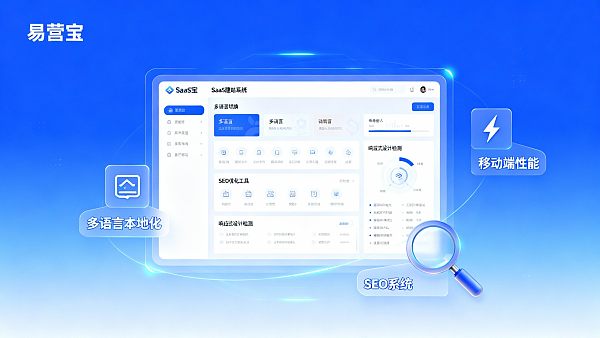
For SaaS system implementation, we recommend phased delivery with KPI acceptance mechanisms: Phase 1 completes multilingual site construction and responsive template libraries with performance baseline testing; Phase 2 integrates AI translation engines and automated TDK, launching initial content matrices with tracking; Phase 3 connects ad campaigns with CRM to establish inquiry loops and optimize ROI. For example, one integrated B2B foreign trade project combining smart website building, ad deployment, and analytics achieved 320% more inquiries, 2.8x higher average order values, with system capabilities handling 10B+ daily data requests and 92.7% translation accuracy. For end-to-end solutions, reference our B2B Foreign Trade Solution, which employs distributed architectures and ISO 18587:2017-certified translation workflows to provide full-cycle services with commercial guarantees.
Summary and Action Guide
In summary, cross-border e-commerce website success requires treating multilingual localization, responsive performance, on-site SEO, and marketing loops as equally critical engineering tasks. Core avoidance strategies include: adopting SaaS website systems supporting unified multilingual management and automated SEO auditing; pre-launch performance and compliance testing; and integrating ad campaigns with CRM/customer service systems for data connectivity and automated follow-ups. EasyStore's smart website building and global traffic ecosystem provide foreign trade enterprises with technical safeguards and localized execution, helping reduce labor costs while improving conversion rates. Contact us now for customized implementation plans and free website diagnostics. To learn more about solutions or schedule demos, click for consultation or leave contact details—project managers will develop tailored implementation plans with phased KPI commitments.
- Website Development
- Website Builder Platform
- Foreign Trade Website Development
- Responsive Design
- Independent website building
- Google Ads
- B2B Foreign Trade
- Multilingual website development
- Yiyingbao
- SEO
- Independent Website
- Smart Website Building
- AI Translation
- Multilingual SEO
- AI Translation Engine
- Independent foreign trade website
- Multilingual website
- Link Building
- Independent Foreign Trade Website Construction
- Global Traffic Ecosystem
- Cross-border E-commerce Website
- SaaS Website Building System
- Responsive website platform
- Cross-Border Website Development
- How to build an independent foreign trade website
- Multilingual Website Construction for Foreign Trade
- Foreign Trade Standalone Site SaaS
- Responsive Enterprise Website Building System
- Foreign Trade Website Solutions
- Responsive Website Building
- cross-border e-commerce
Related Articles
 How can website data analysis improve conversion rates? First identify high-bounce pages and key loss points
 How much does it cost to build a foreign trade multilingual website?Analysis of the modules and hidden costs that affect quotations
 Detailed explanation of 301 redirect setup methods:which pages must be redirected during a website redesign or domain change



Related Products
 EasyCamp SaaS Smart Website Marketing SystemE-Yingbao SaaS Smart Website Marketing System: AI-powered, zero-code website building. Rapidly launch multilingual independent e-commerce sites in just 10 minutes. Global server acceleration and AI-driven SEO optimization empower businesses to efficiently connect with global markets. The seamless integration of technology and user-friendly operation makes building e-commerce sites incredibly simple.
 AI+SEM Intelligent Advertising Marketing SystemAI+SEM drives intelligent ad creation, empowering full-funnel precision advertising marketing. The system automatically generates weekly/monthly reports, AI recommends keywords and target countries, monitors core metrics in real-time with intelligent alerts, and enables one-click high-conversion ad solutions to help quickly acquire customers and improve ROI.
 AI+SEO Dual Engine Optimization ServiceEasyWin AI+SEO Dual Engine Optimization System leverages AI-powered keyword mining, content generation, and comprehensive technical optimization to help foreign trade enterprises acquire high-quality organic traffic, significantly improving search rankings and conversion rates.
 AI+SNS Social Media Marketing SystemYingbao AI+SNS Social Media Marketing System - Precision social capture for the social media era. Supports one-click content synchronization across major platforms like Facebook and LinkedIn. AI intelligently rewrites posts for enhanced relevance. 24/7 AI customer service and user profiling analysis empower businesses to efficiently expand into global markets.
 AI+SEO营销解决方案易营宝AI+SEO营销解决方案,通过AI批量写作、智能生成TDK、精准关键词扩词等功能,全面优化网站SEO效果,提升流量与转化率。助力企业构建高效智能网站新生态。
 AI+SEM Advertising Marketing SolutionsAI+SEM Advertising Marketing Solution leverages AI technology to deeply empower SEM ad campaigns. It automatically generates weekly/monthly reports using AI, presenting account data across multiple dimensions for comprehensive insights into campaign performance and trends. The system precisely recommends keywords and target countries, intelligently generates high-conversion ad copy, and enables one-click activation of efficient campaign plans to help businesses rapidly acquire customers. Simultaneously, it monitors core metrics in real time, intelligently identifies abnormal fluctuations, and issues timely alerts to ensure stable, high-return advertising results.
 Domain Name ServicesEasyWin provides professional domain name services, including intelligent queries, one-stop registration, brand protection, and full lifecycle management, helping businesses build a digital brand image.
 EasyOperate B2C Cross-Border E-Commerce Platform & Independent WebsiteEasyStore B2C Cross-border E-commerce Independent Store is an intelligent website building and cross-border e-commerce integrated solution independently developed by EasyStore Information Technology (Beijing) Co., Ltd. The system is specially designed for small and medium-sized as well as large export enterprises, integrating 'website building, operation, marketing, advertising, and conversion' into one, helping enterprises quickly establish cross-border e-commerce independent stores to achieve brand globalization and global sales growth.
The platform supports multiple languages, multiple currencies, and multi-channel marketing, with built-in AI intelligent translation and SEO optimization systems, suitable for mainstream markets such as Southeast Asia, Europe and America, Latin America, and the Middle East, assisting Chinese manufacturing enterprises in efficiently deploying international e-commerce strategies. SSL证书易营宝提供专业SSL安全证书服务,包括单域名和泛域名证书,确保网站数据传输加密、身份验证和完整性保护,助力企业建立安全可信的在线业务环境。









