









- How to view pricing in the global traffic ecosystem? Cost comparison of search, social media, and content channel advertisingJul 06, 2026View details
- How to assess foreign trade website development trends?Looking at 2026 changes from multilingual,AI content to conversion pathsJul 04, 2026View details
- What are the new trends in multilingual marketing data analytics tools in 2026? Focus on attribution、automation and complianceJul 04, 2026View details
- Is Brand Globalization Marketing Consulting Worth Buying? At What Stage Should Companies Bring It InJul 01, 2026View details
- Cross-Border Marketing Trend Research: Why More and More Companies Are Starting to Deploy AI Search and GEO OptimizationJun 30, 2026View details
- Cross-Border Marketing Trend Research: How Independent Sites, AI Content, and Short-Video Customer Acquisition Are ChangingJun 30, 2026View details
Foreign Trade Website Solution Cost Calculation Template: How to Calculate ROI and Control Project Costs

Introduction
This article provides practical cost calculation templates for B2B website development, teaching you how to calculate ROI and control project budgets. It applies to cross-border e-commerce and multilingual website needs. As an operational guide for users, project managers, and decision-makers, it breaks down budget frameworks, cost structures, KPIs, risk control, and optimization paths to help you make data-driven choices when selecting SaaS or responsive platforms. Covering technical, operational, and security considerations, it addresses common scenarios like building multilingual sites, deploying responsive systems, and comparing cross-border website costs versus ROI. Designed for distributors, quality controllers, and end-users, it delivers actionable calculation tools and decision points.
1. Cost Calculation Framework & Template Structure

Before launching a B2B website project, establish a clear cost framework. A complete template includes: one-time development costs (domain, hosting, templates, plugins, multilingual adaptation), operational costs (SaaS subscriptions, content updates, SEO/social media), marketing expenses (ad budgets, channel testing, landing page A/B), and indirect costs (salaries, compliance/data security). For cross-border SaaS projects, split costs into baseline subscriptions, bandwidth overages, and premium services. Responsive platforms should itemize mobile optimization. Templates must include conversion rates, average order value, click-through rates, and CAC for NPV and ROI calculations. Use historical data to model conservative/optimistic scenarios for agile adjustments.
2. ROI Calculation: Steps & Formulas
ROI requires quantifying costs and benefits within the same period. Recommended workflow: 1) Define timeframe (typically 12 months); 2) Estimate traffic/conversion gains (SEO/social/paid channels); 3) Calculate AOV and margins; 4) Aggregate and discount all costs. Formula: ROI = (Annual net profit - Total cost) / Total cost. Example: A $500K multilingual site generating 30% margins ($150K net) with $30K total costs yields 1:5 ROI (($150K-$30K)/$30K). Implement phased spending: start with low-cost SaaS templates, validate traffic sources, then scale custom development. For Google-dependent projects, use Smart Bidding and Performance Max to test assumptions rapidly.
3. Cost Control & Risk Mitigation Tactics
Cost control means designing measurable, rollback-ready implementations. Core strategy: modular deployment. First launch responsive core pages with multilingual SEO foundations, then add advanced features (multi-currency, logistics integrations). Adopt data-driven budgeting with channel ROI thresholds and regular keyword pruning. Technically, choose global CDN/auto-SSL hosts to boost stability without operational overhead. Automate 50% of content distribution via social/media tools. Integrate third-party monitoring dashboards for real-time KPI tracking. For lead generation, allocate budget to certified ad partners with smart bidding to lower CAC.
4. Tools & Case Studies: Validating Calculations

Validation requires three tools: 1) Multilingual SaaS platforms for rapid MVP deployment with SEO readiness; 2) Analytics suites for channel/keyword optimization; 3) Behavior analysis tools to identify drop-off points. Case studies show AI-powered platforms reduce testing cycles by 40%. Example: Combining Google's keyword filters with audience insights lowered CPA by 58% in multilingual campaigns. For quick validation, use pre-optimized ad products with granular cost models. Reference our Google Ads solutions for multilingual smart bidding tailored to cross-border businesses.
Conclusion & Next Steps
Effective B2B website budgeting requires quantifiable templates, phased validation, and data-driven decisions. By integrating SaaS/responsive platforms with precision targeting and automation, businesses control costs while scaling conversions. Our solutions cover end-to-end multilingual development, ad deployment, and performance tracking—streamlining global expansion. For a free cost template assessment or to discuss independent site strategies, contact us to launch your growth plan.
- Website Development
- Website Builder Platform
- Foreign Trade Website Development
- Social media management
- Multilingual website development
- Yiyingbao
- SEO
- Independent Website
- Smart Website Building
- AI Marketing Engine
- Independent foreign trade website
- Multilingual website
- Cross-border E-commerce Website
- SaaS Website Building System
- Responsive website platform
- Cross-Border Website Development
- How to build an independent foreign trade website
- Multilingual Website Construction for Foreign Trade
- Foreign Trade Standalone Site SaaS
- Responsive Enterprise Website Building System
- Multilingual Website Construction Platform
- Foreign Trade Website Solutions
- Responsive Website Building
- cross-border e-commerce
Related Articles
 Rising European Shipping Costs Extend the Inquiry Conversion Cycle in Europe
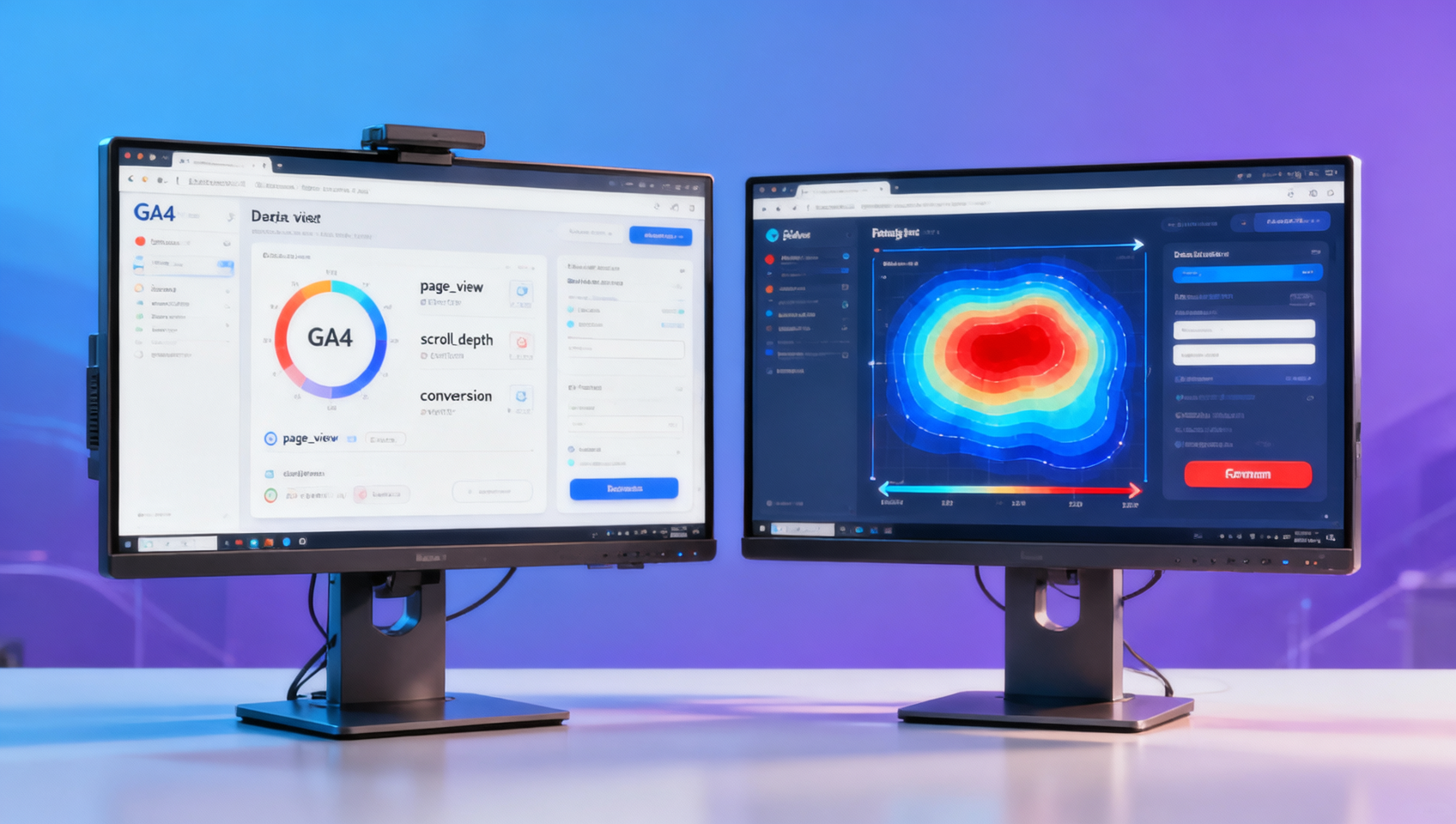
 How to avoid data distortion in website traffic analysis? The GA4 and heatmap joint verification method
 For SaaS companies expanding their brands globally,should they build an official website first or run ads first?How can the growth path be planned more steadily

Related Products
 EasyCamp SaaS Smart Website Marketing SystemE-Yingbao SaaS Smart Website Marketing System: AI-powered, zero-code website building. Rapidly launch multilingual independent e-commerce sites in just 10 minutes. Global server acceleration and AI-driven SEO optimization empower businesses to efficiently connect with global markets. The seamless integration of technology and user-friendly operation makes building e-commerce sites incredibly simple.
 AI+SEM Intelligent Advertising Marketing SystemAI+SEM drives intelligent ad creation, empowering full-funnel precision advertising marketing. The system automatically generates weekly/monthly reports, AI recommends keywords and target countries, monitors core metrics in real-time with intelligent alerts, and enables one-click high-conversion ad solutions to help quickly acquire customers and improve ROI.
 AI+SEO Dual Engine Optimization ServiceEasyWin AI+SEO Dual Engine Optimization System leverages AI-powered keyword mining, content generation, and comprehensive technical optimization to help foreign trade enterprises acquire high-quality organic traffic, significantly improving search rankings and conversion rates.
 AI+SNS Social Media Marketing SystemYingbao AI+SNS Social Media Marketing System - Precision social capture for the social media era. Supports one-click content synchronization across major platforms like Facebook and LinkedIn. AI intelligently rewrites posts for enhanced relevance. 24/7 AI customer service and user profiling analysis empower businesses to efficiently expand into global markets.
 AI+SEO营销解决方案易营宝AI+SEO营销解决方案,通过AI批量写作、智能生成TDK、精准关键词扩词等功能,全面优化网站SEO效果,提升流量与转化率。助力企业构建高效智能网站新生态。
 AI+SEM Advertising Marketing SolutionsAI+SEM Advertising Marketing Solution leverages AI technology to deeply empower SEM ad campaigns. It automatically generates weekly/monthly reports using AI, presenting account data across multiple dimensions for comprehensive insights into campaign performance and trends. The system precisely recommends keywords and target countries, intelligently generates high-conversion ad copy, and enables one-click activation of efficient campaign plans to help businesses rapidly acquire customers. Simultaneously, it monitors core metrics in real time, intelligently identifies abnormal fluctuations, and issues timely alerts to ensure stable, high-return advertising results.
 Domain Name ServicesEasyWin provides professional domain name services, including intelligent queries, one-stop registration, brand protection, and full lifecycle management, helping businesses build a digital brand image.
 EasyOperate B2C Cross-Border E-Commerce Platform & Independent WebsiteEasyStore B2C Cross-border E-commerce Independent Store is an intelligent website building and cross-border e-commerce integrated solution independently developed by EasyStore Information Technology (Beijing) Co., Ltd. The system is specially designed for small and medium-sized as well as large export enterprises, integrating 'website building, operation, marketing, advertising, and conversion' into one, helping enterprises quickly establish cross-border e-commerce independent stores to achieve brand globalization and global sales growth.
The platform supports multiple languages, multiple currencies, and multi-channel marketing, with built-in AI intelligent translation and SEO optimization systems, suitable for mainstream markets such as Southeast Asia, Europe and America, Latin America, and the Middle East, assisting Chinese manufacturing enterprises in efficiently deploying international e-commerce strategies. SSL证书易营宝提供专业SSL安全证书服务,包括单域名和泛域名证书,确保网站数据传输加密、身份验证和完整性保护,助力企业建立安全可信的在线业务环境。









