









- How to view pricing in the global traffic ecosystem? Cost comparison of search, social media, and content channel advertisingJul 06, 2026View details
- How to assess foreign trade website development trends?Looking at 2026 changes from multilingual,AI content to conversion pathsJul 04, 2026View details
- What are the new trends in multilingual marketing data analytics tools in 2026? Focus on attribution、automation and complianceJul 04, 2026View details
- Is Brand Globalization Marketing Consulting Worth Buying? At What Stage Should Companies Bring It InJul 01, 2026View details
- Cross-Border Marketing Trend Research: Why More and More Companies Are Starting to Deploy AI Search and GEO OptimizationJun 30, 2026View details
- Cross-Border Marketing Trend Research: How Independent Sites, AI Content, and Short-Video Customer Acquisition Are ChangingJun 30, 2026View details
Managing multilingual website content is difficult? Use these 4 field tags to improve content synchronization efficiency by 5x
Why should foreign trade companies create independent websites? How to manage content on multilingual websites? — The answer lies in these 4 key field tags! YiYingBao AI Intelligent Website Building System makes AI translation for multilingual websites more reliable, SEO-friendly, and improves content synchronization efficiency by 5 times.
I. Definition and Overview: What are "field tags" for multilingual websites?
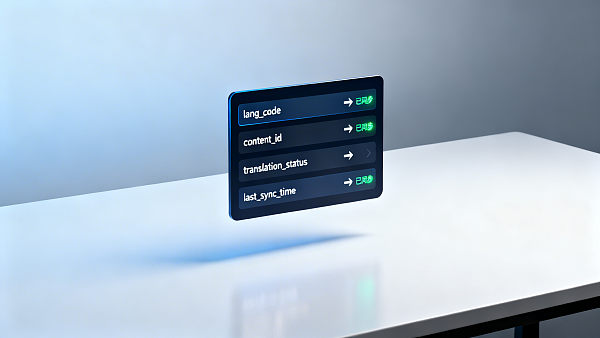
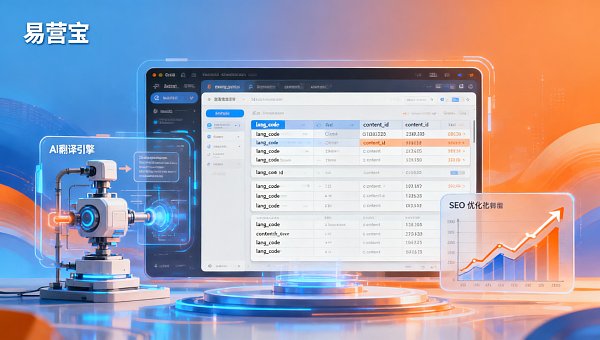
In multilingual website content management, "field tags" are not visually visible UI elements, but rather key metadata carriers of structured data in the backend. They refer to standardized attribute fields in a content management system (CMS) used to identify, categorize, map, and synchronize multilingual versions of content, such as lang_code , content_id , translation_status , and last_sync_time . These fields constitute the "digital identity card" of content assets and are the technological foundation for achieving AI translation scheduling, SEO semantic alignment, and cross-language version consistency verification.
In traditional manual maintenance, companies often scatter content in different languages across multiple Word documents or Excel spreadsheets, leading to frequent issues such as version inconsistencies, duplicate TDKs (Title, Description, Keywords), missing H1 tags, and omitted hreflang. However, intelligent website building platforms with standardized field tag systems can automatically identify source language changes, trigger AI retranslation, synchronously update meta descriptions, verify localized URL paths, and accurately convey language-region signals to search engines—this is the core watershed between whether a multilingual website is beneficial for SEO.
II. Comparative Analysis: Differences in Multilingual Website Management Efficiency with and Without a Field Tag System
To visually demonstrate the value of field tags, we compared two typical management methods based on actual test data from 100 foreign trade companies:
Data confirms that field tags are not merely "icing on the cake," but rather the underlying infrastructure that propels multilingual websites from "usable" to "efficient and compliant." Especially when enterprises need to cover highly complex languages such as German, French, Arabic, and Japanese, the strong binding between lang_code and content_id directly determines whether the AI translation engine can accurately access domain-specific thesaurus and sentence templates.
III. Application Scenarios: How the 4 core field tags drive real business processes
YiYingBao Intelligent Website Building System deeply integrates NLP semantic understanding and multimodal generation capabilities, embedding the following four field tags into the entire content workflow:
-
lang_code: This is not a simple ISO code (such as en-US), but an intelligent language identifier that integrates regional preferences, search habits, and cultural taboos. For example, the system automatically identifies the differences between "Brazilian Portuguese" and "European Portuguese" in e-commerce terms (such as "checkout" vs "finalizar compra"), avoiding mechanical literal translations by AI in multilingual website translation. -
content_id: A unique hash ID that anchors the source content asset, supporting bidirectional traceability across language versions. When a video module is added to the English product page, the system automatically pushes a change notification to all activated languages and marks them as pending translation. -
translation_statusis further divided into four levels: “draft”, “AI_reviewed”, “human_edited”, and “published”. It connects to the “AI keyword expansion + TDK automatic generation” module of the Yiyingbao AI marketing engine to ensure that each version of the translation carries localized keyword density, semantic relevance graph and mobile-adaptive meta tags. -
last_sync_time: A millisecond-level timestamp that is linked to the global CDN node refresh strategy. When the Spanish page is updated, the system synchronizes it to the three edge nodes in Madrid, Mexico City, and Buenos Aires within 0.8 seconds, ensuring a 40% improvement in loading speed for multilingual websites.
This mechanism enables foreign trade enterprises to truly achieve "one-time editing, full-domain effectiveness." After a Shenzhen-based electronic component exporter connected to the system, its independent website, which covers six languages (English, German, French, Spanish, Italian, and Japanese), saw a 5.2-fold increase in content synchronization efficiency and a 37% monthly increase in overseas traffic—verifying the essential logic of how multilingual websites can boost overseas traffic: it's not about piling up the number of languages, but about building an executable, verifiable, and optimizable content governance loop.
IV. Common Misconceptions and FAQs: Overcoming Cognitive Blind Spots in Multilingual Website Management
Q: How many languages does a multilingual website typically need? Is more always better?
A: Quantity doesn't guarantee success. Data from YiYingBao shows that over 73% of high-conversion independent websites focus on 3-5 core languages (such as English + German + French + Spanish + Japanese), covering 82% of global B2B procurement needs. Blindly expanding into less common languages dilutes SEO ranking and increases the cost of maintaining relevant tags.
Q: What is the difference between a multilingual website and a monolingual website?
A: The fundamental difference lies in the architectural hierarchy. A monolingual website has a "linear structure," while a multilingual website must have a "network structure"—each page needs to declare its language relationship (hreflang), content ownership (content_id), and geographic adaptation (lang_code); otherwise, Google will penalize it as duplicate content. This is also the fundamental reason why foreign trade companies need to create independent websites: only a self-controlled architecture can support a global language strategy.
Q: Are multilingual websites beneficial for SEO?
A: Absolutely beneficial, but only if the technology is compliant. According to Google's official white paper, multilingual sites that correctly implement hreflang and localized TDK (Title, Description, Keywords) achieve an average of 3.2 times more long-tail keyword rankings in more countries/regions. Among YiYingBao's clients, 91% saw an increase of over 150% in organic traffic to their target markets within 6 months of implementing the field tagging system.
V. Why Choose Us: Reconstructing Multilingual Content Productivity with an AI Field Engine
E-Creative Information Technology (Beijing) Co., Ltd., with ten years of experience focusing on global digital marketing services, has helped over 100,000 companies build high-conversion, multilingual independent websites. Our field tagging system is not a static configuration item, but a continuously evolving AI capability hub:
- Based on 15 NLP and multimodal AI patents, the field parsing accuracy reaches 99.2%, and it supports right-to-left Arabic text formatting, automatic adaptation of simplified and traditional Chinese characters in Japanese, and intelligent decomposition of German compound words.
- As a Google Premier Partner and official Meta agent, the system incorporates the latest technical specifications for search engines and social media platforms, ensuring 100% compliance with tags such as hreflang, og:locale, and canonical.
- Provides a "Field Health Diagnosis Report" that scans for risk points such as missing lang_code, content_id conflicts, and translation_status stagnation in real time, and proactively pushes out remediation solutions;
- It supports API integration with ERP and PIM systems. Structured data such as product parameters, certifications, and logistics policies are automatically injected into various language versions through field tags, eliminating the need for manual translation.
Activate the EasyCreator AI Intelligent Website Building System now to upgrade multilingual website management from "firefighting" to "predictive governance." Register now to receive the "Multilingual Website Field Tagging Implementation Guide" and an AI diagnostic report on the SEO health of your independent website for free—let the world make way for Chinese brands, starting with every precise field.
- Website Builder Platform
- Mobile-friendly
- Multilingual Independent Website
- AI Smart Website Building
- Website loading speed
- Yiyingbao
- SEO
- Independent Website
- Smart website builder system
- Smart Website Building
- AI Translation
- EasySite Intelligent Website Builder
- AI Marketing Engine
- AI Translation Engine
- Independent site SEO
- Multilingual website
- EasyStore AI Intelligent Website System
- Smart Website Platform
- Global Digital Marketing
- AI Website Building
- How many languages does a multilingual website generally require?
- How to manage content for a multilingual website?
- What is the difference between a multilingual website and a single-language website?
- Why should foreign trade enterprises build independent websites?
- EYB AI Marketing
- AI Marketing
- Digital Marketing Services
Related Articles
 How can website data analysis improve conversion rates? First identify high-bounce pages and key loss points
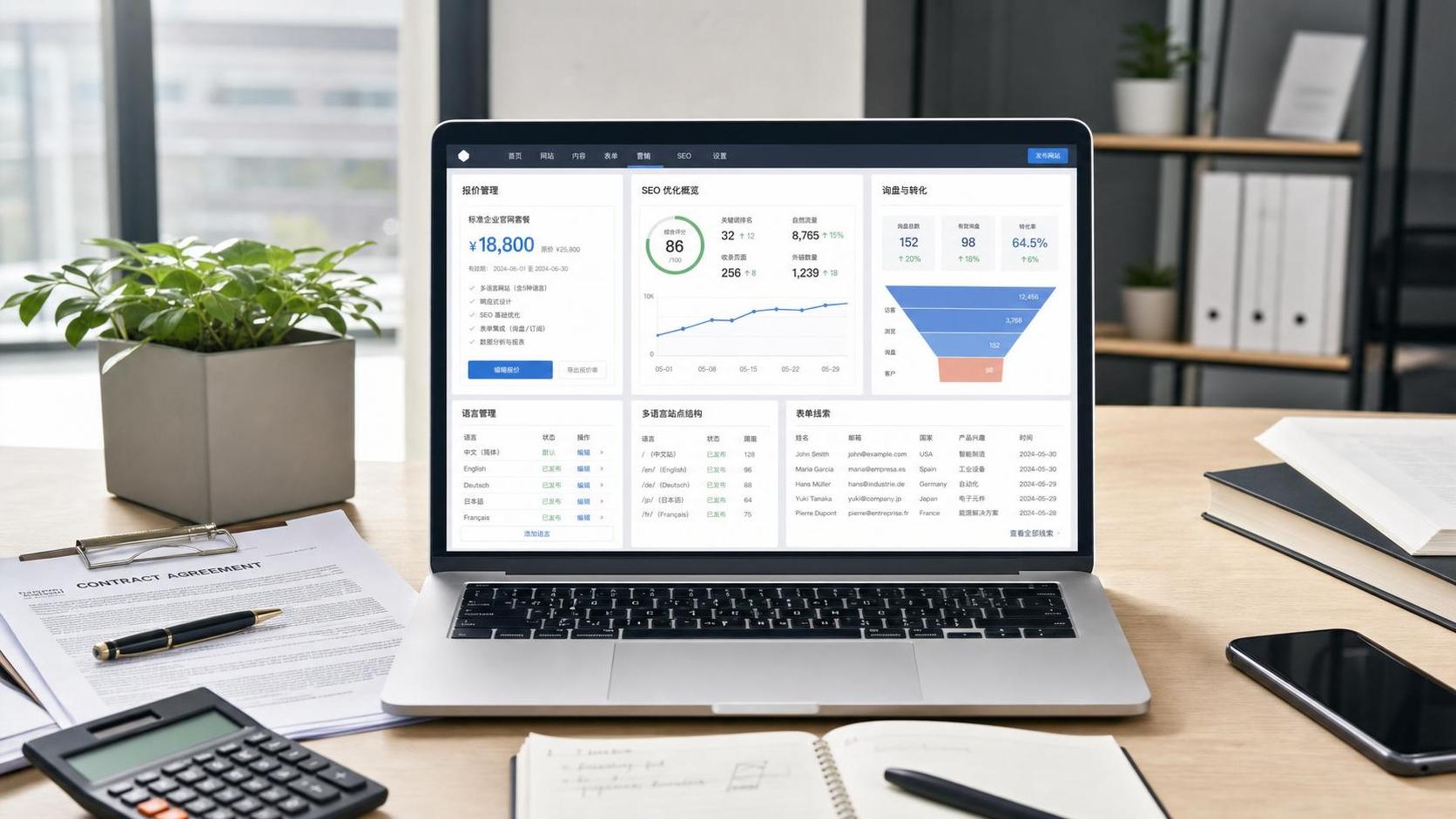
 How much does it cost to build a foreign trade multilingual website?Analysis of the modules and hidden costs that affect quotations
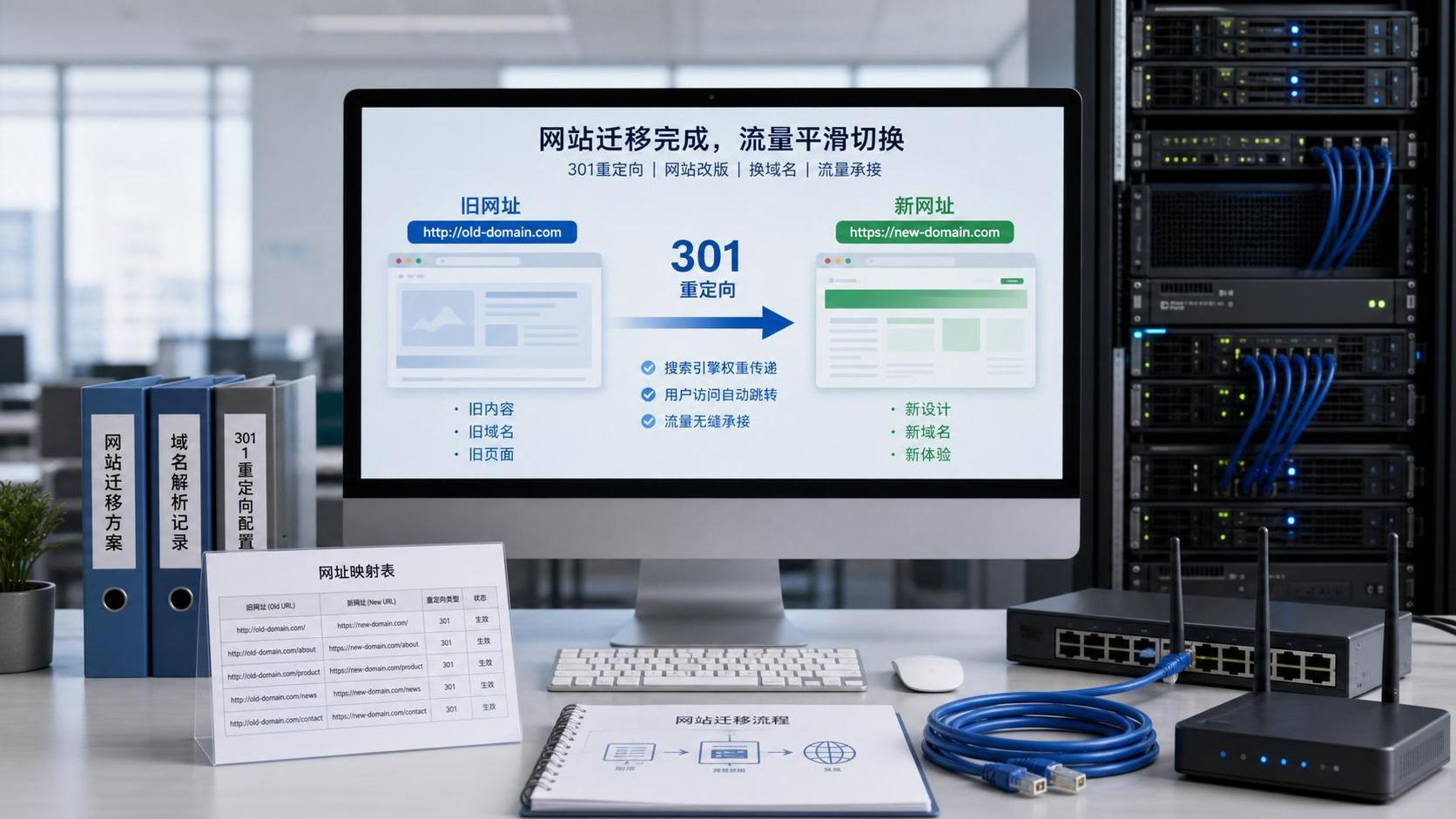
 Detailed explanation of 301 redirect setup methods:which pages must be redirected during a website redesign or domain change

Related Products
 EasyCamp SaaS Smart Website Marketing SystemE-Yingbao SaaS Smart Website Marketing System: AI-powered, zero-code website building. Rapidly launch multilingual independent e-commerce sites in just 10 minutes. Global server acceleration and AI-driven SEO optimization empower businesses to efficiently connect with global markets. The seamless integration of technology and user-friendly operation makes building e-commerce sites incredibly simple.
 AI+SEM Intelligent Advertising Marketing SystemAI+SEM drives intelligent ad creation, empowering full-funnel precision advertising marketing. The system automatically generates weekly/monthly reports, AI recommends keywords and target countries, monitors core metrics in real-time with intelligent alerts, and enables one-click high-conversion ad solutions to help quickly acquire customers and improve ROI.
 AI+SEO Dual Engine Optimization ServiceEasyWin AI+SEO Dual Engine Optimization System leverages AI-powered keyword mining, content generation, and comprehensive technical optimization to help foreign trade enterprises acquire high-quality organic traffic, significantly improving search rankings and conversion rates.
 AI+SNS Social Media Marketing SystemYingbao AI+SNS Social Media Marketing System - Precision social capture for the social media era. Supports one-click content synchronization across major platforms like Facebook and LinkedIn. AI intelligently rewrites posts for enhanced relevance. 24/7 AI customer service and user profiling analysis empower businesses to efficiently expand into global markets.
 AI+SEO营销解决方案易营宝AI+SEO营销解决方案,通过AI批量写作、智能生成TDK、精准关键词扩词等功能,全面优化网站SEO效果,提升流量与转化率。助力企业构建高效智能网站新生态。
 AI+SEM Advertising Marketing SolutionsAI+SEM Advertising Marketing Solution leverages AI technology to deeply empower SEM ad campaigns. It automatically generates weekly/monthly reports using AI, presenting account data across multiple dimensions for comprehensive insights into campaign performance and trends. The system precisely recommends keywords and target countries, intelligently generates high-conversion ad copy, and enables one-click activation of efficient campaign plans to help businesses rapidly acquire customers. Simultaneously, it monitors core metrics in real time, intelligently identifies abnormal fluctuations, and issues timely alerts to ensure stable, high-return advertising results.
 Domain Name ServicesEasyWin provides professional domain name services, including intelligent queries, one-stop registration, brand protection, and full lifecycle management, helping businesses build a digital brand image.
 EasyOperate B2C Cross-Border E-Commerce Platform & Independent WebsiteEasyStore B2C Cross-border E-commerce Independent Store is an intelligent website building and cross-border e-commerce integrated solution independently developed by EasyStore Information Technology (Beijing) Co., Ltd. The system is specially designed for small and medium-sized as well as large export enterprises, integrating 'website building, operation, marketing, advertising, and conversion' into one, helping enterprises quickly establish cross-border e-commerce independent stores to achieve brand globalization and global sales growth.
The platform supports multiple languages, multiple currencies, and multi-channel marketing, with built-in AI intelligent translation and SEO optimization systems, suitable for mainstream markets such as Southeast Asia, Europe and America, Latin America, and the Middle East, assisting Chinese manufacturing enterprises in efficiently deploying international e-commerce strategies. SSL证书易营宝提供专业SSL安全证书服务,包括单域名和泛域名证书,确保网站数据传输加密、身份验证和完整性保护,助力企业建立安全可信的在线业务环境。









