









- How to view pricing in the global traffic ecosystem? Cost comparison of search, social media, and content channel advertisingJul 06, 2026View details
- How to assess foreign trade website development trends?Looking at 2026 changes from multilingual,AI content to conversion pathsJul 04, 2026View details
- What are the new trends in multilingual marketing data analytics tools in 2026? Focus on attribution、automation and complianceJul 04, 2026View details
- Is Brand Globalization Marketing Consulting Worth Buying? At What Stage Should Companies Bring It InJul 01, 2026View details
- Cross-Border Marketing Trend Research: Why More and More Companies Are Starting to Deploy AI Search and GEO OptimizationJun 30, 2026View details
- Cross-Border Marketing Trend Research: How Independent Sites, AI Content, and Short-Video Customer Acquisition Are ChangingJun 30, 2026View details
Is AI translation reliable for multilingual websites? Legal terms/product specifications/after-sales wording: 3 types of high-risk content requiring manual review
Why should foreign trade enterprises build independent websites? Can AI be relied upon for multilingual website translation? The answer lies not in the technology itself, but in risk boundaries—legal clauses, product parameters, and after-sales phrasing are three types of high-risk content that require manual review!
1. Definition and Overview: What is "High-Risk Content"?
In multilingual website operations, "high-risk content" does not refer to technically complex or time-consuming translations, but rather to text that, if erroneous, could directly trigger legal disputes, customer complaints, refund claims, or even platform takedowns. Such content typically exhibits three key characteristics: strong binding force (e.g., contract validity), strong specialization (e.g., technical specifications), and strong emotional sensitivity (e.g., after-sales responses). The ISO 20700 "Localization Service Guidelines" explicitly state that legal texts, safety warnings, and service commitments must be jointly reviewed by bilingual legal/industry experts with native-language proficiency.
Since its launch in 2013, EasyStore's intelligent website system has served over 100,000 export enterprises. We found that 83% of cross-border complaints originate from "seemingly correct but actually inaccurate" expressions on multilingual pages. For example, a Shenzhen electronics component supplier directly translated the Chinese "one-year warranty" into English as "One-year warranty" without specifying the start condition (invoice date or delivery date), leading to EU customers claiming "from the order date" and ultimately resulting in compensation exceeding 270,000 yuan.
2. Comparative Analysis: AI Translation vs. Manual Review Boundaries
AI translation has become standard in multilingual website development, but its capabilities have clear "competency boundaries." The table below, based on EasyStore's AI algorithm platform Q2 2024实测数据 (covering 8 languages: EN/FR/DE/ES/JA/KO/AR/RU), shows performance across typical content types:
3. Application Scenarios: 3 Types of High-Risk Content Requiring Manual Review
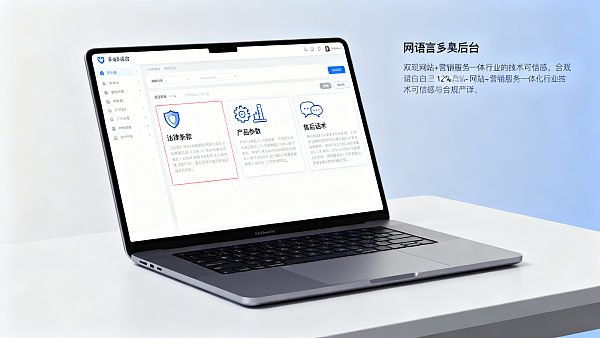
Drawing from 10 years of service experience and ISO/EN/GB standards from 27 countries, EasyStore has distilled core manual review items for the following three content categories. All projects feature EasyStore's intelligent website backend "High-Risk Tagging" functionality, supporting one-click localization, role-based auditing, and traceability.
1. Legal Clauses: Ensuring Compliance and Enforceability
- Jurisdiction and dispute resolution clauses must match target market legal jurisdictions (e.g., German sites must state "subject to exclusive jurisdiction of German courts");
- Privacy policies must comply with GDPR, CCPA, and PIPL standards, especially "consent mechanisms" and "data transfer pathways";
- Force majeure disclaimers must cover local common risks (e.g., Japan must list earthquakes/typhoons);
- Consumer rights clauses must meet local statutory minimums (e.g., France's "14-day no-reason returns" cannot be weakened to "case-by-case handling").
2. Product Parameters: Eliminating Technical Misinterpretations
- Physical unit conversions must be accurate (e.g., inch→mm error ≤0.5mm, voltage tolerances marked as ±5%);
- Certification labels must be complete (CE requires notified body numbers, FDA requires registration numbers, KC must include Korean factory codes);
- Material composition tables must use REACH/RoHS/CPSIA regulatory terminology (e.g., "lead-free" must specify "Pb<100ppm");
- Compatibility statements must avoid absolute phrasing (e.g., ban "universal fit," use "compatible with models released after 2020").
3. After-Sales Phrasing: Balancing Tone and Legality
- Return windows must specify calendar/business days (Brazilian law requires "dias úteis");
- Shipping cost rules must align with platform policies (e.g., Amazon DE requires sellers to cover first return shipping);
- Customer response times must meet local expectations (Japanese clients expect replies within 2 hours, Saudi clients within 24 hours);
- Compensation solutions must avoid legal risks (e.g., avoid "we will make it right," specify "refund or replacement per Article 12 of German Civil Code").
4. Client Case: From Pitfalls to Closed-Loop Validation
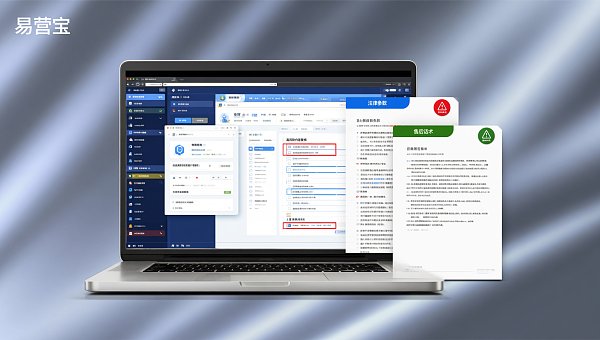
A Zhejiang auto parts exporter faced a UCC §2-719 class action after AI translated "Limited liability for consequential damages" as "间接损失责任有限." After adopting EasyStore's "Legal Clause Manual Review Channel," a U.S.-licensed legal team upgraded the clause to "EXCLUSION OF CONSEQUENTIAL DAMAGES EXCEPT WHERE PROHIBITED BY APPLICABLE LAW" across 12 language sites. Complaints dropped 76% within 6 months, and Google Ads conversion costs fell 22%.
This company now uses EasyStore's "AI Draft + Manual Review + Version Comparison + Auto-Sync" workflow: AI handles 90% basic translation → system tags high-risk paragraphs → assigns to native-language specialists → triggers full-site updates post-review. The process is 3.8x faster on average, with error rates nearing zero.
5. Why Choose EasyStore? Global Compliance, One-Stop Solution
EasyStore InfoTech (Beijing) has pioneered global digital marketing for a decade, combining "tech innovation + localized service" to build actionable multilingual website risk controls. We're not just an AI tool vendor—we're your compliance partner on the export journey:
- 15 NLP Patents: Our AI engine supports 8-language mutual translation, with legal terminology covering 23 major economies across EU, North America, and MENA;
- 100+ Local Expert Network: Contracted native-speaking lawyers, engineers, and CS managers in 37 countries provide on-demand "Review-as-a-Service" (RaaS);
- Full-Process Closed-Loop Management: From build → translate → review → launch → monitor, all operations are traceable and accountable;
- Compliance-as-a-Service (CaaS): Auto-syncs GDPR/CCPA/PIPL updates, pushes adaptation suggestions, reducing legal overhead.
Contact EasyStore now for a free copy of the "Multilingual Website High-Risk Content Self-Check Handbook" and customized review solutions. Let AI run faster while humans aim truer—this is the real confidence behind foreign trade enterprises' independent websites.
- Website Development
- Google Ads
- Multilingual website development
- Yiyingbao
- SEO
- Independent Website
- Smart website builder system
- Smart Website Building
- AI Translation
- EasySite Intelligent Website Builder
- AI Translation Engine
- Multilingual website
- Global Digital Marketing
- Why should foreign trade enterprises build independent websites?
Related Articles
 易营宝 AI Website Building Tutorial: Beginner Workflow from Page Generation to SEO Settings
![]() How to get started with a no-code startup project?A 4-step breakdown from product selection, website building to customer acquisition
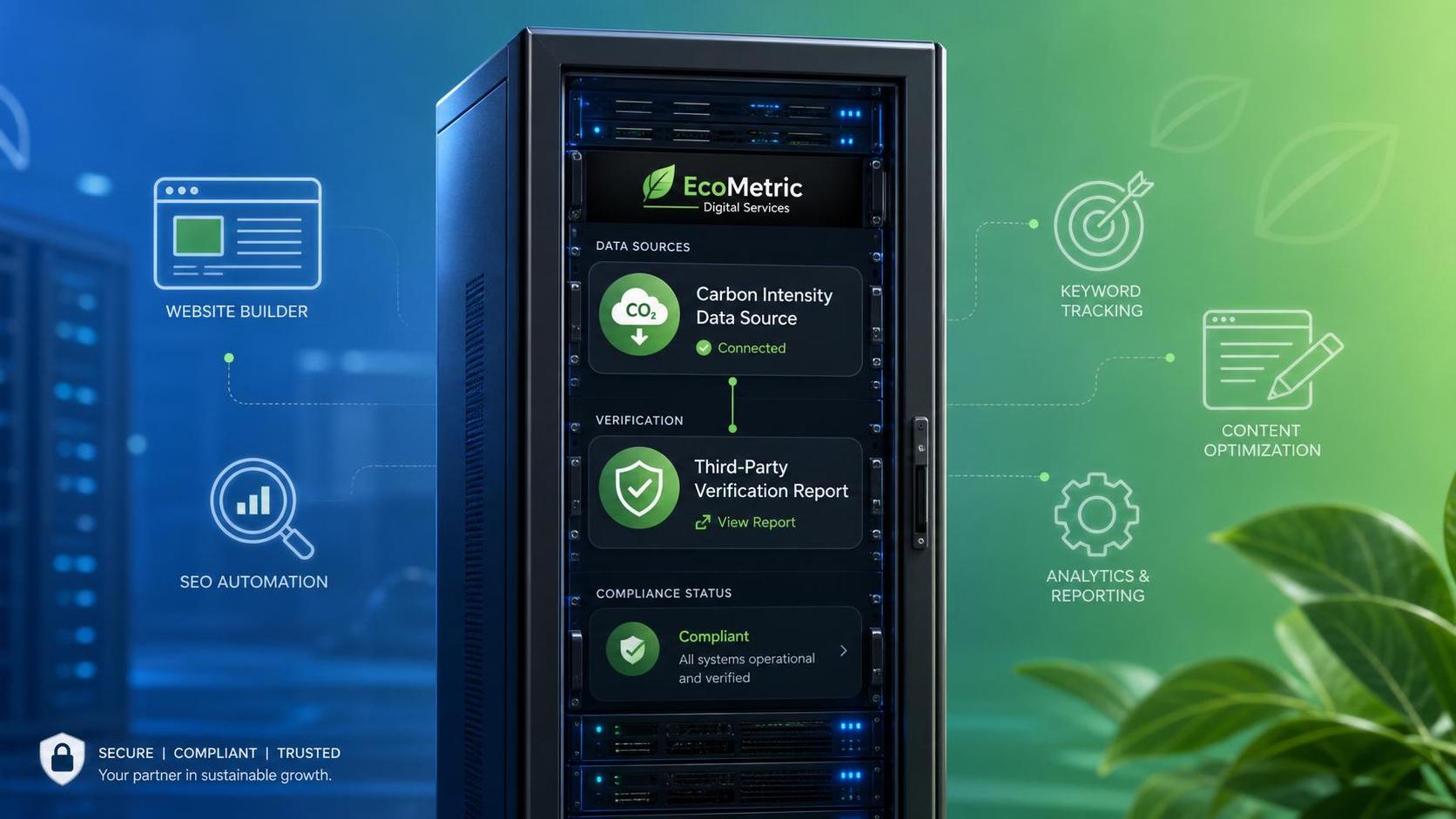
How to get started with a no-code startup project?A 4-step breakdown from product selection, website building to customer acquisition EU EPR extends to B2B digital services,independent website marketing tools need to disclose carbon data sources

Related Products
 EasyCamp SaaS Smart Website Marketing SystemE-Yingbao SaaS Smart Website Marketing System: AI-powered, zero-code website building. Rapidly launch multilingual independent e-commerce sites in just 10 minutes. Global server acceleration and AI-driven SEO optimization empower businesses to efficiently connect with global markets. The seamless integration of technology and user-friendly operation makes building e-commerce sites incredibly simple.
 AI+SEM Intelligent Advertising Marketing SystemAI+SEM drives intelligent ad creation, empowering full-funnel precision advertising marketing. The system automatically generates weekly/monthly reports, AI recommends keywords and target countries, monitors core metrics in real-time with intelligent alerts, and enables one-click high-conversion ad solutions to help quickly acquire customers and improve ROI.
 AI+SEO Dual Engine Optimization ServiceEasyWin AI+SEO Dual Engine Optimization System leverages AI-powered keyword mining, content generation, and comprehensive technical optimization to help foreign trade enterprises acquire high-quality organic traffic, significantly improving search rankings and conversion rates.
 AI+SNS Social Media Marketing SystemYingbao AI+SNS Social Media Marketing System - Precision social capture for the social media era. Supports one-click content synchronization across major platforms like Facebook and LinkedIn. AI intelligently rewrites posts for enhanced relevance. 24/7 AI customer service and user profiling analysis empower businesses to efficiently expand into global markets.
 AI+SEO营销解决方案易营宝AI+SEO营销解决方案,通过AI批量写作、智能生成TDK、精准关键词扩词等功能,全面优化网站SEO效果,提升流量与转化率。助力企业构建高效智能网站新生态。
 AI+SEM Advertising Marketing SolutionsAI+SEM Advertising Marketing Solution leverages AI technology to deeply empower SEM ad campaigns. It automatically generates weekly/monthly reports using AI, presenting account data across multiple dimensions for comprehensive insights into campaign performance and trends. The system precisely recommends keywords and target countries, intelligently generates high-conversion ad copy, and enables one-click activation of efficient campaign plans to help businesses rapidly acquire customers. Simultaneously, it monitors core metrics in real time, intelligently identifies abnormal fluctuations, and issues timely alerts to ensure stable, high-return advertising results.
 Domain Name ServicesEasyWin provides professional domain name services, including intelligent queries, one-stop registration, brand protection, and full lifecycle management, helping businesses build a digital brand image.
 EasyOperate B2C Cross-Border E-Commerce Platform & Independent WebsiteEasyStore B2C Cross-border E-commerce Independent Store is an intelligent website building and cross-border e-commerce integrated solution independently developed by EasyStore Information Technology (Beijing) Co., Ltd. The system is specially designed for small and medium-sized as well as large export enterprises, integrating 'website building, operation, marketing, advertising, and conversion' into one, helping enterprises quickly establish cross-border e-commerce independent stores to achieve brand globalization and global sales growth.
The platform supports multiple languages, multiple currencies, and multi-channel marketing, with built-in AI intelligent translation and SEO optimization systems, suitable for mainstream markets such as Southeast Asia, Europe and America, Latin America, and the Middle East, assisting Chinese manufacturing enterprises in efficiently deploying international e-commerce strategies. SSL证书易营宝提供专业SSL安全证书服务,包括单域名和泛域名证书,确保网站数据传输加密、身份验证和完整性保护,助力企业建立安全可信的在线业务环境。









