









- How Can a Brand Updates Page Be Made More SEO-Friendly? Analysis of Update Frequency, Content Structure, and Internal Linking StrategyJun 28, 2026View details
- What stages does the cross-border services ecosystem include? How do website building, promotion, payment, and compliance work togetherJun 22, 2026View details
- How will email marketing costs change in 2026Jun 22, 2026View details
- The China-US tariff arrangement has reached a preliminary consensus, and the trade association will be establishedJun 15, 2026View details
- Should overseas brand marketing start with ads or contentJun 21, 2026View details
- What determines B2C cross-border e-commerce website development costs? A breakdown of features, interfaces, and deployment methodsJun 17, 2026View details
- China-Morocco zero-tariff access, a breakthrough in the cost of Moroccan goods exports to ChinaJun 11, 2026View details
- What signal should be released for the suspension of exports to JapanJun 10, 2026View details
Think through these 4 things before building an independent website, and you can save a lot of money later
Before building an independent foreign trade website, it is often more important to first think through these 4 things: budget structure, functional boundaries, customer acquisition paths, and long-term operations and maintenance, than to rush to launch. Accurate judgment in the early stage helps avoid detours and unnecessary spending later.
Why can’t financial approvers look only at the website-building quotation?

When many companies start building an independent foreign trade website, their first reaction is to compare prices: several thousand yuan, tens of thousands of yuan, or even hundreds of thousands of yuan—where exactly is the difference? For financial approvers, what truly needs to be reviewed is not the page price, but whether the total investment can form a sustainable customer acquisition asset, whether additional budgets in later stages can be controlled, and whether trial-and-error costs can be reduced.
The characteristics of the integrated website + marketing services industry determine that an independent website is not a one-time deliverable, but a combination of technical systems, content systems, traffic systems, and data systems. If the early stage focuses only on price, but not on goals, paths, or operations and maintenance, common later problems include repeated redesigns, redoing functions, paid traffic without conversions, and missing SEO foundations, ultimately resulting in higher overall costs.
Since 2013, Easy-Biz Information Technology (Beijing) Co., Ltd. has been deeply engaged in global digital marketing services, driven by artificial intelligence and big data as its core engines, and has built full-chain capabilities around intelligent website building, SEO optimization, social media marketing, and advertising placement. For financial approvers, the key value of this integrated capability lies in reducing the coordination loss caused by multiple vendors, making budgets more predictable, delivery more controllable, and results easier to track.
- Look at explicit costs: domain name, server, design, front-end and back-end development, multilingual content, payment and inquiry functions.
- Look at hidden costs: ongoing maintenance, new page additions, plugin compatibility, security updates, staff training.
- Look at opportunity costs: lack of traffic after launch, poor inquiry quality, and broken conversion paths will all prolong the payback period.
The first thing: break down the budget structure clearly first, instead of only asking for the total price
The budget for building an independent foreign trade website should not be written only as one total package number. What financial approvers need most is an itemized list, because only after breaking it down can they determine which are one-time investments, which are ongoing expenses, and which will increase as the business grows.
The table below is suitable for classifying the budget during the early approval stage. It can help companies avoid the common risk of “signing at a low price first, then adding expensive items later,” and also makes it easier to compare different service providers on the same basis.
If the budget sheet can be broken down in advance, finance can more easily judge the investment rhythm. Usually, a more reasonable approach is to divide independent foreign trade website construction into 3 stages: “launch-ready,” “customer acquisition foundation,” and “continuous optimization,” rather than putting the entire budget on the visual layer at the very beginning.
3 figures recommended for follow-up questions during financial approval
- What is the total investment in the first year, and which one-time and annual costs does it include.
- What is the minimum monthly operations and maintenance budget after launch, and whether natural traffic can still continue without advertising spend.
- If the business adds more languages, product lines, or country-specific sites, how the expansion cost will be calculated.
The second thing: unclear functional boundaries are the easiest trigger for repeated add-on charges
Many independent foreign trade website construction projects exceed budget not because the technology itself is complex, but because the scope of requirements was not clearly defined at the project initiation stage. Companies often start by saying only “let’s build an official website first,” but during the launch process they keep adding requirements such as language versions, download centers, distributor systems, customer-tiered forms, sample applications, online chat, quote management, and more, so the project naturally becomes more and more expensive.
Financial approvers do not need to judge every technical implementation detail item by item, but they must require the business department to submit a three-tier requirements list of “must have,” “can be added later,” and “not needed for now.” The significance of doing this is not to compress functions, but to align functions with stage goals and avoid premature investment.
Which functions should be prioritized, and which are suitable to postpone?
The table below is suitable for companies to use when initiating an independent foreign trade website construction project, helping clarify functional priorities and reduce unnecessary development expenses.
For finance, the core value of phased functionality is breaking large investments into milestone-based approvals. First verify whether the website can take on traffic and inquiries, and then decide whether to add budget for complex systems. This is more prudent than making a heavy one-time investment.
The third thing: if the customer acquisition path is unclear, the website may still produce no results after going live
Building an independent foreign trade website is not for the sake of “having a website,” but for generating clear outcomes such as inquiries, sample requests, distributor partnerships, or brand exposure. If the customer acquisition path is not planned in advance, then no matter how refined the website is, it may still just be a static display page.
The most common concern of financial approvers is: after spending money on the website, will there still be a need for additional marketing budget later? The correct answer is usually yes, but it should be spent in places with a clear path. SEO, social media, advertising placement, and content marketing are not separate projects disconnected from one another, but should work together around the same website conversion goals.
- If the focus is organic customer acquisition, priority should be given to building an SEO-friendly content structure, keyword pages, and a content update mechanism.
- If the focus is short-term inquiries, then advertising landing pages, conversion form length, and data feedback mechanisms should be considered simultaneously.
- If the focus is overseas brand expansion, then multilingual expression, social media content continuity, and trust-building pages should be strengthened.
This is also where the value of an integrated website + marketing service solution lies. Relying on artificial intelligence and big data capabilities, Easy-Biz can consider website building, SEO optimization, social media marketing, and advertising placement within the same growth framework, avoiding repeated investment in situations where “the website vendor is only responsible for launch, and the marketing vendor then asks for page redesigns.”
If corporate management is evaluating a longer-term investment logic, they can also combine topics such as analysis of the impact of digital transformation on corporate resilience to understand that an independent website is not an isolated project, but part of a company’s digital operational capability. It affects not only customer acquisition, but also the organization’s response speed to market fluctuations.
The fourth thing: how long-term operations and maintenance are handled determines whether money can continue to be saved later
Many companies underestimate the operations and maintenance costs after building an independent foreign trade website. A website does not end after launch; it requires continuous content updates, fixing compatibility issues, monitoring access speed, handling security risks, and optimizing conversion paths. A website without an operations and maintenance mechanism often starts to fall behind after half a year.
At this stage, the key task for financial approvers is to confirm the follow-up service model. Will the internal team take over, or will the vendor collaborate long term? Will changes be charged by request, or provided as a monthly service? Does it include data reports and optimization recommendations? If these issues are not clarified before signing the contract, later costs will become extremely fragmented.
Integrated operations and maintenance are easier to control costs than fragmented procurement
For companies without a mature overseas digital team, integrated operations and maintenance are usually more suitable for controlling total costs. Because website building, content, SEO, advertising, and social media are interconnected, splitting execution among multiple vendors may not appear expensive on the surface in unit price terms, but the hidden costs of coordination, rework, and responsibility allocation are often much higher.
Easy-Biz’s experience serving more than 100,000 companies shows that what truly saves budget in the long term is not one-time price cutting, but making every investment traceable, reviewable, and continuously iterable. Especially in the context of rapidly changing overseas markets, unified data standards and localization service capabilities can significantly improve budget efficiency.
What should be the focus during procurement? A checklist for financial approvers
If you are approving an independent foreign trade website construction project, you can first use the checklist below to filter risks. It is more useful than simply comparing quotations, and also better aligns with finance’s focus on controllability, transparency, and payback period.
- Whether there is a clear project scope description, including the number of pages, number of languages, functional boundaries, and number of revisions.
- Whether it includes basic SEO capabilities, rather than delivering only a visual page.
- Whether it provides data statistics and conversion tracking to facilitate later evaluation of investment effectiveness.
- Whether it clarifies responsibility for operations and maintenance such as servers, security, backups, and upgrades.
- Whether it can support subsequent advertising placement, social media integration, and multilingual expansion.
- Whether it has localization service capabilities and can understand content expression and conversion logic in different markets.
Common question: where does approval for independent foreign trade website construction get stuck most easily?
Is cheaper always better for testing the waters in independent foreign trade website construction?
Not necessarily. During the testing phase, excessive investment is indeed not recommended, but an overly low budget often means lacking SEO structure, data statistics, mobile experience, or later expansion capability. The result is that the website soon needs to be rebuilt from scratch. It may seem like a saving at first, but over the full year it ends up being more expensive.
How can you tell during approval whether a vendor is a website builder or a growth partner?
The key is whether they can explain the website, traffic, content, and conversion within the same solution. If they only talk about page design and development timelines, but not customer acquisition paths, inquiry handling, and subsequent optimization, then it is most likely still a single-point delivery. For finance, such projects have a higher probability of requiring additional procurement later.
How long is a reasonable delivery cycle?
For a standard corporate website-type independent foreign trade website construction project, if requirements are clear, the first-stage launch can usually be completed within a few weeks to a few months. What truly affects the timeline is not only development speed, but also requirement confirmation, content preparation, multilingual proofreading, data tagging, and acceptance standards. The more rushed the timeline, the more important it is to solidify boundaries, otherwise later rework will consume the time saved.
Should the long-term value of digitalization be included in approval?
Yes. Independent foreign trade website construction not only serves current customer acquisition, but also accumulates content assets, search assets, customer data, and cross-market operational capabilities. From this perspective, the long-term resilience logic discussed in topics such as analysis of the impact of digital transformation on corporate resilience also applies to budget judgment for independent website projects.
Why choose us: turn website-building budgets into more controllable growth investments
For financial approvers, the ideal independent foreign trade website construction solution is not the one that merely looks cheapest on the quotation sheet, but the one with a clear budget structure, clearly defined delivery boundaries, a formed customer acquisition path, and sustainable follow-up operations and maintenance. Relying on ten years of industry accumulation and a dual-wheel strategy of “technological innovation + localized service,” Easy-Biz provides full-chain support from intelligent website building to SEO optimization, social media marketing, and advertising placement, helping companies reduce repetitive procurement and coordination losses.
If you are advancing project initiation, you can directly communicate the following: first-year budget breakdown, confirmation of page and functional boundaries, delivery timeline evaluation, multilingual and multi-market expansion plans, basic SEO configuration, advertising landing page integration, follow-up operations and maintenance methods, and phased quotation recommendations. Clarifying these key issues first before starting independent foreign trade website construction is often more cost-saving than rushing to launch, and also makes it easier to obtain internal approval support.
Related Articles
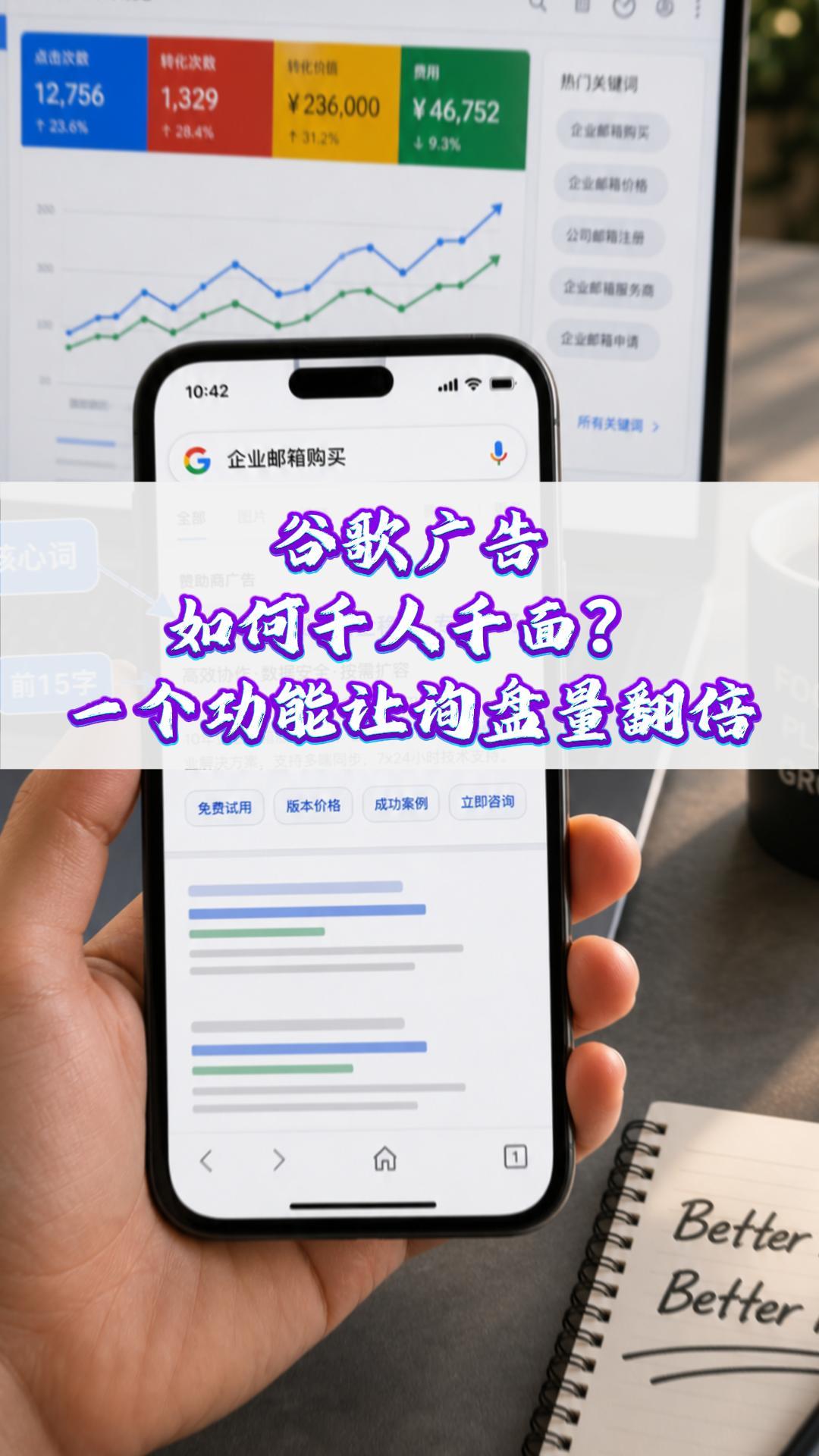
 How can Google Ads deliver one-to-one personalization? One feature can double your inquiry volume#ExportMarketing#OverseasPromotion#GoogleAds#SocialMediaMarketing#ForeignTradeIndependentWebsite
 Why a Google-optimized independent website is essential for trailer exports
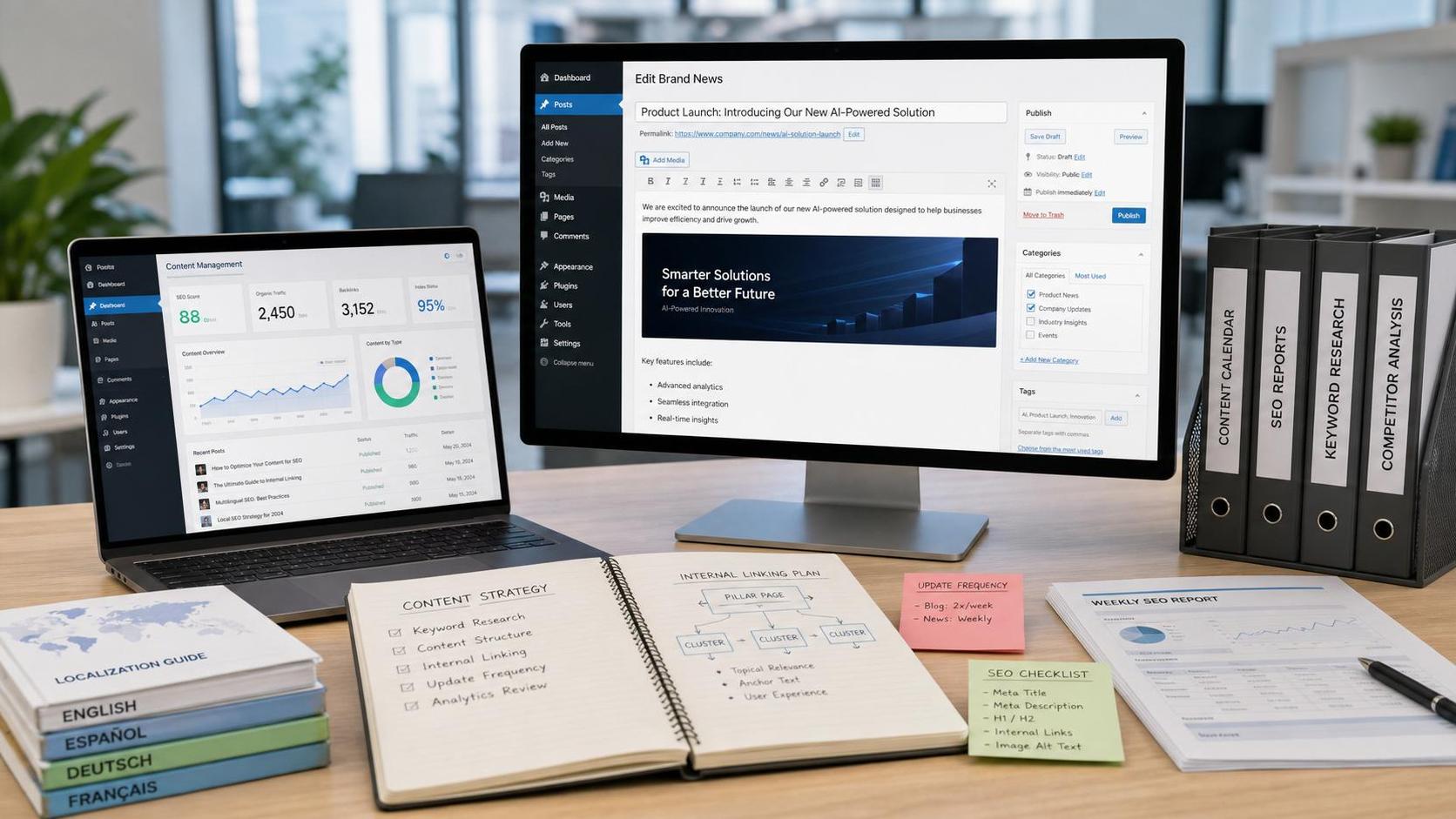
 How Can a Brand Updates Page Be Made More SEO-Friendly? Analysis of Update Frequency, Content Structure, and Internal Linking Strategy

Related Products
 EasyCamp SaaS Smart Website Marketing SystemE-Yingbao SaaS Smart Website Marketing System: AI-powered, zero-code website building. Rapidly launch multilingual independent e-commerce sites in just 10 minutes. Global server acceleration and AI-driven SEO optimization empower businesses to efficiently connect with global markets. The seamless integration of technology and user-friendly operation makes building e-commerce sites incredibly simple.
 AI+SEM Intelligent Advertising Marketing SystemAI+SEM drives intelligent ad creation, empowering full-funnel precision advertising marketing. The system automatically generates weekly/monthly reports, AI recommends keywords and target countries, monitors core metrics in real-time with intelligent alerts, and enables one-click high-conversion ad solutions to help quickly acquire customers and improve ROI.
 AI+SEO Dual Engine Optimization ServiceEasyWin AI+SEO Dual Engine Optimization System leverages AI-powered keyword mining, content generation, and comprehensive technical optimization to help foreign trade enterprises acquire high-quality organic traffic, significantly improving search rankings and conversion rates.
 AI+SNS Social Media Marketing SystemYingbao AI+SNS Social Media Marketing System - Precision social capture for the social media era. Supports one-click content synchronization across major platforms like Facebook and LinkedIn. AI intelligently rewrites posts for enhanced relevance. 24/7 AI customer service and user profiling analysis empower businesses to efficiently expand into global markets.
 AI+SEO营销解决方案易营宝AI+SEO营销解决方案,通过AI批量写作、智能生成TDK、精准关键词扩词等功能,全面优化网站SEO效果,提升流量与转化率。助力企业构建高效智能网站新生态。
 AI+SEM Advertising Marketing SolutionsAI+SEM Advertising Marketing Solution leverages AI technology to deeply empower SEM ad campaigns. It automatically generates weekly/monthly reports using AI, presenting account data across multiple dimensions for comprehensive insights into campaign performance and trends. The system precisely recommends keywords and target countries, intelligently generates high-conversion ad copy, and enables one-click activation of efficient campaign plans to help businesses rapidly acquire customers. Simultaneously, it monitors core metrics in real time, intelligently identifies abnormal fluctuations, and issues timely alerts to ensure stable, high-return advertising results.
 Domain Name ServicesEasyWin provides professional domain name services, including intelligent queries, one-stop registration, brand protection, and full lifecycle management, helping businesses build a digital brand image.
 EasyOperate B2C Cross-Border E-Commerce Platform & Independent WebsiteEasyStore B2C Cross-border E-commerce Independent Store is an intelligent website building and cross-border e-commerce integrated solution independently developed by EasyStore Information Technology (Beijing) Co., Ltd. The system is specially designed for small and medium-sized as well as large export enterprises, integrating 'website building, operation, marketing, advertising, and conversion' into one, helping enterprises quickly establish cross-border e-commerce independent stores to achieve brand globalization and global sales growth.
The platform supports multiple languages, multiple currencies, and multi-channel marketing, with built-in AI intelligent translation and SEO optimization systems, suitable for mainstream markets such as Southeast Asia, Europe and America, Latin America, and the Middle East, assisting Chinese manufacturing enterprises in efficiently deploying international e-commerce strategies. SSL证书易营宝提供专业SSL安全证书服务,包括单域名和泛域名证书,确保网站数据传输加密、身份验证和完整性保护,助力企业建立安全可信的在线业务环境。









