I. The Authoritative Definition, Market Positioning, and Development History of Social Media Marketing
1. The Authoritative Definition and Core Elements of Social Media Marketing
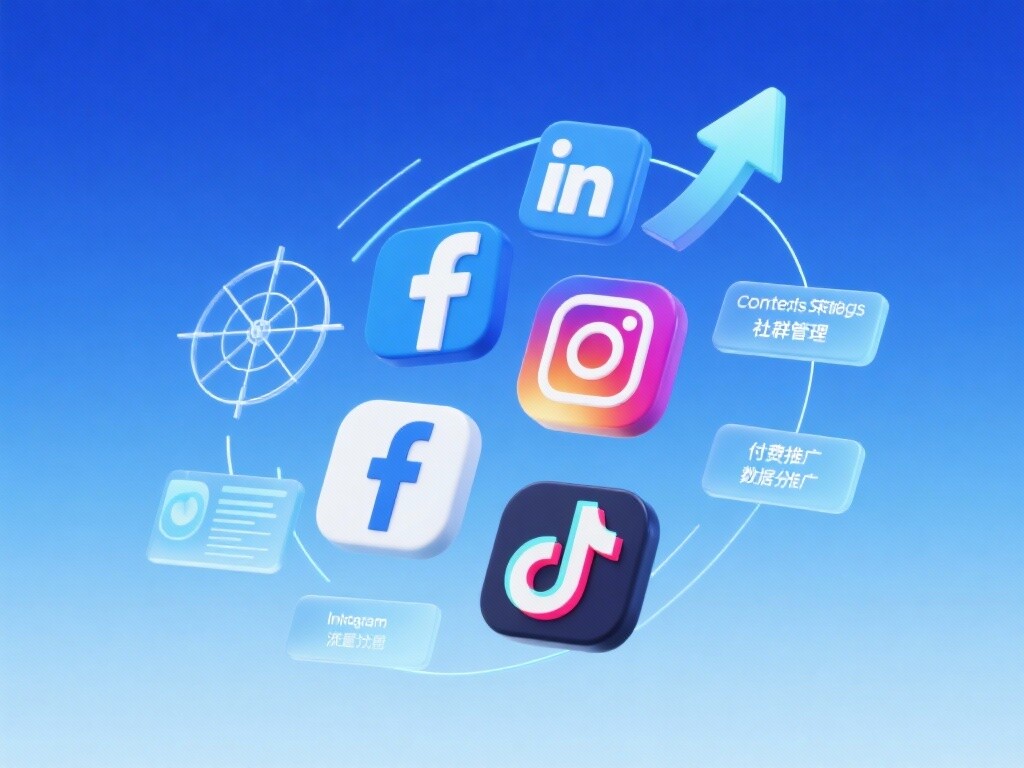
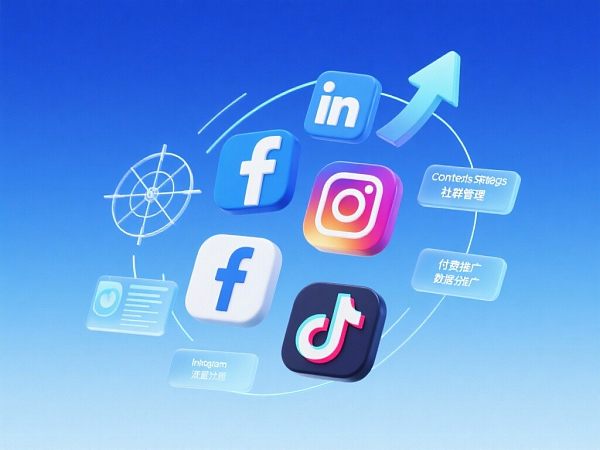
Social media marketing refers to the marketing activities where businesses leverage **user bases, content-sharing mechanisms, and advertising systems** on social media platforms (such as LinkedIn, Facebook, Instagram, TikTok, etc.) to achieve brand promotion, traffic acquisition, customer service, and sales conversion. Its core elements include: **content strategy, community management, paid promotion, data analysis**, and **SEO synergy (SMO)**.
2. The Three Strategic Values of Social Media Marketing for Foreign Trade Businesses
Social media marketing is key for foreign trade businesses to achieve global expansion:
- **Brand Trust and E-E-A-T Establishment**: By consistently publishing professional content on authoritative platforms, businesses can establish their brand as an expert and authoritative figure in the minds of the target audience, indirectly enhancing Google's trust in the brand's website.
- **Precision Traffic Acquisition and CRO**: Utilizing **granular audience targeting** on social media platforms to precisely deliver content to procurement managers or decision-makers in the target industry, driving high-quality, high-intent conversion traffic.
- **Enhancing Social Signals and SEO Synergy**: High user engagement (likes, shares, comments) on social platforms generates strong **brand search signals**, which Google increasingly values, helping improve the website's overall search rankings.
3. The Development History and Technological Evolution of Social Media Marketing
Early Stage (2000s): Dominated by Myspace and blogs, primarily for personal interaction with low business involvement. Mid-Stage (2010s): Rise of Facebook and Twitter, businesses began establishing official pages, focusing on **content publishing and fan accumulation**. Modern Era (2020s to Present): Entered the **algorithm-driven era**, emphasizing **short videos, micro-conversions, KOL/KOC collaborations, and automated optimization of paid ads**, with SMM becoming a data-driven, ROI-oriented precision marketing system.
II. The Five Core Technical Principles of Social Media Marketing: Algorithms, Data, and Platform Mechanisms
The success of social media marketing relies on a deep understanding of the underlying algorithms and user behavior mechanisms of major platforms:
1. The "Interest Graph" Algorithm Principle of Social Platforms
Principle: Platforms like Facebook and TikTok use machine learning to build complex **"interest graphs"**, analyzing users' **interaction history, browsing preferences, geographic location, and social networks**. Technical Application: Algorithms determine the **exposure rate and targeting accuracy** of content. Marketers must understand the three key elements of algorithms—**affinity, timeliness, and weight**—and create highly interactive content to boost organic reach.
2. Social Media SEO (SMO) and Search Mechanism Principles
Principle: Social platforms also have powerful **search functionalities**. Technical Application: **Social media SEO** requires optimizing profiles, page descriptions, content tags (hashtags), and titles to ensure visibility on both internal platform searches and Google. For example, **keyword search optimization** is key to acquiring long-tail traffic on YouTube and Pinterest.
3. Micro-Conversion and Attribution Tracking Technology Principles
Principle: Tracking users' **complete conversion paths** from social platforms to business websites. Technical Application: Deploying **Facebook Pixel, LinkedIn Insight Tag, or TikTok Pixel** connects social platforms with websites. These tracking codes enable **ad attribution**, build **retargeting audiences**, and optimize ad delivery based on conversion data (e.g., completed inquiries).
4. The "Bidding and Optimization" Mechanism Principle of Paid Ads
Principle: Social ads use a **bidding model**, but platform AI prioritizes ads with **high relevance and quality scores**. Technical Application: Marketers must use **high-quality creatives, precise audience targeting, and rational bidding strategies** to improve **relevance scores**, achieving higher exposure and conversions at lower costs.
5. Content Localization and Audience Segmentation Principles
Principle: Different countries and cultures have varying preferences for social content. Technical Application: **Social media marketing** requires **localizing content based on target market culture and language**. For example, **professional articles** on LinkedIn work well for B2B markets in Europe and the U.S., while **entertaining short videos** on TikTok are more effective for B2C markets in Southeast Asia.
III. The Four Core Technical Features and Applications of Social Media Marketing
1. Technical Feature: Highly Granular Audience Profiling and Retargeting
Feature: Social platforms offer **more detailed user behavior data** than traditional ads. Application: Businesses can target audiences based on **hundreds of dimensions like profession, interests, company size, and spending habits**. **Retargeting** allows precise ad delivery to **users who visited the website but didn't inquire**, significantly boosting conversion rates.
2. Practical Application: Content Lifecycle Management and ROI Optimization
Application: High-quality social content has a lifecycle: **1) Organic publishing for initial engagement; 2) Small-budget boosting to expand high-engagement user groups; 3) Converting into paid ad assets for large-scale delivery**. Social media experts track content ROI throughout this process, guiding its evolution from free to paid assets.
3. Practical Application: KOL/KOC Collaborations and UGC Incentives
Application: Partnering with **KOLs (Key Opinion Leaders) or KOCs (Key Opinion Consumers)** in target markets quickly gains trust from their followers. Additionally, **challenges and interactive topics** can incentivize user-generated content (UGC), a cost-effective way to build brand influence and enhance E-E-A-T.
4. Practical Application: Social Customer Service and Crisis PR
Application: Social platforms are now vital customer service channels. Businesses must establish **rapid response mechanisms** to address complaints or inquiries promptly. This is not only crucial for customer retention but also serves as the frontline for **brand crisis PR**, as negative reviews can cause irreversible reputational damage if unaddressed.
IV. Comparative Analysis and Industry Applications of Social Media Marketing
1. Comparative Analysis of Social Media Marketing vs. SEO/SEM
2. Typical Industry Applications of Social Media Marketing
Social media marketing plays distinct roles across industries:
- **B2B Industrial/Tech Export**: Focus on **LinkedIn**, publishing industry reports, whitepapers, and executive interviews to directly reach decision-makers and establish professional authority.
- **Cross-Border B2C Fashion/Consumer Goods**: Target **Instagram and TikTok**, leveraging visual content and short videos to create buzz, drive sales via KOL collaborations and live streaming.
- **Service-Based Export Businesses (e.g., Education, Finance)**: Use **Facebook and YouTube's precision tools** to publish educational content, build expert credibility, and acquire high-quality leads.
3. Certifications and Data Compliance in Social Media Marketing
Global operations require compliance focus:
- **Platform Certifications**: Obtain **Facebook Blueprint, Google Ads** certifications to demonstrate team expertise in ad delivery and optimization.
- **Data Compliance**: Strictly adhere to **GDPR (EU) and CCPA (US)** regulations to ensure lawful collection and use of user data on social platforms, avoiding hefty fines and reputational damage.
- **Ad Policies**: Familiarize with and strictly follow **content review and ad publishing policies** of major platforms to prevent account bans or ad rejections.
V. Activate Your Social Growth Engine Now, Transforming Social Assets into Commercial Value!
Is your social investment lacking ROI? Is your content sinking into oblivion? It's time to let our seasoned foreign trade marketing experts tailor a **social media and SEO synergy growth strategy** for you! We specialize in **platform algorithm analysis, high-conversion creative content, precise pixel attribution, and international compliant ad delivery**. Book our **"Social Media Marketing Diagnosis & Strategy Development" service** today, and we'll help you build formidable brand authority across global social platforms, turning social interactions into tangible inquiries and orders!
Click to Get Your Free Social Media Marketing StrategyFAQ
1. How Does Social Media Marketing Help Improve Google SEO Rankings?
Answer: Social media marketing indirectly impacts SEO through multiple channels: 1) Enhancing brand awareness and search volume, which Google considers E-E-A-T signals; 2) High-quality social content may earn backlinks when cited; 3) Content on platforms like Pinterest and YouTube itself serves as important search traffic sources.
2. Should B2B Export Businesses Focus Their Marketing Efforts on Facebook or Instagram?
Answer: LinkedIn and YouTube should be primary B2B marketing channels. Facebook and Instagram are better suited for **retargeting, brand storytelling** and **attracting non-decision-maker employees**. Platform selection should align with the target audience's professional habits and content preferences.
3. How to Ensure ROI from Social Media Ad Campaigns?
Answer: Successful social ads require: 1) Precise audience segmentation; 2) High-quality, highly relevant creatives; 3) Deployment of tracking codes (Pixel/Tag) for accurate website conversion tracking; 4) Continuous monitoring of **ad relevance scores** with data-driven automated optimization of bids and budgets.
4. What Are "Micro-Conversions" in Social Media Marketing?
Answer: Micro-conversions refer to smaller goals users complete before final inquiries or orders, e.g.: clicking CTA buttons, watching full videos, downloading whitepapers, or visiting key product pages. Social campaigns often optimize for micro-conversions initially to nurture potential customers and build retargeting lists.

Customer Reviews
Manager Chen, European B2B Machinery Equipment Exporter
"Our LinkedIn investments had been underperforming, but after adjusting our social media marketing strategy with the professional team, everything changed. They helped us redesign the **content matrix** and utilized **Insight Tag** to achieve precise remarketing. **In just 4 months, our direct inquiries from social media increased by 60%, with exceptionally high client quality.** The synergy between social media and SEO is also reflected in the overall ranking improvement of our website."
Ms. Wang, U.S. Cross-Border FMCG E-commerce Manager
"We had been relying on Google Ads, but traffic costs remained high. The professional team customized **Instagram and TikTok content & paid placement strategies** for us and optimized our e-commerce conversion funnel through **Pixel**. Now, **social media has become our primary low-cost customer acquisition channel, with ad ROI increasing by 40%, and brand awareness among young user groups achieving explosive growth.**"
 Limited Budget, Unlimited Value: How B2B Export Marketing Creates Endless PossibilitiesHow to Achieve More with Less in Export Marketing? Strategic Creativity is the Key!
 Global Client Solution: One-stop Cross-border Marketing, Low Cost to Boost Global BusinessGlobal Client Solution provides a one-stop cross-border marketing solution, offering professional overseas website construction, advertising promotion, social media operation, and other comprehensive services, helping enterprises achieve global business growth at a low cost. Build a 'SEO+SEM+Social Media Marketing' three-dimensional customer acquisition system, achieving full-channel client expansion and brand marketing.
 International Website Development: Essential Reading for Technical Evaluation PersonnelProfessional interpretation of technical evaluation requirements for international website development, including multilingual support, global server deployment, SEO optimization tool integration, and other critical dimensions, providing actionable technical recommendations.
 Rapid enterprise website building solution: 3-day launch is not a dream!This article details the core advantages and technical solutions of EasyStore's rapid enterprise website building, covering key features such as AI-powered website construction, multilingual support, and global SEO optimization, helping businesses efficiently complete website construction and achieve global growth.
 Full-Strike SEO Optimization Strategy for Foreign Trade Independent Websites: The Secret Weapons for Rapid Ranking ImprovementThis article systematically explains the key steps and tools for SEO optimization of foreign trade independent websites, including multilingual website construction, content optimization, technical SEO and other core aspects. Combined with practical cases of AI intelligent marketing platforms, it provides enterprises with actionable ranking improvement solutions.
 How to Quickly Build a Corporate Website in Nanjing? This Guide is a Must-ReadHow Can Nanjing Enterprises Rapidly Build a High-Conversion Website? This Guide Covers the Full Process from Domain Registration to SEO Optimization and Introduces How EasyYunbao's AI-Powered Website Builder Helps Foreign Trade Companies Launch Multilingual Independent Sites in Just 3 Days.
 Must-Read for Business Decision Makers: How to Build a Global Brand Through Social Media Marketing?In-depth Analysis of Global Brand Social Media Marketing Strategies, Covering Platform Selection, Content Operations, AI Technology Empowerment, and Practical Case Studies to Help Enterprises Efficiently Expand Overseas Markets.
 Still struggling with social media marketing? This SaaS tool makes it easy!EasyPromo AI Social Media Marketing System integrates multi-platform management, intelligent content generation, and data analytics, providing end-to-end solutions from strategy formulation to execution optimization, especially suitable for global operation needs of foreign trade enterprises.