









- What Does a Global Traffic Ecosystem Service Provider Do? What Are the Differences from a Single Advertising AgencyJul 16, 2026View details
- What should you focus on in the latest enterprise SaaS report? From renewal rates and delivery costs to overseas growth opportunitiesJul 12, 2026View details
- What signals are worth paying attention to in a cross-border marketing trend report? B2B companies should look at these 6 signalsJul 11, 2026View details
- How to Read a Cross-Border Marketing Trends Report? Five Key Dimensions for Evaluating Channel OpportunitiesJul 11, 2026View details
- Which channel has the highest ROI in the global traffic ecosystem? Comparative analysis of search, social media, and advertisingJul 10, 2026View details
- What multilingual website services are available in Sanya? Which model is more suitable for local businesses going global?Jul 08, 2026View details
- How to view the complete list of China SaaS companies in the top 100? Practical methods for screening website-building and marketing service providersJul 08, 2026View details
- How to view pricing in the global traffic ecosystem? Cost comparison of search, social media, and content channel advertisingJul 06, 2026View details
Meta Advertising Tips: 3 Settings New Accounts Most Often Overlook
When many beginners launch Meta ads, they often put budget and creatives first while overlooking key account-level settings. To master Meta ad campaign techniques, first avoid these 3 most commonly missed details so you can reduce waste and make subsequent optimization deliver results faster.
For operations staff responsible for day-to-day campaign execution, Meta ads are not a task where “you can just build an ad set and let it run,” but rather a complete system that links account structure, data attribution, event tracking, and ongoing optimization. Especially in an integrated website + marketing services scenario, ad delivery often also needs to work in sync with landing pages, forms, pixels, CRM lead flow, and conversion routing. Missing any one foundational setting will directly affect cost per click, lead quality, and optimization speed.
Yiyingbao Information Technology (Beijing) Co., Ltd. has been deeply engaged in global digital marketing services for more than 10 years. Through integrated practices in smart website building, SEO optimization, social media marketing, and ad campaign coordination, we have found that the setup quality of the first 7 days of a new account often determines the usability of data in the following 30 days. Below, we break down the 3 most easily overlooked key points into Meta ad campaign techniques that are more suitable for hands-on execution by operators.
Before scaling a new account, make sure the underlying account settings are correct first
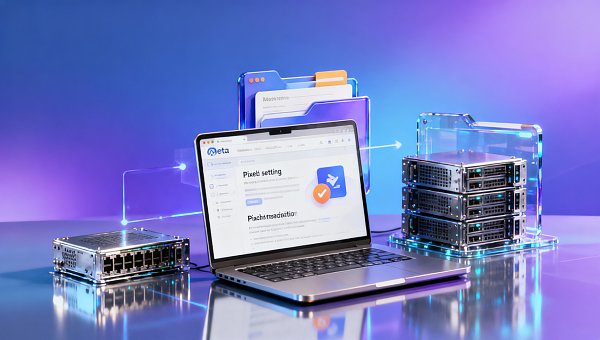
Many account problems are not caused by weak creatives, but by incomplete underlying settings. During the learning phase of a new account from day 3 to day 7, the system is extremely sensitive to signal quality. If account time zone, attribution window, and pixel event priority are not sorted out in advance, then even if CTR looks good, conversion costs later on may still remain distorted.
Setting 1: Do not wait until after launch to change the account time zone and currency
This is one of the most basic yet most commonly overlooked Meta ad campaign techniques. The time zone and currency selected when creating the account usually affect budget statistics, daily report time segmentation, financial reconciliation, and cross-team communication efficiency. For campaigns targeting overseas markets, if the ad account uses Beijing time while the sales team follows up based on U.S. Western Time, lead peak analysis can easily show an 8-hour to 15-hour deviation.
A more practical issue is that once some settings are confirmed, they cannot be changed casually, or the cost of changing them is very high. For a new account, it is recommended to complete 3 checks before going live: target market time zone, billing currency, and payment entity. Especially when a company is advertising in 2 or more regional markets at the same time, it is recommended to split accounts by region rather than using one account to run across multiple time zones.
A check sequence suitable for operators
- First confirm the core inquiry hours in the advertising country or region, such as Beijing time, UTC+8, or local business hours 9:00–18:00.
- Then confirm the financial settlement currency to avoid mixing USD, EUR, and HKD, which may cause ROI calculation deviations.
- Finally, cross-check with the CRM and sales schedule to ensure daily report statistics are aligned with follow-up windows.
To reduce execution errors, the table below can be used as a quick checklist before a new account goes live.
In actual execution, although this type of foundational setting does not directly improve click-through rate, it can reduce at least 3 types of problems: mismatched data, loss of budget pacing control, and inefficient cross-department collaboration. For integrated website + marketing services projects, these problems will further carry over into website tracking, form attribution, and lead distribution processes.
Setting 2: Pixel, Conversions API, and event priority must be planned together
The second commonly overlooked Meta ad campaign technique is installing only the pixel without completing the conversion tracking setup. Today, relying only on browser-side pixel data creates a higher risk of data loss than before. This is especially true for B2B actions such as form submissions, consultation bookings, and white paper downloads. Without event deduplication and server-side data supplementation, the learning phase will be noticeably prolonged.
For a new account, at least 4 layers of setup should be completed: basic page view events, key button clicks, form submission conversions, and Conversions API integration. If the website is built and maintained centrally by a marketing service provider, testing should ideally be completed before launch rather than reworking after ad spend has already started. It is usually recommended to reserve 2 days to 5 days for event validation before formal launch.
Common B2B event setup logic
- Top-of-funnel visit events: PageView, ViewContent, used to build a foundational audience pool.
- Mid-funnel intent events: button clicks, page dwell time, and scroll depth, used to assess interest level.
- Bottom-funnel conversion events: form submissions, WhatsApp inquiries, and demo bookings, used for optimization goals.
- Backend return events: qualified leads and opportunity creation, used to improve subsequent campaign quality.
If a company is also involved in content marketing for vertical industries such as finance, manufacturing, and education, actions like content downloads and report access often also need to be included in the conversion path. For example, industry resource pages, solution pages, or research report download pages are all suitable as medium- to high-intent signal nodes. Content-based product pages like Research on Optimization Paths for Bank Wealth Management Systems are better used in actual campaigns as lead nurturing assets rather than directly taking on the full conversion task.
At the operational level, it is recommended to keep priority control within 8 key events to avoid data fragmentation caused by too many events. If a new account has fewer than 20 daily conversions, you can first focus optimization on 1 core event such as “form submission” or “initiate inquiry,” and then gradually refine high-quality lead labels after 7 days to 14 days.
The 3rd setting that affects subsequent optimization efficiency: attribution, audience, and naming conventions
Many beginners know how to build campaigns, but overlook whether subsequent optimization can continue sustainably. Truly efficient Meta ad campaign techniques are not just about “getting it running first,” but about enabling the account to be quickly reviewed again in week 2 and week 4 so you know which layer is effective and which layer should be paused. The core here lies in attribution settings, audience exclusions, and naming rules.
Setting 3: Attribution window, audience exclusions, and naming system should be designed together
Many operators in new accounts focus only on interest keywords and creatives, but fail to simultaneously establish clear naming conventions. As a result, after day 10, Campaign, Ad Set, and Ad names become mixed up, making it impossible to quickly identify country, objective, audience, and version. For B2B companies, this directly slows down review efficiency and may even lead to budget being added incorrectly.
The attribution window should be determined based on the conversion cycle. For low-threshold lead collection forms, a common observation window can start with 1-day click or 7-day click. If it is a service inquiry with higher customer value and a decision cycle of 2 weeks to 6 weeks, then secondary judgment based on CRM return data is even more necessary. Do not only look at front-end platform conversion volume; also look at the sales follow-up rate and valid lead rate.
Naming recommendation: let the team understand an ad within 30 seconds
It is recommended to use a 5-part structure of “country/region + objective + audience + placement/creative version + date,” for example: US_Leads_LAL1%_Video_A_2405. For companies that simultaneously involve website building, SEO, social media, and ad collaboration, this standardized naming can significantly shorten cross-team communication time and also make it easier to trace the source of issues during review.
The following table is suitable for management before and after a new account goes live, helping operators quickly check which settings will affect the learning phase and subsequent scaling.
From an execution results perspective, standardized naming and audience exclusions will not cause conversions to surge on the first day, but they will significantly reduce ineffective spend. Especially when there are 3 or more audience packages and 2 or more conversion objectives in the ad account at the same time, stable scaling is difficult without rules. For operators, this is precisely the most practical Meta ad campaign technique.
Only when the website and campaign execution are integrated can ad value truly be amplified
In B2B business scenarios, ad delivery is never an isolated action. If a new Meta account wants to see a relatively stable conversion trend within 14 days, the website side must at least simultaneously do 3 things well: control landing page load speed, streamline form fields, and make the inquiry path clear. It is generally recommended that the key information on the first screen be displayed within 3 seconds, and that form fields be controlled between 4 and 6 items to avoid losing users on mobile devices.
If the company also needs to work with content marketing and industry resource downloads, then the campaign path should be designed more around “ad click—page view—content access—sales follow-up—CRM accumulation.” Resources like Research on Optimization Paths for Bank Wealth Management Systems are better suited as audience education and remarketing destination pages, improving the proportion of high-quality inquiries through layered conversions rather than focusing only on single submission cost.
Recommendations for the first 14 days of a new account
- Day 1 to Day 3: Only check tracking, budget spend, basic clicks, and form flow; do not rush to make major creative changes.
- Day 4 to Day 7: Based on CTR, CPC, and landing page view rate, filter out obviously inefficient ad sets.
- Day 8 to Day 10: Observe whether core conversion events are stable, and optimize forms and page structure when necessary.
- Day 11 to Day 14: Based on qualified lead feedback, then decide whether to scale within 20% rather than doubling all at once.
Common misconception reminders
First, do not make large budget changes every day during the learning phase; a single adjustment is recommended to be kept within 20% whenever possible. Second, do not make cold-start audiences too narrow; even in B2B industries, the system needs a certain amount of room to explore. Third, do not look only at the platform’s surface lead volume; at minimum, verify the qualified lead rate once a week, otherwise what appears to be cheap conversions may actually just be low-quality submissions.
Build a solid foundation first so subsequent optimization can move faster
For frontline operators, truly valuable Meta ad campaign techniques are not about chasing complex tactics, but about first stabilizing the 3 settings most easily overlooked in a new account: account time zone and currency, the pixel and Conversions API event system, and attribution, naming, and audience exclusion rules. As long as these 3 underlying layers are set correctly, subsequent creative testing, budget allocation, and lead optimization will have a reliable basis.
In an integrated website + marketing services scenario, improvements in advertising efficiency often come from system collaboration rather than single-point breakthroughs. Leveraging capabilities in smart website building, SEO, social media, and advertising collaboration, Yiyingbao Information Technology (Beijing) Co., Ltd. can help companies complete account setup, tracking deployment, page conversion support, and data optimization loops more quickly. If you are planning to launch a new Meta account or want to sort out your current campaign path, feel free to contact us now for customized solutions and execution recommendations that better align with your business goals.
Related Articles

Related Products
 EasyCamp SaaS Smart Website Marketing SystemE-Yingbao SaaS Smart Website Marketing System: AI-powered, zero-code website building. Rapidly launch multilingual independent e-commerce sites in just 10 minutes. Global server acceleration and AI-driven SEO optimization empower businesses to efficiently connect with global markets. The seamless integration of technology and user-friendly operation makes building e-commerce sites incredibly simple.
 AI+SEM Intelligent Advertising Marketing SystemAI+SEM drives intelligent ad creation, empowering full-funnel precision advertising marketing. The system automatically generates weekly/monthly reports, AI recommends keywords and target countries, monitors core metrics in real-time with intelligent alerts, and enables one-click high-conversion ad solutions to help quickly acquire customers and improve ROI.
 AI+SEO Dual Engine Optimization ServiceEasyWin AI+SEO Dual Engine Optimization System leverages AI-powered keyword mining, content generation, and comprehensive technical optimization to help foreign trade enterprises acquire high-quality organic traffic, significantly improving search rankings and conversion rates.
 AI+SNS Social Media Marketing SystemYingbao AI+SNS Social Media Marketing System - Precision social capture for the social media era. Supports one-click content synchronization across major platforms like Facebook and LinkedIn. AI intelligently rewrites posts for enhanced relevance. 24/7 AI customer service and user profiling analysis empower businesses to efficiently expand into global markets.
 AI+SEO营销解决方案易营宝AI+SEO营销解决方案,通过AI批量写作、智能生成TDK、精准关键词扩词等功能,全面优化网站SEO效果,提升流量与转化率。助力企业构建高效智能网站新生态。
 AI+SEM Advertising Marketing SolutionsAI+SEM Advertising Marketing Solution leverages AI technology to deeply empower SEM ad campaigns. It automatically generates weekly/monthly reports using AI, presenting account data across multiple dimensions for comprehensive insights into campaign performance and trends. The system precisely recommends keywords and target countries, intelligently generates high-conversion ad copy, and enables one-click activation of efficient campaign plans to help businesses rapidly acquire customers. Simultaneously, it monitors core metrics in real time, intelligently identifies abnormal fluctuations, and issues timely alerts to ensure stable, high-return advertising results.
 Domain Name ServicesEasyWin provides professional domain name services, including intelligent queries, one-stop registration, brand protection, and full lifecycle management, helping businesses build a digital brand image.
 EasyOperate B2C Cross-Border E-Commerce Platform & Independent WebsiteEasyStore B2C Cross-border E-commerce Independent Store is an intelligent website building and cross-border e-commerce integrated solution independently developed by EasyStore Information Technology (Beijing) Co., Ltd. The system is specially designed for small and medium-sized as well as large export enterprises, integrating 'website building, operation, marketing, advertising, and conversion' into one, helping enterprises quickly establish cross-border e-commerce independent stores to achieve brand globalization and global sales growth.
The platform supports multiple languages, multiple currencies, and multi-channel marketing, with built-in AI intelligent translation and SEO optimization systems, suitable for mainstream markets such as Southeast Asia, Europe and America, Latin America, and the Middle East, assisting Chinese manufacturing enterprises in efficiently deploying international e-commerce strategies. SSL证书易营宝提供专业SSL安全证书服务,包括单域名和泛域名证书,确保网站数据传输加密、身份验证和完整性保护,助力企业建立安全可信的在线业务环境。









