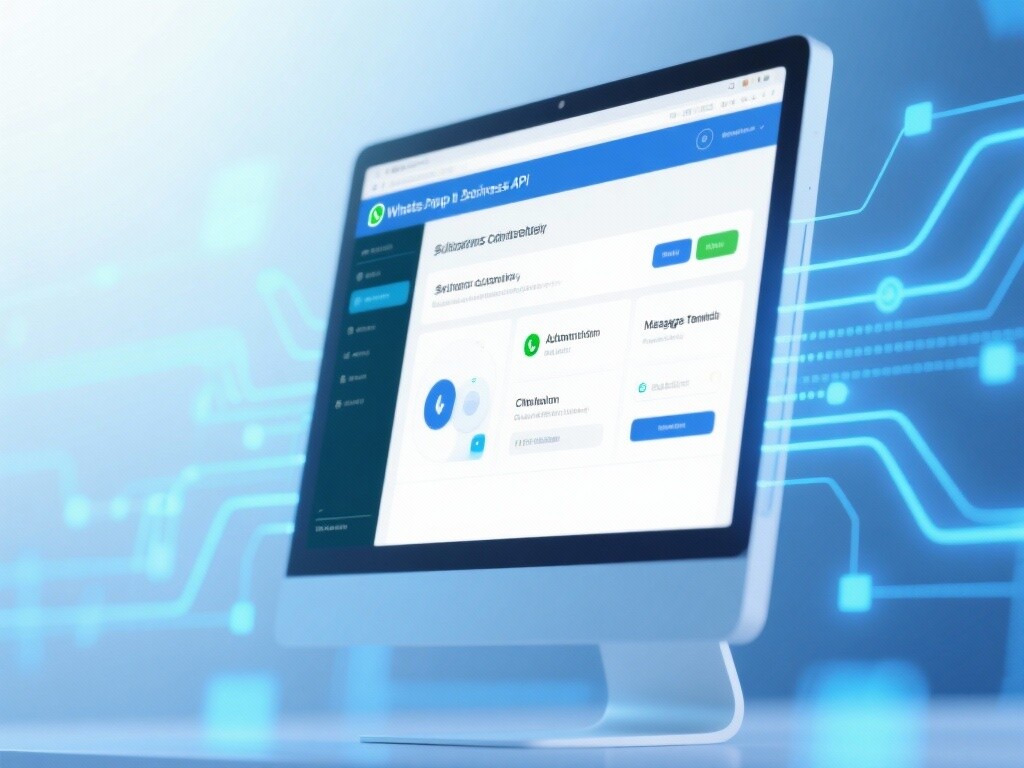
1. The Authoritative Definition of WhatsApp in Foreign Trade Marketing, Key Features, and Development History
1. The Commercial Authoritative Definition of WhatsApp
In commercial terms, WhatsApp specifically refers to the **"WhatsApp Business"** ecosystem provided by Meta. It is a tool based on encrypted instant messaging technology, used for **direct, private, and highly efficient** communication between businesses and customers. In the field of foreign trade, it has become a key touchpoint for **inquiry handling, order follow-up, and after-sales service**.
2. WhatsApp's 3 Major Strategic Values in Foreign Trade
WhatsApp has become a core tool in foreign trade for the following reasons:
- **High Conversion Rate:** Compared to email, instant chat responses are faster, significantly shortening customer decision cycles and improving conversion rates.
- **Customer Stickiness:** Directly integrates customers into the business's private domain, facilitating personalized services and subsequent marketing (e.g., new product announcements).
- **Global Ubiquity:** In most core foreign trade markets outside mainland China (e.g., Europe, the U.S., Southeast Asia, Latin America), it has extremely high user penetration.
3. WhatsApp's Development History and Commercial Evolution
Early Stage (2009-2017): Initially a free personal instant messaging tool, later acquired by Facebook/Meta. Commercialization Phase (2018-Present): Launched **WhatsApp Business App** (for small businesses) and **WhatsApp Business API/Platform** (for medium-to-large enterprises), officially entering the enterprise services market with a focus on automation and system integration.
2. WhatsApp's 5 Core Technical Principles: API, Automation, and Compliance
To achieve efficient foreign trade operations via WhatsApp, the following technical principles must be followed:
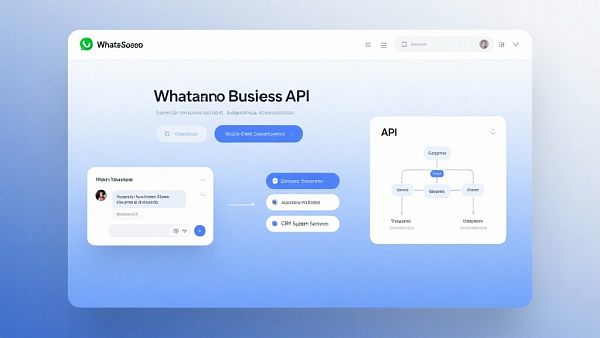
1. System Integration Principles of WhatsApp Business API
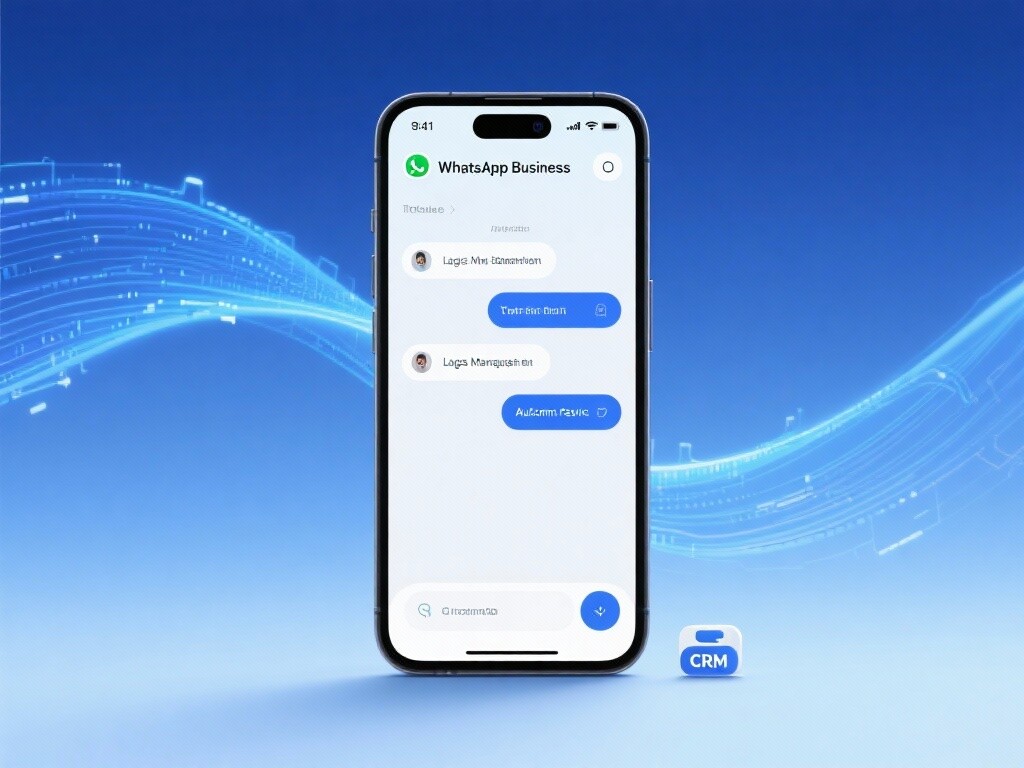
Principle: API (Application Programming Interface) allows businesses to integrate WhatsApp functionality into their **existing CRM, ERP, or marketing automation systems**. Technical Application: Through the API, businesses can implement **shared numbers for multiple agents, bulk automated notifications, and customized message templates**, meeting the collaboration and data management needs of medium-to-large foreign trade enterprises.
2. 24-Hour Conversation Window and Message Template (HSM) Principles
Principle: To prevent misuse, WhatsApp enforces a **24-hour conversation window**. Businesses can only freely respond within 24 hours of the customer's last message. Technical Application: Beyond 24 hours, businesses must use **pre-approved message templates (HSM, Highly Structured Message)** for paid messaging, ensuring compliance and customer experience.
3. Chat-Based Conversion Rate Optimization (CRO-Chat) Principles
Principle: Optimize WhatsApp buttons on websites and ads to maximize click-through and conversation initiation rates. Technical Application: Deploy **"One-Click WhatsApp Chat" buttons** in key positions (e.g., product pages, quote pages) and use **UTM parameters** to track sources. Additionally, set **pre-filled messages** to guide customers toward high-intent inquiries.
4. End-to-End Encryption (E2EE) and Data Security Principles
Principle: WhatsApp provides end-to-end encryption, ensuring only senders and recipients can read message content. Technical Application: This offers critical **business confidentiality and privacy protection** for foreign trade transactions. When using the API, businesses must choose **compliant service providers** and adhere to **GDPR/CCPA** regulations for secure customer data storage and usage.
5. Chatbot Automation for Customer Service Principles
Principle: AI-driven chatbots handle common queries during off-hours or peak periods. Technical Application: Deploy **multi-turn chatbots** via API to automate responses to **product inquiries, factory addresses, shipping times**, etc., and seamlessly transfer complex requests to human agents for 24/7 service.
3. WhatsApp's 4 Core Technical Features and Applications
1. Technical Feature: Multi-Agent and Team Collaboration (API Only)
Feature: A single WhatsApp Business number can be accessed and managed by multiple team members. Application: Ideal for **multi-region, multilingual sales teams** in foreign trade companies. The system automatically routes inquiries to region- or language-specific agents, ensuring quick, professional responses and avoiding customer loss due to device limitations.
2. Practical Application: Foreign Trade Ads (Click-to-WhatsApp Ads)
Application: Run ads on **Facebook/Instagram** (Meta platforms) that direct users to WhatsApp chat upon clicking. This drastically shortens conversion paths. Foreign trade businesses should leverage its **high interactivity** for **product launches, limited-time promotions**, etc., to quickly capture high-intent traffic.
3. Practical Application: Customer Segmentation and Tag Management
Application: Use **Labels** in WhatsApp Business App or API to segment customers (e.g., **"High-Intent Leads," "Pending Follow-Up," "Repeat Customers"**). This helps sales teams prioritize follow-ups and implement tailored communication strategies.
4. Practical Application: WhatsApp Payments and Order Notifications
Application: In regions with payment functionality, WhatsApp enables direct transactions. Elsewhere, businesses can send **order confirmations, shipping updates, payment links**, etc., using WhatsApp as a high-efficiency order fulfillment and service channel.
4. Comparative Analysis of WhatsApp's Three Versions and Industry Applications
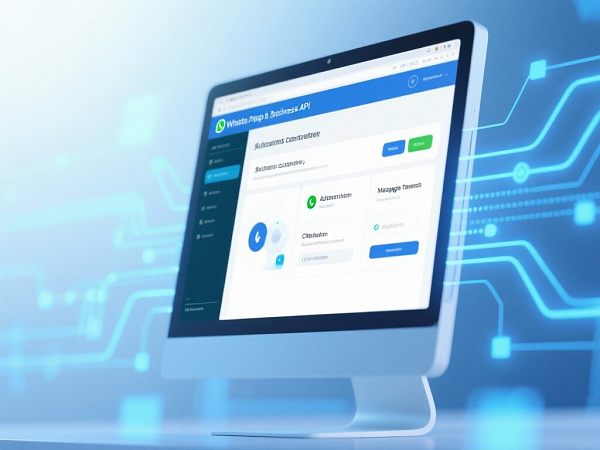
1. WhatsApp Personal vs. Business App vs. Business API
2. Typical Foreign Trade Use Cases for WhatsApp
WhatsApp strategies for different foreign trade scenarios:
- **B2B Supply Chain/Manufacturing:** For **product quotes, on-site photo/video confirmations, quick contract delivery**. High-value inquiries can swiftly transition from email to WhatsApp for deeper follow-up.
- **Cross-Border B2C E-Commerce:** For **customer support, order status updates, logistics tracking, quick after-sales resolution**, significantly improving satisfaction and repeat purchase rates.
- **Service-Based Foreign Trade (Consulting/SaaS):** For **appointment scheduling, product demo links, quick technical troubleshooting**, serving as a trusted, convenient communication channel.
3. Compliance and Certification for WhatsApp Business Applications
Foreign trade businesses using WhatsApp must comply with:
- **Meta's Business Messaging Policy:** Strictly adhere to WhatsApp's template guidelines. Avoid sending promotional/unauthorized messages to prevent account bans.
- **GDPR/CCPA Compliance:** Customer data (e.g., names, numbers) must be collected and used per target market privacy laws, with clear website disclosures.
- **API Partner Certification:** Only obtain API services through Meta-authorized **Business Solution Providers (BSPs)** to ensure stability and security.
5. Upgrade to WhatsApp Business Now and Boost Inquiry Efficiency by 5X!
Still managing hundreds of customers with a personal WhatsApp account? It's time to ditch inefficiency and embrace professional, systematic private domain operations! Our expert team specializes in **compliant WhatsApp Business API deployment, multi-agent integration, and CRO-Chat optimization**. We help seamlessly convert website traffic into WhatsApp sales pipelines and automate follow-ups. Book a **free "WhatsApp Business Operations Assessment"** today for a customized private growth plan!
Click for Free Business Operations AssessmentFAQ
1. What are the advantages of WhatsApp Business API? Do small businesses need it?
Answer: The core advantages of API are **multi-agent support, system integration, and automation**. For businesses averaging over 50 monthly inquiries or requiring multiple sales agents to collaborate on follow-ups, **API is the only choice for scalable, professional operations**.
2. How to avoid WhatsApp Business account bans due to policy violations?
Answer: The key is **strict compliance with Meta's messaging policies**. **Avoid unsolicited bulk messaging**. Beyond the 24-hour conversation window, always use **pre-approved HSM templates** for paid messaging to ensure compliant, non-intrusive content.
3. How to integrate WhatsApp chat data with CRM systems?
Answer: This must be achieved through **WhatsApp Business API**. The API allows real-time synchronization of all chat records, customer information, inquiry statuses, etc., to Salesforce, HubSpot, or custom CRM systems, enabling centralized customer data management and sales automation.
4. Where should WhatsApp buttons be placed on websites for maximum conversion?
Answer: Highest-converting placements include: **CTA sections on product detail pages, floating "Contact Us" widgets** (site-wide visibility), and **landing page footers/form bottoms**. Using pre-filled messages (e.g., "I want a quote for XXX") can further improve conversion rates.
Customer Reviews
General Manager Zhang, Auto Parts Exporter to Middle East and Latin America
"WhatsApp is our lifeline for developing emerging markets. With expert guidance, we successfully deployed **API and multi-agent collaboration systems**. **Inquiry response times dropped from 3 hours to under 3 minutes**. More importantly, through **Click-to-WhatsApp ads**, our cost per high-intent lead is 40% lower than traditional email, significantly boosting penetration in regional markets."
Manager Sun, European B2C Outdoor Products E-commerce
"We primarily focus on independent foreign trade websites, **the introduction of WhatsApp Business has completely transformed our customer service efficiency.** The API system can automatically send order confirmations and logistics status updates, **significantly reducing customer inquiries via email.** Additionally, by using chatbots to automatically respond to common after-sales questions, we have saved substantial labor costs and increased customer satisfaction to over 90%."
 WhatsApp blocked in seconds for not doing this?The newly registered WhatsApp account was blocked in seconds? The reason may be that you did not maintain the account! This article shares the bitter experience and teaches you how to maintain a new account by simulating real-life operations, avoid violations, and protect your customer resources and chat records.
 Emergency! WhatsApp can't receive the verification code? 3 tricks to solve in secondsWhatsApp verification code not receiving? Try the 3-trick first aid program immediately: turn on global proxy, turn off SMS blocking, contact your carrier to enable international SMS. With voice verification code, clear cache, permission settings and other ultimate tips, Huawei/Honor users must see!
 Must-read for foreign trade business owners! WhatsApp Personal vs. Business Edition: Are you using the right one?Must-read for foreign trade business owners! Key differences between WhatsApp Personal and Business Editions: Professional branding, efficiency enhancement techniques, customer management optimization. Avoid account suspension risks, get the complete operation guide!
 B2B Bosses Beware! These two types of ads will waste your budget, and your order leads will vanish!B2B Bosses Take Note! Failure to renew WhatsApp direct ads and form ads on time will lead to customer loss, missed precision leads, and even affect account weight. Understand renewal importance to avoid order loss!
 Foreign trade business customer acquisition, Google and Facebook in the end to choose who?Foreign trade companies face a choice when acquiring customers: should they rely on the precise delivery of Google search ads or the wide coverage of Facebook social ads? This article deeply analyzes the advantages of both to help you make wise decisions and achieve efficient customer acquisition and brand growth.
 How Can Multilingual Website Design Help Enterprises with Global Expansion?This article systematically explains the core value and implementation approach of multilingual website design, combining Ten Years Business and YepBridge's industry experience with AI-powered website-building system capabilities to provide practical solutions for enterprises' global expansion.
 Burning fast = Google screwing you? The truth is you're using the wrong bidUncover the truth that Google ads burn money fast: manual bidding is inefficient and costs are out of control! Intelligent bidding automatically optimizes the value of clicks by analyzing user intent, but conversion tracking and data accumulation need to be set up correctly. Get the Smart Bid Avoidance Guide to improve ad ROI now!
 Must-Know for Multilingual Foreign Trade Website: 5 Key Metrics for Website TestingThis article systematically analyzes the 5 essential testing metrics for multilingual foreign trade websites, including SEO architecture scoring and multilingual compatibility from a technical perspective. With real-world case studies from EasyYunbao's AI-powered website building system, it provides actionable optimization solutions for businesses.