I. The Authoritative Definition, Strategic Necessity, and Historical Development of Independent Foreign Trade Website Construction
1. The Authoritative Definition of Independent Foreign Trade Website Construction
Independent foreign trade website construction refers to enterprises building a website for showcasing products, brands, collecting inquiries, or conducting online transactions through **their own domain name, server, and independent system**. Its core features are that **data, traffic, and brand assets** are entirely owned by the enterprise, free from restrictions imposed by third-party platform rules.
2. The Three Strategic Values of Independent Foreign Trade Website Construction
Independent websites are the cornerstone for sustained growth in foreign trade enterprises:
- **Traffic Privatization and Data Accumulation:** Breaking free from the **"rental" model** of platforms, all visitor data (GA4, Metrica) belongs to the enterprise, providing a foundation for precise marketing.
- **Brand Premium and Authority:** Website design, functionality, and content are fully customizable, enabling deep displays of **professional capabilities and E-E-A-T signals** to enhance negotiation power.
- **SEO Performance and CRO Optimization:** Adopting the most advanced website technologies (e.g., SaaS-optimized architecture) ensures **CWV performance compliance** and **optimal inquiry conversion paths**.
3. The Historical Development and Technological Evolution of Independent Foreign Trade Website Construction
Early Stage (1990s): Mostly simple **HTML static sites** for information display. Mid-Stage (2000s-2010s): Dominated by **WordPress/CMS**, emphasizing content management but reliant on manual performance and maintenance. Modern Era (2020s-Present): Shift to **integrated SaaS website platforms**, emphasizing **AI-driven SEO optimization, global CDN deployment, and high-conversion design**, treating websites as core marketing tools.
II. The Five Core Technical Principles of Independent Foreign Trade Website Construction: Performance, Internationalization, and Security
A successful independent foreign trade website must be built on the following technical principles:

1. SEO-Friendly High-Performance Architecture Principle (CWV Compliance)
Principle: Website performance (e.g., LCP, FID/INP) is a Google ranking factor. Technical Application: Modern independent sites should adopt **optimized rendering techniques (e.g., preloading, critical CSS inlining)** and deploy **global CDN**. High-performance SaaS platforms ensure streamlined code without complex configurations, guaranteeing fast loading and Core Web Vitals (CWV) compliance.
2. Hreflang Automation Principle for Multilingual SEO
Principle: Resolves duplicate content and geo-targeting issues in Google indexing. Technical Application: Superior foreign trade website systems should feature **auto-generation, deployment, and error detection for Hreflang tags**, ensuring precise targeting of language versions to relevant markets and users.
3. Security and Compliance SaaS Principle
Principle: Foreign trade websites face global cyberattacks and data compliance risks. Technical Application: Through **integrated SaaS platforms**, built-in **SSL certificates, DDoS protection, auto-backups, and vulnerability fixes**, plus **GDPR/CCPA compliance tools**, ensure adherence to international data laws.
4. Structured Data (Schema Markup) Auto-Deployment Principle
Principle: Standardized code snippets (Schema) clearly describe website content (e.g., products, reviews, FAQs) to search engines. Technical Application: Website systems should **auto-generate and embed Schema Markup** based on user inputs like **product info, reviews, and contact details**, enhancing CTR via rich snippets.
5. Marketing Tool Integration and Data Loop Principle
Principle: Websites must seamlessly integrate global marketing tools. Technical Application: Systems should support easy integration with **Google Analytics 4 (GA4), Google Ads conversion tracking, Facebook Pixel, CRM systems**, enabling full-funnel data tracking from "traffic" to "inquiries" to "orders".
III. The Four Core Technical Features and Applications of Independent Foreign Trade Website Construction
1. Technical Feature: B2B/B2C Hybrid Model Support
Feature: Modern foreign trade websites must serve both B2B inquiries and B2C orders. Application: Platforms should flexibly switch between or support **inquiry forms, live chat** (B2B) and **shopping carts, international payment gateways** (B2C), maximizing conversion opportunities.
2. Practical Application: CRO-Optimized Design
Application: CRO must be integrated into website design. Key applications include **high-contrast CTAs, clear value propositions, distraction-free landing pages, multi-step inquiry forms**, and **heatmap-driven layout optimizations**.
3. Practical Application: E-E-A-T Content Framework
Application: Independent sites need dedicated frameworks for authoritative content: **"About Us"** showcasing team expertise; **"Case Studies"** detailing collaborations and results; **"Certifications & Standards"** pages displaying industry credentials—all critical for Google E-E-A-T signals.
4. Practical Application: Mobile-First Design
Application: With Google's mobile-first indexing, independent sites must ensure **mobile UX, loading speed, and functionality** surpass PC performance. All design and testing should prioritize mobile devices.
IV. Comparative Analysis and Industry Applications of Independent Foreign Trade Website Construction
1. Comparative Analysis: SaaS vs CMS vs Custom Development
2. Typical Industry Applications of Independent Foreign Trade Websites
Website strategies vary by industry:
- **B2B Industrial/Machinery Manufacturing:** Use **high-performance SaaS websites**, emphasizing **detailed product specs, technical docs, and E-E-A-T pages** to meet buyer needs.
- **Cross-Border B2C E-Commerce (High-Value):** Focus on **brand storytelling, high-res images, and streamlined checkout**, leveraging third-party payments and global CDN.
- **OEM/ODM Supply Chain Services:** Highlight **customization capabilities and flexible supply chains**, with landing pages guiding detailed inquiries.
3. Certifications and Metrics for Independent Foreign Trade Websites
Professional websites must meet:
- **Performance Standards:** **Google PageSpeed Insights** scores consistently **above 90**.
- **SEO Compliance:** Pass **Google Search Console** checks for **mobile usability, Hreflang errors**.
- **Security Standards:** **SSL certificates**, preferably with **ISO 27001** certification.
V. Launch Your Independent Foreign Trade Website Today and Seize Global Growth Opportunities!
Is your website slow, multilingual-messy, and low-converting? You're missing global opportunities! Choose our **integrated SaaS foreign trade website solution** for **architecture, SEO, and CRO design**, ensuring global competitiveness. Book a **free consultation** for a customized strategy and ROI report!
Click for Free Website SolutionFAQ
1. What are the main cost components of independent foreign trade website construction?
Answer: Main components: **Domain fees** (annual), **website system/platform subscriptions** (SaaS) or **development/hosting fees** (CMS/custom), **professional design and content creation** (one-time), plus **ongoing SEO and maintenance costs**.
2. How to ensure global access speed post-construction?
Answer: Key: Deploy **global CDN** to cache resources worldwide. Also, choose **high-performance architectures**, optimize images and code loading to meet CWV requirements.
3. What are the main differences between B2B and B2C independent websites?
Answer: **B2B sites** emphasize **professionalism, E-E-A-T, and high-quality inquiry conversion (CRO)**; content requires depth. **B2C sites** prioritize **UX, payment convenience, inventory management, and quick checkout**, with marketing-focused content.
4. How to choose the best website solution?
Answer: **Most SMEs should opt for integrated SaaS platforms** for SEO, security, and multilingual support at the lowest TCO. **Custom development** is only for complex needs with sufficient budgets.
Customer Reviews
CEO Wang, Asia High-Precision Machinery Manufacturer
"Switching from traditional CMS to a professional foreign trade SaaS website was a leap in our digital transformation. **Global access speeds improved significantly, with CWV scores stable above 95.** Most crucially, **automated Hreflang deployment resolved multilingual indexing issues.** **The site generated high-intent inquiries exceeding our annual total within 8 months.**"
Manager Sun, European B2C Cross-Border Consumer Brand
"Our goal in building the independent site was to establish a strong brand image. The SaaS platform not only met our high-end design requirements but also ensured **integrated SEO and CRO at the technical level.** We could conveniently conduct A/B testing and optimize the shopping journey. **After the website went live, organic search traffic grew rapidly, bounce rates dropped significantly, and brand equity accumulated quickly.**"
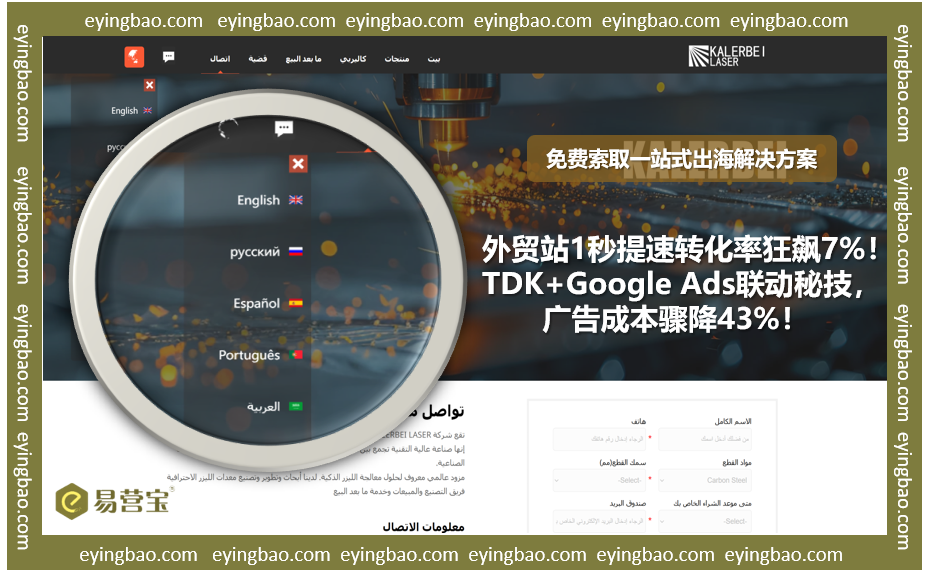
 Is your multilingual independent website leaking orders? Unlock the underlying synergy logic between Google rankings and advertising costs.Every 1-second improvement in page loading speed increases B2B website conversions by 7%. Discover how SEO-optimized TDK slashes Google Ads costs by 43% through strategic alignment.
: The 'Bizarre' Gifts That Make Foreigners Cringe!") International Gift-Giving Guide (China): The 'Bizarre' Gifts That Make Foreigners Cringe!Revealing the Gifts Foreigners Dislike in International Trade—Avoid Gift-Giving Pitfalls! Chinese tea and baijiu aren't universally loved, and food allergies require caution. Stay tuned for our foolproof gift guide—don't miss it!
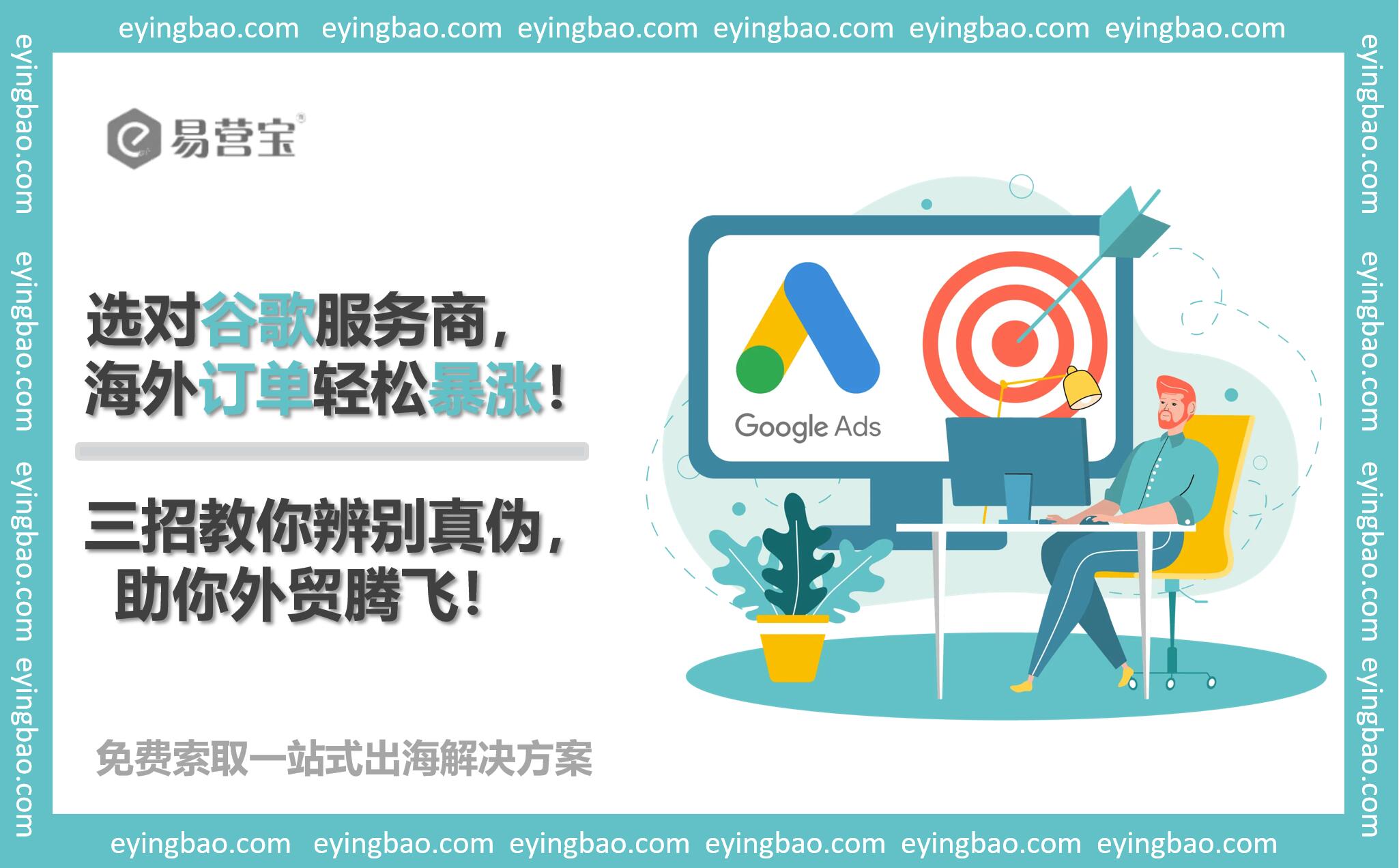
International Gift-Giving Guide (China): The 'Bizarre' Gifts That Make Foreigners Cringe!Revealing the Gifts Foreigners Dislike in International Trade—Avoid Gift-Giving Pitfalls! Chinese tea and baijiu aren't universally loved, and food allergies require caution. Stay tuned for our foolproof gift guide—don't miss it! How to Choose a Google Service Provider? Three Tips to Identify Authenticity, Overseas Order Surge is Not a Dream!Choose the Right Google Service Provider, Easily Achieve Overseas Order Surge! Three Tips to Help You Distinguish Authenticity and Boost Your Foreign Trade!
 Independent website construction + SEO optimization plan, two-pronged approach to boost trafficThis article introduces in detail the full-process solution for foreign trade independent sites from site building to SEO optimization, including core technologies such as intelligent site building system, AI advertising diagnosis, Google Ads optimization, etc., to help foreign trade companies build an international marketing platform with high conversion rates.
 Foreign trade independent station AI translation engine: a powerful tool to break the language barrierThis article introduces in detail the technical principles, core advantages and practical application scenarios of the AI translation engine for foreign trade independent websites, helping foreign trade companies understand how to use AI translation technology to improve the website's multilingual support capabilities and enhance user experience and conversion rates. At the same time, the article also provides practical suggestions for selecting AI translation engine service providers, as well as how to combine SEO optimization with Google Ads delivery to maximize the marketing effect of independent websites.
 The official agent of Google for foreign trade independent website: authoritative certification, trustworthyThis article introduces in detail the key elements of building a foreign trade independent station, including how to choose an officially certified service provider, the importance of SEO optimization, and the application of AI technology in foreign trade independent stations. It aims to provide a comprehensive website construction guide for foreign trade companies.
 Global SEO-optimized website system, empowering businesses to capture international marketsThis article provides an in-depth analysis of the technical advantages and implementation scenarios of EasyStore's global SEO-optimized website system, covering AI-powered website building, multilingual SEO optimization, overseas marketing channel integration, and other core modules, offering a one-stop solution for businesses planning to expand into international markets.
 Rapidly deploy multilingual websites, empowering global expansion for B2B export enterprises!This system outlines the technical approaches and marketing values in multilingual website development, combining practical case studies from Easymp AI website-building platform to provide comprehensive solutions for foreign trade enterprises—from site construction to traffic acquisition.