









- How Can a Brand Updates Page Be Made More SEO-Friendly? Analysis of Update Frequency, Content Structure, and Internal Linking StrategyJun 28, 2026View details
- What stages does the cross-border services ecosystem include? How do website building, promotion, payment, and compliance work togetherJun 22, 2026View details
- How will email marketing costs change in 2026Jun 22, 2026View details
- The China-US tariff arrangement has reached a preliminary consensus, and the trade association will be establishedJun 15, 2026View details
- Should overseas brand marketing start with ads or contentJun 21, 2026View details
- What determines B2C cross-border e-commerce website development costs? A breakdown of features, interfaces, and deployment methodsJun 17, 2026View details
- China-Morocco zero-tariff access, a breakthrough in the cost of Moroccan goods exports to ChinaJun 11, 2026View details
- What signal should be released for the suspension of exports to JapanJun 10, 2026View details
Is responsive design really just adaptive? Don’t overlook these key differences
Many people equate responsive design with adaptive design, but in fact the two differ significantly in layout logic, development cost, and later maintenance. For technical evaluators, understanding these key differences is essential to making more sound technical judgments for integrated website and marketing service projects.
Today, as corporate websites, marketing landing pages, multilingual site clusters, and lead conversion systems continue to merge, front-end architecture is no longer just a question of “whether it can display completely,” but is directly related to SEO crawling efficiency, cross-device conversion rates, content maintenance costs, and the ability to scale future advertising campaigns. Especially in B2B digital marketing projects, technical choices often affect operational efficiency over the next 12 months to 36 months.
For those responsible for technical evaluation, judging whether responsive design is suitable for a project should not stop at the level of “it can be viewed on mobile phones and also on computers,” but should be systematically evaluated in combination with page component complexity, content update frequency, number of business countries, SEO goals, and advertising campaign pace.
The core difference between responsive design and adaptive design goes beyond screen adaptation
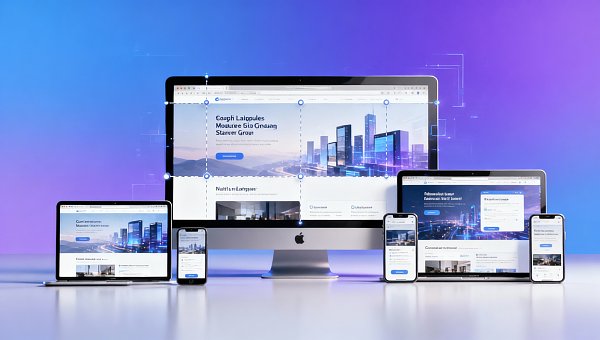
From the perspective of development definitions, responsive design is usually based on the same set of front-end code, using fluid grids, flexible images, and CSS media queries to allow pages to change continuously under different resolutions; adaptive design, by contrast, is more inclined to prepare multiple layouts for several fixed breakpoints, such as 320px, 768px, 1024px, and 1440px, each calling different styles or structures.
One codebase scaling continuously and multiple templates switching by breakpoint are fundamentally different
During technical evaluation, what is most easily overlooked is the “layout logic” of the two. Responsive design emphasizes continuous change: the same module will be proportionally rearranged between 360px and 1920px; adaptive design is more like interval-based switching: once a device crosses a breakpoint, the overall layout jumps to another preset state. The former is flexible, the latter is controllable, but the development approaches are completely different.
For integrated website + marketing service projects, this difference directly affects the collaboration efficiency of the content team and the media buying team. For example, if a page contains an above-the-fold form, a case study module, an FAQ module, and a multilingual switcher, insufficient breakpoint design may cause issues such as button misalignment, crowded forms, and weakened CTA between 900px and 1100px, thereby affecting conversions.
Technical evaluation can first focus on 4 basic dimensions
- Whether the number of breakpoints covers mainstream access ranges, such as 360px, 768px, 1024px, 1366px, 1920px;
- Whether components support flexible scaling, rather than relying only on hiding elements to solve layout problems;
- Whether images, videos, and forms have differentiated loading mechanisms based on terminal differences;
- Whether content under the same URL is convenient for crawling, indexing, and later iteration.
The table below is suitable for use in the early stage of project initiation, helping technical evaluators quickly distinguish the actual differences between responsive design and adaptive design in website construction and marketing systems.
If the project goal is to support multi-channel customer acquisition over the next 2 years or more, responsive design is usually more scalable than simple adaptive design. But this does not mean all businesses must choose responsive design; the key still lies in whether page complexity, team capability, and iteration frequency are well matched.
Why technical evaluators cannot look only at the “front-end effect”
In actual procurement, many demo environments display only the visual effect of the homepage, easily causing decisions to focus on the two superficial indicators of “appearance” and “compatibility.” But what truly affects project success or failure is often 6 underlying issues: content management, component reuse, form tracking, tracking code compatibility, page loading speed, and multilingual scalability.
For example, a company plans to launch 3 versions in Chinese, English, and Japanese within the next 6 months, while also integrating SEO optimization, social media advertising, and remarketing tracking. If front-end adaptation is handled only with a breakpoint patchwork approach, additional work hours may later arise in page version synchronization, tag deployment, and data calibration, commonly increasing maintenance pressure by 20% to 40%.
In integrated website and marketing service projects, how to judge whether responsive design is better
For technical evaluators, judging whether responsive design is better cannot be separated from business goals. An official website focused mainly on brand presentation and a website that undertakes SEO traffic, advertising lead collection, social media traffic generation, and automated nurturing do not carry the same technical weighting. The former places more emphasis on stable presentation, while the latter emphasizes continuous conversion and rapid iteration.
5 scenarios where responsive design should be prioritized
- The site has more than 50 pages, and sections are adjusted more than once per quarter;
- Mobile traffic is expected to account for 40% to 70%;
- It is necessary to simultaneously support SEO content pages, advertising landing pages, and campaign pages;
- There are plans to expand into more than 2 languages or multiple regional sites;
- CRM, form tracking, heatmaps, and conversion analysis tools need to be integrated.
If the project has the following limitations, adaptive design may also be more suitable
If the project timeline is extremely short, for example, a campaign page must go live within 7 to 15 days; or if the number of pages is controlled within 5 and the lifecycle does not exceed 3 months, then an adaptive solution may sometimes be easier to deliver within budget and time constraints. The focus of technical evaluation is not “which is more advanced,” but which is better aligned with the current business pace.
At this point, service providers with collaborative capabilities in website building, SEO optimization, social media marketing, and advertising placement have more advantages. Companies such as Easy-Biz Information Technology (Beijing) Co., Ltd., which have long served integrated website + marketing service needs, are more likely to consider technology, content, and customer acquisition paths together when choosing front-end architecture, rather than treating page adaptation as a separate issue.
To avoid bias in technical selection, evaluation criteria can be broken down into more actionable checkpoints. The following table is suitable for use during tendering, comparison, or supplier communication stages.
If a supplier cannot clearly explain breakpoint logic, component rules, and subsequent expansion plans, then even if the demo page looks visually good, it is still not recommended to enter the development stage directly. For technical evaluators, a clear implementation method is more valuable for reference than verbal promises.
The 3 most common misunderstandings when implementing responsive design
Misunderstanding 1: Treating page shrinkage as mobile optimization
Many projects simply scale down the PC page proportionally, which visually seems to complete responsive design, but button tap areas, form input, above-the-fold copy length, and image cropping have not been redesigned. The result is that the page is “viewable” but not easy to use, and users are especially likely to drop off during the first 3 seconds on the mobile above-the-fold screen.
Misunderstanding 2: Looking only at development quotes, not at 3-year maintenance costs
Technical evaluation cannot compare only one-time construction costs. For websites under continuous operation, what should really be compared is the modification frequency, template reuse rate, testing hours, and difficulty of content synchronization over 12 months to 36 months. Saving 10% of the development budget once may be offset by repeated rework in later maintenance.
Misunderstanding 3: Overlooking the consistency of marketing data collection
Responsive design is not only a front-end issue, but also concerns the data chain. If the CTA positions, event naming, and form fields on mobile and desktop are not unified, later advertising attribution and lead analysis will be biased. For companies that rely on coordinated customer acquisition through SEO and advertising, this will directly affect budget judgment and page optimization direction.
Implementation recommendations for technical evaluators: shifting from “can go live” to “can grow”
In integrated website + marketing service scenarios, the value of responsive design should not be measured only by compatibility, but should be examined within the growth chain: whether it can support SEO content expansion, whether it can improve the multi-device access experience, whether it can reduce version maintenance costs, and whether it can keep media buying, content, and sales conversion paths consistent.
It is recommended to adopt a phased evaluation method
In the first stage, look at business goals and clarify whether the site is more brand-oriented, acquisition-oriented, or also takes global presentation into account; in the second stage, look at the technical structure and inspect breakpoints, components, and tracking code placement; in the third stage, look at the operation and maintenance mechanism and confirm responsibility boundaries for content updates, new page additions, language expansion, and performance optimization. Usually, these 3 stages are enough to identify most risks in advance.
If the company internally still needs to supplement institutionalized and research-oriented reference materials, it can also draw on some mature studies at the project management and process governance level, such as the methodological approach reflected in Research on Optimization Strategies for the Financial and Accounting Supervision System of Administrative Institutions, that is, first clarifying the supervision framework and then refining execution and review mechanisms. This way of thinking is equally applicable in website project review for standardizing acceptance and continuous optimization.
When choosing a service provider, focus on clarifying these 4 things
- Whether it can simultaneously provide website building, SEO, social media, and advertising coordination implementation, rather than just single-point development;
- Whether it has a clear responsive design delivery checklist, including breakpoint descriptions, component rules, and testing scope;
- Whether it supports content expansion and technical optimization over the following 6 months to 12 months;
- Whether it can combine page experience with conversion metrics, rather than only delivering static pages.
For companies aiming at long-term operations, it is more suitable to look for partners with full-chain capabilities. Since its establishment in 2013, Easy-Biz Information Technology (Beijing) Co., Ltd. has formed coordinated solutions around smart website building, SEO optimization, social media marketing, and advertising placement. For companies that need to balance technical stability with marketing growth efficiency, this is more conducive to reducing communication loss across teams.
If your project is evaluating a responsive design solution, it is recommended to first sort out terminal access structure, page quantity, language planning, and subsequent operation cycles, and then decide whether to adopt continuous responsive design or breakpoint-based adaptive design. Only by evaluating technical architecture together with marketing goals can a website become not just “live,” but truly an asset for sustainable customer acquisition. If you need customized advice based on your specific business scenario, please contact us immediately to obtain an implementation solution better suited to your project.
Related Articles
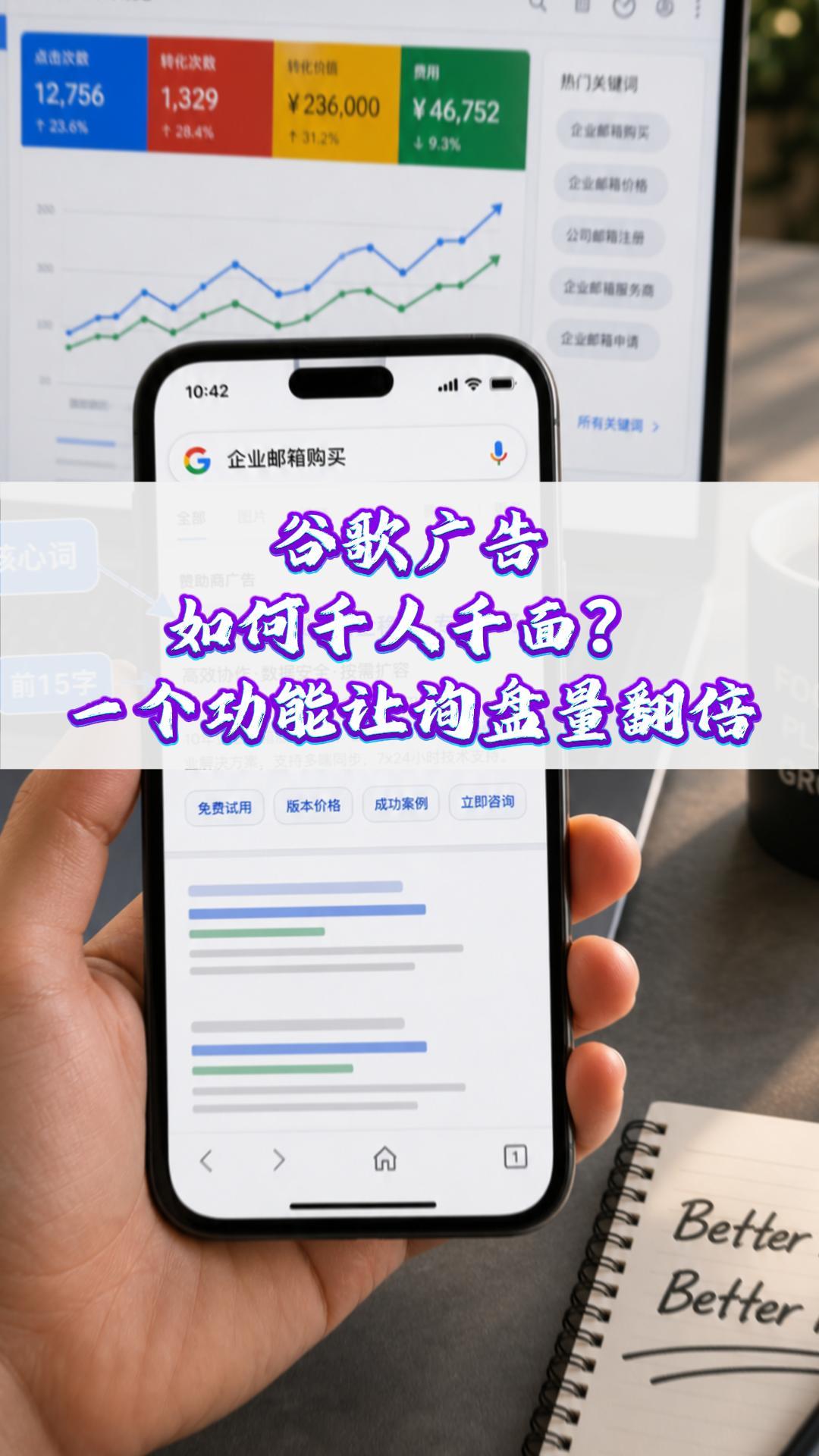
 How can Google Ads deliver one-to-one personalization? One feature can double your inquiry volume#ExportMarketing#OverseasPromotion#GoogleAds#SocialMediaMarketing#ForeignTradeIndependentWebsite
 Why a Google-optimized independent website is essential for trailer exports
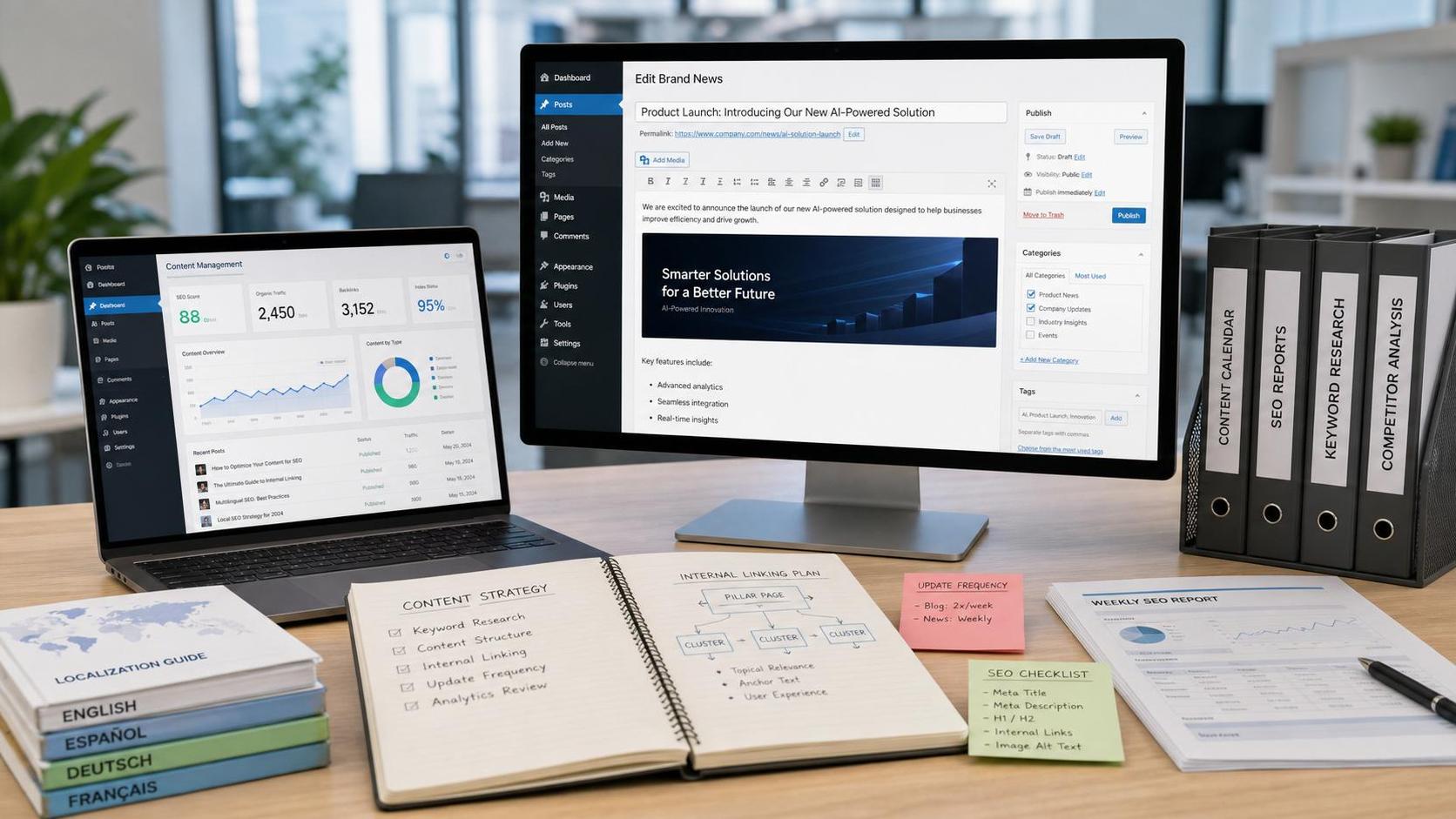
 How Can a Brand Updates Page Be Made More SEO-Friendly? Analysis of Update Frequency, Content Structure, and Internal Linking Strategy

Related Products
 EasyCamp SaaS Smart Website Marketing SystemE-Yingbao SaaS Smart Website Marketing System: AI-powered, zero-code website building. Rapidly launch multilingual independent e-commerce sites in just 10 minutes. Global server acceleration and AI-driven SEO optimization empower businesses to efficiently connect with global markets. The seamless integration of technology and user-friendly operation makes building e-commerce sites incredibly simple.
 AI+SEM Intelligent Advertising Marketing SystemAI+SEM drives intelligent ad creation, empowering full-funnel precision advertising marketing. The system automatically generates weekly/monthly reports, AI recommends keywords and target countries, monitors core metrics in real-time with intelligent alerts, and enables one-click high-conversion ad solutions to help quickly acquire customers and improve ROI.
 AI+SEO Dual Engine Optimization ServiceEasyWin AI+SEO Dual Engine Optimization System leverages AI-powered keyword mining, content generation, and comprehensive technical optimization to help foreign trade enterprises acquire high-quality organic traffic, significantly improving search rankings and conversion rates.
 AI+SNS Social Media Marketing SystemYingbao AI+SNS Social Media Marketing System - Precision social capture for the social media era. Supports one-click content synchronization across major platforms like Facebook and LinkedIn. AI intelligently rewrites posts for enhanced relevance. 24/7 AI customer service and user profiling analysis empower businesses to efficiently expand into global markets.
 AI+SEO营销解决方案易营宝AI+SEO营销解决方案,通过AI批量写作、智能生成TDK、精准关键词扩词等功能,全面优化网站SEO效果,提升流量与转化率。助力企业构建高效智能网站新生态。
 AI+SEM Advertising Marketing SolutionsAI+SEM Advertising Marketing Solution leverages AI technology to deeply empower SEM ad campaigns. It automatically generates weekly/monthly reports using AI, presenting account data across multiple dimensions for comprehensive insights into campaign performance and trends. The system precisely recommends keywords and target countries, intelligently generates high-conversion ad copy, and enables one-click activation of efficient campaign plans to help businesses rapidly acquire customers. Simultaneously, it monitors core metrics in real time, intelligently identifies abnormal fluctuations, and issues timely alerts to ensure stable, high-return advertising results.
 Domain Name ServicesEasyWin provides professional domain name services, including intelligent queries, one-stop registration, brand protection, and full lifecycle management, helping businesses build a digital brand image.
 EasyOperate B2C Cross-Border E-Commerce Platform & Independent WebsiteEasyStore B2C Cross-border E-commerce Independent Store is an intelligent website building and cross-border e-commerce integrated solution independently developed by EasyStore Information Technology (Beijing) Co., Ltd. The system is specially designed for small and medium-sized as well as large export enterprises, integrating 'website building, operation, marketing, advertising, and conversion' into one, helping enterprises quickly establish cross-border e-commerce independent stores to achieve brand globalization and global sales growth.
The platform supports multiple languages, multiple currencies, and multi-channel marketing, with built-in AI intelligent translation and SEO optimization systems, suitable for mainstream markets such as Southeast Asia, Europe and America, Latin America, and the Middle East, assisting Chinese manufacturing enterprises in efficiently deploying international e-commerce strategies. SSL证书易营宝提供专业SSL安全证书服务,包括单域名和泛域名证书,确保网站数据传输加密、身份验证和完整性保护,助力企业建立安全可信的在线业务环境。









