









- What stages does the cross-border services ecosystem include? How do website building, promotion, payment, and compliance work togetherJun 22, 2026View details
- How will email marketing costs change in 2026Jun 22, 2026View details
- The China-US tariff arrangement has reached a preliminary consensus, and the trade association will be establishedJun 15, 2026View details
- Should overseas brand marketing start with ads or contentJun 21, 2026View details
- What determines B2C cross-border e-commerce website development costs? A breakdown of features, interfaces, and deployment methodsJun 17, 2026View details
- China-Morocco zero-tariff access, a breakthrough in the cost of Moroccan goods exports to ChinaJun 11, 2026View details
- What signal should be released for the suspension of exports to JapanJun 10, 2026View details
- China's May LNG imports rebounded, with increased volumes from Russia and Canada filling the Middle East supply gapJun 10, 2026View details
Why Your Website Can’t Retain Traffic When Mobile Optimization Is Poor
Inadequate mobile adaptation is often not a minor user experience issue, but a major leak causing traffic loss.
For project managers and engineering project leaders, once page loading, layout display, and conversion paths fall out of balance, user retention and inquiry results will decline significantly.
Many companies find that their websites clearly have advertising, indexing, and visits, yet they still “bring people in but fail to keep them.” The problem is often not the traffic itself, but that mobile adaptation has not truly been done well. Today, the vast majority of users’ first visit to a website happens on mobile devices; if the first screen opens slowly, buttons are hard to tap, and forms are difficult to fill out, user loss is almost inevitable.
From the perspective of search intent, readers searching for “mobile adaptation” are not really looking to hear concepts, but to judge: why the website cannot retain traffic, which business metrics mobile affects, and how to quickly diagnose and improve it. For project owners, the greater concerns are priorities, input-output results, and cross-team collaboration, rather than purely front-end terminology.
Why poor mobile adaptation directly drags down traffic value
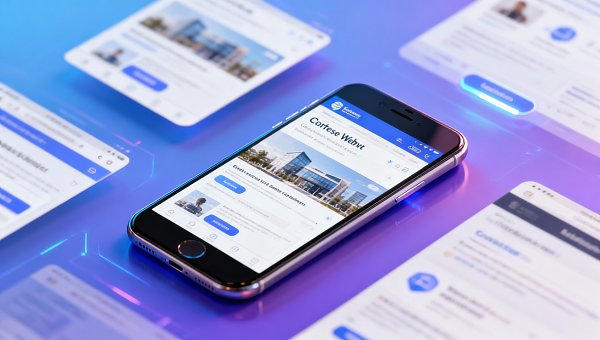
Mobile adaptation is not as simple as “shrinking” a PC page onto a phone. It affects loading speed, visual hierarchy, interaction paths, and conversion efficiency. Users are less patient when browsing on mobile devices, and any extra step or extra second of waiting may lead to a bounce.
From the search engine perspective, the mobile experience also directly affects SEO performance. Search platforms are placing more and more emphasis on mobile page quality, including readability, clickability, stability, and loading performance. If mobile adaptation is poor, even if keyword rankings remain, actual clicks and dwell time will continue to decline.
From a business results perspective, mobile problems usually show up on three levels: first, users leave quickly after entering the site; second, they browse pages but do not continue deeper; third, they reach the inquiry stage but do not submit leads. In other words, the traffic may appear to still be there, but the actual conversion chain has already been broken.
This is especially true for engineering and project-based companies. Target customers often search for suppliers and solutions on their phones while traveling, at job sites, or between meetings. If the website display is unclear, parameters are incomplete, or contact methods are hard to find, opportunities will flow directly to competitors.
Which signals project managers should check first to determine whether there is a mobile adaptation problem
If you are responsible for website revamps, marketing project execution, or digital budget approval, you do not need to look at technical details first to determine whether there is a mobile adaptation problem. Start by looking at several business signals.
First, check whether the mobile bounce rate is significantly higher than the PC bounce rate. If mobile traffic accounts for a high proportion but average dwell time is short and page views are low, it usually indicates obstacles in the first-screen experience, content structure, or loading speed.
Second, check the drop-off on key conversion pages. For example, product detail pages, case study pages, contact pages, and inquiry form pages. If mobile traffic is not low, but form submission rates and inquiry click rates remain consistently low, the issue is often not lack of user demand, but an unsmooth path.
Third, check whether the page’s core elements are mobile-friendly. Common problems include font sizes that are too small, buttons placed too close together, horizontal scrolling, obstructive pop-ups, overly deep navigation levels, too many form fields, and contact entry points such as phone and WhatsApp being unclear.
Fourth, check speed metrics and stability. The mobile network environment is more complex. If images are too large, scripts are redundant, or pages shift frequently, users will find it difficult to wait until the content is fully displayed. For conversion-oriented websites, speed is not a technical optimization item, but a prerequisite for closing deals.
When traffic cannot be retained, it is usually not one issue, but a series of mobile journey problems
Many teams focus on just one point during troubleshooting, such as “whether the button color is not eye-catching enough” or “whether the form is too long.” In fact, poor mobile adaptation is often a journey-related problem and must be viewed according to the user access path.
The first stage is the entry experience. When users enter a page through search, ads, or social media links, the first screen should quickly tell them “who you are, what problem you can solve, and what they should do next.” If the first screen only has a large image without value information, users will leave quickly.
The second stage is the reading experience. Engineering project leaders care about qualifications, case studies, delivery capabilities, service scope, and response efficiency. If this content is folded too deeply on mobile or the layout is cluttered, users will find it hard to build trust in a short time.
The third stage is decision support. Project-based customers will not submit an inquiry just because of a nice-looking page. They need to see clear solutions, industry experience, and verifiable results. If the mobile page lacks structured information, such as parameters, processes, case summaries, and FAQs, conversions will be greatly affected.
The fourth stage is the conversion action. Many website problems are not that no one wants to inquire, but that the inquiry action is too troublesome. For example, too many input fields, complicated verification codes, no feedback after submission, or mobile keyboards blocking buttons. These all directly consume potential customers’ intent.
For engineering project customers, which mobile issues are the most critical
Compared with ordinary consumer goods websites, visitors to engineering project-based websites make decisions more cautiously and have more concentrated information needs, so these detailed issues become magnified.
First, professional information display is incomplete. Engineering customers place great importance on solution fit, implementation capability, and industry case studies. If the mobile page only contains promotional language and key service content cannot be seen, users cannot judge whether the company has cooperation value.
Second, contact methods are inconvenient. Many potential customers are not necessarily willing to fill out a long form immediately. They prefer to communicate by phone first, get instant consultation, or quickly obtain materials. If the mobile version does not have one-tap calling, floating inquiry entry points, or simple forms, leads will be lost in large numbers.
Third, multi-role browsing scenarios have not been considered. Project managers, procurement staff, and technical leads may all visit the same page, but their concerns are different. If the mobile page does not have clear information layering, no one can understand it clearly, and effective progress naturally becomes difficult.
Finally, the cross-region and cross-language access experience is poor. For companies targeting international markets or foreign trade business, mobile adaptation also involves multilingual presentation, access speed, and overseas user behavior habits. Responsive structure, multilingual switching, and page performance optimization directly affect inquiry quality.
Truly effective improvements are not about rebuilding the website, but about prioritizing high-impact fixes
Once many companies discover that the mobile experience is poor, they want a full redesign. But from a project management perspective, a more efficient approach is to first identify pages with “high traffic, high conversion value, and high loss,” and prioritize fixing key issues.
It is recommended to first focus on three types of pages: the homepage, core service pages, and conversion pages. The homepage determines the first impression, service pages determine professional trust, and conversion pages determine lead acquisition. As long as the mobile experience of these three types of pages improves significantly, overall retention and conversion often increase immediately.
In terms of optimization order, first work on speed and usability, then content and conversion. For example, compress images, reduce invalid scripts, optimize above-the-fold resource loading, adjust button sizes, simplify navigation structure, and reduce form fields. First solve whether users can “view smoothly, tap smoothly, and submit smoothly,” and then talk about visual upgrades.
At the content level, mobile should emphasize information summarization more than PC. Put the content customers care about most first, such as application scenarios, core advantages, successful cases, response methods, and qualification descriptions, so users can form a judgment within 30 seconds instead of relying on long blocks of introductory text.
If a company is also pursuing both customer acquisition and brand building goals, it may also consider adopting a more mature integrated solution. For example, for foreign trade companies, a B2B foreign trade solution usually integrates responsive website building, multilingual SEO, advertising placement, and inquiry tracking, reducing experience loss caused by fragmentation across multiple systems.
How to measure whether mobile adaptation improvements are truly effective
What project owners fear most is “we changed a lot, it looks better, but the business did not change.” Therefore, mobile adaptation optimization must be paired with trackable metrics, rather than staying at subjective evaluation.
The first type of metric is experience metrics, including page loading time, above-the-fold visibility speed, interaction stability, and mobile error rate. These can help teams determine whether the foundational experience has improved.
The second type of metric is behavioral metrics, including bounce rate, average dwell time, page browsing depth, button click-through rate, and form initiation rate. They can reflect whether users are willing to keep reading and whether it is easier for them to enter conversion actions.
The third type of metric is business metrics, including inquiry volume, valid inquiry rate, conversion cost, and deal cycle. Truly valuable mobile adaptation is not just about making the data “look good,” but about improving lead quality and follow-up conversion efficiency at the same time.
In some mature cases, mobile optimization often works together with SEO, advertising placement, and user persona analysis. For example, after response speed, content structure, and conversion paths are all optimized, when the Google PageSpeed score reaches 90+, click-through rates and inquiry volume increase more noticeably. This is also why many companies choose systematic services instead of single-point patching.
Mobile adaptation has already become foundational infrastructure for website growth capabilities
Today, when looking at website development, mobile adaptation is no longer a “bonus item,” but a basic capability. For project managers and engineering project leaders, it affects not only page aesthetics, but also retention after traffic acquisition, trust building, and lead conversion.
If your company has already invested in SEO, advertising placement, or content marketing, but the results have always been unstable, then you need to re-examine whether mobile has become the biggest leak in the funnel. It is not that users have no demand, but that they have not been able to smoothly complete judgment and action on their phones.
From a management perspective, what is most worth doing is not blindly rebuilding, but quickly locating problem pages based on data, clarifying priorities, and promoting coordinated optimization between technology and marketing. Doing mobile adaptation well is often not about “slightly improving the experience,” but about adding real conversion capacity to every traffic investment.
Ultimately, when traffic cannot be retained, many times it is not a channel problem, but that the website has failed to effectively receive users on the device they use most often. Whoever polishes the mobile experience first will have a greater chance of turning visitors into inquiries and inquiries into growth.
Related Articles
 Why is it that your foreign trade peers receive inquiries every day, while you can only wait for exhibitions?
 Foreign trade websites "look good but don’t convert"? Yiyingbao’s global language automatic adaptation, inquiries surge!
 Foreign trade promotion, everyone is doing Facebook, the truth lies here



Related Products
 EasyCamp SaaS Smart Website Marketing SystemE-Yingbao SaaS Smart Website Marketing System: AI-powered, zero-code website building. Rapidly launch multilingual independent e-commerce sites in just 10 minutes. Global server acceleration and AI-driven SEO optimization empower businesses to efficiently connect with global markets. The seamless integration of technology and user-friendly operation makes building e-commerce sites incredibly simple.
 AI+SEM Intelligent Advertising Marketing SystemAI+SEM drives intelligent ad creation, empowering full-funnel precision advertising marketing. The system automatically generates weekly/monthly reports, AI recommends keywords and target countries, monitors core metrics in real-time with intelligent alerts, and enables one-click high-conversion ad solutions to help quickly acquire customers and improve ROI.
 AI+SEO Dual Engine Optimization ServiceEasyWin AI+SEO Dual Engine Optimization System leverages AI-powered keyword mining, content generation, and comprehensive technical optimization to help foreign trade enterprises acquire high-quality organic traffic, significantly improving search rankings and conversion rates.
 AI+SNS Social Media Marketing SystemYingbao AI+SNS Social Media Marketing System - Precision social capture for the social media era. Supports one-click content synchronization across major platforms like Facebook and LinkedIn. AI intelligently rewrites posts for enhanced relevance. 24/7 AI customer service and user profiling analysis empower businesses to efficiently expand into global markets.
 AI+SEO营销解决方案易营宝AI+SEO营销解决方案,通过AI批量写作、智能生成TDK、精准关键词扩词等功能,全面优化网站SEO效果,提升流量与转化率。助力企业构建高效智能网站新生态。
 AI+SEM Advertising Marketing SolutionsAI+SEM Advertising Marketing Solution leverages AI technology to deeply empower SEM ad campaigns. It automatically generates weekly/monthly reports using AI, presenting account data across multiple dimensions for comprehensive insights into campaign performance and trends. The system precisely recommends keywords and target countries, intelligently generates high-conversion ad copy, and enables one-click activation of efficient campaign plans to help businesses rapidly acquire customers. Simultaneously, it monitors core metrics in real time, intelligently identifies abnormal fluctuations, and issues timely alerts to ensure stable, high-return advertising results.
 Domain Name ServicesEasyWin provides professional domain name services, including intelligent queries, one-stop registration, brand protection, and full lifecycle management, helping businesses build a digital brand image.
 EasyOperate B2C Cross-Border E-Commerce Platform & Independent WebsiteEasyStore B2C Cross-border E-commerce Independent Store is an intelligent website building and cross-border e-commerce integrated solution independently developed by EasyStore Information Technology (Beijing) Co., Ltd. The system is specially designed for small and medium-sized as well as large export enterprises, integrating 'website building, operation, marketing, advertising, and conversion' into one, helping enterprises quickly establish cross-border e-commerce independent stores to achieve brand globalization and global sales growth.
The platform supports multiple languages, multiple currencies, and multi-channel marketing, with built-in AI intelligent translation and SEO optimization systems, suitable for mainstream markets such as Southeast Asia, Europe and America, Latin America, and the Middle East, assisting Chinese manufacturing enterprises in efficiently deploying international e-commerce strategies. SSL证书易营宝提供专业SSL安全证书服务,包括单域名和泛域名证书,确保网站数据传输加密、身份验证和完整性保护,助力企业建立安全可信的在线业务环境。









