









- How to view pricing in the global traffic ecosystem? Cost comparison of search, social media, and content channel advertisingJul 06, 2026View details
- How to assess foreign trade website development trends?Looking at 2026 changes from multilingual,AI content to conversion pathsJul 04, 2026View details
- What are the new trends in multilingual marketing data analytics tools in 2026? Focus on attribution、automation and complianceJul 04, 2026View details
- Is Brand Globalization Marketing Consulting Worth Buying? At What Stage Should Companies Bring It InJul 01, 2026View details
- Cross-Border Marketing Trend Research: Why More and More Companies Are Starting to Deploy AI Search and GEO OptimizationJun 30, 2026View details
- Cross-Border Marketing Trend Research: How Independent Sites, AI Content, and Short-Video Customer Acquisition Are ChangingJun 30, 2026View details
From 0 to 1 Cross-border Website Construction Process: Project Delivery Timeline for Multilingual Foreign Trade Website Development
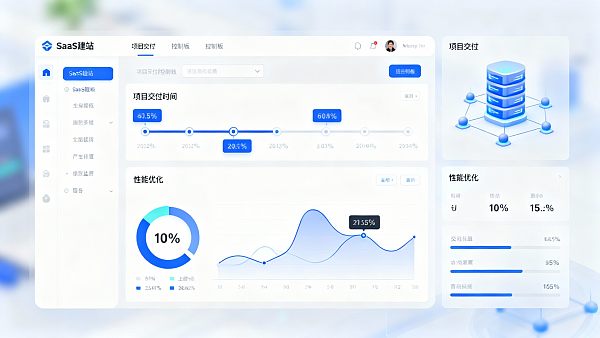
This article details the cross-border website construction process and the timeline for building a multilingual foreign trade website, tailored to the delivery requirements of SaaS website building systems and enterprise projects. As a project leader or corporate decision-maker targeting global markets, the primary pain points include: How to complete cross-border e-commerce website construction within a limited timeframe while ensuring SEO and performance? How to achieve multilingual localization with minimal technical costs? How to evaluate the ROI of foreign trade standalone websites? This article provides a step-by-step breakdown of the standardized workflow from requirement confirmation to launch, incorporating practical insights on responsive website platforms and SaaS website building systems. It offers executable timelines and acceptance checkpoints for users, project managers, and quality control personnel, helping distributors and resellers quickly assess the maturity and risk management priorities of foreign trade website solutions.
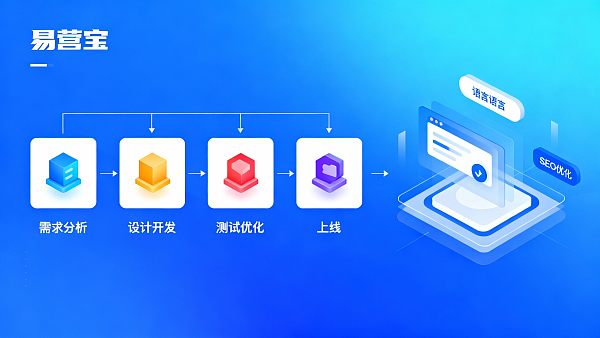
1. Project Preparation and Requirement Confirmation: Defining Goals and Scope
The project initiation phase is critical for determining efficiency and delivery quality, typically completed within 1-2 weeks. First, clarify business objectives: Is this a cross-border e-commerce website primarily for overseas inquiries, or a foreign trade standalone site for brand display and agent对接? Requirement documents should cover target markets, language versions, payment and logistics integration needs, compliance (including GDPR and local privacy policies), SEO target keywords, and conversion paths. Technically, choosing between SaaS website systems or custom templates directly impacts delivery cycles. For SaaS foreign trade solutions, configuration and templates can be completed quickly, but time must be预留 for domain resolution, certificate applications, and third-party service integrations. Role allocation is equally important: define responsibilities for end-users/operators, engineering leads, and QC personnel, along with acceptance criteria, test cases, and rollback mechanisms at each delivery milestone. Deliverables at this stage should include feature lists, page wireframes, key performance indicators (e.g., page load targets, initial SEO rankings), and preliminary timelines to ensure subsequent design and development follow measurable guidelines.
2. Design and Multilingual Content Preparation: Prioritizing Localization
Design and content are core factors affecting conversion rates, with the main challenge in multilingual foreign trade websites being "linguistic accuracy + cultural fit." Visual and information architecture must simultaneously comply with responsive design standards and target market aesthetic preferences. Copywriting and SEO strategies should proceed in parallel: conduct keyword research (including long-tail terms) for target markets to generate localized TDK (Title, Description, Keywords) and landing page outlines. We recommend using AI-assisted translation with local editorial review during initial phases, leveraging Google Neural Machine Translation (GNMT) for batch preliminary translations, followed by native editors optimizing tone and legal compliance. Images and media should consider localization表现 and loading optimization—use WebP format and lazy loading to reduce首屏时间. For rapid validation, adopt 10-minute template deployment workflows utilizing platform automation tools for foundational multilingual site setup. Teams seeking integrated marketing-website solutions can reference platform demos like EasyStore SaaS Intelligent Website Marketing System, which typically feature AI-driven no-code building and minimalist CMS capabilities, significantly lowering barriers to foreign trade standalone site development.

3. Development, Deployment, and Performance Optimization: Balancing Technology and Security
The development and deployment phase ensures site stability and合规 operation, with a recommended timeframe of 2-4 weeks depending on customization levels and third-party integration complexity. Key technical aspects include multi-device adaptability (via responsive enterprise systems), SEO-friendly URL structures, Schema markup, automated sitemap generation, and Robots rules. For performance, configure global CDN acceleration with at least 22 server nodes or partner cloud providers to guarantee毫秒级access in primary markets. Security measures must launch simultaneously: auto-SSL issuance, DDoS protection, WAF, and permission management are mandatory验收 items. Payment and logistics integrations require validated workflows, callbacks, and robust retry mechanisms. Continuous automated testing should cover common regression risks, while performance tests should simulate multi-region concurrency to validate caching strategies and static resource distribution. Teams using SaaS platforms benefit from AI-powered SEO tools that identify critical gaps pre-launch, reducing post-launch adjustment costs.
4. Testing, Launch, and Project Delivery Timeline: Quantifiable Milestones
Adopt phased delivery by breaking projects into verifiable micro-milestones to control risks and enhance visibility. A typical foreign trade website timeline includes: requirement confirmation & prototyping (7-14 days), visual design & content prep (7-14 days parallel), development & integration (14-28 days), testing & localization QA (7-10 days), pre-launch optimization (3-7 days), and正式上线 monitoring (1-3 days). Average cycles complete within 5-10 weeks but can compress to 2-4 weeks using responsive platforms or SaaS solutions with prepped content. Each milestone requires clear验收 criteria like feature pass rates, page load times, Core Web Vitals, SEO baseline completion, and critical security漏洞 absence. Post-launch, maintain 30-day quality assurance with continuous metric tracking and initial optimization iterations to ensure multilingual sites achieve expected traffic and conversion performance in target markets.

Conclusion and Action Guide: Choosing an Executable Foreign Trade Website Solution
To achieve efficient cross-border website construction, enterprises must establish reusable workflows and验收 standards bridging requirement definition, content localization, technical deployment, and delivery management. SaaS-based responsive platforms significantly shorten multilingual site development cycles, reduce technical barriers, and enhance SEO/operational efficiency through automation tools. When selecting vendors, prioritize global node coverage, intelligent translation capabilities, SEO automation, and post-launch support—these directly impact commercial ROI. For end-to-end foreign trade solutions or existing project timeline/risk assessments, our team offers free evaluations and implementation plans. Contact us now for customized cross-border e-commerce consultations to explore enterprise-grade multilingual website platforms and foreign trade website solutions.
- Website Development
- Website Builder Platform
- Foreign Trade Website Development
- SSL Certificate
- Multilingual website development
- Yiyingbao
- SEO
- Independent Website
- SEO Optimization
- Smart Website Building
- Independent foreign trade website
- Multilingual website
- Cross-border E-commerce Website
- SaaS Website Building System
- Responsive website platform
- Cross-Border Website Development
- How to build an independent foreign trade website
- Multilingual Website Construction for Foreign Trade
- Foreign Trade Standalone Site SaaS
- Responsive Enterprise Website Building System
- Multilingual Website Construction Platform
- Foreign Trade Website Solutions
- Responsive Website Building
- cross-border e-commerce
Related Articles
 How can website data analysis improve conversion rates? First identify high-bounce pages and key loss points
 How much does it cost to build a foreign trade multilingual website?Analysis of the modules and hidden costs that affect quotations
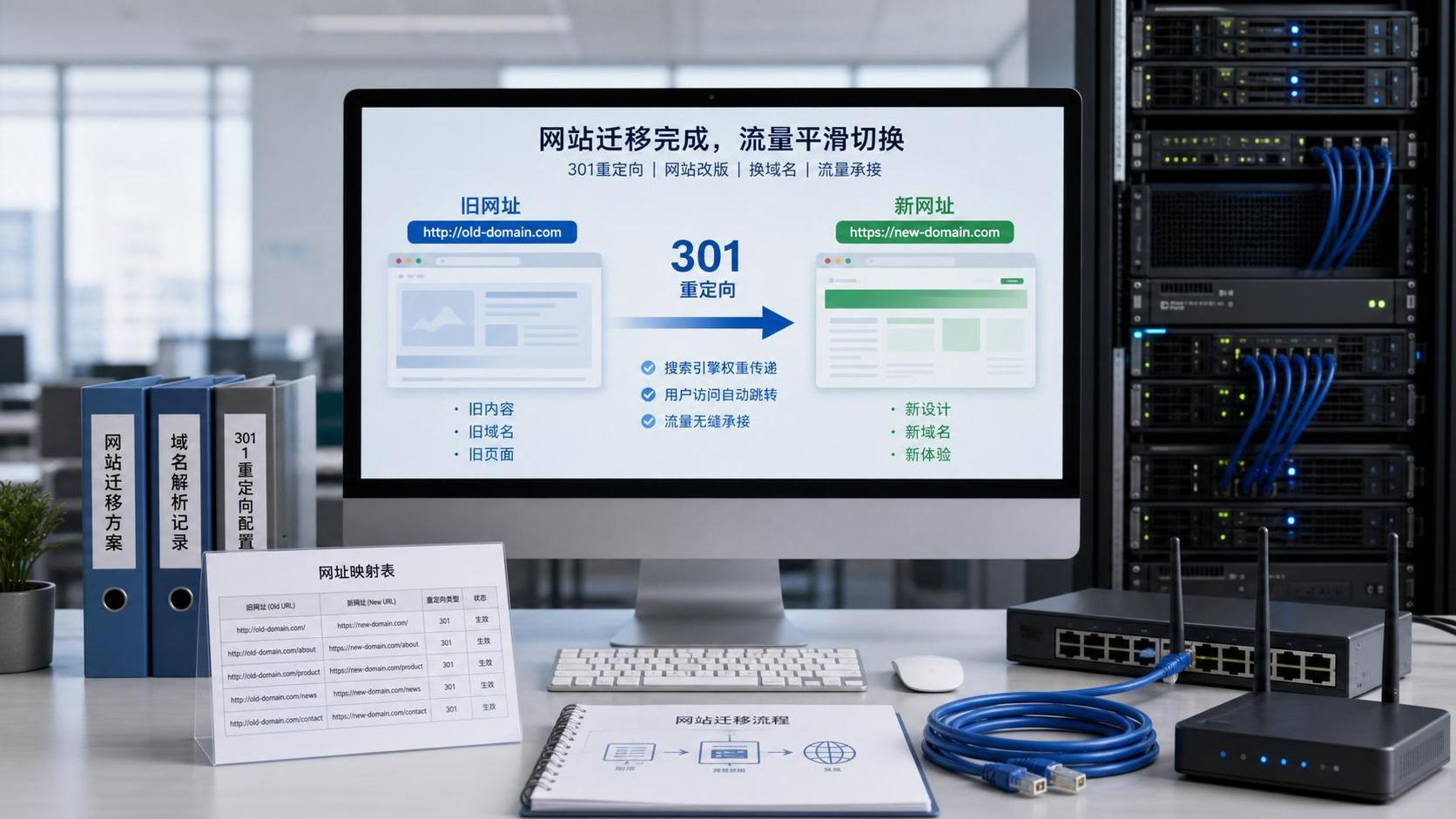
 Detailed explanation of 301 redirect setup methods:which pages must be redirected during a website redesign or domain change


Related Products
 EasyCamp SaaS Smart Website Marketing SystemE-Yingbao SaaS Smart Website Marketing System: AI-powered, zero-code website building. Rapidly launch multilingual independent e-commerce sites in just 10 minutes. Global server acceleration and AI-driven SEO optimization empower businesses to efficiently connect with global markets. The seamless integration of technology and user-friendly operation makes building e-commerce sites incredibly simple.
 AI+SEM Intelligent Advertising Marketing SystemAI+SEM drives intelligent ad creation, empowering full-funnel precision advertising marketing. The system automatically generates weekly/monthly reports, AI recommends keywords and target countries, monitors core metrics in real-time with intelligent alerts, and enables one-click high-conversion ad solutions to help quickly acquire customers and improve ROI.
 AI+SEO Dual Engine Optimization ServiceEasyWin AI+SEO Dual Engine Optimization System leverages AI-powered keyword mining, content generation, and comprehensive technical optimization to help foreign trade enterprises acquire high-quality organic traffic, significantly improving search rankings and conversion rates.
 AI+SNS Social Media Marketing SystemYingbao AI+SNS Social Media Marketing System - Precision social capture for the social media era. Supports one-click content synchronization across major platforms like Facebook and LinkedIn. AI intelligently rewrites posts for enhanced relevance. 24/7 AI customer service and user profiling analysis empower businesses to efficiently expand into global markets.
 AI+SEO营销解决方案易营宝AI+SEO营销解决方案,通过AI批量写作、智能生成TDK、精准关键词扩词等功能,全面优化网站SEO效果,提升流量与转化率。助力企业构建高效智能网站新生态。
 AI+SEM Advertising Marketing SolutionsAI+SEM Advertising Marketing Solution leverages AI technology to deeply empower SEM ad campaigns. It automatically generates weekly/monthly reports using AI, presenting account data across multiple dimensions for comprehensive insights into campaign performance and trends. The system precisely recommends keywords and target countries, intelligently generates high-conversion ad copy, and enables one-click activation of efficient campaign plans to help businesses rapidly acquire customers. Simultaneously, it monitors core metrics in real time, intelligently identifies abnormal fluctuations, and issues timely alerts to ensure stable, high-return advertising results.
 Domain Name ServicesEasyWin provides professional domain name services, including intelligent queries, one-stop registration, brand protection, and full lifecycle management, helping businesses build a digital brand image.
 EasyOperate B2C Cross-Border E-Commerce Platform & Independent WebsiteEasyStore B2C Cross-border E-commerce Independent Store is an intelligent website building and cross-border e-commerce integrated solution independently developed by EasyStore Information Technology (Beijing) Co., Ltd. The system is specially designed for small and medium-sized as well as large export enterprises, integrating 'website building, operation, marketing, advertising, and conversion' into one, helping enterprises quickly establish cross-border e-commerce independent stores to achieve brand globalization and global sales growth.
The platform supports multiple languages, multiple currencies, and multi-channel marketing, with built-in AI intelligent translation and SEO optimization systems, suitable for mainstream markets such as Southeast Asia, Europe and America, Latin America, and the Middle East, assisting Chinese manufacturing enterprises in efficiently deploying international e-commerce strategies. SSL证书易营宝提供专业SSL安全证书服务,包括单域名和泛域名证书,确保网站数据传输加密、身份验证和完整性保护,助力企业建立安全可信的在线业务环境。









