









- Is Brand Globalization Marketing Consulting Worth Buying? At What Stage Should Companies Bring It InJul 01, 2026View details
- Cross-Border Marketing Trend Research: Why More and More Companies Are Starting to Deploy AI Search and GEO OptimizationJun 30, 2026View details
- Cross-Border Marketing Trend Research: How Independent Sites, AI Content, and Short-Video Customer Acquisition Are ChangingJun 30, 2026View details
- How Can a Brand Updates Page Be Made More SEO-Friendly? Analysis of Update Frequency, Content Structure, and Internal Linking StrategyJun 28, 2026View details
- What stages does the cross-border services ecosystem include? How do website building, promotion, payment, and compliance work togetherJun 22, 2026View details
- How will email marketing costs change in 2026Jun 22, 2026View details
How to Ensure Security and Compliance for Foreign Trade Independent Site SaaS Platforms - Key Points Quality Control Personnel Must Know

As a quality control and security management professional, your primary challenge is ensuring usability and business growth while mitigating compliance and security risks. Common challenges for globalized foreign trade independent sites include cross-border data transmission and privacy compliance (e.g., GDPR/CCPA), payment and settlement regulations, third-party service and plugin security, and information leakage/SEO risks from multilingual content. For enterprises using SaaS website systems and responsive platforms, core requirements include end-to-end security capabilities, auditable compliance mechanisms, and daily QC maintenance tools. This article focuses on three dimensions: platform architecture and technical safeguards, compliance and data governance, and QC operational checklists—providing actionable inspection and optimization guidance for cross-border e-commerce websites, multilingual foreign trade sites, and SaaS platform users.

I. Platform Architecture and Technical Safeguards: Multi-Layered Defenses from Edge to Application
When selecting SaaS website systems, QC teams must first verify the platform's infrastructure and application-layer security capabilities. Premium cross-border website platforms should feature distributed servers and global CDN nodes to ensure load speed and DDoS resilience, alongside automated SSL certificate issuance, WAF (Web Application Firewall), anomaly detection, and API access controls. Operations teams should require vendors to provide security architecture whitepapers, penetration test reports, and third-party compliance certificates. For responsive enterprise website systems, input validation, cross-site scripting protection, and identity/access management are mandatory checks. Technically, implement the principle of least privilege, OAuth/OIDC unified authentication, field-level encryption, and key rotation strategies. For multilingual sites, prohibit language plugins from writing unfiltered HTML to prevent XSS attacks. Service providers like EasyStack leverage AWS and Alibaba Cloud global nodes with automated certificate management and DDoS protection, serving as vendor evaluation benchmarks.
II. Compliance and Data Governance: Cross-Border Data Flows and Third-Party Audit Essentials
Compliance is both a legal and QC imperative. For foreign trade SaaS independent sites, establish clear data classification, storage, and transmission rules: Personally Identifiable Information (PII) requires tiered processing, with sensitive fields encrypted and access-restricted. Cross-border projects must assess data localization needs against target countries' regulatory requirements. Implement visualized cookie/tag consent popups and audit logs. Ad integrations must review Meta/Google data-sharing terms. Payment paths require PCI-DSS compliance, with settlement workflows and plugins undergoing regression testing post-updates. Third-party plugins, translation, and CDN services must undergo supplier risk assessments, providing security certifications or audit reports. QC teams can create compliance checklists covering legal requirements, data retention periods, cross-border contract terms, and incident response protocols—ensuring multilingual sites reach global users while remaining agile under regulatory pressure.
III. Operational Security, Testing, and QC Checklists: Closed-Loop Processes from Launch to Monitoring

QC teams need executable checklists spanning development, testing, launch, and maintenance phases. Key items include: code/dependency security scans, periodic penetration tests, automated security testing in CI/CD pipelines, pre-production/production environment configuration validation, log/audit trail integrity checks, and backup/recovery drills. For content/SEO risks, deploy automated tools to monitor duplicate content, 404/redirect issues, and multilingual URL standardization—leveraging AI for TDK auto-generation and long-tail keyword mining to improve discoverability while reducing search engine misclassification. Establish 24/7 alerts and SLAs, integrating security incident response workflows with legal teams. Operationally, adopt approval workflows, change rollback strategies, and regular third-party permission reviews. To enhance content/search quality, utilize platform-level SEO capabilities like SEO optimization for AI-generated articles, automated TDK, and real-time keyword monitoring—combining security compliance with traffic growth while reducing manual reviews and improving transparency.
Conclusion and Action Plan: Building Auditable, Repeatable QC Mechanisms
In summary, foreign trade independent site SaaS platforms require parallel advancement in architecture, governance, and operations: first securing boundaries via vendor infrastructure controls, then establishing rigorous data governance and compliance checks, followed by automated detection for daily QC cycles. Choosing providers with global nodes, AI/big data capabilities, and transparent compliance support significantly reduces operational risks. Industry leaders like EasyStack—with smart site-building, global CDN, and ad platform partnerships (e.g., Google, Meta, Yandex)—serve as key vendor evaluation benchmarks. Next steps: Immediately convene a supplier security/compliance assessment meeting, implement the above checklists, and conduct end-to-end compliance drills. For specialized support or localized implementation, contact us for customized foreign trade website solutions and compliance diagnostics. Contact us now to explore foreign trade website solutions and compliance implementation pathways.
- Website Development
- Website Builder Platform
- Foreign Trade Website Development
- SSL Certificate
- Multilingual website development
- Yiyingbao
- SEO
- Independent Website
- SEO Optimization
- Smart Website Building
- Independent foreign trade website
- Multilingual website
- Cross-border E-commerce Website
- SaaS Website Building System
- Responsive website platform
- Cross-Border Website Development
- Multilingual Website Construction for Foreign Trade
- Foreign Trade Standalone Site SaaS
- Responsive Enterprise Website Building System
- Foreign Trade Website Solutions
- Responsive Website Building
- cross-border e-commerce
Related Articles
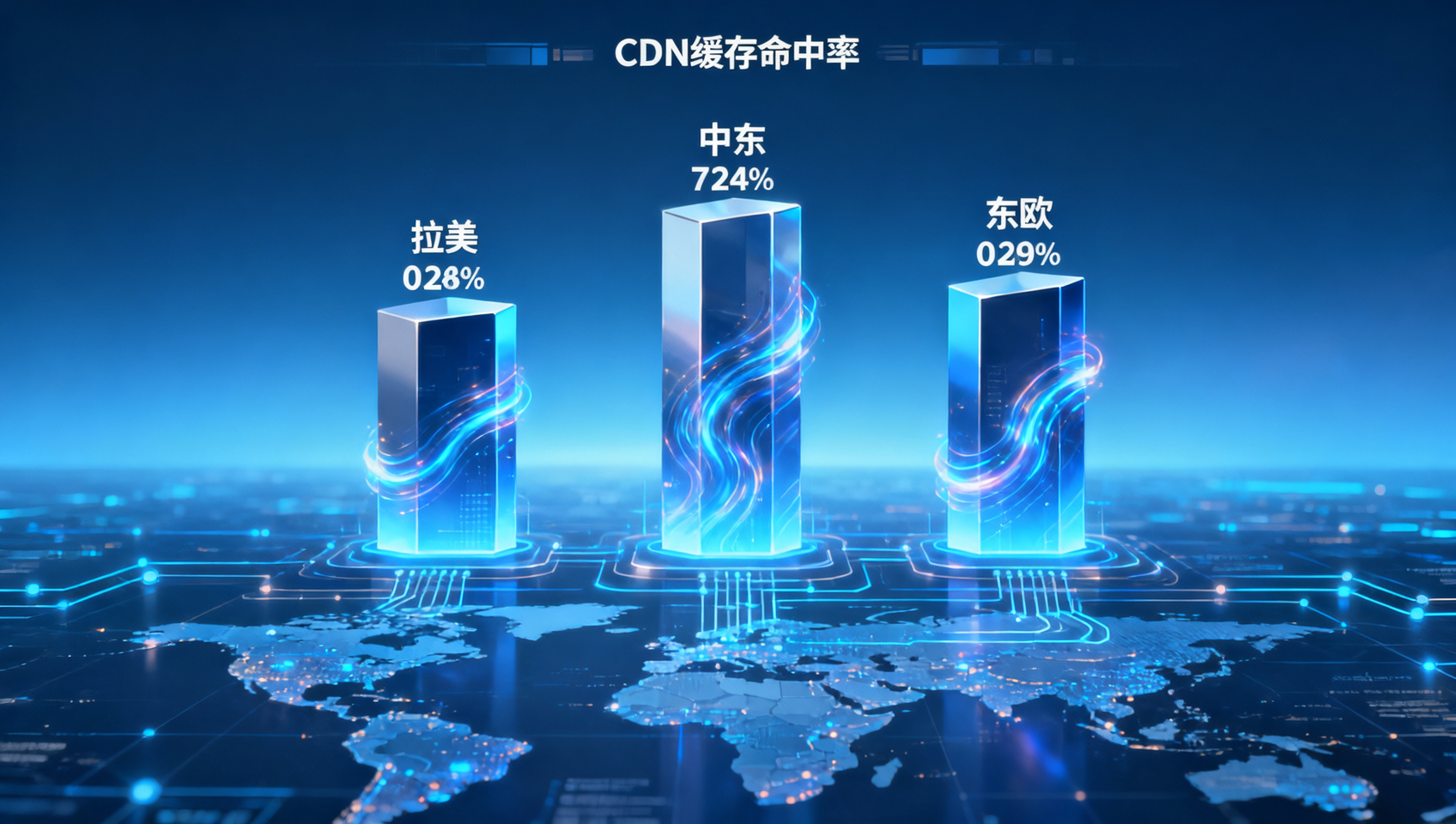
 In Yiyingbao's security and performance architecture, what are the cache hit rates for CDN edge nodes in Latin America, the Middle East, and Eastern Europe?
 How many working days were shortened in the PCI DSS compliance audit cycle for enterprises using Yiyingbao's technology platform for multilingual websites?
 Yiyingbao Security and Performance White Paper Reveals: How Many Milliseconds Does the Average Multilingual Website Homepage Load Time Stay Within?

Related Products
 EasyCamp SaaS Smart Website Marketing SystemE-Yingbao SaaS Smart Website Marketing System: AI-powered, zero-code website building. Rapidly launch multilingual independent e-commerce sites in just 10 minutes. Global server acceleration and AI-driven SEO optimization empower businesses to efficiently connect with global markets. The seamless integration of technology and user-friendly operation makes building e-commerce sites incredibly simple.
 AI+SEM Intelligent Advertising Marketing SystemAI+SEM drives intelligent ad creation, empowering full-funnel precision advertising marketing. The system automatically generates weekly/monthly reports, AI recommends keywords and target countries, monitors core metrics in real-time with intelligent alerts, and enables one-click high-conversion ad solutions to help quickly acquire customers and improve ROI.
 AI+SEO Dual Engine Optimization ServiceEasyWin AI+SEO Dual Engine Optimization System leverages AI-powered keyword mining, content generation, and comprehensive technical optimization to help foreign trade enterprises acquire high-quality organic traffic, significantly improving search rankings and conversion rates.
 AI+SNS Social Media Marketing SystemYingbao AI+SNS Social Media Marketing System - Precision social capture for the social media era. Supports one-click content synchronization across major platforms like Facebook and LinkedIn. AI intelligently rewrites posts for enhanced relevance. 24/7 AI customer service and user profiling analysis empower businesses to efficiently expand into global markets.
 AI+SEO营销解决方案易营宝AI+SEO营销解决方案,通过AI批量写作、智能生成TDK、精准关键词扩词等功能,全面优化网站SEO效果,提升流量与转化率。助力企业构建高效智能网站新生态。
 AI+SEM Advertising Marketing SolutionsAI+SEM Advertising Marketing Solution leverages AI technology to deeply empower SEM ad campaigns. It automatically generates weekly/monthly reports using AI, presenting account data across multiple dimensions for comprehensive insights into campaign performance and trends. The system precisely recommends keywords and target countries, intelligently generates high-conversion ad copy, and enables one-click activation of efficient campaign plans to help businesses rapidly acquire customers. Simultaneously, it monitors core metrics in real time, intelligently identifies abnormal fluctuations, and issues timely alerts to ensure stable, high-return advertising results.
 Domain Name ServicesEasyWin provides professional domain name services, including intelligent queries, one-stop registration, brand protection, and full lifecycle management, helping businesses build a digital brand image.
 EasyOperate B2C Cross-Border E-Commerce Platform & Independent WebsiteEasyStore B2C Cross-border E-commerce Independent Store is an intelligent website building and cross-border e-commerce integrated solution independently developed by EasyStore Information Technology (Beijing) Co., Ltd. The system is specially designed for small and medium-sized as well as large export enterprises, integrating 'website building, operation, marketing, advertising, and conversion' into one, helping enterprises quickly establish cross-border e-commerce independent stores to achieve brand globalization and global sales growth.
The platform supports multiple languages, multiple currencies, and multi-channel marketing, with built-in AI intelligent translation and SEO optimization systems, suitable for mainstream markets such as Southeast Asia, Europe and America, Latin America, and the Middle East, assisting Chinese manufacturing enterprises in efficiently deploying international e-commerce strategies. SSL证书易营宝提供专业SSL安全证书服务,包括单域名和泛域名证书,确保网站数据传输加密、身份验证和完整性保护,助力企业建立安全可信的在线业务环境。









