









- What Does a Global Traffic Ecosystem Service Provider Do? What Are the Differences from a Single Advertising AgencyJul 16, 2026View details
- What should you focus on in the latest enterprise SaaS report? From renewal rates and delivery costs to overseas growth opportunitiesJul 12, 2026View details
- What signals are worth paying attention to in a cross-border marketing trend report? B2B companies should look at these 6 signalsJul 11, 2026View details
- How to Read a Cross-Border Marketing Trends Report? Five Key Dimensions for Evaluating Channel OpportunitiesJul 11, 2026View details
- Which channel has the highest ROI in the global traffic ecosystem? Comparative analysis of search, social media, and advertisingJul 10, 2026View details
- What multilingual website services are available in Sanya? Which model is more suitable for local businesses going global?Jul 08, 2026View details
- How to view the complete list of China SaaS companies in the top 100? Practical methods for screening website-building and marketing service providersJul 08, 2026View details
- How to view pricing in the global traffic ecosystem? Cost comparison of search, social media, and content channel advertisingJul 06, 2026View details
Is a responsive foreign trade website suitable for the German market
Is a responsive website design suitable for the German market? The answer is: yes, but far from enough. For the German market, responsive design is merely a basic element of website construction, not the core factor determining sales performance. What truly matters is the professionalism of the multilingual website design, whether the search engine optimization services are tailored to local German search habits, the stability of page loading, and whether it meets the data security and compliance requirements that German users highly value. For companies hoping to penetrate the German market, judging a website's suitability shouldn't solely focus on its mobile display; it should also consider its ability to build trust, support inquiry conversion, and cultivate long-term organic traffic.
In conclusion: responsive websites can enter the German market, but they cannot stop at simply being "adaptive pages."
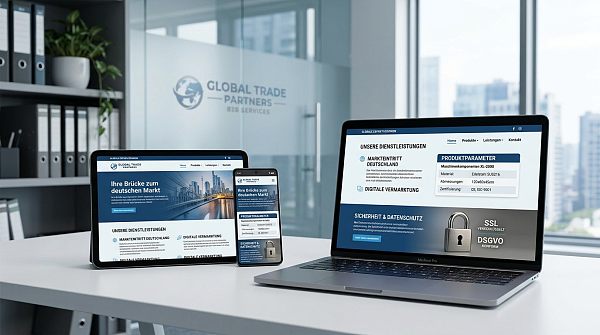
Many companies, when creating foreign trade websites, understand "responsive design" as simply adapting to computer, tablet, and mobile phone screens. This is certainly important, as German users also use mobile devices to search for products, view specifications, and send inquiries. However, if only interface adaptation is achieved while neglecting the quality of German-language content, page structure, privacy compliance, loading speed, and SEO fundamentals, then even if such a website is technically responsive, it may not truly be suitable for the German market.
When browsing websites, German users and buyers typically prioritize information accuracy, clear structure, genuine contact details, comprehensive product specifications, and trustworthy company credentials. They are more easily persuaded by "professional, credible, and transparent" websites than by visually impressive features. Therefore, for a responsive foreign trade website to be suitable for the German market, it must not only be visually appealing but also easily found, trusted, and usable.
What do users in the German market really care about? Not fancy features, but professionalism, efficiency, and trust.
If the target audience includes corporate decision-makers, operators, quality control and after-sales personnel, distributors and end consumers, then the website content cannot only serve a certain type of visitor, but must cover the real needs of different roles in the German market.
Business decision-makers are more concerned with these questions: Can the website generate inquiries? Is the return on investment clear? Is subsequent promotion sustainable? Does it comply with the German market's compliance requirements?
The execution and operations teams are more concerned with: Is the website backend easy to maintain? Is multi-language updating convenient? Is the SEO structure sound? Can search engine optimization services be continuously provided in the future?
Personnel involved in quality control, safety management, and after-sales maintenance place greater emphasis on whether technical documentation is complete, certification information is transparent, download centers are comprehensive, and problem feedback pathways are clear.
Distributors, agents, and end consumers will focus on: whether the brand is reliable, whether the product description is detailed, whether the delivery time and service are clear, and whether there is a sense of localized communication.
This means that the ideal website for the German market is not one that "looks good in the eyes of the design firm," but rather one that allows users to quickly find the information they need. Many companies overlook this, resulting in websites that, while launched, fail to meet genuine search intent.
Why do many responsive e-commerce websites perform poorly in Germany? The problem is usually not with the template, but with insufficient localization.
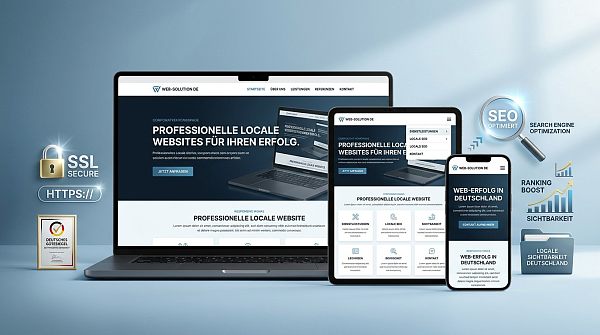
Based on practical project experience, many companies' websites fail not because they lack responsiveness, but because they haven't handled the following key points properly.
First, the quality of the German content is inadequate. Direct machine translation or Chinese-style expressions will quickly cause German users to lose trust. This is especially true for websites selling industrial products, equipment, parts, and technical services; inaccurate terminology and unnatural sentence structure can easily negatively impact inquiries.
Secondly, the website structure resembles a "company brochure" rather than a site geared towards search and conversion. German users often search with specific needs, such as specifications, application scenarios, certifications, materials, and delivery capabilities, rather than starting with company slogans. Therefore, product pages, industry solution pages, FAQ pages, case study pages, and technical documentation pages should all be prioritized.
Third, weak SEO fundamentals. Without keyword strategy tailored to German search habits, and without proper setting of titles, descriptions, URLs, internal links, and page hierarchy, even a visually appealing website will struggle to attract organic traffic from Google.
Fourth, a lack of trust verification. The German market is highly sensitive to a company's qualifications, privacy policies, company address, after-sales service mechanisms, certification standards, and the authenticity of contact information. Websites with only simple introductions and no detailed supporting evidence often result in low conversion rates.
Fifth, neglecting data security and compliance. German users generally value the protection of their personal information. Cookie warnings, privacy policies, form data processing, SSL certificates, server stability, etc., all directly influence whether users are willing to leave their information.
From this perspective, responsive websites are merely a basic container; what truly determines the effectiveness is localized marketing capabilities and website operation logic.
How can businesses determine if their foreign trade website is truly suitable for the German market?
If a company is evaluating whether to launch a German website or is preparing to upgrade its existing English website, it can quickly make a judgment based on the following dimensions.
1. Does it truly support the German-speaking market, rather than just adding a German-speaking button?
True multilingual website building is not about mass-translating English content, but about reorganizing information expression according to the habits of German users, including title writing, product terminology, application descriptions, and conversion copy.
2. Whether the content is built around German search needs.
Businesses should focus on what users will search for, rather than just writing what they want to showcase. For example, users might search for "a supplier of a certain type of equipment," "technical parameters of a certain material," "a solution for a certain industry," or "a certain certification standard," and this kind of content should be planned in advance.
3. Does it have the ability to continuously optimize?
A website isn't something that ends once it's launched; it needs to be able to continuously publish content, iterate keywords, analyze inquiry sources, and track page performance. For businesses that prioritize long-term returns, this is even more important than the initial visual style.
4. Does it have a trust establishment module?
This includes company introduction, case studies, factory photos, customer testimonials, certifications, downloadable materials, after-sales commitments, and frequently asked questions. These modules are particularly important for the German market.
5. Does it take into account the reading paths of different characters?
Decision-makers look at capabilities and case studies, technical personnel look at parameters and documentation, procurement personnel look at delivery time and service, and end users look at the practical value. A website structure that caters to all these roles will result in more stable overall conversion rates.
What content should be prioritized for optimization on a website suitable for the German market?
If businesses want their responsive e-commerce websites to truly deliver value, it is recommended to focus their optimization efforts on the following categories of content.
First, the homepage should convey trust. The homepage doesn't need to be cluttered with too many fancy elements; instead, it should quickly explain what the company does, which markets it serves, its advantages, whether it has certifications and case studies, and how to contact it.
Secondly, the completeness of the product page. German users are typically willing to spend time looking at details, so the product page should be as complete as possible, including specifications, materials, applications, advantages, customization capabilities, quality control standards, frequently asked questions, and related downloads.
Thirdly, industry-specific solutions content. Compared to simply listing products, scenario-based content is more beneficial for SEO and conversion. For example, solution pages corresponding to different industries, uses, and working conditions are better matched to actual search intent.
Fourthly, technical documentation and support pages. For after-sales maintenance personnel, quality control personnel, and technical procurement professionals, documentation and support are crucial sources of trust. A clear download center, installation instructions, user manuals, and troubleshooting guides significantly enhance the sense of professionalism.
Fifth, localize SEO content. Building blogs, Q&A pages, knowledge pages, and application case pages tailored to the German market will help generate sustained organic traffic. The content should be practical, with less empty talk and more easily verifiable information.
In industries that emphasize standardized management and transparent processes, companies also enhance their professional image through knowledge-based content, such as showcasing research on budgets, processes, and systems. If a company's business involves public services, information technology, or extended management capabilities, appropriately incorporating knowledge links such as research on comprehensive budget management in administrative and public institutions can also help strengthen the brand's professional content ecosystem, but it should maintain a natural connection with the overall audience context.
From a return-on-investment perspective, which companies are better suited to create responsive foreign trade websites for the German market?
Not all companies need to make their German market websites very heavy, but the following types of companies are particularly suitable for investing in them.
Category 1: Manufacturing companies with highly standardized products, suitable for search engine procurement. Because German buyers frequently use search engines to find suppliers, a website + SEO approach is a long-term and effective customer acquisition method.
The second category includes companies with high technical barriers to entry that require detailed explanations of their product advantages. Responsive websites can handle complex information, helping clients complete initial screening and build trust.
The third category consists of companies that want to reduce their reliance on platforms and build their own brand assets. Compared to relying solely on B2B platforms, independent websites are more conducive to accumulating organic traffic and brand awareness.
Category 4: Businesses that need to serve multiple stakeholders, including distributors, agents, and end customers. Their websites can simultaneously provide functions such as product display, inquiry processing, document downloads, and after-sales support.
If a company is only testing the market in the short term, or does not currently have a clear business plan in Germany, it can start with a lightweight website. However, if it already has a business foundation in Europe and wants to continuously expand its customer base in Germany, it is often more cost-effective to build a multilingual website and provide search engine optimization services from the beginning, based on the habits of German users.
When choosing a service provider, don't just ask "how much?", but more importantly, ask "can they meet the needs of the German market?"
For integrated website and marketing service projects, the biggest pitfall for businesses when choosing a partner is focusing solely on price and the number of pages. In reality, what truly influences the outcome is whether the service provider understands the local rules of the German market and whether they can seamlessly integrate website building, SEO, content, data, and conversion processes.
More reliable service providers typically focus on these questions: How to target market keywords? How to review German-language content? Is the website structure conducive to Google indexing? Does it consider privacy compliance? Does it support subsequent operations and data analysis? Can it develop content strategies tailored to industry characteristics?
For companies seeking to balance technological capabilities with marketing results, choosing a team that understands intelligent website building, SEO optimization, social media marketing, and advertising is typically more beneficial in reducing internal friction and improving the efficiency of foreign trade growth. Especially in mature markets like Germany, simply creating a website is no longer sufficient; the website must become a conversion node within the digital marketing system.
In summary, responsive websites are suitable for the German market, but only if they combine "responsive design + localization + SEO + trust building".
Returning to the initial question, is a responsive website suitable for the German market? The answer is yes, but it's merely an entry ticket, not a guarantee of success. A website truly suited to the German market must go beyond a responsive experience and further enhance its German localization, multilingual website development, search engine optimization (SEO), content depth, trustworthiness, and data security compliance.
If a company only wants "to have a website," then a standard responsive website is sufficient. However, if a company truly hopes to gain stable inquiries from the German market, build brand awareness, and improve long-term ROI, then its website development strategy must be upgraded. Simply put, the German market doesn't reject responsive websites, but rather websites that are only responsive but lack professionalism and credibility.
Therefore, the most worthwhile investment for businesses is not a website that "looks international," but rather a foreign trade website that truly understands the search intent, reading habits, and purchasing decision-making logic of German users. Such a website has a greater chance of converting traffic into inquiries and visits into business.
Related Articles
Related Products
 EasyCamp SaaS Smart Website Marketing SystemE-Yingbao SaaS Smart Website Marketing System: AI-powered, zero-code website building. Rapidly launch multilingual independent e-commerce sites in just 10 minutes. Global server acceleration and AI-driven SEO optimization empower businesses to efficiently connect with global markets. The seamless integration of technology and user-friendly operation makes building e-commerce sites incredibly simple.
 AI+SEM Intelligent Advertising Marketing SystemAI+SEM drives intelligent ad creation, empowering full-funnel precision advertising marketing. The system automatically generates weekly/monthly reports, AI recommends keywords and target countries, monitors core metrics in real-time with intelligent alerts, and enables one-click high-conversion ad solutions to help quickly acquire customers and improve ROI.
 AI+SEO Dual Engine Optimization ServiceEasyWin AI+SEO Dual Engine Optimization System leverages AI-powered keyword mining, content generation, and comprehensive technical optimization to help foreign trade enterprises acquire high-quality organic traffic, significantly improving search rankings and conversion rates.
 AI+SNS Social Media Marketing SystemYingbao AI+SNS Social Media Marketing System - Precision social capture for the social media era. Supports one-click content synchronization across major platforms like Facebook and LinkedIn. AI intelligently rewrites posts for enhanced relevance. 24/7 AI customer service and user profiling analysis empower businesses to efficiently expand into global markets.
 AI+SEO营销解决方案易营宝AI+SEO营销解决方案,通过AI批量写作、智能生成TDK、精准关键词扩词等功能,全面优化网站SEO效果,提升流量与转化率。助力企业构建高效智能网站新生态。
 AI+SEM Advertising Marketing SolutionsAI+SEM Advertising Marketing Solution leverages AI technology to deeply empower SEM ad campaigns. It automatically generates weekly/monthly reports using AI, presenting account data across multiple dimensions for comprehensive insights into campaign performance and trends. The system precisely recommends keywords and target countries, intelligently generates high-conversion ad copy, and enables one-click activation of efficient campaign plans to help businesses rapidly acquire customers. Simultaneously, it monitors core metrics in real time, intelligently identifies abnormal fluctuations, and issues timely alerts to ensure stable, high-return advertising results.
 Domain Name ServicesEasyWin provides professional domain name services, including intelligent queries, one-stop registration, brand protection, and full lifecycle management, helping businesses build a digital brand image.
 EasyOperate B2C Cross-Border E-Commerce Platform & Independent WebsiteEasyStore B2C Cross-border E-commerce Independent Store is an intelligent website building and cross-border e-commerce integrated solution independently developed by EasyStore Information Technology (Beijing) Co., Ltd. The system is specially designed for small and medium-sized as well as large export enterprises, integrating 'website building, operation, marketing, advertising, and conversion' into one, helping enterprises quickly establish cross-border e-commerce independent stores to achieve brand globalization and global sales growth.
The platform supports multiple languages, multiple currencies, and multi-channel marketing, with built-in AI intelligent translation and SEO optimization systems, suitable for mainstream markets such as Southeast Asia, Europe and America, Latin America, and the Middle East, assisting Chinese manufacturing enterprises in efficiently deploying international e-commerce strategies. SSL证书易营宝提供专业SSL安全证书服务,包括单域名和泛域名证书,确保网站数据传输加密、身份验证和完整性保护,助力企业建立安全可信的在线业务环境。









