









- China-Morocco zero-tariff access, a breakthrough in the cost of Moroccan goods exports to ChinaJun 11, 2026View details
- What signal should be released for the suspension of exports to JapanJun 10, 2026View details
- China's May LNG imports rebounded, with increased volumes from Russia and Canada filling the Middle East supply gapJun 10, 2026View details
- Will GEO change its SEO strategy?Jun 04, 2026View details
- What types of businesses are end-to-end solutions suitable for?Jun 03, 2026View details
- 2026 Global Growth Channel TrendsJun 02, 2026View details
- Changes in Search Engine Ranking Factors in 2026Jun 06, 2026View details
- Which stages is the brand visibility enhancement service suitable forMay 29, 2026View details
Why Global Marketing Strategies Often Fail: Localization Is Usually the Problem
When many companies engage in global marketing, a common misjudgment is to interpret “going global” as translating the same set of content into multiple languages and duplicating the same advertising across multiple countries. But what truly causes global marketing plans to fail is often not insufficient budget or incomplete channels, but inadequate localization. Whether it is multilingual website development, social media content operations, or search engine optimization services, whether users are ultimately willing to click, inquire, and place orders is often determined by factors hidden in the local market’s language expression, cultural preferences, search habits, trust mechanisms, and conversion paths.
For business decision-makers, what most needs to be judged is: is the problem with the strategy itself, or with execution on the ground? For operations and project leaders, what is more critical is: how to identify localization shortcomings and turn them into actionable, measurable growth initiatives. The following article revolves around these practical issues.
When global marketing plans fail, it is usually not because “promotion wasn’t done,” but because “it wasn’t localized enough”
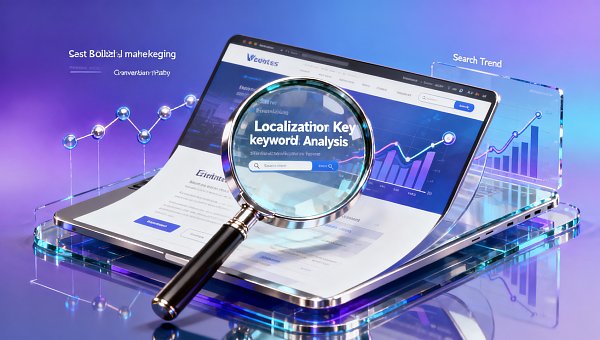
After entering overseas markets, many companies discover a seemingly contradictory phenomenon: the website is live, ads are running, and social media accounts have started updating, yet inquiry volume remains low, bounce rates are high, and conversion costs keep rising. On the surface, there is no shortage of marketing activity, but in reality, the problem often lies in the fact that “local users simply don’t buy into it.”
The reason is simple: global marketing pursues scalable reach, while localized marketing determines whether users are willing to trust you, understand you, and ultimately choose you. The former solves “whether you can be seen,” while the latter solves “whether you can be accepted.” If localization is missing, even the most complete marketing plan may remain only at the exposure level and fail to enter the conversion stage.
Especially in the integrated website + marketing services industry, what corporate clients most easily overlook is not technical setup, but whether content, structure, messaging, and channel strategy are truly aligned with the target market. A website that looks “international” is not necessarily a website that “local users are willing to use”; and a media buying logic that has been validated in the domestic market is not necessarily suitable for Europe, the Middle East, Southeast Asia, or Latin America.
The localization issues companies most often overlook are usually concentrated in these 5 areas
1. The language translation is fine, but the way it is expressed is wrong.
Many companies understand multilingual website development as “translating Chinese content into English, French, and Spanish.” But what truly affects conversion is not whether the grammar is correct, but whether the expression fits the local business context. For example, in the B2B industry, some markets care more about “delivery lead times” and “certification capabilities,” while others place more importance on “after-sales responsiveness” and “local case studies.” If website copy is still arranged according to the logic of the original market, then even if the translation is accurate, users may still not be persuaded.
2. The website structure reflects the company’s perspective, not the user’s perspective.
When overseas users visit a website, their browsing paths, information preferences, and ways of building trust may be completely different from those in the domestic market. A common mistake companies make is this: homepage information is too broad, product pages are too technical, inquiry entry points are buried too deeply, and the mobile experience is poor, causing users to leave quickly even after entering the site. A truly effective localized website is not just about changing the language, but about restructuring navigation, page hierarchy, CTA buttons, and content sequence according to local user habits.
3. SEO is being done, but the keywords are not the terms users are actually searching for.
What search engine optimization services fear most is a keyword strategy based on “self-assumed correctness.” Many companies directly use industry terminology or translated terms based on Chinese thinking for SEO, while overlooking how overseas users actually search. Users may be searching for application scenarios, problem solutions, price comparisons, or certification requirements, rather than the product terms the company internally tends to use. If the keywords are wrong, no matter how much traffic you get, it still will not be precise.
4. Social media content is continuously produced, but it does not fit the culture of the platform.
Different countries and different platforms vary greatly in their acceptance of content formats and communication tone. LinkedIn is more suitable for professional insights and industry value output, TikTok leans toward lightweight, fast, and visual content, while Facebook places more emphasis on interaction and community atmosphere. If a company simply copies the domestic content rhythm, or treats all platforms as the same “posting channel,” it is often difficult to build effective interaction.
5. The conversion path is not fully designed, causing breaks in marketing effectiveness.
Some companies have decent ad click-through rates, but unstable inquiry volume; some have good SEO rankings, but orders fail to grow for a long time. This usually indicates that the marketing stages are not connected. Does the website page users enter after clicking an ad match the ad? Does the landing page contain enough local trust elements? Are there too many form fields? Does customer service response time across time zones affect deal closure? These seemingly small issues are often the key reasons why global marketing fails.
Why localization directly affects inquiries, conversions, and ROI
For business managers, localization is not a brand move that merely “adds icing on the cake,” but a growth variable that directly affects input-output results. This can be understood from three levels.
First, it reduces user comprehension costs. When users enter a website, see an advertisement, or browse social media content, if the way information is presented matches local habits, users can more easily and quickly understand what you offer, who it is suitable for, and why it is worth choosing. This will directly increase time on site, reduce bounce rate, and improve willingness to inquire.
Second, it increases user trust. Overseas markets naturally have screening mechanisms for unfamiliar brands. Local language expression, real case studies, local contact methods, compliance statements, payment methods, and after-sales commitments all affect whether users are willing to continue communicating. Marketing is not only about “persuading,” but even more about “removing concerns.”
Third, it improves channel efficiency. Whether it is SEO, social media marketing, or advertising, platform algorithms essentially favor content and pages that receive better user feedback. If localization is done better, resulting in longer post-click engagement, stronger interaction, and higher conversion, then traffic costs will usually decrease accordingly, and ROI will naturally be easier to improve.
This is also why more and more companies are realizing that global growth is not simply about broad coverage, but about using standardized capabilities as the foundation and then amplifying results through localized execution. Service providers such as Easy Business Treasure Information Technology (Beijing) Co., Ltd., which has been deeply engaged in global digital marketing for ten years, are able to continuously serve a large number of companies going global essentially because the path of “technological innovation + localized services” is more in line with real market rules.
How to determine whether your global marketing problem lies in localization
If a company is already doing overseas promotion but the results are unsatisfactory, it can use the following questions for a quick self-check:
Look at the website: Are the different country sites just text translations, or have page structure, value proposition presentation, case study content, and CTA design also been adjusted?
Look at the traffic: Do the visitors you acquire actually come from the real target market? Is keyword traffic relevant to your actual business?
Look at the content: Does social media content revolve around local user pain points and application scenarios, or is it only publishing company news and brand updates?
Look at the data: Is the click-through rate low, or is there no conversion after the click? If it is the latter, then the problem most likely lies not only in media buying, but more in the landing page and content alignment.
Look at the conversion path: From seeing content, entering the page, submitting an inquiry, to subsequent follow-up, are there any obvious breakpoints in between?
If any one of the above stages shows a clear disconnect, then the problem is likely no longer “whether marketing was done,” but “whether localization was done deeply enough.” When formulating optimization plans, companies should also prioritize starting from the perspectives of user experience and market fit, rather than blindly increasing budget, adding channels, or raising ad frequency.
How truly effective localization should be implemented
To make a global marketing plan truly effective, localization cannot remain at the level of content translation, but should become a systematic project spanning websites, content, search, advertising, and conversion.
First, segment markets instead of using one solution for all markets.
Different countries vary greatly in development stage, industry maturity, and competitive landscape. Companies should first divide markets into core markets, potential markets, and test markets, and then decide the depth of investment. Core markets are more suitable for refined local operations, potential markets can adopt lightweight validation strategies, and test markets should focus mainly on data validation.
Then localize user personas.
Even when they are all business customers, purchasing roles, decision-making processes, and concerns may differ across regions. Some care about price, some about certification, some about delivery time, and some about after-sales service. Localized marketing must design content around the real purchasing decision chain, rather than only talking about the advantages the company wants to promote.
Then systematically reconstruct the closed loop of “content — channels — pages — conversion.”
For example, SEO should structure keywords based on local search intent; social media content should differentiate formats according to platform attributes; advertising should be consistent with the promise of the landing page; and website pages should reduce ineffective information and strengthen trust elements. Only when these four work together can marketing effectiveness avoid breaking apart.
Finally, establish a mechanism for continuous iteration.
Localization is not a one-time delivery project, but an ongoing optimization process. Companies should focus on tracking data such as organic traffic quality, form submission rate, bounce rate, cost per inquiry, page heatmaps, and content performance in different regions, and continuously test to refine strategy.
In actual management, this mindset of “continuous optimization, waste reduction, and process-based improvement” is consistent with the logic many organizations use to improve operational efficiency. For example, at the management methodology level, many industries emphasize refined improvement. Topics such as the application of lean management in the control of operating costs in public hospitals, although belonging to different scenarios, offer core insights that are equally applicable to marketing systems: only by identifying ineffective actions in the process can growth investment truly generate measurable returns.
For companies, what should be the key focus when choosing a service provider
If a company hopes to rely on an external team to advance global marketing, localization capability should become an important criterion in selecting a service provider, rather than only looking at “whether they can build a website” or “whether they can run ads.”
It is recommended to focus on four points:
First, whether they have full-funnel capabilities. If website development, SEO optimization, social media marketing, and advertising are fragmented from one another, it is ultimately difficult to form sustainable growth. Full-funnel coordination capability determines whether a solution can truly be implemented.
Second, whether they understand differences in local markets. A truly experienced team usually will not start by copying templates, but will first ask about your target countries, customer types, conversion goals, and competitive environment.
Third, whether they value data feedback. Localization is not about creating content by intuition, but about using data to verify whether pages, keywords, channels, and creatives are effective.
Fourth, whether they can balance technology and service. For companies going global, intelligent website-building capabilities can improve efficiency, big data and AI capabilities can improve optimization precision, and localized services determine whether the solution can truly fit the market. Both are indispensable.
Conclusion: What global marketing competes on is not “how broadly it is spread,” but “how accurately it lands”
Why do global marketing plans so easily fail? Fundamentally, it is not because companies are not trying hard enough, nor necessarily because there are not enough channels, but because many actions remain at the “surface level of globalization” without going deeper into the “details of localization.”
Truly effective growth often comes from a deep understanding of the target market: how users search, how they judge, how they compare, how they build trust, and how they complete decisions. Only by getting each of these key nodes right can website development, SEO optimization, social media operations, and advertising work together in real synergy.
If you are evaluating overseas marketing performance, instead of first asking “should the budget be increased,” it is better to first ask: was your marketing plan really designed from the perspective of local users? This is often the true watershed between success and failure.
Related Articles



Related Products
 EasyCamp SaaS Smart Website Marketing SystemE-Yingbao SaaS Smart Website Marketing System: AI-powered, zero-code website building. Rapidly launch multilingual independent e-commerce sites in just 10 minutes. Global server acceleration and AI-driven SEO optimization empower businesses to efficiently connect with global markets. The seamless integration of technology and user-friendly operation makes building e-commerce sites incredibly simple.
 AI+SEM Intelligent Advertising Marketing SystemAI+SEM drives intelligent ad creation, empowering full-funnel precision advertising marketing. The system automatically generates weekly/monthly reports, AI recommends keywords and target countries, monitors core metrics in real-time with intelligent alerts, and enables one-click high-conversion ad solutions to help quickly acquire customers and improve ROI.
 AI+SEO Dual Engine Optimization ServiceEasyWin AI+SEO Dual Engine Optimization System leverages AI-powered keyword mining, content generation, and comprehensive technical optimization to help foreign trade enterprises acquire high-quality organic traffic, significantly improving search rankings and conversion rates.
 AI+SNS Social Media Marketing SystemYingbao AI+SNS Social Media Marketing System - Precision social capture for the social media era. Supports one-click content synchronization across major platforms like Facebook and LinkedIn. AI intelligently rewrites posts for enhanced relevance. 24/7 AI customer service and user profiling analysis empower businesses to efficiently expand into global markets.
 AI+SEO营销解决方案易营宝AI+SEO营销解决方案,通过AI批量写作、智能生成TDK、精准关键词扩词等功能,全面优化网站SEO效果,提升流量与转化率。助力企业构建高效智能网站新生态。
 AI+SEM Advertising Marketing SolutionsAI+SEM Advertising Marketing Solution leverages AI technology to deeply empower SEM ad campaigns. It automatically generates weekly/monthly reports using AI, presenting account data across multiple dimensions for comprehensive insights into campaign performance and trends. The system precisely recommends keywords and target countries, intelligently generates high-conversion ad copy, and enables one-click activation of efficient campaign plans to help businesses rapidly acquire customers. Simultaneously, it monitors core metrics in real time, intelligently identifies abnormal fluctuations, and issues timely alerts to ensure stable, high-return advertising results.
 Domain Name ServicesEasyWin provides professional domain name services, including intelligent queries, one-stop registration, brand protection, and full lifecycle management, helping businesses build a digital brand image.
 EasyOperate B2C Cross-Border E-Commerce Platform & Independent WebsiteEasyStore B2C Cross-border E-commerce Independent Store is an intelligent website building and cross-border e-commerce integrated solution independently developed by EasyStore Information Technology (Beijing) Co., Ltd. The system is specially designed for small and medium-sized as well as large export enterprises, integrating 'website building, operation, marketing, advertising, and conversion' into one, helping enterprises quickly establish cross-border e-commerce independent stores to achieve brand globalization and global sales growth.
The platform supports multiple languages, multiple currencies, and multi-channel marketing, with built-in AI intelligent translation and SEO optimization systems, suitable for mainstream markets such as Southeast Asia, Europe and America, Latin America, and the Middle East, assisting Chinese manufacturing enterprises in efficiently deploying international e-commerce strategies. SSL证书易营宝提供专业SSL安全证书服务,包括单域名和泛域名证书,确保网站数据传输加密、身份验证和完整性保护,助力企业建立安全可信的在线业务环境。









