









- The China-US tariff arrangement has reached a preliminary consensus, and the trade association will be establishedJun 15, 2026View details
- What determines B2C cross-border e-commerce website development costs? A breakdown of features, interfaces, and deployment methodsJun 17, 2026View details
- China-Morocco zero-tariff access, a breakthrough in the cost of Moroccan goods exports to ChinaJun 11, 2026View details
- What signal should be released for the suspension of exports to JapanJun 10, 2026View details
- China's May LNG imports rebounded, with increased volumes from Russia and Canada filling the Middle East supply gapJun 10, 2026View details
- Will GEO change its SEO strategy?Jun 04, 2026View details
- What types of businesses are end-to-end solutions suitable for?Jun 03, 2026View details
- 2026 Global Growth Channel TrendsJun 02, 2026View details
How to Evaluate AI+SEM Advertising Strategy Providers: The Key Is Not Just Writing Prompts
When many companies look for an AI+SEM advertising strategy provider, the easiest thing to be misled by is a superficial capability: whether they can write prompts and whether they can use a few AI tools. But what truly determines campaign performance is often not “how much copy they can generate,” but whether the provider has comprehensive search engine optimization service capabilities, experience in Facebook advertising strategy, data analysis capabilities, and a practical understanding of how to implement global marketing solutions. In other words, what companies need to screen for is not an “AI operator,” but a battle-tested team that can connect traffic acquisition, lead management, conversion improvement, and long-term growth.
For business decision-makers, project owners, and execution teams, the core question is usually not “Can AI run ads,” but “Can this service provider help me reduce trial-and-error costs, improve customer acquisition efficiency, and turn budget into real growth?” If you are evaluating potential partners, the following evaluation dimensions are more important than “being able to write prompts.”
See the essence first: what you need is a growth partner, not an AI tool demonstrator
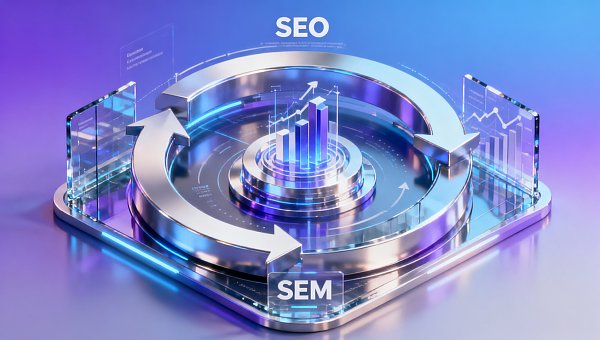
When users search for “how to screen an AI+SEM advertising strategy provider,” the real intent behind it is usually very clear: they want a reliable set of selection criteria to avoid being misled by marketing talk, especially to avoid mistaking “knows how to use AI” for “knows how to drive growth through advertising.”
The value of AI in SEM is mainly reflected in several areas: keyword expansion, ad creative generation, audience segmentation, bidding strategy support, anomaly detection in data, and improved efficiency in landing page testing. But no matter how intelligent these steps are, they can only improve efficiency and cannot replace strategic capability. A truly valuable provider should be able to answer the following questions:
- Who are your target customers, and how should their search intent be segmented?
- How should advertising budgets be allocated across different markets and channels?
- How can SEO and SEM work together instead of being disconnected from each other?
- How can a Facebook advertising strategy form a remarketing closed loop with search ads?
- Between lead generation and deal closure, which pages, forms, messaging, and follow-up mechanisms are holding performance back?
If a provider mainly showcases “we can quickly generate 100 ad copies” and “we have AI prompt templates,” but rarely talks about conversion paths, campaign structure, data attribution, and business outcomes, this type of partner is usually more suitable for execution outsourcing and not necessarily for taking on growth goals.
What companies really care about is not clicks, but whether input-output performance is sustainable
From a management perspective, there are usually four main concerns when screening providers:
- Whether the budget is worth spending: Can they keep customer acquisition costs within a reasonable range, and do they have ongoing optimization capabilities?
- Whether lead quality is stable: It is not just about the number of forms, but about qualified leads, opportunity rate, and closing rate.
- Whether the cooperation risk is high: Is there excessive dependence on a single platform, a single media buyer, or a single breakout creative?
- Whether the capability is replicable: After switching markets, products, or languages, can growth still be maintained?
That is also why “whether they can write prompts” should not become the core selection criterion. Prompts can be replicated and can even be learned quickly; but understanding of the business model, judgment of market competition, experience in multi-channel coordination, and control over the data loop are all very difficult to make up for temporarily.
Especially for companies with overseas expansion needs or multi-region advertising needs, providers must also have the capability to design global marketing solutions. For example, for the same product, Google search ads need to emphasize demand matching, while Facebook advertising strategy focuses more on interest targeting, creative testing, and remarketing continuity. The logic of the two is not the same.
When screening AI+SEM providers, it is recommended to focus on these 6 hard indicators
1. Whether they have the ability to break down search intent
An excellent provider will not start by talking about ad accounts, but will first break down user search intent: how brand terms, product terms, competitor terms, problem terms, and scenario terms should each be handled. This is because different keywords correspond to different stages of purchase intent, and the conversion strategy must also be different.
2. Whether they can combine SEO and SEM
A team that truly understands search engine optimization services will think about organic traffic and paid traffic within the same growth framework. For example, which high-commercial-intent keywords are suitable for capturing with SEM first, which long-tail content keywords are better for SEO accumulation, and which high-click, low-conversion keywords need landing page optimization instead of continued budget increases.
3. Whether they have cross-platform integration experience
Today, high-quality customer acquisition rarely relies on search ads alone. Especially in B2B, brand globalization, franchise recruitment, and similar scenarios, Facebook advertising strategy, Google Ads, content marketing, and independent website conversion optimization usually need to work together. A team that only understands operations on a single platform will find it difficult to help a company build a stable conversion funnel.
4. Whether they focus on the conversion chain, not just ad performance data
A high click-through rate does not mean good business; a low CPC does not mean high ROI either. You need to see whether the provider goes deep into landing page structure, form design, customer service response, CRM entry, lead grading, and other links. Many projects perform poorly not because the ads were poorly run, but because the downstream chain could not hold up.
5. Whether they can provide verifiable optimization methods
A reliable service provider will explain clearly: how long the testing cycle is, how A/B testing is conducted, how creative fatigue is identified, when to scale the budget, when to pause keyword groups, and how remarketing is done—instead of simply saying “we will continue optimizing.”
6. Whether they have transparent data reporting and attribution mechanisms
For business managers, reading reports is not about looking at a pile of impressions and clicks, but about looking at business results. For example, cost per lead, qualified lead rate, deal conversion rate, channel contribution, and payback speed over the campaign cycle. Whoever can explain these data clearly is closer to being a true growth partner.
How to quickly judge whether a provider truly understands the work or is just packaging AI capabilities
In actual communication, you can directly ask a few questions and basically tell the difference in capability level:
- If search volume in my industry is not large, how would you structure keywords and allocate the budget?
- If Google search conversion costs rise, how should Facebook advertising strategy work together to support it?
- How do you determine whether a landing page should change its content, its structure, or its traffic source?
- What exactly has AI replaced in your delivery process, and what can it not replace?
- What projects have you failed to optimize in the past, and how did you adjust afterward?
If the other party’s answers stay at “we have an AI system,” “we generate copy very fast,” or “we can automate bidding,” but cannot connect that to concrete business logic, optimization processes, and project review, that basically shows their capability is more tool-level than strategy-level.
On the other hand, truly mature teams usually acknowledge the boundaries of AI: it can improve efficiency, but it cannot replace industry knowledge, user insight, and conversion strategy. This kind of understanding is actually more trustworthy.
When different roles screen providers, their focus should be different
Business decision-makers should prioritize results and risks: whether the budget scale is appropriate, whether the return cycle is too long, whether the provider is stable, and whether they can support mid- to long-term growth.
Project managers or owners should focus on collaboration efficiency: whether requirement communication is smooth, whether the project rhythm is clear, whether the reporting mechanism is standardized, and whether cross-department coordination is easy to implement.
Executors or operations staff are better suited to focus on methodology: whether keyword management, ad testing, creative updates, conversion tracking, and remarketing settings are detailed enough.
Dealers, agents, and distributors should focus on localized customer acquisition capability: whether there are differentiated strategies for ad creatives, landing page language, and user trust-building methods in different regions.
It is precisely because different roles focus on different points that an excellent provider should not only present a single standardized PPT, but should be able to respond separately to the core concerns of business, execution, and management. In projects where digital marketing and management systems work together, many companies also simultaneously care about internal process efficiency, which follows the same logic emphasized by the optimization path of financial management information systems for state-owned enterprises in the context of digital transformation: tools are not the goal—efficiency and results are.
Why “full-chain capability” is more important than “single-point advertising capability”
When many companies look for providers in the early stage, they tend to focus only on account management capability, but later discover several common issues:
- Ads can drive traffic volume, but landing page conversion is poor;
- There are many form submissions, but sales follow-up efficiency is low;
- Search ads work, but social media ads cannot scale;
- The advertising logic works in the domestic market, but cannot be replicated overseas.
This shows that what companies need is not single-point execution, but full-chain coordination from website building, SEO, and ad delivery to data attribution and lead management. Especially under the trend of integrated website + marketing services, a website is no longer just a display page, but a key asset for ad conversion. Without strong website support, even the most precise traffic will be wasted.
Therefore, when evaluating an AI+SEM advertising strategy provider, it is recommended to first assess whether they have the following integrated capabilities:
- Independent website or marketing website construction capability;
- Coordination capability between search engine optimization services and paid traffic;
- Facebook advertising strategy and multi-platform integration experience;
- Localized content production and multilingual market adaptation capability;
- Data analysis, tracking deployment, and continuous optimization mechanisms.
This combination of capabilities is much closer to the global marketing solution that companies truly need, rather than fragmented outsourcing.
One final practical judgment for companies: review the plan before reviewing the price
Pricing is certainly important, but if you compare prices directly before the strategy is clear, the goals are aligned, and attribution is defined, you will often end up choosing a team that is “cheap but inefficient.” A better approach is to first ask the provider to offer a preliminary diagnosis based on your industry and target market:
- Target user profiling and search demand assessment;
- Suggestions for keyword and channel segmentation;
- Coordination thinking among SEO, SEM, and Facebook;
- Optimization directions for landing pages and conversion paths;
- Testing priorities and phase goals for the first 3 months.
If a company can see the issues clearly at the early stage, the later success rate of cooperation is usually higher. Conversely, if the other party only emphasizes AI tools, prompt-writing capability, and proficiency in ad platform operations, but cannot clearly explain business goals and conversion logic, then caution is needed.
In some industries with higher management requirements and more complex processes, companies also view marketing digitalization together with internal informatization. At that time, understanding “strategy + systems + processes” becomes even more important. Similar to the thinking reflected in the optimization path of financial management information systems for state-owned enterprises in the context of digital transformation, it also reminds companies that any digital investment must ultimately return to management efficiency, decision quality, and business growth.
In summary, when screening an AI+SEM advertising strategy provider, the key is indeed not whether they can write prompts, but whether they can understand your business, break down user search intent, connect search and social media, manage both ad delivery and conversion, and turn short-term customer acquisition into long-term growth. If what you want is temporary hype, a tool-oriented team may be enough; if what you want is stable growth, then you must choose a partner that truly has integrated capabilities in search engine optimization services, Facebook advertising strategy, and global marketing solutions.
Related Articles



Related Products
 EasyCamp SaaS Smart Website Marketing SystemE-Yingbao SaaS Smart Website Marketing System: AI-powered, zero-code website building. Rapidly launch multilingual independent e-commerce sites in just 10 minutes. Global server acceleration and AI-driven SEO optimization empower businesses to efficiently connect with global markets. The seamless integration of technology and user-friendly operation makes building e-commerce sites incredibly simple.
 AI+SEM Intelligent Advertising Marketing SystemAI+SEM drives intelligent ad creation, empowering full-funnel precision advertising marketing. The system automatically generates weekly/monthly reports, AI recommends keywords and target countries, monitors core metrics in real-time with intelligent alerts, and enables one-click high-conversion ad solutions to help quickly acquire customers and improve ROI.
 AI+SEO Dual Engine Optimization ServiceEasyWin AI+SEO Dual Engine Optimization System leverages AI-powered keyword mining, content generation, and comprehensive technical optimization to help foreign trade enterprises acquire high-quality organic traffic, significantly improving search rankings and conversion rates.
 AI+SNS Social Media Marketing SystemYingbao AI+SNS Social Media Marketing System - Precision social capture for the social media era. Supports one-click content synchronization across major platforms like Facebook and LinkedIn. AI intelligently rewrites posts for enhanced relevance. 24/7 AI customer service and user profiling analysis empower businesses to efficiently expand into global markets.
 AI+SEO营销解决方案易营宝AI+SEO营销解决方案,通过AI批量写作、智能生成TDK、精准关键词扩词等功能,全面优化网站SEO效果,提升流量与转化率。助力企业构建高效智能网站新生态。
 AI+SEM Advertising Marketing SolutionsAI+SEM Advertising Marketing Solution leverages AI technology to deeply empower SEM ad campaigns. It automatically generates weekly/monthly reports using AI, presenting account data across multiple dimensions for comprehensive insights into campaign performance and trends. The system precisely recommends keywords and target countries, intelligently generates high-conversion ad copy, and enables one-click activation of efficient campaign plans to help businesses rapidly acquire customers. Simultaneously, it monitors core metrics in real time, intelligently identifies abnormal fluctuations, and issues timely alerts to ensure stable, high-return advertising results.
 Domain Name ServicesEasyWin provides professional domain name services, including intelligent queries, one-stop registration, brand protection, and full lifecycle management, helping businesses build a digital brand image.
 EasyOperate B2C Cross-Border E-Commerce Platform & Independent WebsiteEasyStore B2C Cross-border E-commerce Independent Store is an intelligent website building and cross-border e-commerce integrated solution independently developed by EasyStore Information Technology (Beijing) Co., Ltd. The system is specially designed for small and medium-sized as well as large export enterprises, integrating 'website building, operation, marketing, advertising, and conversion' into one, helping enterprises quickly establish cross-border e-commerce independent stores to achieve brand globalization and global sales growth.
The platform supports multiple languages, multiple currencies, and multi-channel marketing, with built-in AI intelligent translation and SEO optimization systems, suitable for mainstream markets such as Southeast Asia, Europe and America, Latin America, and the Middle East, assisting Chinese manufacturing enterprises in efficiently deploying international e-commerce strategies. SSL证书易营宝提供专业SSL安全证书服务,包括单域名和泛域名证书,确保网站数据传输加密、身份验证和完整性保护,助力企业建立安全可信的在线业务环境。









