









- The China-US tariff arrangement has reached a preliminary consensus, and the trade association will be establishedJun 15, 2026View details
- China-Morocco zero-tariff access, a breakthrough in the cost of Moroccan goods exports to ChinaJun 11, 2026View details
- What signal should be released for the suspension of exports to JapanJun 10, 2026View details
- China's May LNG imports rebounded, with increased volumes from Russia and Canada filling the Middle East supply gapJun 10, 2026View details
- Will GEO change its SEO strategy?Jun 04, 2026View details
- What types of businesses are end-to-end solutions suitable for?Jun 03, 2026View details
- 2026 Global Growth Channel TrendsJun 02, 2026View details
- Changes in Search Engine Ranking Factors in 2026Jun 06, 2026View details
How to Choose a Digital Marketing Strategy Agency: First Distinguish Between Execution and Consulting
How to choose a digital marketing strategy agency? The key is to first distinguish between consulting capability and execution capability. Whether it is a search engine optimization company, a social media marketing strategy provider, or website design pricing and global marketing solutions, investment is only more efficient when it matches the company’s goals.
First determine: do you need strategic consulting or implementation and execution
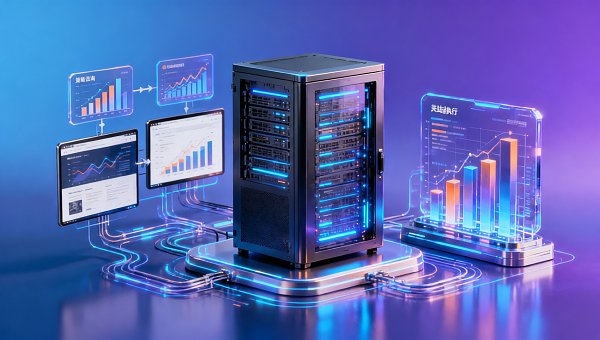
Many companies take the wrong first step when choosing a digital marketing strategy agency. On the surface, they are looking for a “marketing company,” but their actual needs may be completely different: some companies lack strategic judgment, some lack an execution team, and some lack both. If this is not broken down in the early stage, the budget can easily be consumed inefficiently within 2–3 months.
Consulting-oriented agencies are better at market assessment, competitive analysis, channel planning, and phased goal setting. They are suitable for projects such as entering new markets, brand upgrading, and overseas expansion, where direction must be defined first. Execution-oriented agencies focus more on website building, content updates, SEO optimization, advertising placement, and social media operations, making them suitable for teams that already have clear goals and need to move quickly.
For users and operators, the biggest pain point is usually not “not knowing what to do,” but “doing many things every day without seeing lead accumulation.” For business decision-makers, the core risk lies in spending the budget without forming a closed loop among the website, traffic, inquiries, and repeat purchases.
The value of integrated website + marketing services lies precisely in connecting consulting and execution. Especially in industries such as foreign trade, manufacturing, and channel distribution, where common delivery cycles are 2–6 weeks, an incorrect positioning decision in the early stage will force every subsequent round of content production, bid placement, and page revision into rework.
The responsibility boundaries of the two types of agencies must be clearly defined before cooperation begins
To avoid the situation of “many promises before signing, but off-track execution after signing,” it is recommended to first confirm 4 questions during requirement discussions: who is responsible for breaking down the goals, who is responsible for the execution rhythm, who is responsible for data review, and who proposes corrective recommendations when results deviate. Unclear responsibilities are the most common hidden cost when SMEs purchase marketing services.
- Consulting-led: emphasizes research, strategy, and phased roadmaps, usually using monthly or quarterly reviews as the evaluation unit.
- Execution-led: emphasizes page launches, content publishing, keyword deployment, and account optimization, usually advancing on a weekly basis.
- Integrated service model: conducts diagnosis in the early stage, implementation in the middle stage, and growth iteration in the later stage, making it more suitable for companies with ongoing customer acquisition needs.
If a company needs an annual growth plan but purchases a team that only handles daily operational outsourcing, the result is usually plenty of execution with no clear direction. Conversely, if a company simply wants to launch a website as soon as possible and gain basic traffic, but chooses a pure consulting firm, it may also encounter problems such as a thick proposal and slow action.
How to compare digital marketing strategy agencies: look at goals, delivery, and collaboration efficiency
When comparing a search engine optimization company, a social media marketing strategy team, or website design pricing, companies should not look only at the price of a single item. What truly affects return on investment is often whether the goal definition is clear, whether the delivery granularity is sufficient, and whether cross-department collaboration is smooth. The table below is suitable for preliminary screening before procurement.
From a procurement perspective, integrated agencies are more suitable for companies that hope to complete “website setup—traffic acquisition—conversion optimization” within 3 stages. This does not necessarily mean the largest one-time investment, but it often reduces the time loss and unclear responsibilities caused by coordinating multiple vendors.
A low website design quote does not mean a low total cost
Many companies focus only on homepage design, page quantity, and quotation details, while overlooking subsequent operational capabilities. If a website does not reserve structure for SEO optimization, content expansion, multilingual management, and mobile adaptation, then even the cheapest website-building solution may later incur secondary costs due to redesign, migration, and speed optimization.
Project managers and engineering project owners in particular need to pay attention to delivery boundaries. A common issue is this: the pages are delivered, but keyword deployment, conversion forms, site structure, access speed, and data tracking are not included in acceptance. This kind of service that “delivers only pages, not results” usually leads to higher follow-up costs for make-up work.
5 key points recommended for review before procurement
- Whether there are clear phased goals, such as going live in the first month, completing basic indexing within 60 days, and entering a stable optimization period within 90 days.
- Whether it provides a coordinated plan linking site structure, content strategy, and keyword hierarchy, rather than isolated point services.
- Whether it supports multilingual capabilities, localization, and overseas access acceleration, especially for foreign trade scenarios.
- Whether there is a monthly review mechanism covering at least 3 categories of metrics: traffic, inquiries, and page performance.
- Whether it can coordinate with sales and channel teams to avoid disconnects between marketing leads and back-end follow-up.
Which companies are better suited for integrated website and marketing solutions
If your business involves foreign trade, distributor expansion, regional agent recruitment, or multi-market brand promotion, then purchasing website building, SEO optimization, and social media marketing separately will often lead to fragmented information. One website handles presentation, another team handles ad placement, and a third team handles content, making it difficult to unify the final data and close the loop on responsibility.
Since its establishment in 2013, Easy-Biz Information Technology (Beijing) Co., Ltd. has long focused on global digital marketing services. Driven by artificial intelligence and big data, it has developed a full-chain solution covering intelligent website building, SEO optimization, social media marketing, and advertising placement. For companies seeking overseas growth, this capability combination offers more practical value than outsourcing individual items separately.
Especially for foreign trade teams, the common difficulties are concentrated in 3 areas: slow multilingual launch, complex later-stage website maintenance, and a disconnect between traffic acquisition and conversion. If the infrastructure is unstable, even the best social media marketing strategy will struggle to generate continuous inquiries, let alone support subsequent channel distribution growth.
At this point, a website-building and marketing system with a technical foundation will significantly improve collaboration efficiency. For example, Easy-Biz SaaS Intelligent Website Building Marketing System is suitable for quickly launching foreign trade scenarios. It can build a multilingual independent website within 10 minutes and supports multi-device responsiveness and AI intelligent SEO optimization, shortening the preparation period from website building to customer acquisition.
From application scenarios, who needs integrated capabilities more
Different roles have different demands for digital marketing strategy agencies, but all increasingly value “fewer handoffs, faster delivery, and iterative capability.” The table below is more suitable for use during internal evaluation to determine whether an integrated solution is necessary.
For foreign trade websites, server nodes, translation engines, and back-end usability are all critical. Based on common needs, if it can cover more than 20 global nodes and combine neural network translation with localized editing, it is usually more conducive to launching in multiple markets and subsequent content expansion, which is more practical than simply pursuing low-cost templates.
Related Articles



Related Products
 EasyCamp SaaS Smart Website Marketing SystemE-Yingbao SaaS Smart Website Marketing System: AI-powered, zero-code website building. Rapidly launch multilingual independent e-commerce sites in just 10 minutes. Global server acceleration and AI-driven SEO optimization empower businesses to efficiently connect with global markets. The seamless integration of technology and user-friendly operation makes building e-commerce sites incredibly simple.
 AI+SEM Intelligent Advertising Marketing SystemAI+SEM drives intelligent ad creation, empowering full-funnel precision advertising marketing. The system automatically generates weekly/monthly reports, AI recommends keywords and target countries, monitors core metrics in real-time with intelligent alerts, and enables one-click high-conversion ad solutions to help quickly acquire customers and improve ROI.
 AI+SEO Dual Engine Optimization ServiceEasyWin AI+SEO Dual Engine Optimization System leverages AI-powered keyword mining, content generation, and comprehensive technical optimization to help foreign trade enterprises acquire high-quality organic traffic, significantly improving search rankings and conversion rates.
 AI+SNS Social Media Marketing SystemYingbao AI+SNS Social Media Marketing System - Precision social capture for the social media era. Supports one-click content synchronization across major platforms like Facebook and LinkedIn. AI intelligently rewrites posts for enhanced relevance. 24/7 AI customer service and user profiling analysis empower businesses to efficiently expand into global markets.
 AI+SEO营销解决方案易营宝AI+SEO营销解决方案,通过AI批量写作、智能生成TDK、精准关键词扩词等功能,全面优化网站SEO效果,提升流量与转化率。助力企业构建高效智能网站新生态。
 AI+SEM Advertising Marketing SolutionsAI+SEM Advertising Marketing Solution leverages AI technology to deeply empower SEM ad campaigns. It automatically generates weekly/monthly reports using AI, presenting account data across multiple dimensions for comprehensive insights into campaign performance and trends. The system precisely recommends keywords and target countries, intelligently generates high-conversion ad copy, and enables one-click activation of efficient campaign plans to help businesses rapidly acquire customers. Simultaneously, it monitors core metrics in real time, intelligently identifies abnormal fluctuations, and issues timely alerts to ensure stable, high-return advertising results.
 Domain Name ServicesEasyWin provides professional domain name services, including intelligent queries, one-stop registration, brand protection, and full lifecycle management, helping businesses build a digital brand image.
 EasyOperate B2C Cross-Border E-Commerce Platform & Independent WebsiteEasyStore B2C Cross-border E-commerce Independent Store is an intelligent website building and cross-border e-commerce integrated solution independently developed by EasyStore Information Technology (Beijing) Co., Ltd. The system is specially designed for small and medium-sized as well as large export enterprises, integrating 'website building, operation, marketing, advertising, and conversion' into one, helping enterprises quickly establish cross-border e-commerce independent stores to achieve brand globalization and global sales growth.
The platform supports multiple languages, multiple currencies, and multi-channel marketing, with built-in AI intelligent translation and SEO optimization systems, suitable for mainstream markets such as Southeast Asia, Europe and America, Latin America, and the Middle East, assisting Chinese manufacturing enterprises in efficiently deploying international e-commerce strategies. SSL证书易营宝提供专业SSL安全证书服务,包括单域名和泛域名证书,确保网站数据传输加密、身份验证和完整性保护,助力企业建立安全可信的在线业务环境。









