









- What Does a Global Traffic Ecosystem Service Provider Do? What Are the Differences from a Single Advertising AgencyJul 16, 2026View details
- What should you focus on in the latest enterprise SaaS report? From renewal rates and delivery costs to overseas growth opportunitiesJul 12, 2026View details
- What signals are worth paying attention to in a cross-border marketing trend report? B2B companies should look at these 6 signalsJul 11, 2026View details
- How to Read a Cross-Border Marketing Trends Report? Five Key Dimensions for Evaluating Channel OpportunitiesJul 11, 2026View details
- Which channel has the highest ROI in the global traffic ecosystem? Comparative analysis of search, social media, and advertisingJul 10, 2026View details
- What multilingual website services are available in Sanya? Which model is more suitable for local businesses going global?Jul 08, 2026View details
- How to view the complete list of China SaaS companies in the top 100? Practical methods for screening website-building and marketing service providersJul 08, 2026View details
- How to view pricing in the global traffic ecosystem? Cost comparison of search, social media, and content channel advertisingJul 06, 2026View details
Will GEO change its SEO strategy?
GEO is reshaping the logic of customer acquisition for businesses. For business decision-makers, understanding its relationship with SEO will determine the efficiency of future digital marketing growth.
A basic overview of GEO and its relationship to SEO
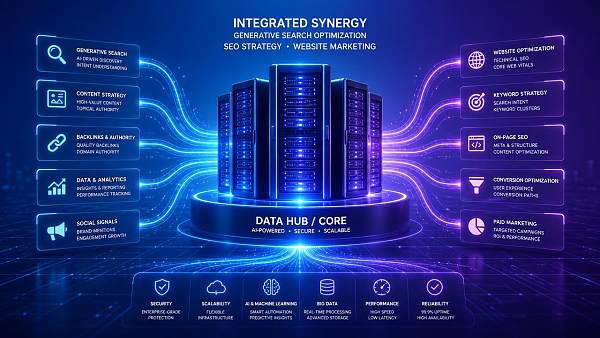
GEO typically refers to content optimization for generative search. It focuses on answer generation, semantic referencing, brand credibility, and structured information.
Traditional SEO focuses more on page ranking. GEO, on the other hand, focuses on whether a company's content can be included in intelligent responses, summary citations, and conversational recommendations.
Therefore, GEO will not simply replace SEO. It is more like an upgraded layer of SEO, driving strategies to shift from traffic entry points to trust entry points.
In the integrated website and marketing services scenario, GEO requires that website building, content, technology, security and advertising form a unified closed loop.
Industry Background and Current Focus Signals
Search behavior is changing. Users are no longer just entering keywords; they are asking complex questions and expecting complete answers.
This makes GEO a new variable in digital marketing. Businesses need to target search engines, generative engines, and real users simultaneously.
Yiyingbao Information Technology (Beijing) Co., Ltd. has been deeply involved in digital marketing for ten years, with services covering intelligent website building, SEO optimization, social media marketing and advertising.
In a GEO environment, this type of end-to-end capability is even more valuable because single-point optimization is difficult to support complex generative recommendation logic.
GEO's core changes to its SEO strategy
First, keyword strategies will change. GEO does not reject keywords, but places more emphasis on question chains, semantic clusters, and user intent.
Businesses should build content around "questions, answers, evidence, and actions," rather than simply piling up single search terms.
Second, content evaluation will change. GEO prefers verifiable content, including industry experience, real-world case studies, parameter descriptions, and authoritative endorsements.
Third, the technological foundation will change. Page speed, security protocols, structured data, and mobile experience will affect the efficiency of content comprehension.
For example, enabling SSL certificates on a company's official website can strengthen HTTPS secure connections, verify identity authenticity, and encrypt data transmission.
Its SHA-256 algorithm, 2048-bit key, HSTS support, and OCSP binding technology also help improve access trust and page experience.
Application Value of Integrated Website Marketing
GEO's business significance goes beyond mere exposure. It influences how brands are recommended, compared, trusted, and chosen.
For corporate websites, GEO can enhance the explanatory power of solution pages, allowing users to quickly understand service boundaries and advantages.
For SEO projects, GEO can drive content to evolve from "ranking articles" to "decision-making materials," improving the quality of conversion leads.
For advertising campaigns, GEOs can feed back into landing page content. High-credibility pages can reduce bounce rates and improve inquiry and lead generation performance.
For social media marketing, GEO requires that external content align with the official website's theme. The more consistent the information across multiple channels, the clearer the brand's identity becomes.
Typical Scenarios and Object Classification
In these scenarios, GEO is best suited to be pursued in parallel with SEO. The former increases the probability of being understood, while the latter stabilizes search visibility.
Practical suggestions and precautions
- Establish brand entity information and unify official website, maps, social media, and media information.
- Expand the keywords into a set of questions covering the pre-, during, and post-decision stages.
- Add case studies, data, processes, certificates, and frequently asked questions to the core pages.
- Optimize the technical foundation, focusing on HTTPS, speed, mobile devices, and structured markup.
- Regularly review generated search results to record whether brands are being cited accurately.
It's important to note that GEO is not a short-term technique. It relies on continuous content creation, real service capabilities, and a stable technical architecture.
If you only pursue rapid indexing while neglecting credibility, the GEO effect will be difficult to sustain. SEO fundamentals should not be abandoned either.
Next steps toward growth
GEO will change its SEO strategy, but the shift will be in its methodology, not its growth goals. Future competition will place greater emphasis on content credibility.
Enterprises can first complete an audit of the website's content and technology, and then establish a GEO issue database, a list of core pages, and channel consistency standards.
Only by creating a closed loop between website building, SEO optimization, social media promotion, and advertising landing pages can GEO truly be transformed into customer acquisition efficiency.
Related Articles
 Attention! Builders' must-see: Yibingbao AI components updated, design efficiency directly doubled!
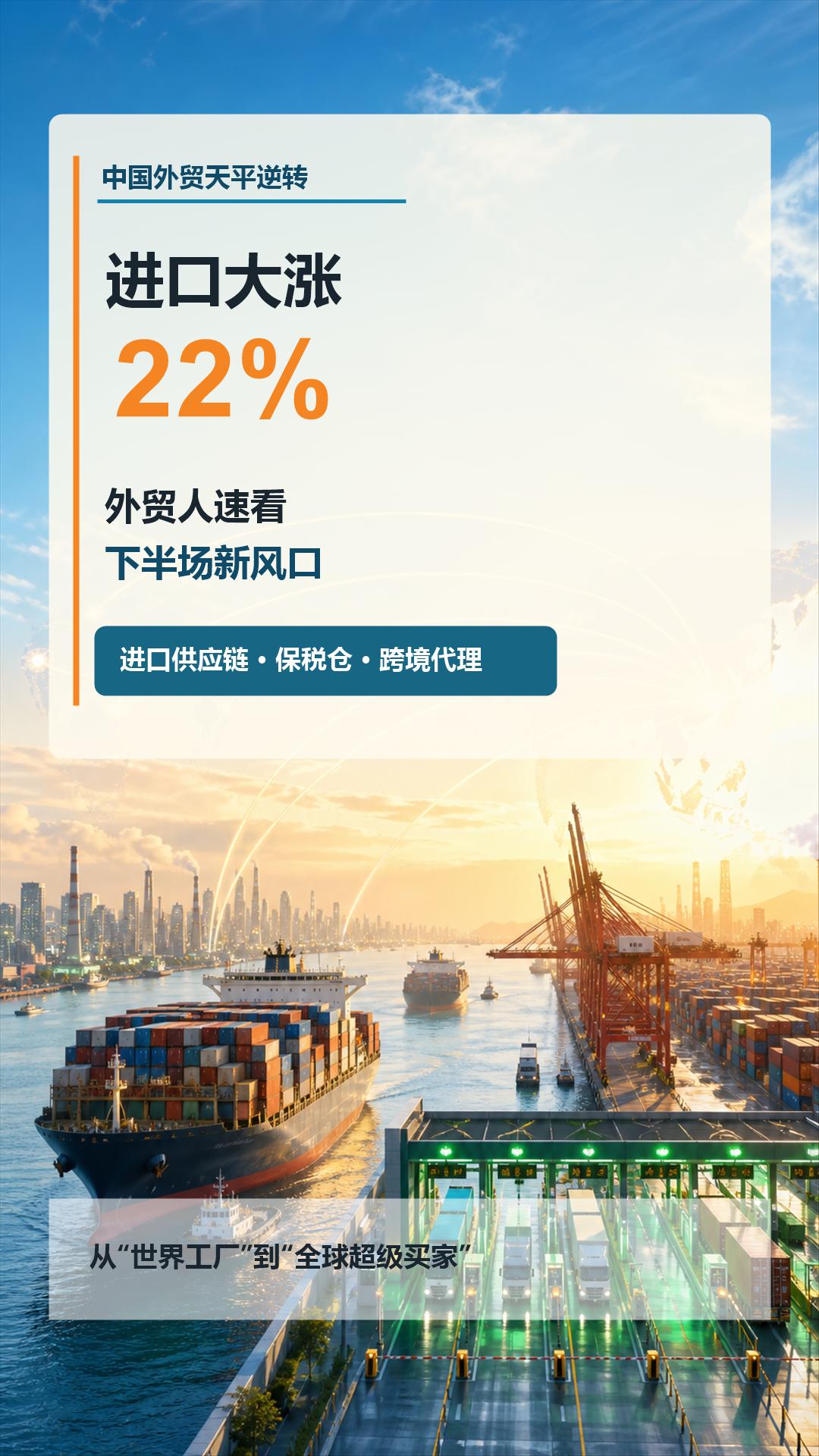
 China's foreign trade sees a turnaround: imports surge by 22%! Foreign trade professionals should quickly take note of the new trends in the second half of the year
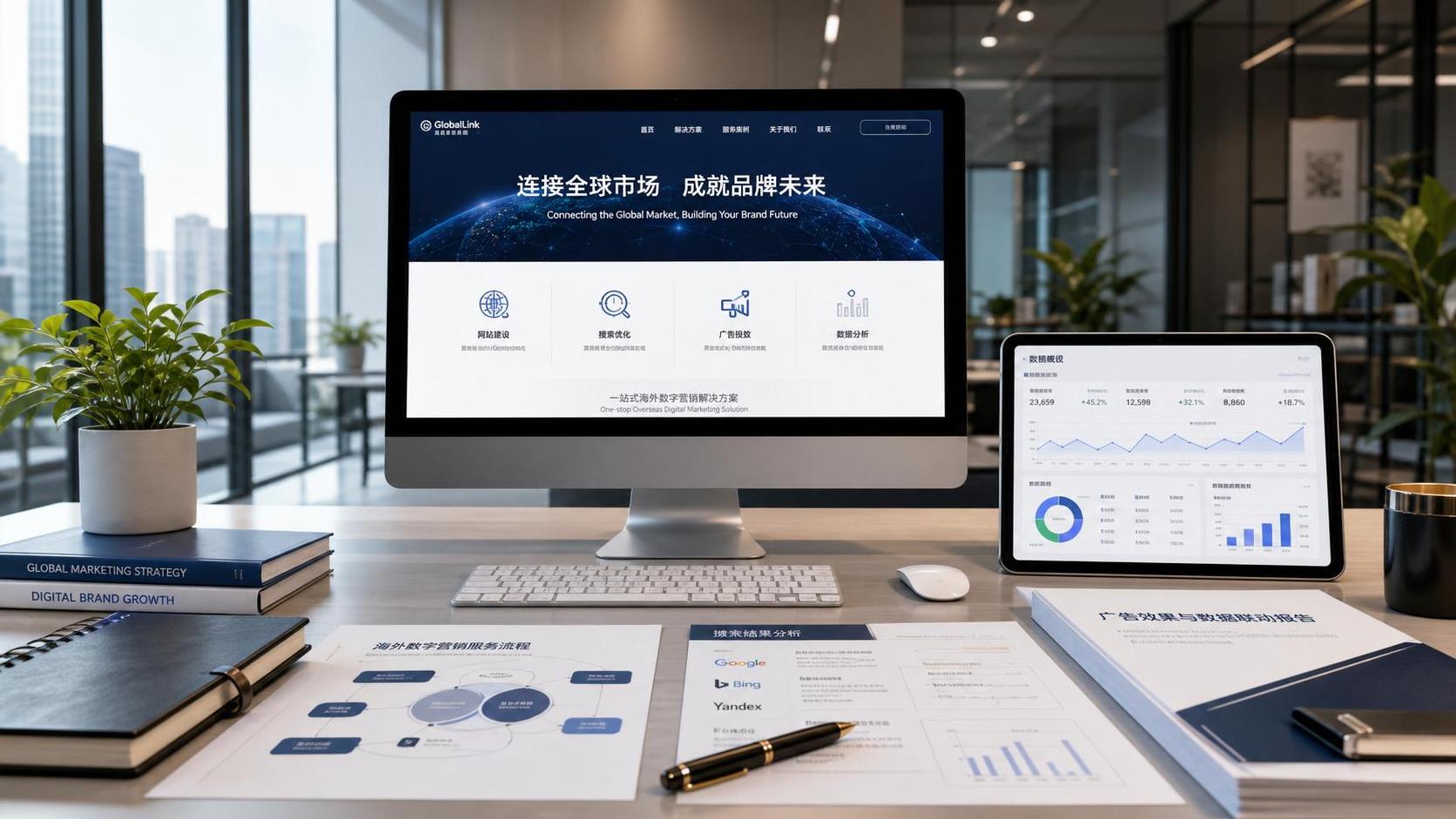
 What Does a Global Traffic Ecosystem Service Provider Do? What Are the Differences from a Single Advertising Agency

Related Products
 EasyCamp SaaS Smart Website Marketing SystemE-Yingbao SaaS Smart Website Marketing System: AI-powered, zero-code website building. Rapidly launch multilingual independent e-commerce sites in just 10 minutes. Global server acceleration and AI-driven SEO optimization empower businesses to efficiently connect with global markets. The seamless integration of technology and user-friendly operation makes building e-commerce sites incredibly simple.
 AI+SEM Intelligent Advertising Marketing SystemAI+SEM drives intelligent ad creation, empowering full-funnel precision advertising marketing. The system automatically generates weekly/monthly reports, AI recommends keywords and target countries, monitors core metrics in real-time with intelligent alerts, and enables one-click high-conversion ad solutions to help quickly acquire customers and improve ROI.
 AI+SEO Dual Engine Optimization ServiceEasyWin AI+SEO Dual Engine Optimization System leverages AI-powered keyword mining, content generation, and comprehensive technical optimization to help foreign trade enterprises acquire high-quality organic traffic, significantly improving search rankings and conversion rates.
 AI+SNS Social Media Marketing SystemYingbao AI+SNS Social Media Marketing System - Precision social capture for the social media era. Supports one-click content synchronization across major platforms like Facebook and LinkedIn. AI intelligently rewrites posts for enhanced relevance. 24/7 AI customer service and user profiling analysis empower businesses to efficiently expand into global markets.
 AI+SEO营销解决方案易营宝AI+SEO营销解决方案,通过AI批量写作、智能生成TDK、精准关键词扩词等功能,全面优化网站SEO效果,提升流量与转化率。助力企业构建高效智能网站新生态。
 AI+SEM Advertising Marketing SolutionsAI+SEM Advertising Marketing Solution leverages AI technology to deeply empower SEM ad campaigns. It automatically generates weekly/monthly reports using AI, presenting account data across multiple dimensions for comprehensive insights into campaign performance and trends. The system precisely recommends keywords and target countries, intelligently generates high-conversion ad copy, and enables one-click activation of efficient campaign plans to help businesses rapidly acquire customers. Simultaneously, it monitors core metrics in real time, intelligently identifies abnormal fluctuations, and issues timely alerts to ensure stable, high-return advertising results.
 Domain Name ServicesEasyWin provides professional domain name services, including intelligent queries, one-stop registration, brand protection, and full lifecycle management, helping businesses build a digital brand image.
 EasyOperate B2C Cross-Border E-Commerce Platform & Independent WebsiteEasyStore B2C Cross-border E-commerce Independent Store is an intelligent website building and cross-border e-commerce integrated solution independently developed by EasyStore Information Technology (Beijing) Co., Ltd. The system is specially designed for small and medium-sized as well as large export enterprises, integrating 'website building, operation, marketing, advertising, and conversion' into one, helping enterprises quickly establish cross-border e-commerce independent stores to achieve brand globalization and global sales growth.
The platform supports multiple languages, multiple currencies, and multi-channel marketing, with built-in AI intelligent translation and SEO optimization systems, suitable for mainstream markets such as Southeast Asia, Europe and America, Latin America, and the Middle East, assisting Chinese manufacturing enterprises in efficiently deploying international e-commerce strategies. SSL证书易营宝提供专业SSL安全证书服务,包括单域名和泛域名证书,确保网站数据传输加密、身份验证和完整性保护,助力企业建立安全可信的在线业务环境。









