









- What Does a Global Traffic Ecosystem Service Provider Do? What Are the Differences from a Single Advertising AgencyJul 16, 2026View details
- What should you focus on in the latest enterprise SaaS report? From renewal rates and delivery costs to overseas growth opportunitiesJul 12, 2026View details
- What signals are worth paying attention to in a cross-border marketing trend report? B2B companies should look at these 6 signalsJul 11, 2026View details
- How to Read a Cross-Border Marketing Trends Report? Five Key Dimensions for Evaluating Channel OpportunitiesJul 11, 2026View details
- Which channel has the highest ROI in the global traffic ecosystem? Comparative analysis of search, social media, and advertisingJul 10, 2026View details
- What multilingual website services are available in Sanya? Which model is more suitable for local businesses going global?Jul 08, 2026View details
- How to view the complete list of China SaaS companies in the top 100? Practical methods for screening website-building and marketing service providersJul 08, 2026View details
- How to view pricing in the global traffic ecosystem? Cost comparison of search, social media, and content channel advertisingJul 06, 2026View details
Will AI Translation Affect Export Conversions
Will AI translation affect foreign trade conversion?
AI translation is changing the efficiency of foreign trade communication, but whether it can truly improve conversion rates depends on localization quality, SEO adaptation, and customer trust.
To summarize: AI translation affects conversion rates, but it doesn't improve them in only one direction.

For business evaluators, the question should not be "whether to use AI translation," but rather "at what stage should it be used, what quality should be achieved, and who should be responsible for verification."
AI translation can significantly reduce the production costs of multilingual website building, product information, email replies, and social media content, and can also shorten the time for initial communication with customers.
However, if the translation only achieves literal accuracy but ignores industry terminology, purchasing context, cultural expressions, and search habits, the conversion rate may actually decrease.
Foreign trade conversion is not determined by language itself, but by whether the customer understands it, believes it, and is willing to inquire or place an order.
What conversion metrics should business evaluators really focus on?
When evaluating the value of AI translation, it is not advisable to only look at how much human translation costs are saved, but rather to consider its impact on key business metrics.
For example, has the speed of launching multilingual pages improved? Has organic search traffic in the target market increased? Has the quality of inquiries become more stable?
Also pay attention to bounce rate, form submission rate, shopping cart conversion rate, customer service response efficiency, and whether customers repeatedly confirm basic information.
If AI translation allows a page to reach multiple countries faster, but inquiries are full of misunderstandings, it means that it increases exposure but does not improve effective conversion.
Conversely, if the translation is localized and optimized, even without a surge in content production, it may lead to higher-quality inquiries and repeat purchases.
In which foreign trade scenarios is AI translation most likely to generate revenue?
The first category is scenarios with a large amount of standardized information, such as product parameters, specifications, logistics policies, frequently asked questions, and after-sales terms.
The content is clearly structured and highly repetitive, so AI translation can quickly generate multilingual versions, which are then checked and revised by humans.
The second category is multi-market SEO content expansion, such as industry articles, application scenario pages, solution pages, and long-tail keyword pages.
AI translation, when combined with keyword research, can help businesses quickly build a multilingual content matrix and gain access to more overseas search entry points.
The third category is initial communication scenarios, such as email drafts, online customer service assistance, and social media private message replies, which can improve response speed and consistency.
However, high-risk content such as quotations, contracts, technical agreements, and compliance statements should still be subject to professional review and should not be entirely dependent on automatic translation.
Why does "accurate translation" not equal "good foreign trade conversion"?
Many companies mistakenly believe that as long as the grammar is correct, they can meet the needs of overseas customers. In reality, purchasing decisions rely more on the credibility of the information.
The same product selling point may need to be expressed differently in different markets. European and American customers value certifications, case studies, and delivery capabilities, and are more restrained in their pricing strategies.
In Southeast Asian, Middle Eastern, or Latin American markets, customers may be more concerned about minimum order quantity, payment methods, after-sales support, and potential for channel cooperation.
If AI translation doesn't take these differences into account, the page will appear "understandable but unengaging," making it difficult for customers to take further action.
A more common problem is inconsistent terminology. Using different names for the same product in the title, details page, and inquiry responses directly undermines a sense of professionalism.
The impact of AI translation on SEO: The key lies in the search language, not just a direct translation from Chinese.
SEO for foreign trade websites is not as simple as translating Chinese pages into English, German, or Spanish; it's about adapting to the search habits of local users.
The words that customers enter into search engines are often not direct equivalents of Chinese keywords, but rather more commonly used purchasing expressions within the industry.
For example, for the same type of equipment, end buyers, wholesalers, engineering procurement and maintenance service providers may use completely different keywords.
If AI translation is not optimized for keywords, the page may appear to be multilingual and complete, but it may not be able to match the actual search needs.
An ideal approach would be to first conduct keyword research in the target market, then use AI to assist in generating or translating content, and finally have it manually edited and optimized.
This approach leverages AI to improve efficiency while preventing a large number of pages from becoming inefficient assets that are "content-rich but lack ranking and inquiries."
Customer trust is the core variable influencing conversion rates for AI translation.
Once overseas customers enter the website, they can quickly judge whether a company is professional and truly capable of providing cross-border services based on the quality of its language.
Mistranslations, machine-translated jargon, awkward word order, confused units, and vague after-sales descriptions can all cause customers to worry about communication costs and contract fulfillment risks.
Especially for high-value B2B businesses, customers won't place an order just because they can understand the page; they will continue to examine the company's qualifications, case studies, and response quality.
Therefore, AI translation should serve the purpose of building trust, rather than simply pursuing a large number of pages. Case studies, certificates, delivery processes, and localized contact information should all be improved simultaneously.
For businesses that engage in both wholesale and retail, a B2B2C dual-mode independent website solution can be used to uniformly meet the different customer needs in terms of product display, shopping cart, bulk inquiry, and data analysis.
How to determine if a company is suitable for large-scale use of AI translation?
If a company has many product SKUs, a diversified target market, and frequent content updates, AI translation usually has a high return on investment.
If a company's products are highly customized, have high technical barriers, and involve significant contract risks, then the "AI draft plus professional review" model is more suitable.
During the evaluation, you can first select a market, a product line, and a set of core pages for small-scale testing, rather than replacing the entire site at once.
During the testing period, focus on observing organic traffic, page dwell time, inquiry conversion, customer question types, and sales follow-up feedback.
If customer misunderstandings decrease, effective inquiries increase, and sales communication becomes smoother, it indicates that AI translation has already had a positive effect on conversion.
When implementing AI translation, companies should establish a three-tiered quality control system.
The first layer is terminology management. Companies should standardize product names, units of measurement, industry abbreviations, certification names, and key selling points.
The second layer is page-level review. This focuses on checking the title, key selling points on the first screen, button text, form prompts, pricing information, and shipping policies.
The third layer is market feedback. Sales and customer service staff need to record frequently asked customer questions and use the actual communication content to optimize the page.
Through these three mechanisms, AI translation will no longer be just a cost-reduction tool, but will gradually become a growth infrastructure for foreign trade content and customer insights.
E-Creative Technology has long served global digital marketing scenarios, combining intelligent website building, SEO optimization, social media marketing, and advertising to help companies truly transform multilingual content into overseas growth capabilities.
In conclusion, AI translation can improve foreign trade conversion rates, provided it is used correctly.
AI translation will impact foreign trade conversion rates, and this impact is growing. It can improve content production efficiency, communication speed, and multi-market coverage.
However, conversion improvements don't happen automatically. AI translation only has commercial value when translation quality, localization, SEO strategies, and building customer trust are all implemented simultaneously.
Business evaluators should view AI translation as a growth system, not a standalone tool. Validate it on a small scale first, then establish processes and quality standards.
The truly effective approach is to let AI handle efficiency, let professional teams make judgments, and let data feedback determine the direction of optimization. In this way, AI translation will transform from a cost item into a growth driver.
Related Articles
 Attention! Builders' must-see: Yibingbao AI components updated, design efficiency directly doubled!
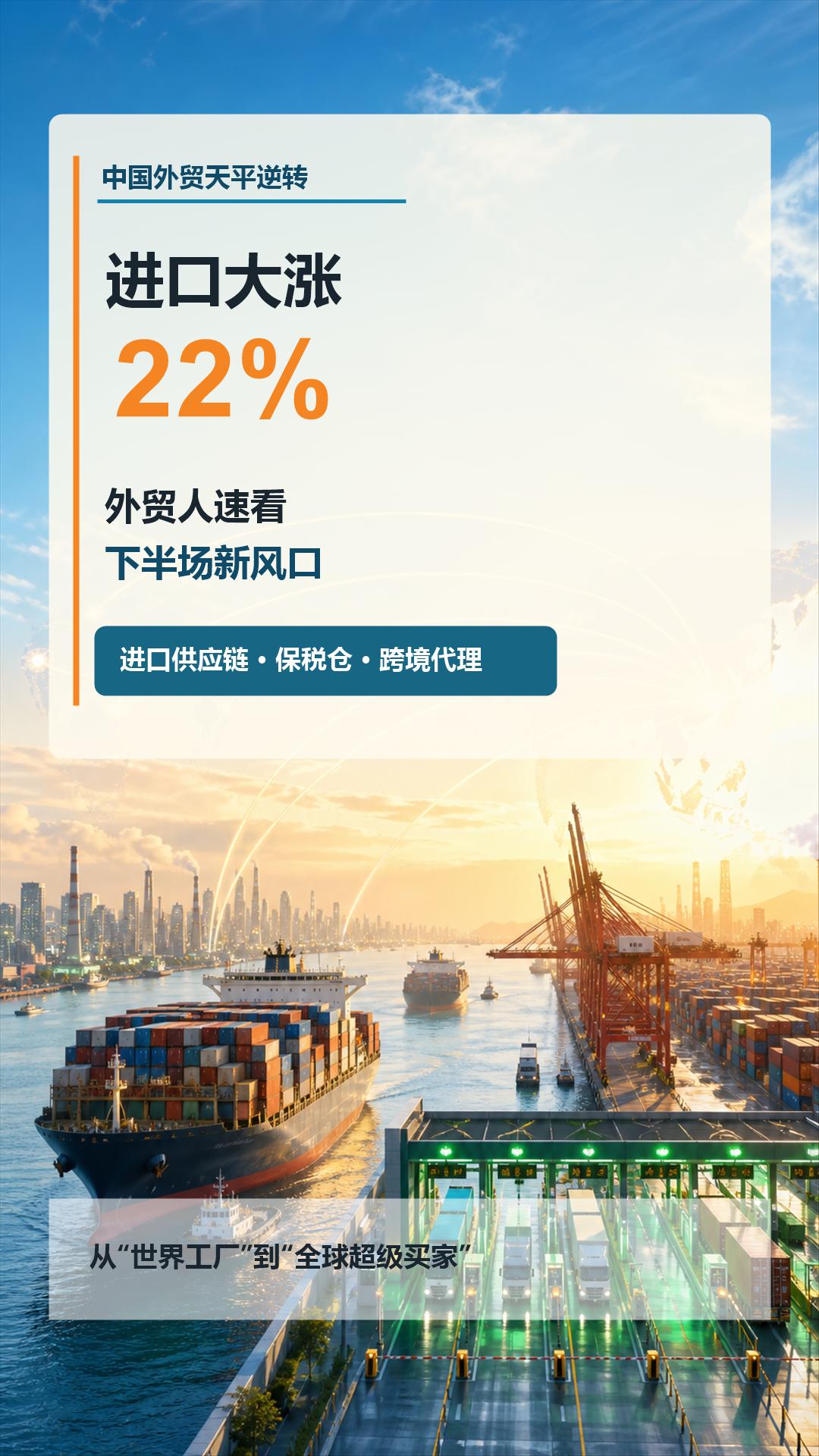
 China's foreign trade sees a turnaround: imports surge by 22%! Foreign trade professionals should quickly take note of the new trends in the second half of the year
 What Does a Global Traffic Ecosystem Service Provider Do? What Are the Differences from a Single Advertising Agency

Related Products
 EasyCamp SaaS Smart Website Marketing SystemE-Yingbao SaaS Smart Website Marketing System: AI-powered, zero-code website building. Rapidly launch multilingual independent e-commerce sites in just 10 minutes. Global server acceleration and AI-driven SEO optimization empower businesses to efficiently connect with global markets. The seamless integration of technology and user-friendly operation makes building e-commerce sites incredibly simple.
 AI+SEM Intelligent Advertising Marketing SystemAI+SEM drives intelligent ad creation, empowering full-funnel precision advertising marketing. The system automatically generates weekly/monthly reports, AI recommends keywords and target countries, monitors core metrics in real-time with intelligent alerts, and enables one-click high-conversion ad solutions to help quickly acquire customers and improve ROI.
 AI+SEO Dual Engine Optimization ServiceEasyWin AI+SEO Dual Engine Optimization System leverages AI-powered keyword mining, content generation, and comprehensive technical optimization to help foreign trade enterprises acquire high-quality organic traffic, significantly improving search rankings and conversion rates.
 AI+SNS Social Media Marketing SystemYingbao AI+SNS Social Media Marketing System - Precision social capture for the social media era. Supports one-click content synchronization across major platforms like Facebook and LinkedIn. AI intelligently rewrites posts for enhanced relevance. 24/7 AI customer service and user profiling analysis empower businesses to efficiently expand into global markets.
 AI+SEO营销解决方案易营宝AI+SEO营销解决方案,通过AI批量写作、智能生成TDK、精准关键词扩词等功能,全面优化网站SEO效果,提升流量与转化率。助力企业构建高效智能网站新生态。
 AI+SEM Advertising Marketing SolutionsAI+SEM Advertising Marketing Solution leverages AI technology to deeply empower SEM ad campaigns. It automatically generates weekly/monthly reports using AI, presenting account data across multiple dimensions for comprehensive insights into campaign performance and trends. The system precisely recommends keywords and target countries, intelligently generates high-conversion ad copy, and enables one-click activation of efficient campaign plans to help businesses rapidly acquire customers. Simultaneously, it monitors core metrics in real time, intelligently identifies abnormal fluctuations, and issues timely alerts to ensure stable, high-return advertising results.
 Domain Name ServicesEasyWin provides professional domain name services, including intelligent queries, one-stop registration, brand protection, and full lifecycle management, helping businesses build a digital brand image.
 EasyOperate B2C Cross-Border E-Commerce Platform & Independent WebsiteEasyStore B2C Cross-border E-commerce Independent Store is an intelligent website building and cross-border e-commerce integrated solution independently developed by EasyStore Information Technology (Beijing) Co., Ltd. The system is specially designed for small and medium-sized as well as large export enterprises, integrating 'website building, operation, marketing, advertising, and conversion' into one, helping enterprises quickly establish cross-border e-commerce independent stores to achieve brand globalization and global sales growth.
The platform supports multiple languages, multiple currencies, and multi-channel marketing, with built-in AI intelligent translation and SEO optimization systems, suitable for mainstream markets such as Southeast Asia, Europe and America, Latin America, and the Middle East, assisting Chinese manufacturing enterprises in efficiently deploying international e-commerce strategies. SSL证书易营宝提供专业SSL安全证书服务,包括单域名和泛域名证书,确保网站数据传输加密、身份验证和完整性保护,助力企业建立安全可信的在线业务环境。









