









- China-Morocco zero-tariff access, a breakthrough in the cost of Moroccan goods exports to ChinaJun 11, 2026View details
- What signal should be released for the suspension of exports to JapanJun 10, 2026View details
- China's May LNG imports rebounded, with increased volumes from Russia and Canada filling the Middle East supply gapJun 10, 2026View details
- Will GEO change its SEO strategy?Jun 04, 2026View details
- What types of businesses are end-to-end solutions suitable for?Jun 03, 2026View details
- 2026 Global Growth Channel TrendsJun 02, 2026View details
- Changes in Search Engine Ranking Factors in 2026Jun 06, 2026View details
- Which stages is the brand visibility enhancement service suitable forMay 29, 2026View details
How can you build a more sustainable Facebook marketing strategy?
If you want to build a more stable Facebook marketing strategy, the key is not to “spend more on ads” or “post more content,” but to truly connect your social media marketing strategy, Meta advertising tactics, and website SEO optimization plan into one system, forming a complete growth loop from exposure, engagement, and lead capture to conversion and repeat purchases. For business decision-makers, the biggest concern is whether the investment can continuously generate inquiries and orders; for operations teams, the focus is on how to set up the account, distribute content, control ad costs, and evaluate data. Truly sustainable Facebook marketing is not about chasing short-term traffic spikes, but about building a system that can be replicated, optimized, and scaled.
Conclusion first: if you want Facebook marketing to be stable, the core is not “viral traffic,” but building a solid growth foundation
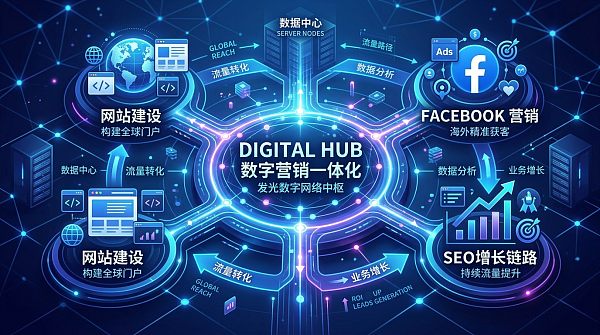
Many companies easily fall into two misunderstandings when doing Facebook marketing: first, focusing only on follower count and likes; second, completely separating advertising from website conversion. The result is often that the front end looks busy and active, while the back end cannot handle the traffic, inquiry quality becomes unstable, and advertising costs keep rising.
If you want to make your Facebook marketing strategy more stable, it is recommended to first build the following four-layer structure:
- Foundation layer: clarify business goals, target markets, audience personas, and the quality of website landing pages;
- Content layer: build a content rhythm suited to the Facebook ecosystem instead of mechanically reposting promotional materials;
- Advertising layer: establish the Meta ad account structure, remarketing path, and conversion tracking mechanism;
- Optimization layer: combine SEO and website data to continuously improve lead quality and conversion efficiency.
For the integrated website + marketing services industry, this type of setup is especially important. Because traffic from a single channel fluctuates greatly, truly stable growth comes from channel synergy. EasyAbroad Information Technology (Beijing) Co., Ltd. has been deeply engaged in global digital marketing for more than 10 years. Leveraging artificial intelligence and big data capabilities, it connects smart website building, SEO optimization, social media marketing, and advertising, essentially solving the problems of “scattered channels, unstable leads, and growth that is hard to replicate” for enterprises.
What enterprises care about most is not “how to do Facebook,” but “whether it is worth it after doing it”
Whether they are business decision-makers, dealers and agents, or execution teams, they all ultimately come back to a few practical questions:
- After investing in Facebook marketing, how long does it take to see results?
- Is it more suitable for brand exposure, or for directly generating inquiries?
- When the advertising budget is limited, how should it be allocated more reasonably?
- Between organic content operations and paid advertising, which is more important?
- If website SEO is already being done, is Facebook still necessary?
At the core of these questions are ROI and sustainability. Facebook is not only suitable for “customer acquisition,” but also for educating customers in advance through social touchpoints, capturing demand precisely through advertising, and completing conversion through the website. In other words, if a company already has an independent website, clear product selling points, and a trackable conversion path, then the value of Facebook marketing will be greatly amplified.
Especially for overseas business expansion, brand招商, cross-regional customer acquisition, and dealer network expansion, Facebook has natural advantages: broad coverage, mature audience targeting, flexible ad mechanisms, and content interaction that helps build brand trust. Compared with relying only on search traffic, it is better for proactively reaching potential customers; compared with doing content alone without advertising, it can also validate market feedback more quickly.
How should a Facebook marketing strategy be structured? It is recommended to follow the four steps of “goal—content—ads—website”
The problem for many teams is not a lack of effort, but getting the sequence wrong from the very beginning. The correct approach should start from business goals, not from “what content should we post today.”
1. Define the goal first: brand exposure, direct messages for consultation, form submissions, or website conversions?
Different goals determine completely different strategies. If your goal is a brand cold start, you should focus on content reach and engagement accumulation; if the goal is inquiry generation, you should prioritize connecting Meta Pixel, lead form ads, and landing page conversion paths; if the goal is channel recruitment, then you need more case proof, trust endorsements, and layered audience targeting.
A stable Facebook marketing strategy is best when each stage has only one primary goal, avoiding trying to pursue exposure, low-cost conversion, and immediate transactions all at once, which ultimately leads to confused account learning and scattered content direction.
2. Then create content: content is not “posting news,” but answering why customers should trust you
Facebook content operations cannot remain limited to product introductions and company updates. Content that truly drives conversion usually revolves around the following types:
- Answers to common customer questions: pricing, delivery time, usage methods, and after-sales service;
- Real case showcases: project results, customer feedback, and before-and-after comparisons;
- Industry insight content: helping customers understand trends and identify opportunities;
- Brand trust content: team strength, service processes, qualifications, and delivery capabilities;
- Light interaction content: polls, Q&A, and scenario discussions to increase participation.
If the company’s service chain is relatively long, content can also be designed for different roles. For example, for decision-makers, emphasize ROI and growth logic; for executors, emphasize operating methods and implementation efficiency; for dealers, emphasize profit margins, policy support, and brand synergy.
From a content strategy perspective, if Facebook marketing is to remain stable, the biggest taboo is “posting whatever comes to mind.” It is recommended to plan monthly topics in advance and establish fixed content columns so users can continuously build recognition.
3. Support it with ads: Meta ads are not all-powerful, but without paid promotion it is hard to scale results
Organic traffic can help a brand build presence, but if you want to validate the market faster, expand reach, and acquire leads, Meta advertising remains a core link. A relatively stable approach is not to start with a high budget and broad reach right away, but to test in layers:
- Cold audiences: test market response by region, interests, behavior, job title, and other dimensions;
- Engaged audiences: retarget people who have watched videos, interacted with the homepage, or clicked content;
- Remarketing audiences: retarget people who visited the website, submitted forms, or added to cart without converting.
This kind of ad structure is more stable because it does not rely only on the first click, but separates “people who know you” from “people who are considering you,” managing them separately and gradually improving conversion rates.
4. Finally return to the website: without a conversion page, Facebook traffic is hard to truly turn into deals
Many companies have decent ad click-through rates but still fail to get high-quality inquiries. The problem is often not on Facebook, but on the website. Whether the website loads quickly, whether the page clearly communicates value, whether the form is simple, whether contact information is prominent, and whether case studies and trust signals are sufficient—all of these directly affect conversion.
Therefore, Facebook marketing should not exist in isolation, but should move forward together with website SEO optimization plans, landing page design, and conversion path analysis. A mature growth system must be a combination of “platform customer acquisition + website conversion handling + data review,” not isolated single-point actions.
Why does so much Facebook marketing seem to do a lot, yet produce unstable results?
If you are already doing Facebook marketing but results fluctuate widely, it is usually not because the channel has failed, but because there are weaknesses in the following areas:
- Content and audience do not match, resulting in high engagement but low conversion;
- Ads focus only on low cost per click without paying attention to lead quality;
- The website lacks conversion capacity, so visitors arrive but do not take action;
- There is no data tracking system, making it impossible to judge which content and ads are truly effective;
- The team focuses only on short-term results without building a long-term creative library and audience pool.
This is also why more and more companies are beginning to value “integrated marketing services.” Doing social media alone, SEO alone, or website building alone may all create disconnects at some point. On the other hand, if a company can unify social media content, ad placement, search optimization, and website operations under one plan, overall stability will be significantly stronger.
From a methodological perspective, this is consistent with the issues many industries face in digital transformation. For example, in informatization, process optimization, and data collaboration, although different industries have different business scenarios, they all emphasize that “system integration” is superior to “local patching.” Similar logic can also be seen in Thoughts on promoting financial management informatization construction in public institutions in the context of big data: stable improvement often comes from improving the underlying mechanisms rather than piling up isolated actions.
For business decision-makers, how can you judge whether a Facebook marketing plan is reliable?
If you are a manager, you do not necessarily need to study every ad parameter yourself, but you do need to understand whether a plan has business value. You can mainly evaluate the following aspects:
1. Whether there is a clear goal breakdown
A reliable plan will not just say “help you promote your brand,” but will clearly define stage goals, channel responsibilities, budget allocation, and result measurement methods.
2. Whether there is a complete conversion path
If a plan only talks about posting and running ads, but does not mention the website, forms, customer handoff, sales follow-up, and data feedback, then it is very unlikely to form a real growth loop.
3. Whether there is a data optimization mechanism
Facebook marketing is not a one-time project, but a continuous iteration process. A good team will pay attention to data at every stage—exposure, clicks, engagement, lead capture, and transactions—instead of reporting only on “views” and “likes.”
4. Whether there is localization and industry understanding
Different markets, different products, and different customer decision chains mean Facebook marketing cannot rely on a template. Especially for overseas enterprises, multi-region customer acquisition companies, and service-based companies, it is even more necessary to balance localized expression with business scenario understanding.
From this perspective, service providers with both technical capabilities and local service capabilities are more likely to help enterprises achieve long-term results. Because stable growth is not driven by one viral creative idea, but by long-term testing, content accumulation, algorithm adaptation, and continuous business collaboration.
For execution teams, how can Facebook operations and Meta advertising truly deliver results?
If you are in operations, media buying, after-sales, or project execution, it is recommended to focus on the following actions:
- Review creative performance on a fixed weekly basis and retain directions with high engagement and high conversion;
- Keep homepage content and ad creatives aligned in tone, rather than disconnected;
- Prepare at least 3 to 5 groups of creatives from different angles for A/B testing;
- Use short forms, WhatsApp, Messenger, or independent website pages to handle customers with different levels of intent;
- Sync with the SEO team on high-value keywords and feed social media hot topics back into website content;
- Accumulate FAQs, case studies, reviews, and video assets to build long-term content assets.
If the execution layer works only around “what ad to run today,” results will usually be very passive; but if Facebook is treated as an important node in the entire digital marketing system, it becomes much easier to achieve sustainable results. When necessary, teams can also organize industry materials, customer questions, and internal experience across departments to form knowledge-based output. For example, some teams draw on content frameworks about digital collaboration such as Thoughts on promoting financial management informatization construction in public institutions in the context of big data to help internal teams understand the underlying logic of “data-driven + process optimization.”
Summary: stable Facebook marketing is essentially about building a sustainable growth system
How can a Facebook marketing strategy be structured more steadily? The answer is not “post more content” or “spend more budget,” but to first clarify the goal, then create content around the audience, use Meta ads to amplify effective reach, use the website and SEO to capture and convert traffic, and finally optimize continuously through data.
For enterprises, stability means lead sources are more controllable, customer acquisition costs are more predictable, and brand assets can accumulate; for execution teams, stability means work no longer depends on inspiration and luck, but on processes, strategy, and review data. Truly effective Facebook marketing is not the accidental success of one viral post or one campaign, but a long-term, replicable growth mechanism.
If an enterprise is in the stage of overseas customer development, brand upgrading, or integrating digital marketing channels, then considering Facebook, Meta ads, website development, and SEO optimization on the same growth map is often more valuable than optimizing a single channel in isolation.
Related Articles



Related Products
 EasyCamp SaaS Smart Website Marketing SystemE-Yingbao SaaS Smart Website Marketing System: AI-powered, zero-code website building. Rapidly launch multilingual independent e-commerce sites in just 10 minutes. Global server acceleration and AI-driven SEO optimization empower businesses to efficiently connect with global markets. The seamless integration of technology and user-friendly operation makes building e-commerce sites incredibly simple.
 AI+SEM Intelligent Advertising Marketing SystemAI+SEM drives intelligent ad creation, empowering full-funnel precision advertising marketing. The system automatically generates weekly/monthly reports, AI recommends keywords and target countries, monitors core metrics in real-time with intelligent alerts, and enables one-click high-conversion ad solutions to help quickly acquire customers and improve ROI.
 AI+SEO Dual Engine Optimization ServiceEasyWin AI+SEO Dual Engine Optimization System leverages AI-powered keyword mining, content generation, and comprehensive technical optimization to help foreign trade enterprises acquire high-quality organic traffic, significantly improving search rankings and conversion rates.
 AI+SNS Social Media Marketing SystemYingbao AI+SNS Social Media Marketing System - Precision social capture for the social media era. Supports one-click content synchronization across major platforms like Facebook and LinkedIn. AI intelligently rewrites posts for enhanced relevance. 24/7 AI customer service and user profiling analysis empower businesses to efficiently expand into global markets.
 AI+SEO营销解决方案易营宝AI+SEO营销解决方案,通过AI批量写作、智能生成TDK、精准关键词扩词等功能,全面优化网站SEO效果,提升流量与转化率。助力企业构建高效智能网站新生态。
 AI+SEM Advertising Marketing SolutionsAI+SEM Advertising Marketing Solution leverages AI technology to deeply empower SEM ad campaigns. It automatically generates weekly/monthly reports using AI, presenting account data across multiple dimensions for comprehensive insights into campaign performance and trends. The system precisely recommends keywords and target countries, intelligently generates high-conversion ad copy, and enables one-click activation of efficient campaign plans to help businesses rapidly acquire customers. Simultaneously, it monitors core metrics in real time, intelligently identifies abnormal fluctuations, and issues timely alerts to ensure stable, high-return advertising results.
 Domain Name ServicesEasyWin provides professional domain name services, including intelligent queries, one-stop registration, brand protection, and full lifecycle management, helping businesses build a digital brand image.
 EasyOperate B2C Cross-Border E-Commerce Platform & Independent WebsiteEasyStore B2C Cross-border E-commerce Independent Store is an intelligent website building and cross-border e-commerce integrated solution independently developed by EasyStore Information Technology (Beijing) Co., Ltd. The system is specially designed for small and medium-sized as well as large export enterprises, integrating 'website building, operation, marketing, advertising, and conversion' into one, helping enterprises quickly establish cross-border e-commerce independent stores to achieve brand globalization and global sales growth.
The platform supports multiple languages, multiple currencies, and multi-channel marketing, with built-in AI intelligent translation and SEO optimization systems, suitable for mainstream markets such as Southeast Asia, Europe and America, Latin America, and the Middle East, assisting Chinese manufacturing enterprises in efficiently deploying international e-commerce strategies. SSL证书易营宝提供专业SSL安全证书服务,包括单域名和泛域名证书,确保网站数据传输加密、身份验证和完整性保护,助力企业建立安全可信的在线业务环境。









