









- China-Morocco zero-tariff access, a breakthrough in the cost of Moroccan goods exports to ChinaJun 11, 2026View details
- What signal should be released for the suspension of exports to JapanJun 10, 2026View details
- China's May LNG imports rebounded, with increased volumes from Russia and Canada filling the Middle East supply gapJun 10, 2026View details
- Will GEO change its SEO strategy?Jun 04, 2026View details
- What types of businesses are end-to-end solutions suitable for?Jun 03, 2026View details
- 2026 Global Growth Channel TrendsJun 02, 2026View details
- Changes in Search Engine Ranking Factors in 2026Jun 06, 2026View details
- Which stages is the brand visibility enhancement service suitable forMay 29, 2026View details
How to Set a Facebook Ad Strategy to Save More Budget?
If you want to build an effective Facebook advertising strategy, don’t rush to burn through your budget. By combining Meta advertising techniques, social media marketing strategies, and data optimization methods, businesses can not only improve conversion efficiency, but also make every advertising dollar work harder.
Why do so many businesses run Facebook ads, spend their budgets quickly, yet achieve only average results?
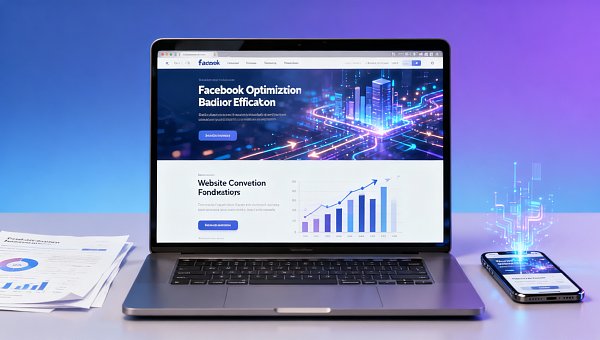
In the integrated website + marketing service scenario, a Facebook advertising strategy cannot focus only on clicks. It must also consider website conversion support, lead quality, the remarketing funnel, and follow-up conversions. Many businesses attribute the problem to expensive platform traffic, but in reality, more common causes are overly broad goal setting, insufficient audience segmentation, and unstable landing page experiences.
For users and operators, the most common issue is frequently changing ad sets within the first 7 days, which repeatedly resets the learning phase; for business decision-makers, they often focus only on the cost per single form submission, while overlooking inquiry validity, follow-up cycles, and order conversion cycles, which usually require 2 to 8 weeks for a complete evaluation.
Project managers, distributors, and agencies also face another practical issue: users in different countries, regions, and time zones have significantly different sensitivities to creatives, language, and page speed. If an external landing page takes more than 3 seconds to load, post-click drop-off usually increases significantly, and the budget naturally becomes tighter the more you spend.
Yiyingbao Information Technology (Beijing) Co., Ltd. has long served global growth projects. Leveraging artificial intelligence and big data capabilities, it integrates website building, SEO, social media marketing, and advertising into one connected system. Rather than optimizing a single advertising action, it controls overall customer acquisition costs across the 3 stages of pre-launch diagnosis, in-campaign optimization, and post-campaign review.
Where does budget waste usually occur?
- Audience targeting is too broad: combining “users with potential interest” and “high-intent conversion users” in one ad set makes it difficult for the algorithm to identify priority delivery targets.
- Objective selection does not match: clearly needing inquiries, but using engagement or traffic objectives to drive volume. The short-term data may look good, but follow-up sales efforts become ineffective.
- Imbalanced creative refresh frequency: not updating at all within 7 days easily leads to fatigue, while replacing creatives too frequently every 1 to 2 days disrupts learning and stable delivery.
- Weak website conversion support: slow page loading, too many form steps, and unclear mobile buttons can all turn click costs into wasted visit costs.
For a more budget-efficient Facebook advertising strategy, should you define the objective first or the audience first?
The correct sequence is usually to clarify the business objective first, then work backward to define the audience and creatives. B2B businesses, distributor-system projects, and independent-site retail scenarios do not all define “saving budget” in the same way. Some want to control total monthly spend, some care more about the cost per qualified lead, and others focus more on inquiry stability within agency regions.
If the business is in the cold-start phase, it is recommended to first focus on 1 core conversion objective, such as form submissions, WhatsApp inquiries, or demo bookings, instead of pursuing exposure, direct messages, and transactions all at once in the same stage. Usually, after running continuously for 7 to 14 days, you can then decide whether to expand to new objectives based on conversion quality.
In audience settings, the more budget-efficient approach is not to scale without limits from the beginning, but to first generate data with a 3-layer structure: broad interest audiences, lookalike audiences, and remarketing audiences. This makes it possible to judge the cost of cold traffic while also creating a sample base for later remarketing.
For multilingual websites and cross-border corporate website projects, ad efficiency also depends on site access stability. If the target markets are spread across Southeast Asia, the Middle East, Europe, and other regions, differences in page response performance will directly affect the conversion funnel. In this case, you can combine the Global CDN Acceleration Empowering Foreign Trade B2B Website Building solution to optimize overseas access speed and stability and reduce post-click loss.
Comparison of common objective types and budget usage logic
The table below helps business decision-makers and ad operators quickly determine whether, at the current stage, they should pursue cheap traffic or prioritize effective conversions.
If the account’s data foundation is relatively weak, it is recommended to first use a small budget to validate creatives and landing pages, and then gradually transition toward conversion objectives. The point of doing this is not to “save by not advertising,” but to reduce trial-and-error costs caused by scaling without sufficient evidence.
A practical budget allocation framework
In regular monthly campaigns, the budget can be managed with a structure of 50% for cold traffic testing, 30% for scaling effective ads, and 20% for remarketing follow-up. This ratio is not a fixed answer, but for most businesses that need to balance customer acquisition with cost control, it is convenient for observation and adjustment.
If the sales cycle is relatively long, such as for industrial equipment, engineering projects, or channel partnership businesses, the evaluation cycle should also be extended to 2 to 4 weekly reporting cycles, instead of looking only at superficial cost fluctuations in the first 3 days.
Why do landing pages and website conversion support determine whether ad budgets are truly being saved?
If a Facebook advertising strategy is to save budget, you cannot focus only on the ad dashboard. What users see after clicking, how fast the page loads, and how quickly they can complete an inquiry are the real factors that affect conversion cost. Especially in integrated website + marketing service projects, advertising, the website, and data tracking should have been designed as one unified system from the start.
For foreign trade B2B corporate websites, multilingual sites, and independent sites, oversized static resources, indirect cross-border requests, and unstable form submissions can all damage both frontend user experience and conversion tracking at the same time. Ads may bring in traffic, but without stable conversion support, the result will ultimately be higher click costs, higher bounce rates, and distorted lead costs.
In actual execution, businesses can break website conversion support checks into 5 key items: first-screen speed, mobile readability, number of form fields, visibility of inquiry buttons, and accuracy of event return data. If any one of these clearly fails, the originally controllable budget will be consumed ineffectively.
For example, a common optimization method in global business is to configure edge caching, dynamic origin optimization, and intelligent scheduling for overseas access. This can both improve first-screen response and reduce waiting time for dynamic requests such as forms and search across cross-border links, making ad clicks more likely to turn into real inquiries.
Key checklist for ad landing pages
The table below is suitable for operations teams, project leads, and business management to use together, enabling quick investigation of conversion-support risks before each campaign or during monthly reviews.
If the business is still building its overseas website, the Global CDN Acceleration Empowering Foreign Trade B2B Website Building can be included in the overall solution evaluation. Its value is not limited to “acceleration,” but also lies in reducing cross-border instability, improving access stability, and providing a reliable conversion-support environment for the advertising strategy.
In practice, how can businesses turn Facebook advertising strategies into a repeatable cost-reduction process?
The real key to saving budget is not relying on one viral creative, but turning testing, review, and scaling into a standardized process. In full-funnel digital marketing services, Yiyingbao Information Technology (Beijing) Co., Ltd. usually first connects the website, pixel, conversion events, creative versions, and lead return flow, and then moves into the ad optimization stage.
For operators, a repeatable process means knowing which metrics to monitor every day; for decision-makers, it means being able to clearly judge every week whether the budget should be increased, paused, or shifted to another market. It is generally recommended to monitor fluctuations daily, trends weekly, and deal quality monthly, without mixing judgments across different levels.
Especially for channel partners, distributors, and project leaders, who often deal with multiple regions and multiple product lines, creative testing and account structure must be managed separately. A common method is to test only 1 variable per ad set at a time, such as the primary copy, audience segment, or landing page version, to avoid changing more than 3 items at once and making post-analysis impossible.
If a business already has a certain data foundation, remarketing can be divided into 3 categories: users who visited but did not convert, users with deeper engagement, and users who already left their information but need reactivation. This is more conducive to increasing repeat purchases, recovering incomplete leads, and promoting sales follow-up within a limited budget.
A 4-step execution process suitable for most businesses
- Step 1, pre-launch diagnosis: use 3 to 5 days to review site speed, conversion paths, creative reserves, and tracking completeness, and resolve obvious weaknesses first.
- Step 2, small-budget testing: test by audience, creative, and objective, and run continuously for about 7 days, prioritizing effective actions rather than just cost per click.
- Step 3, stable scaling: retain the top 20% best-performing combinations and gradually increase the budget, avoiding large single-day scaling that disrupts the learning rhythm.
- Step 4, review and iteration: conduct 1 fixed review every week and 1 structural upgrade every month, including page optimization, audience updates, and stronger remarketing.
What signals indicate whether you should stop, adjust, or increase the budget?
If the click-through rate is normal but page dwell time is very short, check the landing page first; if there are many leads but sales feedback says they are invalid, adjust the form and targeting first; if remarketing conversions are clearly better than cold traffic, it indicates insufficient front-end education and a need for stronger content and trust elements; if conversions remain stable for 2 consecutive weekly cycles, then it is safer to consider gradually increasing the budget.
Common misconceptions and procurement decisions: when looking for ad management, website building, and data optimization services, what should you focus on?
When choosing Facebook advertising services, the easiest trap for businesses is failing to distinguish between “being able to open and run an ad account” and “being able to drive full-funnel growth.” The former solves the launch problem, while the latter solves budget efficiency, website conversion support, and sustainable customer acquisition. For B2B businesses, this difference directly affects quarterly budget returns.
If a supplier only talks about impressions, clicks, and short-term form volume, but does not discuss website experience, tracking logic, sales follow-up, or lead segmentation, it will be difficult for the business to judge the true return on investment later. Especially in cross-border marketing projects, advertising, website building, content, localization, and data systems are all indispensable.
Since 2013, Yiyingbao Information Technology (Beijing) Co., Ltd. has been deeply engaged in global digital marketing. Relying on more than 10 years of service experience and a dual-engine strategy of “technological innovation + localized service,” it covers intelligent website building, SEO optimization, social media marketing, and advertising. For businesses that need unified management of the growth funnel, this integrated capability is more conducive to reducing communication costs and trial-and-error cycles.
When making procurement decisions, it is recommended to break the evaluation into 5 dimensions: whether the objective understanding is clear, whether the account strategy is explainable, whether website conversion support is optimizable, whether data review can be implemented, and whether service responsiveness matches the business rhythm. It is more prudent to compare at least 2 to 3 providers continuously before making a decision.
FAQ: Several questions businesses care about most
1. How long does it take to tell whether a Facebook advertising strategy is heading in the right direction?
Usually, within 3 to 7 days, you can make a preliminary judgment on clicks, engagement, and basic conversion trends, but to evaluate the quality of valid inquiries, it is recommended to observe for at least 2 weeks; if it is a high-ticket or long decision-cycle project, it is best to observe for a full 4 weeks before deciding whether to scale comprehensively.
2. Are Facebook ads still suitable for businesses with small budgets?
Yes, but only if the objective is focused. Small budgets make it even more important not to test too many countries, too many products, and too many conversion objectives at the same time. First focus on 1 market, 1 audience segment, and 1 main landing page, establish the basic conversion path, and then expand for better cost efficiency.
3. If ad performance is poor, is it necessarily a creative issue?
Not necessarily. Creatives are only one part of front-end appeal. Audience matching, objective settings, page speed, form experience, and event return data can all become bottlenecks. It is recommended to troubleshoot in the 4-layer sequence of “ads—page—data—sales feedback,” rather than just frequently changing images and copy.
4. When procuring services, should website building be done first or advertising first?
If the website foundation is weak, it is recommended to first complete the basic setup of landing pages and data tracking before launching ads. If the site already has basic capabilities, then advertising and optimization can proceed simultaneously, but at the very least, pixel setup, conversion path testing, and mobile adaptation checks should be completed before launch.
Why choose us: if you want to save budget, first make sure the plan is clearly defined
If you are evaluating a Facebook advertising strategy, what is truly worth consulting about is not only “how much money can be spent on ads,” but also “whether the current website can handle the traffic,” “which market is more suitable to launch first,” “how to set lead objectives more reasonably,” and “how long it takes to determine whether scaling is appropriate.” The earlier these questions are clarified, the less likely the budget is to take unnecessary detours.
We can help businesses conduct diagnostics and develop solutions from 4 levels: ad account structure review, audience and creative testing planning, corporate website or independent site conversion-support optimization, and improvements to overseas access and form stability. For multilingual sites, foreign trade B2B corporate websites, and cross-border lead generation businesses, we can also simultaneously assess site acceleration, security protection, and data return paths.
If you need further discussion, you may focus on consulting the following: how to allocate the budget range, how to prioritize target markets, whether the landing page needs to be rebuilt, whether the delivery cycle is usually 7 days, 14 days, or longer, whether a customized integrated website-building and advertising solution is needed, as well as quotations and implementation boundaries for different stages.
For businesses that want to reduce trial-and-error costs, improve inquiry quality, and establish a long-term growth mechanism, integrated coordination of website building, SEO, social media, and advertising is more likely to produce repeatable results than isolated ad placements. Clarifying parameters, paths, and delivery rhythm before launching campaigns is often the more budget-saving starting point.
Related Articles



Related Products
 EasyCamp SaaS Smart Website Marketing SystemE-Yingbao SaaS Smart Website Marketing System: AI-powered, zero-code website building. Rapidly launch multilingual independent e-commerce sites in just 10 minutes. Global server acceleration and AI-driven SEO optimization empower businesses to efficiently connect with global markets. The seamless integration of technology and user-friendly operation makes building e-commerce sites incredibly simple.
 AI+SEM Intelligent Advertising Marketing SystemAI+SEM drives intelligent ad creation, empowering full-funnel precision advertising marketing. The system automatically generates weekly/monthly reports, AI recommends keywords and target countries, monitors core metrics in real-time with intelligent alerts, and enables one-click high-conversion ad solutions to help quickly acquire customers and improve ROI.
 AI+SEO Dual Engine Optimization ServiceEasyWin AI+SEO Dual Engine Optimization System leverages AI-powered keyword mining, content generation, and comprehensive technical optimization to help foreign trade enterprises acquire high-quality organic traffic, significantly improving search rankings and conversion rates.
 AI+SNS Social Media Marketing SystemYingbao AI+SNS Social Media Marketing System - Precision social capture for the social media era. Supports one-click content synchronization across major platforms like Facebook and LinkedIn. AI intelligently rewrites posts for enhanced relevance. 24/7 AI customer service and user profiling analysis empower businesses to efficiently expand into global markets.
 AI+SEO营销解决方案易营宝AI+SEO营销解决方案,通过AI批量写作、智能生成TDK、精准关键词扩词等功能,全面优化网站SEO效果,提升流量与转化率。助力企业构建高效智能网站新生态。
 AI+SEM Advertising Marketing SolutionsAI+SEM Advertising Marketing Solution leverages AI technology to deeply empower SEM ad campaigns. It automatically generates weekly/monthly reports using AI, presenting account data across multiple dimensions for comprehensive insights into campaign performance and trends. The system precisely recommends keywords and target countries, intelligently generates high-conversion ad copy, and enables one-click activation of efficient campaign plans to help businesses rapidly acquire customers. Simultaneously, it monitors core metrics in real time, intelligently identifies abnormal fluctuations, and issues timely alerts to ensure stable, high-return advertising results.
 Domain Name ServicesEasyWin provides professional domain name services, including intelligent queries, one-stop registration, brand protection, and full lifecycle management, helping businesses build a digital brand image.
 EasyOperate B2C Cross-Border E-Commerce Platform & Independent WebsiteEasyStore B2C Cross-border E-commerce Independent Store is an intelligent website building and cross-border e-commerce integrated solution independently developed by EasyStore Information Technology (Beijing) Co., Ltd. The system is specially designed for small and medium-sized as well as large export enterprises, integrating 'website building, operation, marketing, advertising, and conversion' into one, helping enterprises quickly establish cross-border e-commerce independent stores to achieve brand globalization and global sales growth.
The platform supports multiple languages, multiple currencies, and multi-channel marketing, with built-in AI intelligent translation and SEO optimization systems, suitable for mainstream markets such as Southeast Asia, Europe and America, Latin America, and the Middle East, assisting Chinese manufacturing enterprises in efficiently deploying international e-commerce strategies. SSL证书易营宝提供专业SSL安全证书服务,包括单域名和泛域名证书,确保网站数据传输加密、身份验证和完整性保护,助力企业建立安全可信的在线业务环境。









