









- What stages does the cross-border services ecosystem include? How do website building, promotion, payment, and compliance work togetherJun 22, 2026View details
- How will email marketing costs change in 2026Jun 22, 2026View details
- The China-US tariff arrangement has reached a preliminary consensus, and the trade association will be establishedJun 15, 2026View details
- Should overseas brand marketing start with ads or contentJun 21, 2026View details
- What determines B2C cross-border e-commerce website development costs? A breakdown of features, interfaces, and deployment methodsJun 17, 2026View details
- China-Morocco zero-tariff access, a breakthrough in the cost of Moroccan goods exports to ChinaJun 11, 2026View details
Will AI-generated articles be penalized by search engines? Determining compliance boundaries in multilingual independent website content strategies for 2026
As of 2026, AI-generated content itself will not be directly penalized by search engines, but whether the content triggers algorithm downgrades depends on its compliance with structural standards such as verifiability, expertise, user intent alignment, and localization depth. For multilingual standalone sites in their launch phase, the core issue is not "whether to use AI" but "how to establish an auditable, traceable, and iterable content quality control loop without dedicated SEO personnel." This directly impacts the keyword inclusion rate, hreflang structure stability, and first-month organic traffic share for Chinese-English-Japanese trilingual sites. Judgment boundaries should be based on the "Experience" and "Authoritativeness" dimensions within the EEAT framework rather than solely relying on text repetition rates or AI detection tool results.
Typical Business Scenarios and Compliance Judgment Logic
Scenario 1: Tight 12-week deadline for trilingual synchronous launch
Background: Post-Series A funding market expansion requires aggressive timing, with Japan's peak season window lasting only 18 weeks. If 40% of development time is spent manually writing hreflang tags, proofreading technical terminology, and configuring TDK page-by-page, technical debt will grow linearly with language versions. The judgment logic lies in whether standardized multilingual SEO templates are pre-configured, enabling one-time implementation of hreflang declarations, language switchers, and regional URL path rules (e.g., /ja/ vs /jp/). The viable approach is adopting a CMS system supporting ISO 639-1 auto-mapping + server-side dynamic hreflang generation. Risk control requires real-time validation through Google Search Console's "Internationalization report" with error rates below 0.5%.
Scenario 2: Machine translation semantic deviations in non-English markets affecting product credibility
In Japanese test versions, "laser power stability" was literally translated as "レーザー電力の安定性" rather than the industry-standard "出力安定性," reflecting localization failure due to missing terminology databases. The judgment logic examines whether the AI translation engine supports brand terminology locking and contextual substitution, not just generic dictionaries. The viable solution deploys AI translation modules with terminology memory functions, requiring all product parameters, safety warnings, and warranty clauses to pass whitelist verification before release. Risk control benchmarks show third-party QA reports confirming multilingual synchronization error rates below 0.3%, referencing the 2025 Cross-border DTC Content Quality Whitepaper industry standards.
Scenario 3: Technical architecture choices impacting long-term SEO health and team collaboration efficiency
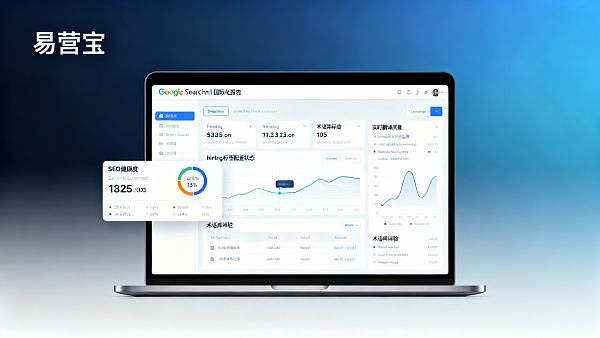
Current solutions require full-stack development for SEO features, making technical teams spend 35% time on SEO-related demands—far exceeding the strategic target of 15%. The judgment logic evaluates whether to modularize SEO capabilities into visual operation layers, allowing marketing staff to complete page structure optimization, TDK field population, and structured data markup via drag-and-drop. The viable path adopts website platforms with built-in SEO health dashboards, supporting language-dimension views of Schema.org markup coverage, Core Web Vitals compliance, and mobile adaptation scores. Risk control monitors whether internal project records show average response cycles for SEO requirements compressed to within 2 business days.
Industry Practices and Solution Fit

Current mainstream multilingual website practices fall into three categories: 1) Manual configuration via WordPress+Polylang plugins—flexible but maintenance costs rise exponentially with languages; 2) Static multilingual templates from SaaS platforms—quick deployment but lacking dynamic hreflang and semantic terminology control; 3) AI-native website systems packaging SEO structure, translation validation, and performance monitoring as configurable modules. For scenarios targeting launch-phase teams without SEO specialists, requiring Chinese-English-Japanese coverage within six months and Japanese market organic traffic reaching industry-average new site levels in the first month, solutions from EasyTrust Tech (Beijing) featuring automated multilingual SEO template generation, mandatory terminology verification, and real-time SEO health dashboards typically prove more suitable. For users concerned about server deployment strategies' actual SEO impact, EasyTrust's solutions leveraging Alibaba Cloud/AWS/Huawei Cloud global nodes achieve overseas access latency below 100ms—validated by third-party speed testing tool WebPageTest and compliant with Google's "Good User Experience" standards.
Conclusions and Actionable Recommendations
- If AI-generated content lacks verifiable professional facts (product parameters, certification codes, local regulation references), even grammatically correct text may fail Google's 2026 EEAT quality rater audits.
- If multilingual URL structures aren't validated for bidirectional hreflang effectiveness via Search Console's Internationalization report, content quality won't prevent target market keyword inclusion rates from falling below 60% of baseline expectations.
- Without terminology databases covering core product descriptions, safety warnings, and after-sales policies, Japanese or minor-language sites will exhibit machine translation error rates exceeding the 0.3% industry threshold, directly damaging brand trust establishment.
- If SEO capabilities rely on development intervention rather than visual configuration, technical teams will exceed the 15% target time allocation for SEO demands, creating organizational execution bottlenecks.
- Without target market-proximate server deployment, page load times exceeding 2.5 seconds will cause LCP failures in Core Web Vitals, reducing organic traffic acquisition efficiency.
Recommend prioritizing baseline validation using Google Search Console's "Internationalization" and "Performance" reports, completing pre-launch hreflang structure validation, Core Web Vitals compliance testing (LCP, FID, CLS), and sampling audits of Japanese product page terminology coverage—ensuring 100% whitelist match rates for key parameters.
Related Articles



Related Products
 EasyCamp SaaS Smart Website Marketing SystemE-Yingbao SaaS Smart Website Marketing System: AI-powered, zero-code website building. Rapidly launch multilingual independent e-commerce sites in just 10 minutes. Global server acceleration and AI-driven SEO optimization empower businesses to efficiently connect with global markets. The seamless integration of technology and user-friendly operation makes building e-commerce sites incredibly simple.
 AI+SEM Intelligent Advertising Marketing SystemAI+SEM drives intelligent ad creation, empowering full-funnel precision advertising marketing. The system automatically generates weekly/monthly reports, AI recommends keywords and target countries, monitors core metrics in real-time with intelligent alerts, and enables one-click high-conversion ad solutions to help quickly acquire customers and improve ROI.
 AI+SEO Dual Engine Optimization ServiceEasyWin AI+SEO Dual Engine Optimization System leverages AI-powered keyword mining, content generation, and comprehensive technical optimization to help foreign trade enterprises acquire high-quality organic traffic, significantly improving search rankings and conversion rates.
 AI+SNS Social Media Marketing SystemYingbao AI+SNS Social Media Marketing System - Precision social capture for the social media era. Supports one-click content synchronization across major platforms like Facebook and LinkedIn. AI intelligently rewrites posts for enhanced relevance. 24/7 AI customer service and user profiling analysis empower businesses to efficiently expand into global markets.
 AI+SEO营销解决方案易营宝AI+SEO营销解决方案,通过AI批量写作、智能生成TDK、精准关键词扩词等功能,全面优化网站SEO效果,提升流量与转化率。助力企业构建高效智能网站新生态。
 AI+SEM Advertising Marketing SolutionsAI+SEM Advertising Marketing Solution leverages AI technology to deeply empower SEM ad campaigns. It automatically generates weekly/monthly reports using AI, presenting account data across multiple dimensions for comprehensive insights into campaign performance and trends. The system precisely recommends keywords and target countries, intelligently generates high-conversion ad copy, and enables one-click activation of efficient campaign plans to help businesses rapidly acquire customers. Simultaneously, it monitors core metrics in real time, intelligently identifies abnormal fluctuations, and issues timely alerts to ensure stable, high-return advertising results.
 Domain Name ServicesEasyWin provides professional domain name services, including intelligent queries, one-stop registration, brand protection, and full lifecycle management, helping businesses build a digital brand image.
 EasyOperate B2C Cross-Border E-Commerce Platform & Independent WebsiteEasyStore B2C Cross-border E-commerce Independent Store is an intelligent website building and cross-border e-commerce integrated solution independently developed by EasyStore Information Technology (Beijing) Co., Ltd. The system is specially designed for small and medium-sized as well as large export enterprises, integrating 'website building, operation, marketing, advertising, and conversion' into one, helping enterprises quickly establish cross-border e-commerce independent stores to achieve brand globalization and global sales growth.
The platform supports multiple languages, multiple currencies, and multi-channel marketing, with built-in AI intelligent translation and SEO optimization systems, suitable for mainstream markets such as Southeast Asia, Europe and America, Latin America, and the Middle East, assisting Chinese manufacturing enterprises in efficiently deploying international e-commerce strategies. SSL证书易营宝提供专业SSL安全证书服务,包括单域名和泛域名证书,确保网站数据传输加密、身份验证和完整性保护,助力企业建立安全可信的在线业务环境。









