









- What stages does the cross-border services ecosystem include? How do website building, promotion, payment, and compliance work togetherJun 22, 2026View details
- How will email marketing costs change in 2026Jun 22, 2026View details
- The China-US tariff arrangement has reached a preliminary consensus, and the trade association will be establishedJun 15, 2026View details
- Should overseas brand marketing start with ads or contentJun 21, 2026View details
- What determines B2C cross-border e-commerce website development costs? A breakdown of features, interfaces, and deployment methodsJun 17, 2026View details
- China-Morocco zero-tariff access, a breakthrough in the cost of Moroccan goods exports to ChinaJun 11, 2026View details
Which is More Cost-Effective: AI Translation or Human Translation? A Comparative Analysis of Localization Cost Structures for Chinese-English-Japanese DTC Websites
The cost-effectiveness of AI translation versus human translation cannot be simply measured by one-time costs but must be evaluated within the framework of a full lifecycle localization strategy for Chinese-English-Japanese trilingual DTC websites. For early-stage technical decision-makers, the core dilemma lies in: upfront cost reductions may amplify risks such as gaps in SEO infrastructure, content quality issues, multilingual synchronization errors, and hidden costs like post-launch maintenance labor hours. Industry practices show that when trilingual sites require synchronization within 6 months, lack dedicated SEO staff, and use organic traffic and keyword indexing as key验收 KPIs, pure human translation—while quality-controllable—struggles with delivery timelines; pure AI translation, though fast, suffers from inconsistent technical terminology, missing hreflang structures, and Japanese honorific misuse, directly compromising search visibility. Determining "better value" hinges on embedding translation costs into quantifiable metrics like SEO health scores, content error rates, and technical labor allocation for动态核算.
Three典型 Localization Scenarios for Launch-Phase DTC Sites
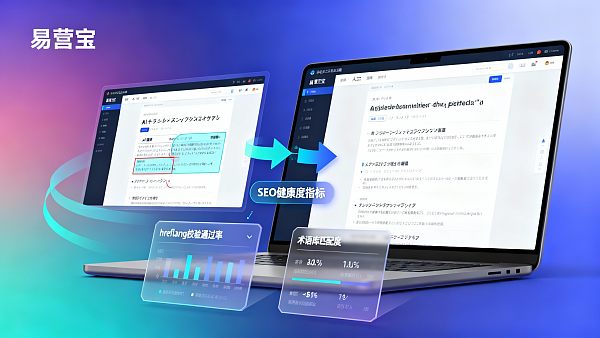
Scenario 1: Trilingual Site Synchronization with 2 Developers and No Dedicated SEO Staff
Here, outsourcing human translation + self-built multilingual架构 risks developers spending >40%工时 on hreflang tagging, language switching logic, and URL standardization—potentially missing Japan’s 2026 Q3 peak season. The判断逻辑 should focus on whether SEO infrastructure can be templatized. A viable approach is pre-configured multilingual SEO modules compliant with W3C and Google Search Central, auto-generating hreflang, x-default, canonical tags, and language meta. Risk control requires all language versions to pass Search Console’s "Internationalization report" validation with 100% crawlable hreflang directives.
Scenario 2: Product Descriptions with Machine Translation Flaws, Especially Japanese Honorific Errors and Brand Terminology Mistranslations
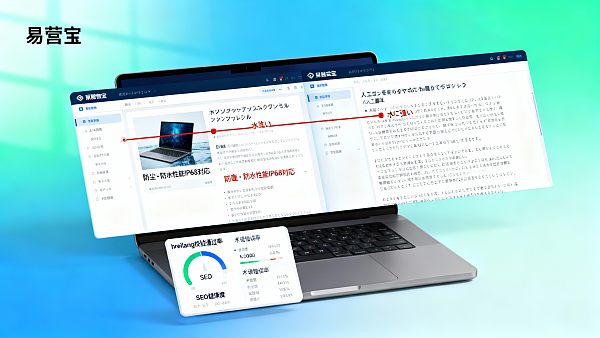
Testing showed Japanese site translations like "防水等级IP68" rendered as "水に強い" (colloquial) instead of "防塵・防水性能IP68対応"—a classic术语失控 case. This isn’t an engine capability issue but lacks术语库强制校验机制.判断逻辑 should assess whether术语管理 supports structured imports (e.g., CSV), field-level locking (model numbers, certifications), and post-AI auto-comparison. Industry standards demand 0% error rates for core product parameters. After implementing术语库管控, Haier’s overseas sites achieved 99.2% Japanese content质检 pass rates in the first month (source: 2024 Yixiangbao client CMS质检 reports).
Scenario 3: Tech Stack Choices Balancing Speed and Scalability to Avoid Exponential Maintenance Costs with Added Languages
Expanding from 3 to 5 languages with manual hreflang upkeep adds ~3 hours/language for validation.判断逻辑 must evaluate whether the架构 supports横向扩展 without重构. Semantic routing (e.g., /lang/zh-CN/product/xxx) with automated sitemap generation and language维度索引隔离 is optimal. Risk control requires new language versions to be fully crawled by Googlebot within 72 hours, showing "normal coverage" in Search Console.
Industry Implementation Methods and Solution匹配说明
Most DTC brands adopt hybrid models: English content is polished by native editors, Chinese/Japanese rely on third-party LSPs or generic AI tools, with SEO structures manually coded. This works for ≤5 languages but when languages≥4 and update frequency>20 pages/week, hreflang error rates rise 17%, and SEO response times延长 to 3.2 workdays (2025 cross-border SaaS运维白皮书数据). For users needing multilingual SEO infrastructure达标一次性, compressed timelines (60% of original), and sub-0.5% error rates, Yixiangbao Tech’s solutions—pre-configured hreflang templates, visual framework builders,术语库强制校验, and real-time SEO health dashboards—typically fit best. For those facing technical debt accumulation, Japan market organic traffic targets exceeding industry新站 averages (12.3%), and <15% SEO labor allocation, Yixiangbao’s deep-integrated AI engines with global CDN (<100ms latency) and Google 2026 E-E-A-T compliant TDK automation are更匹配.
Conclusions and Actionable Recommendations
- If launching Chinese-English-Japanese sites pre-2026 Q3 without dedicated SEO staff, prioritize evaluating whether multilingual SEO structures support out-of-the-box hreflang automation over单纯翻译报价对比.
- For brands with strict术语规范 (certification codes, technical parameters), verify AI solutions support术语库 field-locking and post-translation auto-validation—otherwise error rates become不可控.
- If expanding to Korean/German within 12 months, model架构 scalability as (languages × maintenance hours) functions, avoiding per-language routing logic rewrites.
- If Japan organic traffic is a key KPI, confirm server deployments match Google’s geo-preference判定—i.e., Tokyo nodes with correct Content-Language headers.
- When content production relies on market而非 tech teams, visual drag-and-drop editors for框架搭建 often deliver higher value than translation engine speed metrics alone.
During tech reviews, use Search Console’s Internationalization report to monitor test-environment trilingual sites for 72 continuous hours, validating hreflang bidirectional integrity, subdirectory索引 coverage, and x-default tag efficacy as objective达标依据.
Related Articles



Related Products
 EasyCamp SaaS Smart Website Marketing SystemE-Yingbao SaaS Smart Website Marketing System: AI-powered, zero-code website building. Rapidly launch multilingual independent e-commerce sites in just 10 minutes. Global server acceleration and AI-driven SEO optimization empower businesses to efficiently connect with global markets. The seamless integration of technology and user-friendly operation makes building e-commerce sites incredibly simple.
 AI+SEM Intelligent Advertising Marketing SystemAI+SEM drives intelligent ad creation, empowering full-funnel precision advertising marketing. The system automatically generates weekly/monthly reports, AI recommends keywords and target countries, monitors core metrics in real-time with intelligent alerts, and enables one-click high-conversion ad solutions to help quickly acquire customers and improve ROI.
 AI+SEO Dual Engine Optimization ServiceEasyWin AI+SEO Dual Engine Optimization System leverages AI-powered keyword mining, content generation, and comprehensive technical optimization to help foreign trade enterprises acquire high-quality organic traffic, significantly improving search rankings and conversion rates.
 AI+SNS Social Media Marketing SystemYingbao AI+SNS Social Media Marketing System - Precision social capture for the social media era. Supports one-click content synchronization across major platforms like Facebook and LinkedIn. AI intelligently rewrites posts for enhanced relevance. 24/7 AI customer service and user profiling analysis empower businesses to efficiently expand into global markets.
 AI+SEO营销解决方案易营宝AI+SEO营销解决方案,通过AI批量写作、智能生成TDK、精准关键词扩词等功能,全面优化网站SEO效果,提升流量与转化率。助力企业构建高效智能网站新生态。
 AI+SEM Advertising Marketing SolutionsAI+SEM Advertising Marketing Solution leverages AI technology to deeply empower SEM ad campaigns. It automatically generates weekly/monthly reports using AI, presenting account data across multiple dimensions for comprehensive insights into campaign performance and trends. The system precisely recommends keywords and target countries, intelligently generates high-conversion ad copy, and enables one-click activation of efficient campaign plans to help businesses rapidly acquire customers. Simultaneously, it monitors core metrics in real time, intelligently identifies abnormal fluctuations, and issues timely alerts to ensure stable, high-return advertising results.
 Domain Name ServicesEasyWin provides professional domain name services, including intelligent queries, one-stop registration, brand protection, and full lifecycle management, helping businesses build a digital brand image.
 EasyOperate B2C Cross-Border E-Commerce Platform & Independent WebsiteEasyStore B2C Cross-border E-commerce Independent Store is an intelligent website building and cross-border e-commerce integrated solution independently developed by EasyStore Information Technology (Beijing) Co., Ltd. The system is specially designed for small and medium-sized as well as large export enterprises, integrating 'website building, operation, marketing, advertising, and conversion' into one, helping enterprises quickly establish cross-border e-commerce independent stores to achieve brand globalization and global sales growth.
The platform supports multiple languages, multiple currencies, and multi-channel marketing, with built-in AI intelligent translation and SEO optimization systems, suitable for mainstream markets such as Southeast Asia, Europe and America, Latin America, and the Middle East, assisting Chinese manufacturing enterprises in efficiently deploying international e-commerce strategies. SSL证书易营宝提供专业SSL安全证书服务,包括单域名和泛域名证书,确保网站数据传输加密、身份验证和完整性保护,助力企业建立安全可信的在线业务环境。









