









- Cross-Border Marketing Trend Research: Why More and More Companies Are Starting to Deploy AI Search and GEO OptimizationJun 30, 2026View details
- Cross-Border Marketing Trend Research: How Independent Sites, AI Content, and Short-Video Customer Acquisition Are ChangingJun 30, 2026View details
- How Can a Brand Updates Page Be Made More SEO-Friendly? Analysis of Update Frequency, Content Structure, and Internal Linking StrategyJun 28, 2026View details
- What stages does the cross-border services ecosystem include? How do website building, promotion, payment, and compliance work togetherJun 22, 2026View details
- How will email marketing costs change in 2026Jun 22, 2026View details
- The China-US tariff arrangement has reached a preliminary consensus, and the trade association will be establishedJun 15, 2026View details
Avoiding Pitfalls in Multilingual Website Development: Balancing "Data Synchronization" and "Market-Specific Personalization" – Steer Clear of These 5 Common Mistakes
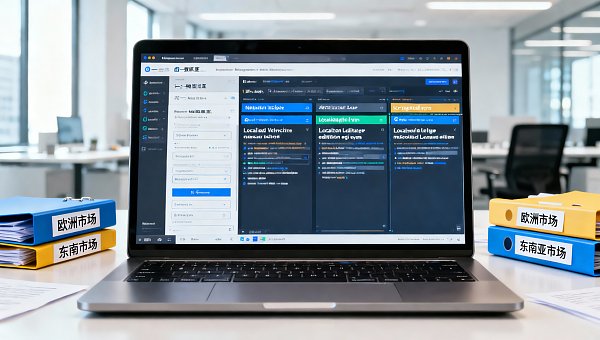
The two most common failures of multilingual websites: either to save effort by making all languages identical, resulting in content that looks "not like local content" to European and Southeast Asian users; or pursuing personalization, with each language site having its own set of changes, leading to mismatched product information, page structures, form fields, and contact methods, ultimately driving up maintenance costs.
A more stable approach is to split multilingual sites into two layers: a unified data backend + a controllable localization editing layer. The unified part ensures no errors and reduces redundant work; the editable part ensures expressions align more closely with real users in different markets.
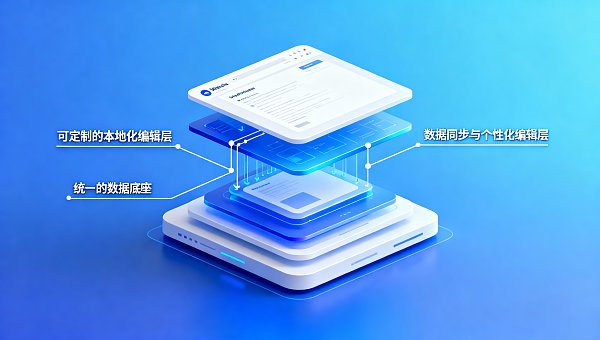
First, clarify "synchronization" and "personalization": What exactly do you need to sync?
In practice, multilingual sites typically need to categorize content into three types:
Content that should not diverge: product parameters, model/specifications, basic materials, contact methods, core policy explanations (e.g., delivery/after-sales entry points)
Content that can be localized: headlines and selling points, case selections, FAQs, CTAs (inquiry/consultation entry copy and placement)
Content that requires market-specific adaptation: landing page structures and content focus for users from different markets via search/ads/social media (often differing between Europe and Southeast Asia)
Once these three categories are clarified, "synchronization" and "personalization" are no longer opposing but serve distinct roles.
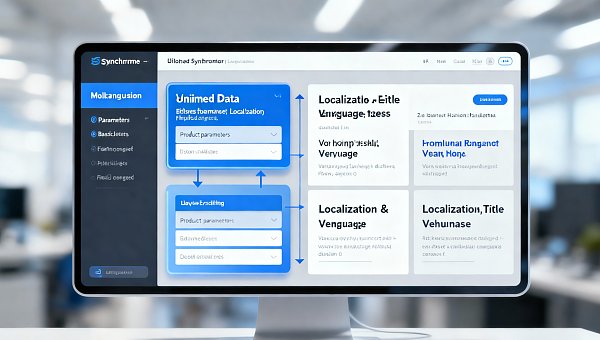
Top 5 pitfalls: Why does "synchronization leads to rigidity, personalization leads to chaos" happen?
Pitfall 1: Treating multilingual sites as "full-site copy + translation"
Symptom: Product info is updated on the English site but not synced to other languages; or each language has its own categories/pages, growing messier with updates.
Cause: No shared data source between language sites, relying on manual duplication.
How to diagnose: Updating product/service info requires repeating the operation in each language backend.
How to fix (the stable approach):
Separate "data" from "expression":
Unified data backend: product/service info, parameter fields, category structures, downloadable materials, contact entry points, etc.
Localized editing layer: headlines, selling points, descriptions, case selections, FAQs, CTAs
If unsure whether a platform/solution can achieve this, ask one practical question:
"Are product data maintained in one place with auto-sync across languages, or is each language maintained separately?"
Platforms like EasyTrade that combine "site-building + multilingual capabilities" often design "unified maintenance, reduced redundancy" as a core goal (e.g., their smart site-building system for rapid corporate site deployment, paired with a multilingual translation hub for localized content), better suiting teams avoiding long-term manual duplication.
Pitfall 2: No "sync rules," leading to inconsistent team edits
Symptom: Some insist on uniformity, others on localization, ending with ad-hoc decisions; the same module is edited inconsistently across languages.
Cause: Lack of rules defining "what must sync, what can change, and to what degree."
How to diagnose: Ask three people "which fields must match" and get three answers.
How to fix (suggest creating a table first):
This table isn't for "looking professional" but to guardrail every team edit.
Integrated site-building + operation solutions often embed such rules as configurations/flows (not relying on manual oversight).

Pitfall 3: Only doing "language switching," not "market adaptation"
Symptom: Pages look like "the same template" after language切换; Europe and Southeast Asia show divergent user behaviors with unstable page performance.
Cause: Treating "multilingual" as text work, not structuring it for "market conversion."
How to diagnose: Users from Europe or Southeast Asia land on the same generic pages, just with language切换.
How to fix (lowest-cost layering):
Start with minimal "language group/market group"分层, especially core landing pages:
For Europe: emphasize trust signals, policy clarity, FAQs, and support commitments (clear, structured)
For Southeast Asia: emphasize communication效率, quick inquiry入口, and social media衔接 (shorter paths)
If running social矩阵 (e.g., Facebook, LinkedIn, Instagram, TikTok, YouTube), pre-design paths from "social content → localized landing pages" to avoid traffic wasting on "translated generic pages." EasyTrade's all-in-one social+site system leans toward this "content reach + localized conversion" approach.
Pitfall 4: No pre-planned analytics, making it hard to judge "what works" later
Symptom: Traffic grows, but it's unclear which language versions contribute more or which pages retain users better.
Cause: No analytics维度 for "language/market" at the site structure level.
How to diagnose: Post-language切换, data is mixed; pages can't be compared across languages.
How to fix (simple steps):
At minimum:
Clear structural separation for language versions (unified URL/subdirectory rules)
Key pages grouped for comparison (product/solution/pricing/case studies)
Trackable key actions (inquiry clicks, form submissions, communication tool跳转)
To avoid detours, ask if platforms support "marketing协同"—e.g., can投放 optimization adjust based on data monitoring? EasyTrade's AI+精准营销 system emphasizes auto-monitoring for precise投放, easier to闭环 with site data (if your site structure/events are predefined).
Pitfall 5: Site-wide "one-click translation," making key pages read unnaturally
Symptom: Stiff phrasing, inconsistent terminology; European users尤其敏感, losing trust.
Cause: No "localized editing layer," relying solely on direct translation.
How to diagnose: Key sections (hero text, core卖点, FAQs) read like "translation drafts."
How to fix (minimal input, maximal impact):
Focus人力 on "most critical localization spots":
Hero positioning (1 sentence)
Core selling points (3–5 items)
FAQs (3–6 questions)
CTA copy (inquiry/consultation phrasing)
For frequent multilingual updates, use "translation hub + glossary control + light human review" instead of full manual rewrites or raw machine translation. EasyTrade's multilingual hub follows this "efficiency + consistency" balance.

One-page checklist: Making "sync + personalization" controllable
Use this list to audit existing solutions for失控 risks:
Is there a unified data source? (product/service info shouldn't require per-language维护)
Is there a sync rules table? (what must sync, what can localize)
Are key landing pages adapted for Europe/Southeast Asia differences? (not just language切换)
Can key pages be compared across languages? (not mixed data)
Are key pages given localized editing slots? (not full-site direct translation)
Are there change rules: who can edit the data backend, who can edit localization, and how approvals work
Applicability: Clarifying boundaries builds more trust
Better suited for "unified backend + controllable localization":
More than 2–3 language versions with ongoing content/product updates
Covering markets with clear differences (e.g., Europe + Southeast Asia)
Teams wanting to avoid redundant sync work, focusing人力 on key page localization
If just static展示 with rare updates:
Lighter solutions work, but accept that multilingual maintenance costs will spike once operations begin
FAQ
1) Do Europe and Southeast Asia need completely separate sites?
Usually not. A practical approach: unified data backend, with key landing pages adapting差异 (hero卖点, trust signals, FAQs, inquiry入口), starting minimal then iterating.
2) How to avoid mismatched info during edits?
Limit "editable" to the localization layer, lock "uneditable" in the data backend; define rules clearly and set minimal审核 (backend changes need approval, localized copy can publish faster).
3) What multilingual content should be prioritized for UX impact?
Focus on "understanding and trust": hero positioning, core卖点, FAQs, CTAs. Nailing these four beats full-site translation.
4) How to vet platforms for reliability in one sentence?
Two questions filter many unfit solutions:
"Can product data be maintained in one place with auto-sync across languages?"
"Which content allows localized edits? Are there rules and approval mechanisms?"
Conclusion: Treat multilingual as "architecture and rules," not just "translation work"
Achieving "synced data yet personalized" hinges not on adding languages but clarifying: what must match, what can localize, and how to adapt per market. With rules established, iterations won't spiral into chaos.
If preferring "fewer tools, unified management," consider integrated systems like EasyTrade covering smart site-building, multilingual localization, marketing投放 optimization, and social矩阵 operations; its public背书 includes 10+ years of internet promotion experience, national high-tech certification, and partnerships with Google/Bing in China, aiding credibility判断.
Related Articles
 TrustLink 2.0 Incorporates Independent E-commerce Site Credit Scores into the Review Process for Cross-Border Market Entry in Southeast Asia
 How Is the Price of Building a Zhejiang Foreign Trade Website Calculated? Features, Number of Languages, and Promotion Needs Are Key
 How should Chinese companies choose overseas marketing solutions?An evaluation from channel planning to local execution

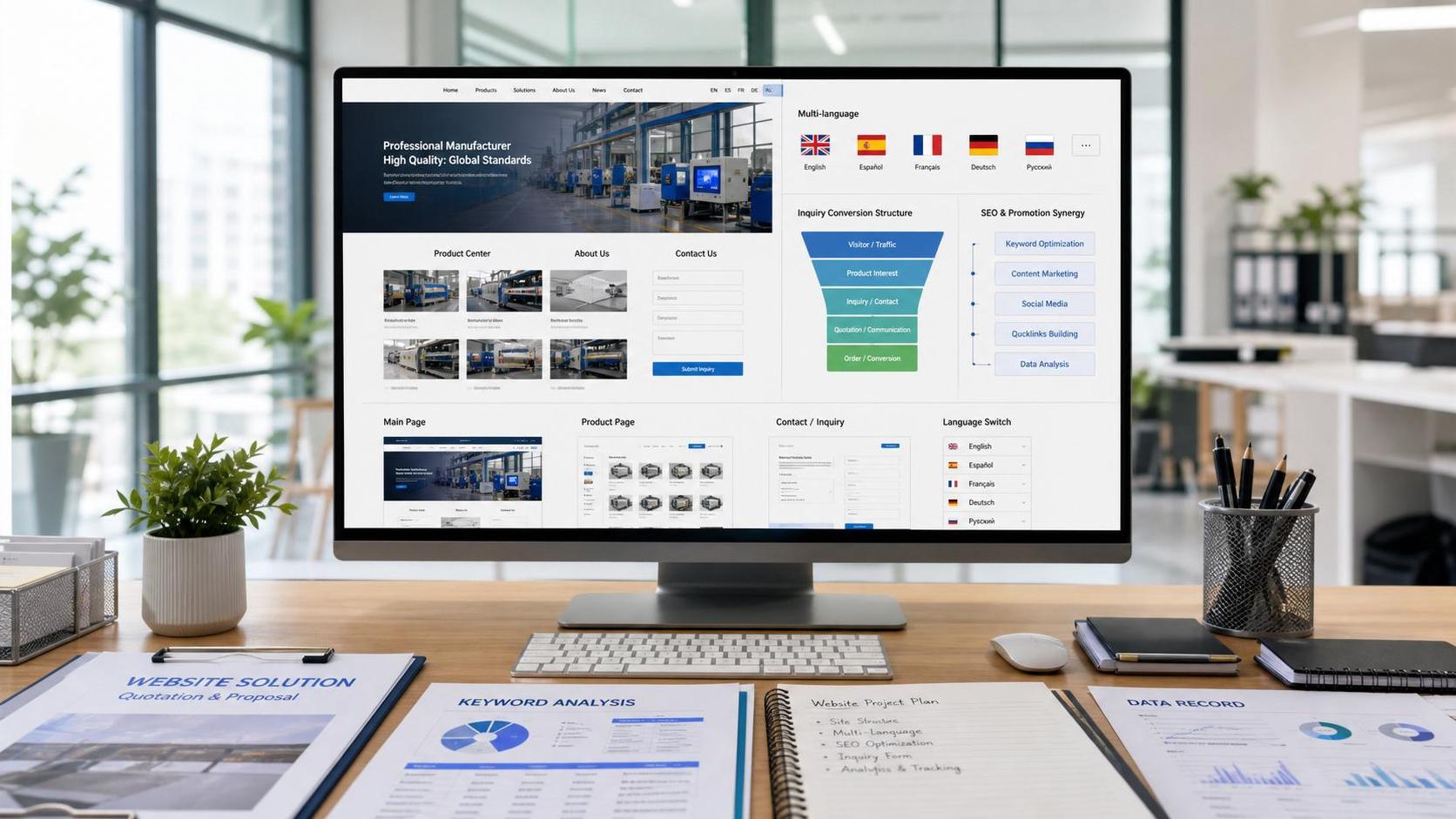
Related Products
 EasyCamp SaaS Smart Website Marketing SystemE-Yingbao SaaS Smart Website Marketing System: AI-powered, zero-code website building. Rapidly launch multilingual independent e-commerce sites in just 10 minutes. Global server acceleration and AI-driven SEO optimization empower businesses to efficiently connect with global markets. The seamless integration of technology and user-friendly operation makes building e-commerce sites incredibly simple.
 AI+SEM Intelligent Advertising Marketing SystemAI+SEM drives intelligent ad creation, empowering full-funnel precision advertising marketing. The system automatically generates weekly/monthly reports, AI recommends keywords and target countries, monitors core metrics in real-time with intelligent alerts, and enables one-click high-conversion ad solutions to help quickly acquire customers and improve ROI.
 AI+SEO Dual Engine Optimization ServiceEasyWin AI+SEO Dual Engine Optimization System leverages AI-powered keyword mining, content generation, and comprehensive technical optimization to help foreign trade enterprises acquire high-quality organic traffic, significantly improving search rankings and conversion rates.
 AI+SNS Social Media Marketing SystemYingbao AI+SNS Social Media Marketing System - Precision social capture for the social media era. Supports one-click content synchronization across major platforms like Facebook and LinkedIn. AI intelligently rewrites posts for enhanced relevance. 24/7 AI customer service and user profiling analysis empower businesses to efficiently expand into global markets.
 AI+SEO营销解决方案易营宝AI+SEO营销解决方案,通过AI批量写作、智能生成TDK、精准关键词扩词等功能,全面优化网站SEO效果,提升流量与转化率。助力企业构建高效智能网站新生态。
 AI+SEM Advertising Marketing SolutionsAI+SEM Advertising Marketing Solution leverages AI technology to deeply empower SEM ad campaigns. It automatically generates weekly/monthly reports using AI, presenting account data across multiple dimensions for comprehensive insights into campaign performance and trends. The system precisely recommends keywords and target countries, intelligently generates high-conversion ad copy, and enables one-click activation of efficient campaign plans to help businesses rapidly acquire customers. Simultaneously, it monitors core metrics in real time, intelligently identifies abnormal fluctuations, and issues timely alerts to ensure stable, high-return advertising results.
 Domain Name ServicesEasyWin provides professional domain name services, including intelligent queries, one-stop registration, brand protection, and full lifecycle management, helping businesses build a digital brand image.
 EasyOperate B2C Cross-Border E-Commerce Platform & Independent WebsiteEasyStore B2C Cross-border E-commerce Independent Store is an intelligent website building and cross-border e-commerce integrated solution independently developed by EasyStore Information Technology (Beijing) Co., Ltd. The system is specially designed for small and medium-sized as well as large export enterprises, integrating 'website building, operation, marketing, advertising, and conversion' into one, helping enterprises quickly establish cross-border e-commerce independent stores to achieve brand globalization and global sales growth.
The platform supports multiple languages, multiple currencies, and multi-channel marketing, with built-in AI intelligent translation and SEO optimization systems, suitable for mainstream markets such as Southeast Asia, Europe and America, Latin America, and the Middle East, assisting Chinese manufacturing enterprises in efficiently deploying international e-commerce strategies. SSL证书易营宝提供专业SSL安全证书服务,包括单域名和泛域名证书,确保网站数据传输加密、身份验证和完整性保护,助力企业建立安全可信的在线业务环境。









