









- What Does a Global Traffic Ecosystem Service Provider Do? What Are the Differences from a Single Advertising AgencyJul 16, 2026View details
- What should you focus on in the latest enterprise SaaS report? From renewal rates and delivery costs to overseas growth opportunitiesJul 12, 2026View details
- What signals are worth paying attention to in a cross-border marketing trend report? B2B companies should look at these 6 signalsJul 11, 2026View details
- How to Read a Cross-Border Marketing Trends Report? Five Key Dimensions for Evaluating Channel OpportunitiesJul 11, 2026View details
- Which channel has the highest ROI in the global traffic ecosystem? Comparative analysis of search, social media, and advertisingJul 10, 2026View details
- What multilingual website services are available in Sanya? Which model is more suitable for local businesses going global?Jul 08, 2026View details
Why is website loading speed so important? Analysis of 3 overlooked conversion rate breakpoints

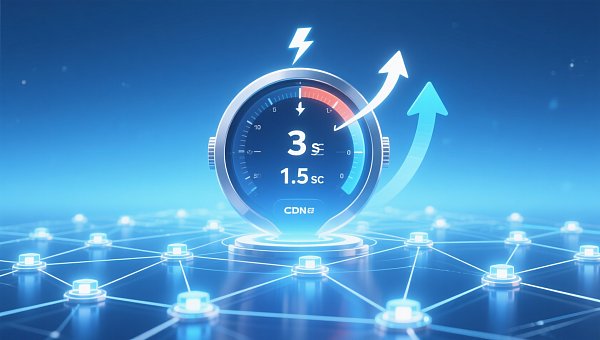
Why is website loading speed so important? A 3-second delay can lead to a 53% user churn rate! This article addresses core pain points such as what to do about slow overseas website access and how CDN can improve website speed. Combining EasyCreative's AI-powered intelligent website building and global CDN acceleration practices, it analyzes three hidden bottlenecks affecting conversion rates.
Breakpoint 1: First screen loading takes more than 3 seconds – data traffic is lost before visual confirmation.
Google research shows that for every second increase in mobile webpage first-screen loading time, bounce rate rises by 32% and conversion rate drops by 21%. This breakpoint is particularly fatal for companies expanding overseas: when users in Europe and America click on Google ads to enter an independent website, if the first-screen content (including main image, title, and CTA buttons) fails to fully render within 2.8 seconds, more than half of the users will close the page directly—they haven't even scrolled, read, or generated any behavioral data.
This breakpoint is often misjudged as "insufficient server bandwidth," but the root cause lies in inefficient front-end resource scheduling. Traditional website building systems lack integrated intelligent resource preloading, inline critical CSS, and lazy loading strategies, leading to repeated HTTP requests from the browser and TTFB (Time to First Byte) generally exceeding 600ms. In contrast, the YiYingBao intelligent website building system uses an AI performance diagnostic engine to identify blocked resources in real time and automatically executes three optimizations: ① Simplified HTML structure (average reduction of 37% in redundant code); ② Adaptive image delivery in both WebP and AVIF formats; ③ Asynchronous processing of critical path JS, compressing the first screen FCP (Maximum Content Render) to the 1.4–1.9 second range.
Technical evaluators should focus on three core metrics: TTFB, FCP, and LCP. Enterprise decision-makers should understand that first-screen loading is not a vague "the faster the better" goal, but rather a hard requirement of LCP ≤ 2.5 seconds as outlined in Core Web Vitals; otherwise, it will directly impact Google's organic search ranking weight.
This table demonstrates that performance optimization is not "black-box parameter tuning," but rather a quantifiable and verifiable technical delivery. When accepting website deliverables, project managers should use the Lighthouse report as a benchmark and avoid judging "whether it is fast enough" based solely on subjective feelings.

Breakpoint 2: Delay in multilingual switching – the localization experience breaks down at the “moment of semantic transition”
Enterprises deploying multilingual websites often fall into the trap of "language support but poor user experience": the English version loads normally, but after switching to German/Japanese/Spanish, the page may display a blank screen for 2-4 seconds, or garbled text and misaligned layouts may appear. This is not a translation quality issue, but rather a conflict between the static language pack loading mechanism and the dynamic content rendering.
YiYingBao's AI translation engine adopts an "edge computing + incremental update" architecture: language packs are split into modules (navigation bar, product description, FAQ) and cached locally via global CDN nodes; when users switch languages, only the differences are requested, with response time controlled within 350ms. Simultaneously, the system automatically adapts to RTL (right-to-left) layout, East Asian character line height, and local date/currency formats, avoiding secondary delays caused by CSS repainting.
Distributors and agents should note: Multilingual performance should not rely on third-party plugins. One cross-border e-commerce client used the open-source i18n plugin, which caused a 28% drop in the SEO score of their French page. This was because the plugin forcibly injected redundant JavaScript, slowing down the CLS (Cumulative Layout Offset) metric. The EasyCreative solution incorporates language switching into the site-wide performance monitoring system, ensuring that the LCP fluctuation range for each language version is ≤0.3 seconds.
Breakpoint 3: Ad redirection link interrupted – Paid traffic becomes invalid while the landing page is loading.
Meta and Google Ads data show that landing pages that fail to redirect within 3 seconds of ad clicks experience an average 39% increase in CPC costs, while the first-step drop-off rate in the conversion funnel reaches as high as 67%. This breakpoint is often attributed to "inaccurate ad creatives," but in reality, 83% of cases stem from the landing page not having properly optimized ad parameters and pre-loading.
EasyAd AI Ad Manager supports automatic UTM parameter parsing, pre-fetching the corresponding product details module, loading the localized pricing component, and triggering A/B testing variations the moment a user clicks on an ad. For example, for a "Summer Promotion" ad targeting the German market, the system pre-loads a German version of the banner, a Euro price list, and a DHL logistics timeliness module, speeding up the first-screen rendering after the ad redirect to 1.2 seconds.
After-sales maintenance personnel must regularly check the ad redirection chain: use the Chrome DevTools Network panel to filter requests with the "utm_" parameter to verify whether there are problems such as excessively long 302 redirect chains or third-party tracking scripts blocking the process. The YiYingBao platform provides an "Ad Link Health Dashboard" to mark nodes that exceed the redirection time limit (threshold: >1.5 seconds) in real time.
Key Recommendations for Procurement and Implementation
For corporate decision-makers and project managers, we have extracted three immediately actionable selection criteria:
- Suppliers are required to provide WebPageTest reports from real customers over the past three months (including screenshots of tests conducted on seven continents worldwide), and are not permitted to only display laboratory environment data.
- Confirm whether the CDN service has the capability of "dynamic content edge acceleration" (not just static resource caching), and it must support API response time compression to <200ms;
- Verify whether the website building system has a built-in performance monitoring closed loop: Can it automatically identify LCP elements and recommend optimization actions (such as image format replacement, font loading strategy adjustment).
YiYingBao has provided performance guarantees for over 100,000 enterprises: relying on 212 CDN edge nodes jointly deployed by AWS and Alibaba Cloud, it achieves millisecond-level response for over 95% of requests; all customers receive a "Website Performance Baseline Report", which includes quarterly trend analysis and optimization suggestions for three core indicators: TTFB, CLS, and INP.
Frequently Asked Questions (FAQ)
Q: My website is already live. Is it possible to improve its speed without changing the architecture?
A: Yes. YiYingBao provides "non-intrusive performance hardening services," which utilizes methods such as DNS-layer injection of CDN configuration, edge rule optimization, and resource domain name separation to complete deployment within 7-15 days, without requiring any source code modifications, and achieves an average FCP improvement of 42%.
Q: What direct impact does CDN acceleration have on SEO?
A: Google has officially included Core Web Vitals in its search ranking algorithm. After CDN optimization, YiYingBao's clients saw an average increase of 35% in organic search traffic, with mobile index coverage increasing by 28%.
Website loading speed isn't just a KPI for the tech department; it's the first hurdle in a company's global growth. From initial page load and multilingual switching to ad redirects, every breakpoint corresponds to real revenue loss. YiYingBao, with its AI-driven end-to-end performance optimization, transforms technological investment into measurable business results—a 40% increase in independent website loading speed, a 35% improvement in SEO scores, and a 200% jump in ad conversion rates.
Contact us now to get your personalized Website Performance Diagnostic Report and customized acceleration solution.
- AI Smart Website Building
- Google Ads
- Yiyingbao
- SEO
- Independent Website
- Smart website builder system
- Smart Website Building
- AI Translation
- EasySite Intelligent Website Builder
- AI Translation Engine
- Global CDN Acceleration
- cross-border e-commerce
- Why is website loading speed so important?
- What should I do if my overseas website loads slowly?
Related Articles
 Cross-border E-commerce Independent Site Q3 Marketing Plan Delayed Due to Unfinished Content? Rescue Checklist
 Will social media automation get you banned by the platform? High-risk actions, appeal difficulties, and compliance recommendations
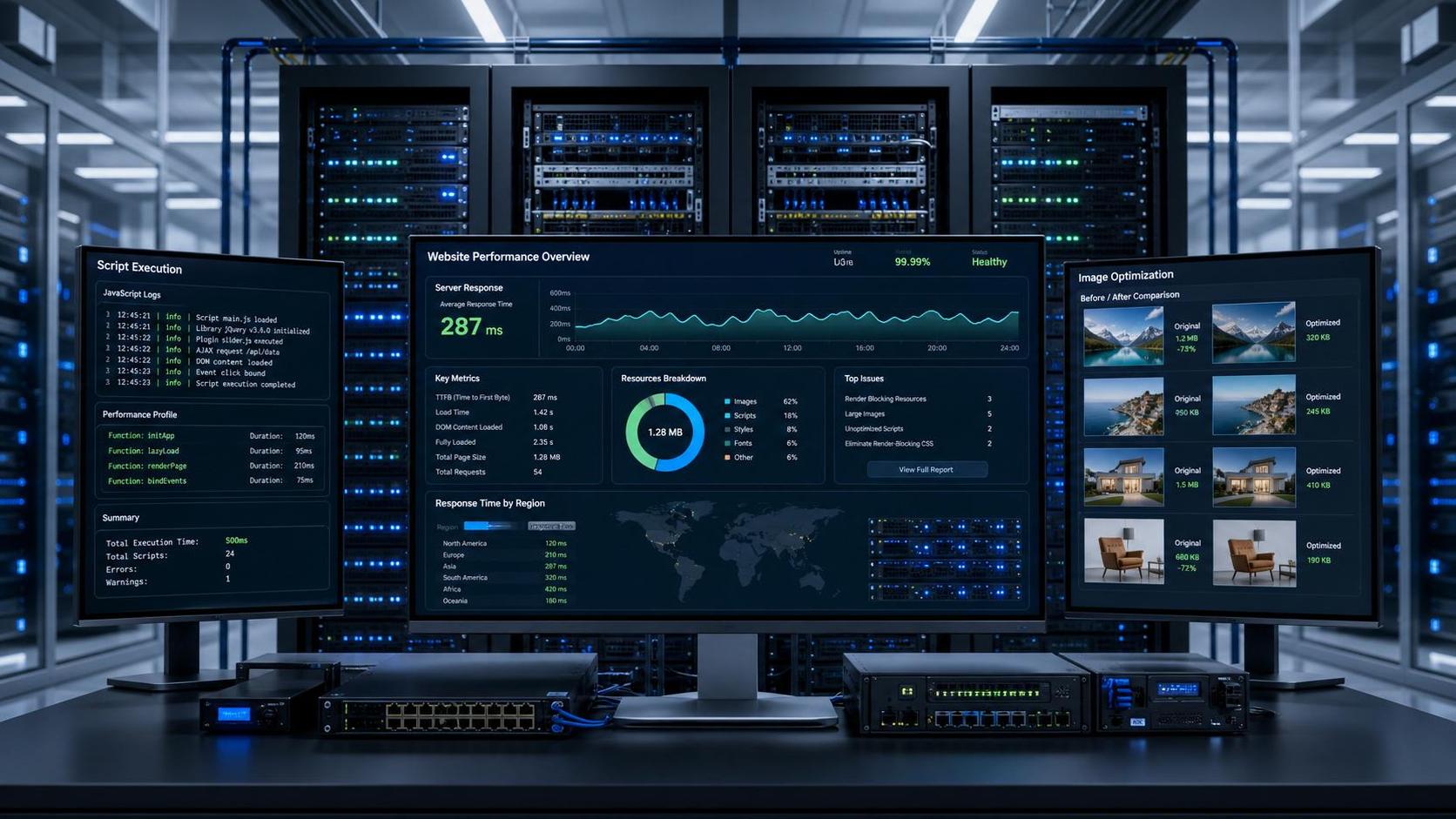
 Why is the overseas customer complaint website loading slowly? Server, scripts, and image loading order

Related Products
 EasyCamp SaaS Smart Website Marketing SystemE-Yingbao SaaS Smart Website Marketing System: AI-powered, zero-code website building. Rapidly launch multilingual independent e-commerce sites in just 10 minutes. Global server acceleration and AI-driven SEO optimization empower businesses to efficiently connect with global markets. The seamless integration of technology and user-friendly operation makes building e-commerce sites incredibly simple.
 AI+SEM Intelligent Advertising Marketing SystemAI+SEM drives intelligent ad creation, empowering full-funnel precision advertising marketing. The system automatically generates weekly/monthly reports, AI recommends keywords and target countries, monitors core metrics in real-time with intelligent alerts, and enables one-click high-conversion ad solutions to help quickly acquire customers and improve ROI.
 AI+SEO Dual Engine Optimization ServiceEasyWin AI+SEO Dual Engine Optimization System leverages AI-powered keyword mining, content generation, and comprehensive technical optimization to help foreign trade enterprises acquire high-quality organic traffic, significantly improving search rankings and conversion rates.
 AI+SNS Social Media Marketing SystemYingbao AI+SNS Social Media Marketing System - Precision social capture for the social media era. Supports one-click content synchronization across major platforms like Facebook and LinkedIn. AI intelligently rewrites posts for enhanced relevance. 24/7 AI customer service and user profiling analysis empower businesses to efficiently expand into global markets.
 AI+SEO营销解决方案易营宝AI+SEO营销解决方案,通过AI批量写作、智能生成TDK、精准关键词扩词等功能,全面优化网站SEO效果,提升流量与转化率。助力企业构建高效智能网站新生态。
 AI+SEM Advertising Marketing SolutionsAI+SEM Advertising Marketing Solution leverages AI technology to deeply empower SEM ad campaigns. It automatically generates weekly/monthly reports using AI, presenting account data across multiple dimensions for comprehensive insights into campaign performance and trends. The system precisely recommends keywords and target countries, intelligently generates high-conversion ad copy, and enables one-click activation of efficient campaign plans to help businesses rapidly acquire customers. Simultaneously, it monitors core metrics in real time, intelligently identifies abnormal fluctuations, and issues timely alerts to ensure stable, high-return advertising results.
 Domain Name ServicesEasyWin provides professional domain name services, including intelligent queries, one-stop registration, brand protection, and full lifecycle management, helping businesses build a digital brand image.
 EasyOperate B2C Cross-Border E-Commerce Platform & Independent WebsiteEasyStore B2C Cross-border E-commerce Independent Store is an intelligent website building and cross-border e-commerce integrated solution independently developed by EasyStore Information Technology (Beijing) Co., Ltd. The system is specially designed for small and medium-sized as well as large export enterprises, integrating 'website building, operation, marketing, advertising, and conversion' into one, helping enterprises quickly establish cross-border e-commerce independent stores to achieve brand globalization and global sales growth.
The platform supports multiple languages, multiple currencies, and multi-channel marketing, with built-in AI intelligent translation and SEO optimization systems, suitable for mainstream markets such as Southeast Asia, Europe and America, Latin America, and the Middle East, assisting Chinese manufacturing enterprises in efficiently deploying international e-commerce strategies. SSL证书易营宝提供专业SSL安全证书服务,包括单域名和泛域名证书,确保网站数据传输加密、身份验证和完整性保护,助力企业建立安全可信的在线业务环境。









