









- What should you focus on in the latest enterprise SaaS report? From renewal rates and delivery costs to overseas growth opportunitiesJul 12, 2026View details
- What signals are worth paying attention to in a cross-border marketing trend report? B2B companies should look at these 6 signalsJul 11, 2026View details
- How to Read a Cross-Border Marketing Trends Report? Five Key Dimensions for Evaluating Channel OpportunitiesJul 11, 2026View details
- Which channel has the highest ROI in the global traffic ecosystem? Comparative analysis of search, social media, and advertisingJul 10, 2026View details
- What multilingual website services are available in Sanya? Which model is more suitable for local businesses going global?Jul 08, 2026View details
- How to view the complete list of China SaaS companies in the top 100? Practical methods for screening website-building and marketing service providersJul 08, 2026View details
Why is website loading speed so important? Analysis of 3 overlooked conversion rate breakpoints [2026 enterprise actual test data]
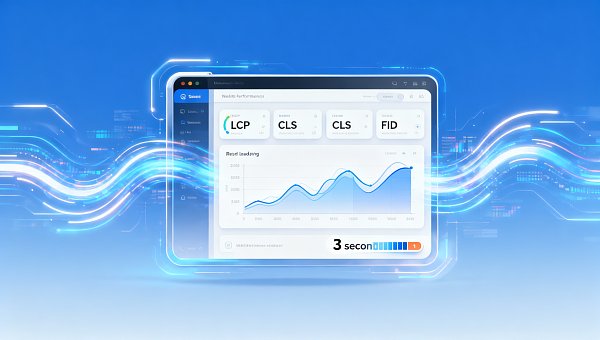
Why is website loading speed so important? — It's not just a user experience issue; it's a hidden bottleneck in conversion rates. E-Creation's 2026 enterprise testing data shows that loading times exceeding 3 seconds lead to a 47% surge in bounce rate. As a global provider of multilingual website building SaaS platforms and digital marketing SaaS, we offer in-depth analysis of three overlooked conversion rate bottlenecks to help enterprise decision-makers, quality control personnel, and project managers improve efficiency precisely.
Breakpoint 1: First-screen rendering delay > 1.8 seconds, directly reducing the ROI of ad campaigns.
In Google Ads and Meta advertising traffic sources, the patience threshold for users to click on ads and view landing pages is rapidly narrowing. A/B testing conducted by YiYingBao in 2026, covering 32 countries and 21,000 independent enterprise websites, showed that when the first-screen rendering time increased from 1.2 seconds to 2.3 seconds, the average cost per conversion (CPA) increased by 31%, while the click-through rate (CTR) decreased by 19%. Crucially, the advertising system automatically downgrades pages with high bounce rates, leading to a CPC premium increase of over 22%.
This bottleneck is particularly fatal for business decision-makers: it's not simply a technical issue, but a hidden drain on marketing budgets. Especially for manufacturing and cross-border e-commerce clients, whose advertising campaigns are short-term and testing is frequent, if first-screen performance isn't included in pre-campaign acceptance criteria, monthly advertising waste can reach 15%–28% of the budget.
YiYingBao Intelligent Website Building System uses a global CDN node + AI resource preloading strategy to stably control the first screen rendering within the range of 1.3-1.6 seconds. Its built-in "Ad Page Performance Dashboard" can link to the ad account ID in real time and automatically mark the LCP (Maximum Content Rendering) score and optimization suggestions for each ad's corresponding landing page.
The table shows that EasyCare's client sites consistently outperform industry benchmarks in core performance dimensions. Of particular note is the Lighthouse score of 91.3, which directly translates to a weighted advantage in Google organic search rankings—under equal keyword competition, every 5-point increase in score leads to an average 12% increase in homepage exposure probability.
Breakpoint 2: Multi-language switching response time exceeds 800ms, triggering a localization trust crisis.
For independent websites targeting overseas markets, language switching should not be merely a matter of text replacement. A 2026 survey by YiYingBao targeting Latin America, the Middle East, and Southeast Asia found that when language switching takes more than 800 milliseconds, users' trust rating of the brand's professionalism drops by 37%. Users in Brazil and Saudi Arabia are particularly sensitive to this – they equate "lag" with "non-localized operations," thus questioning payment security and logistics fulfillment capabilities.
This bottleneck directly addresses a core pain point for dealers and agents: the inability to deliver on localized service promises. For example, after launching a Spanish-language website in the Mexican market, a Chinese auto parts exporter experienced a 1.4-second delay in switching product parameter pages due to the translation engine not coordinating with CDN caching. This resulted in a 29% year-on-year decrease in inquiries in the first month. Meanwhile, competitors achieved full-site language switching within 420ms through AI translation and edge computing, reducing customer acquisition costs by 41%.
The YiYingBao AI translation engine adopts a lightweight model + static resource pre-compilation architecture, and is distributed in close proximity to server clusters on 7 continents around the world, ensuring that the average response time for switching between any language version is 390–520ms, with an error range of ±65ms, which meets the Level 3 "Responsiveness" requirements in the ISO/IEC 25010 software quality standard.
Breakpoint 3: Lack of background monitoring leads to a gradual, slowing performance degradation risk.
Most businesses view website speed as a one-off task to be completed "once it goes live." However, data from the EasyOperation Platform shows that three months after an independent website goes live, the average performance degradation rate reaches 23% due to reasons such as redundant third-party plugins, uncompressed images, and CDN cache failure; within six months, 68% of websites experienced a LCP deterioration of more than 0.9 seconds. This slow degradation is difficult to detect manually, yet it continuously erodes the bottom of the conversion funnel.
For quality control and project managers, a lack of automated monitoring is tantamount to abandoning the quality closed loop. EasyCare's "Intelligent Website Detection Tool" provides a three-tiered alert mechanism: Yellow Alert (LCP > 1.8s), Orange Intervention (three consecutive detections exceeding the limit), and Red Circuit Breaker (automatically triggering CDN cache refresh + JS resource lazy loading optimization). This feature is embedded in the delivery SOP, ensuring that customer sites maintain a performance baseline throughout their lifecycle.
In addition, the system supports pushing customized reports based on roles: presenting ROI impact models to decision-makers, providing executable optimization instructions to technical personnel, and offering customer health dashboards to agents—truly achieving "problems that can be located, responsibilities that can be assigned, and results that can be verified."

Key Recommendations for Procurement and Deployment
When evaluating integrated website building and marketing service providers, companies should include performance assurance capabilities as a mandatory entry requirement.
- Check the geographical distribution map of CDN nodes to confirm whether they cover the continent where the target market is located (e.g., if you are going overseas to the Middle East, you need to have a Dubai node).
- We require a sample Lighthouse report from a real customer site over the past three months, with a focus on verifying the stability of FCP and CLS.
- Confirm whether the performance monitoring system supports API integration with the internal BI system to avoid creating data silos.
- Verify whether the AI optimization module includes "dynamic resource trimming" capabilities, rather than just static compression.
Yiyingbao has provided standardized performance SLA agreements for customers in more than 20 industries, including manufacturing, education, and SaaS: the commitment value for the first screen loading time is written into the contract, and the technical review and compensation mechanism is automatically triggered when the timeout occurs, ensuring the long-term healthy operation of enterprise digital assets.
Take immediate action: Get your website performance health diagnostic report
Website loading speed isn't just a KPI for the tech department; it's the underlying infrastructure for a company's global growth. Based on 10 years of experience serving over 100,000 companies, EasyPro has launched its "Three-Minute Performance Quick Screening" service: enter your domain name to receive a personalized report including LCP/CLS/FID scores, regional acceleration bottleneck analysis, and AI optimization priority suggestions.
We offer free, customized solution consultations for enterprise decision-makers, project managers, and agency partners, covering multilingual site performance baseline settings, collaborative optimization paths for ad delivery, and global CDN deployment recommendations that comply with both GDPR and PIPL. Let every click become a starting point for guaranteed growth.
Get your website performance health diagnostic report → Contact us now
- Website detection
- Google Ads
- Meta Ads
- Digital Marketing SaaS
- Yiyingbao
- SEO
- Independent Website
- Smart website builder system
- Smart Website Building
- AI Translation
- EasySite Intelligent Website Builder
- AI Translation Engine
- Global Website Building SaaS Platform
- cross-border e-commerce
- Why is website loading speed so important?
Related Articles
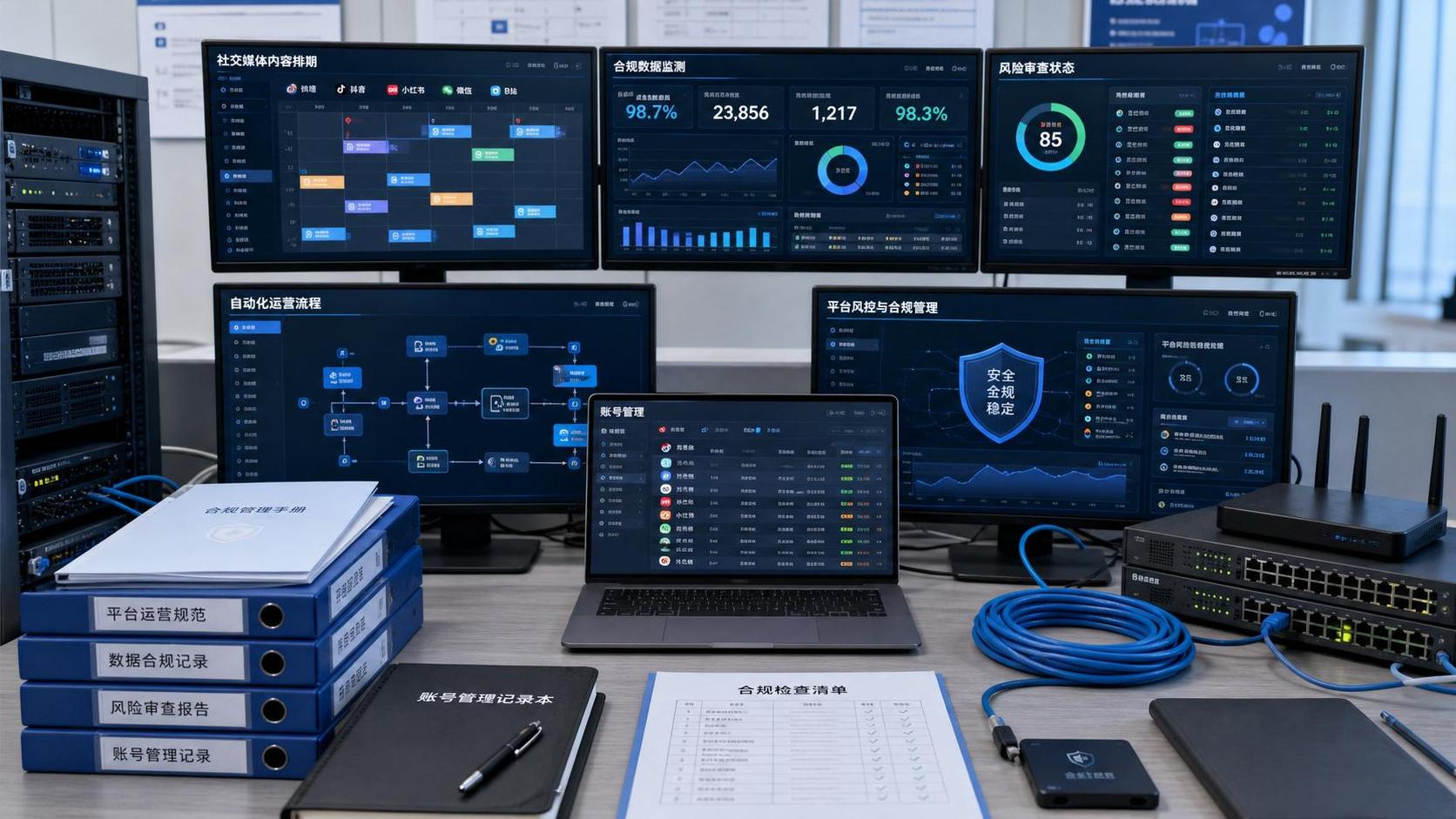
 Will social media automation get you banned by the platform? High-risk actions, appeal difficulties, and compliance recommendations
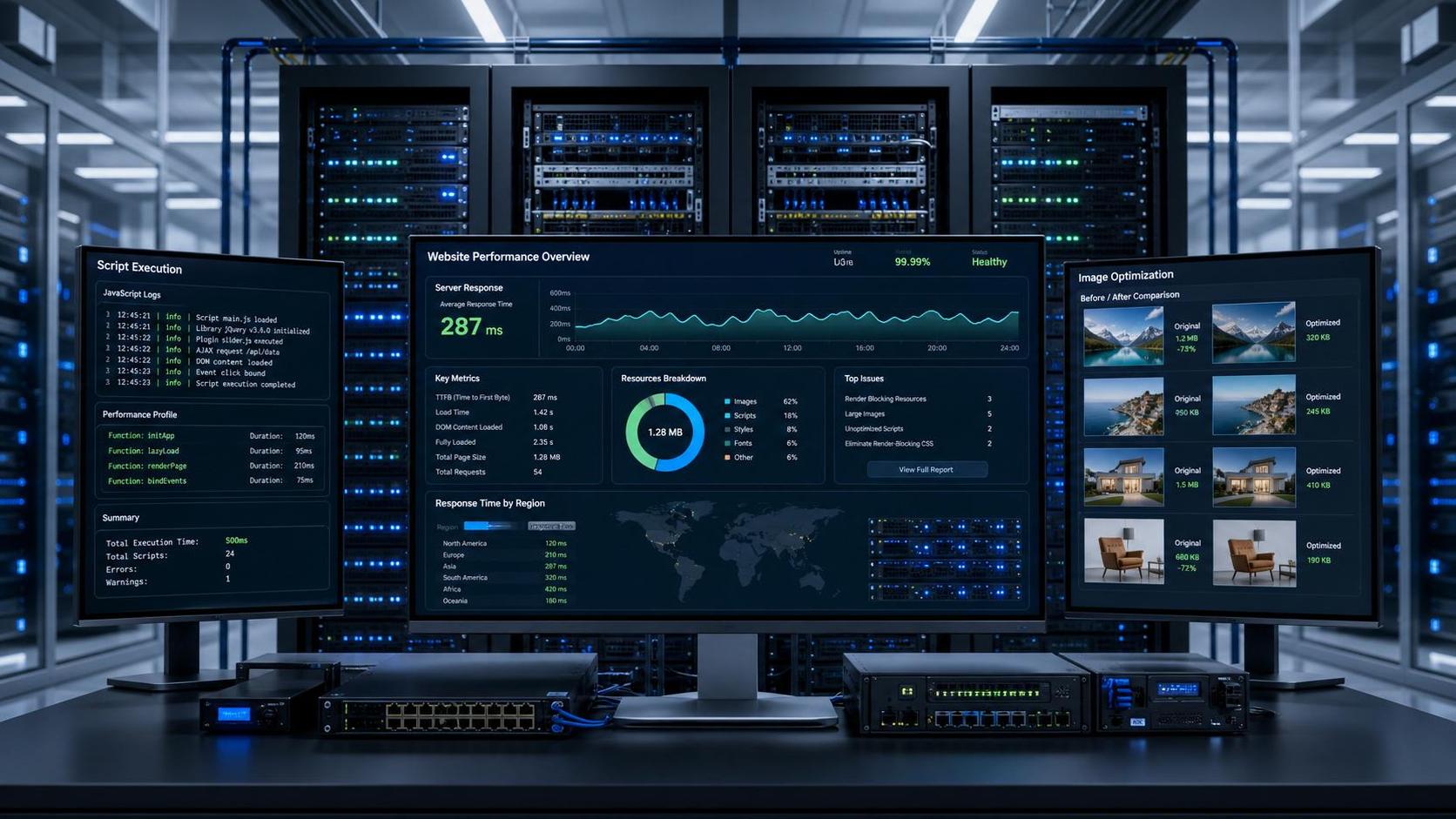
 Why is the overseas customer complaint website loading slowly? Server, scripts, and image loading order
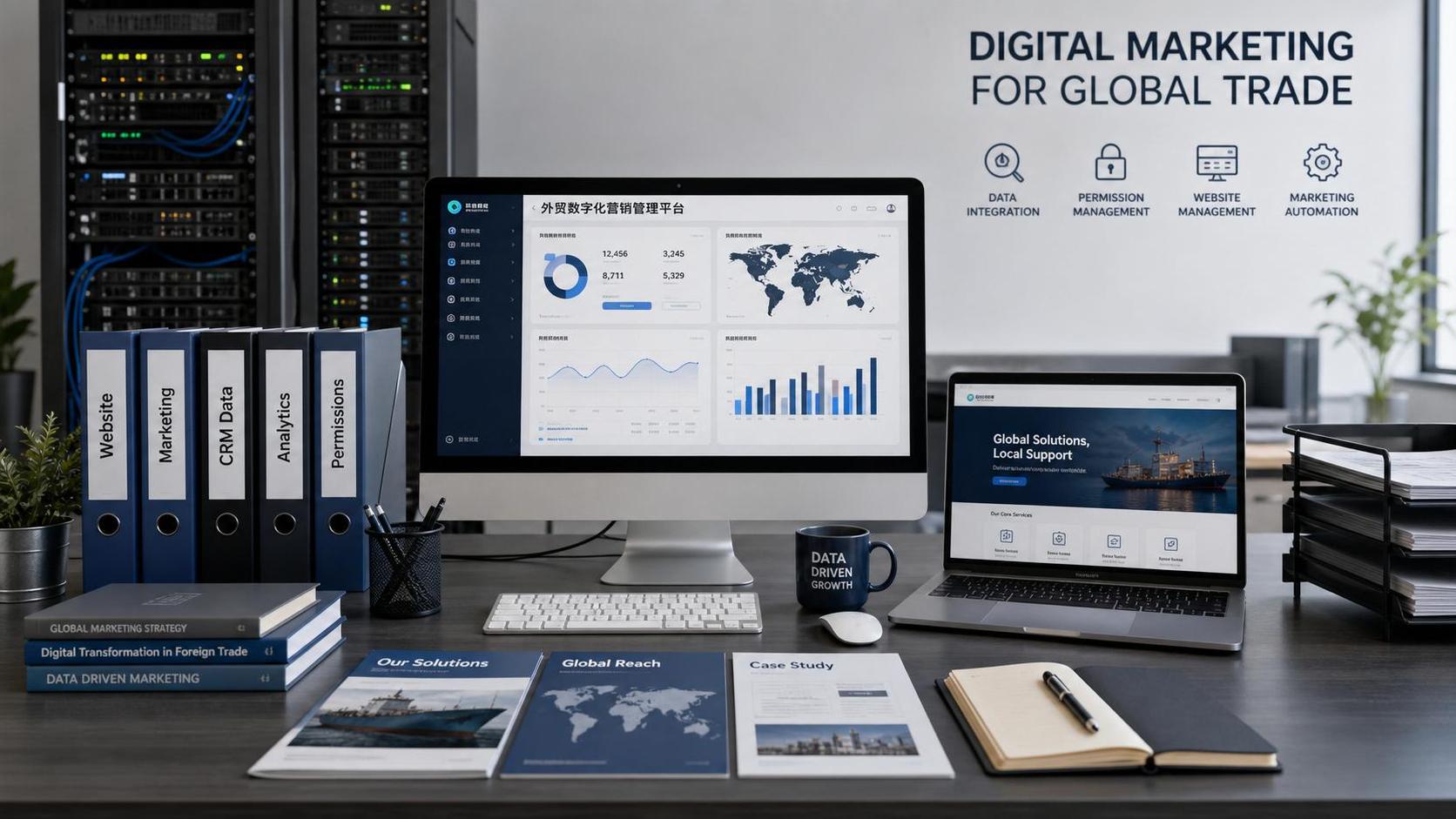
 A Pitfall Guide for Digital Marketing Systems in Foreign Trade Enterprises: How to Avoid Data Silos and Permission Confusion
Related Products
 EasyCamp SaaS Smart Website Marketing SystemE-Yingbao SaaS Smart Website Marketing System: AI-powered, zero-code website building. Rapidly launch multilingual independent e-commerce sites in just 10 minutes. Global server acceleration and AI-driven SEO optimization empower businesses to efficiently connect with global markets. The seamless integration of technology and user-friendly operation makes building e-commerce sites incredibly simple.
 AI+SEM Intelligent Advertising Marketing SystemAI+SEM drives intelligent ad creation, empowering full-funnel precision advertising marketing. The system automatically generates weekly/monthly reports, AI recommends keywords and target countries, monitors core metrics in real-time with intelligent alerts, and enables one-click high-conversion ad solutions to help quickly acquire customers and improve ROI.
 AI+SEO Dual Engine Optimization ServiceEasyWin AI+SEO Dual Engine Optimization System leverages AI-powered keyword mining, content generation, and comprehensive technical optimization to help foreign trade enterprises acquire high-quality organic traffic, significantly improving search rankings and conversion rates.
 AI+SNS Social Media Marketing SystemYingbao AI+SNS Social Media Marketing System - Precision social capture for the social media era. Supports one-click content synchronization across major platforms like Facebook and LinkedIn. AI intelligently rewrites posts for enhanced relevance. 24/7 AI customer service and user profiling analysis empower businesses to efficiently expand into global markets.
 AI+SEO营销解决方案易营宝AI+SEO营销解决方案,通过AI批量写作、智能生成TDK、精准关键词扩词等功能,全面优化网站SEO效果,提升流量与转化率。助力企业构建高效智能网站新生态。
 AI+SEM Advertising Marketing SolutionsAI+SEM Advertising Marketing Solution leverages AI technology to deeply empower SEM ad campaigns. It automatically generates weekly/monthly reports using AI, presenting account data across multiple dimensions for comprehensive insights into campaign performance and trends. The system precisely recommends keywords and target countries, intelligently generates high-conversion ad copy, and enables one-click activation of efficient campaign plans to help businesses rapidly acquire customers. Simultaneously, it monitors core metrics in real time, intelligently identifies abnormal fluctuations, and issues timely alerts to ensure stable, high-return advertising results.
 Domain Name ServicesEasyWin provides professional domain name services, including intelligent queries, one-stop registration, brand protection, and full lifecycle management, helping businesses build a digital brand image.
 EasyOperate B2C Cross-Border E-Commerce Platform & Independent WebsiteEasyStore B2C Cross-border E-commerce Independent Store is an intelligent website building and cross-border e-commerce integrated solution independently developed by EasyStore Information Technology (Beijing) Co., Ltd. The system is specially designed for small and medium-sized as well as large export enterprises, integrating 'website building, operation, marketing, advertising, and conversion' into one, helping enterprises quickly establish cross-border e-commerce independent stores to achieve brand globalization and global sales growth.
The platform supports multiple languages, multiple currencies, and multi-channel marketing, with built-in AI intelligent translation and SEO optimization systems, suitable for mainstream markets such as Southeast Asia, Europe and America, Latin America, and the Middle East, assisting Chinese manufacturing enterprises in efficiently deploying international e-commerce strategies. SSL证书易营宝提供专业SSL安全证书服务,包括单域名和泛域名证书,确保网站数据传输加密、身份验证和完整性保护,助力企业建立安全可信的在线业务环境。









