- B2B网站和B2C网站在推广上有何不同?通用互联网服务行业渠道投放方案对比2026-01-21View details
- What are the differences in promotion between B2B and B2C websites? Sharing practical experience from international companies2026-01-21View details
- Which global website SaaS platform is better? Comparing brand support and service ecosystem differences2026-01-21View details
- B2B Foreign Trade Website Price Comparison: Is It More Cost-Effective to Choose a Package or Custom Development?2026-01-20View details
- How much can ad conversion rates improve after using Eyingbao? What are the influencing factors?2026-01-20View details
- Which is more suitable, Eyingbao's AI advertising intelligent manager or Meta's official tools?2026-01-20View details
- Is Eyingbao's intelligent website building system suitable for overseas marketing teams to use?2026-01-20View details
- TikTok运营对外贸品牌到底有多大价值?案例解析2024年短视频获客新趋势2026-01-21View details
Key Points in Heyuan Multilingual Website Construction: How to Implement SEO, Language Switching, and Localized Content?

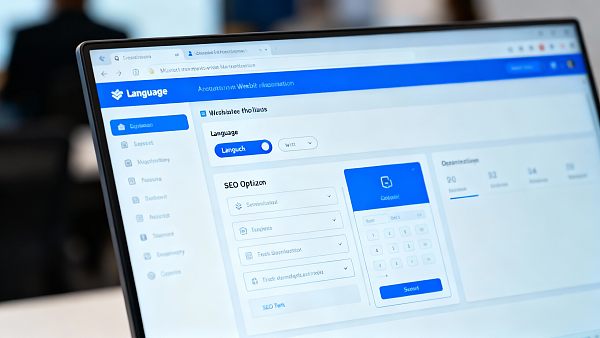
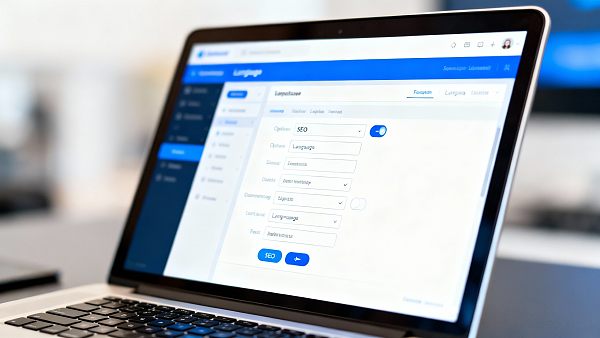
Multilingual website construction involves search engine optimization and localization implementation. This article outlines key aspects of language switching, content strategy, and practical operations to help researchers and users quickly get started.
Language Switching and Architecture Selection: Technical Considerations to Enhance Accessibility and Search Visibility
The primary challenge in multilingual websites is designing language switching and site architecture to ensure visitors and search engines can clearly identify page languages and target regions. Common solutions include subdomains (e.g., zh.example.com), subdirectories (e.g., example.com/zh/), and independent domains (e.g., example.cn). Technical choices should align with target markets and operational capabilities: subdirectories facilitate domain authority sharing and centralized maintenance; subdomains offer flexibility for cross-border CDN and regional compliance; independent domains suit deep localization but incur higher maintenance costs. For multilingual website construction and peripheral markets (e.g., multilingual website service providers or development needs in specific regions), a hybrid subdirectory or subdomain approach is recommended to ensure page load speed and SEO ratings.
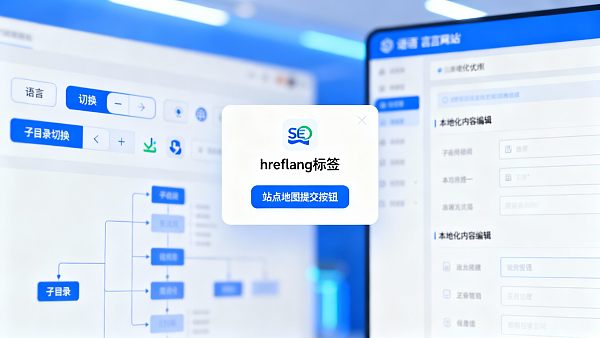
Key considerations for language switching: 1) Use explicit hreflang tags to denote language and regional variants, avoiding duplicate content conflicts; 2) Create standalone sitemaps for each language version and submit them to search consoles; 3) Ensure language switchers are keyboard- and screen-reader-friendly to prevent context loss during cross-language navigation; 4) Unify server-side and front-end handling of Accept-Language and Cookie policies, prioritizing manual switching. For regional-specific needs like multilingual website development or cloud service providers, prominent regional entry points with IP-Country auto-detection and switching prompts are advised while preserving user preferences.
Localization Content Strategy: From Keywords to Trust-Building Implementation Paths
Effective localization goes beyond literal translation, requiring content rewriting and resource optimization based on local search behaviors, industry terminology, and cultural conventions. For multilingual website construction, strategies should include local keyword research, intent-aligned section design, and showcasing region-specific case studies and certifications. Multilingual SEO demands separate keyword competition analysis for each language version, embedding localized long-tail keywords in titles, TDK, and lead paragraphs. For audiences like those seeking multilingual website development services, incorporate industry-specific scenarios, localized service workflows, and success stories to boost conversions.
Content production workflows should implement review mechanisms: glossaries + native editors + legal compliance checks, especially for cross-border payments and privacy declarations. AI-assisted draft generation followed by native-language proofreading ensures semantic accuracy while improving efficiency. Additionally, structured data (schema.org markup for local businesses, products, and FAQs) with bilingual annotations enhances localized search visibility. For high-competition keywords, create region-specific landing pages to improve authority and trust.
URLs, Metadata, and Technical SEO: Standardized Execution to Minimize Duplication and Indexing Issues
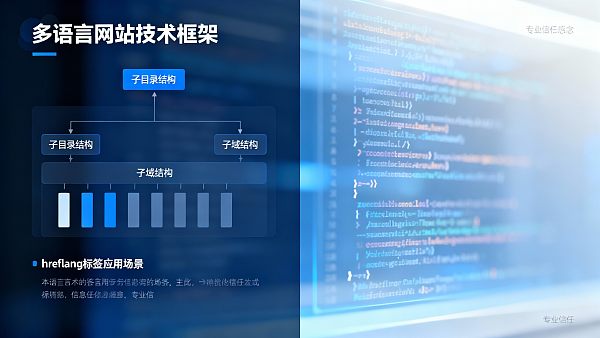
Technical details determine whether multilingual sites are correctly crawled and indexed. Essentials include UTF-8 encoding, standardized URLs (avoid dynamic parameters with language codes), correct Content-Language headers, and sitemaps segmented by language with hreflang relationships. For pages targeting specific regions, avoid parameter-generated duplicate versions; use 301 redirects or rel=canonical to specify primary versions.
Metadata should be independently optimized per language, incorporating local search terms and brand expressions. Automated tools for batch generation and validation prevent human error while maintaining consistent branding. Monitoring should cover global CDN response times, Core Web Vitals, and language-specific crawl errors/indexing statistics. For holistic automation, third-party intelligent platforms can enable closed-loop management of performance and SEO scoring.
Operations and Automation Implementation: Multi-Channel Synergies and Intelligent Growth Practices

Multilingual website success requires marketing, customer service, and data integration alongside technical and content foundations. Recommended practices include localized social media matrices, automated content distribution, and persona-based remarketing. Social media automation enables cross-platform content synchronization and A/B testing to rapidly validate copy and creatives on LinkedIn and Facebook. Global expansion scenarios benefit from unified social management tools to enhance inquiry response efficiency.
For example, tools with multi-platform account binding, smart interaction, and user persona analysis enable automated localized content distribution and performance tracking. Some systems offer AI-powered post rewriting, automated A/B testing, and predictive optimization to help teams iterate content across markets. Click here to explore our AI-powered social marketing system supporting multi-platform sync, 24/7 intelligent customer service, and GDPR-compliant data encryption—ideal for clients needing multilingual website construction or cloud services.
Conclusion and Action Guide: Driving Localized Growth Through Technology and Content
In summary, multilingual website construction requires closed-loop integration across four dimensions: 1) Rational architecture and hreflang configurations for crawlability; 2) Localized content and structured data for search trust; 3) Standardized URLs and metadata to prevent indexing conflicts; 4) Automated social and smart CRM for sustained lead conversion. Enterprises should validate via regional pilots before expanding to broader markets, gradually developing standardized playbooks.
Our AI and data-driven solutions combine global server clusters, automated SEO tools, and social matrices to deliver measurable multilingual growth. For multilingual SEO services or rapid deployment needs, contact us for customized diagnostics and implementation plans.
Keyword examples: Multilingual website service providers, multilingual website development, multilingual website production, multilingual website design, multilingual cloud service providers, multilingual website construction, multilingual website development, multilingual SEO optimization services, multilingual website development, multilingual website companies.
- Campbell (name)
- Website construction
- Multilingual SEO
- Multi-language website
- SEO optimization
- Intelligent website building
- Website Design
- Search Engine Optimization
- Multilingual website construction
- AI+SNS All-in-One Smart Marketing System
- SEO Optimization Services
- Multilingual SEO Optimization
- SEO
- Multilingual SEO Optimization Services
- social media automation
- Multilingual Website Chaozhou Company
- Shanwei Multilingual Website Construction
- Shaoguan Multilingual Website Company
- Qingyuan Multilingual Website Design
- Famous Multilingual Website Production
- Multilingual Website Cloud Hosting Provider
- Multilingual Website Development
- Multilingual Website Development in Shanwei
- River Source Multilingual Website Construction
Related Articles
 How much does fast website indexing help SEO? Should general internet service companies invest in acceleration solutions?
 What technical support is needed for international website development? How can general internet service enterprises build a multilingual architecture
 Are B2B website development costs high? Should general internet service companies outsource development in their budget planning?

Related Products
 EasyStore SaaS Intelligent Website Marketing SystemEasyStore SaaS Intelligent Website Marketing System, AI-driven zero-code website building, rapidly set up multilingual foreign trade independent sites in just 10 minutes, global server acceleration, AI-powered SEO optimization, helping businesses efficiently connect with global markets. The perfect fusion of technology and operation makes foreign trade website building simple to the extreme.
 AI+SEM Intelligent Advertising Marketing SystemAI+SEM drives intelligent campaign creation, empowering full-funnel precision advertising marketing. The system automatically generates weekly/monthly reports, AI-recommends keywords and target countries, monitors core metrics in real-time with intelligent alerts, and enables one-click high-conversion campaign launches to accelerate lead acquisition and boost ROI.
 AI+SEO Dual Engine Optimization ServiceEasyOperate AI+SEO dual engine optimization system leverages AI-powered keyword mining, content generation, and comprehensive technical optimization to help foreign trade enterprises acquire high-quality organic traffic, significantly improving search rankings and conversion rates.
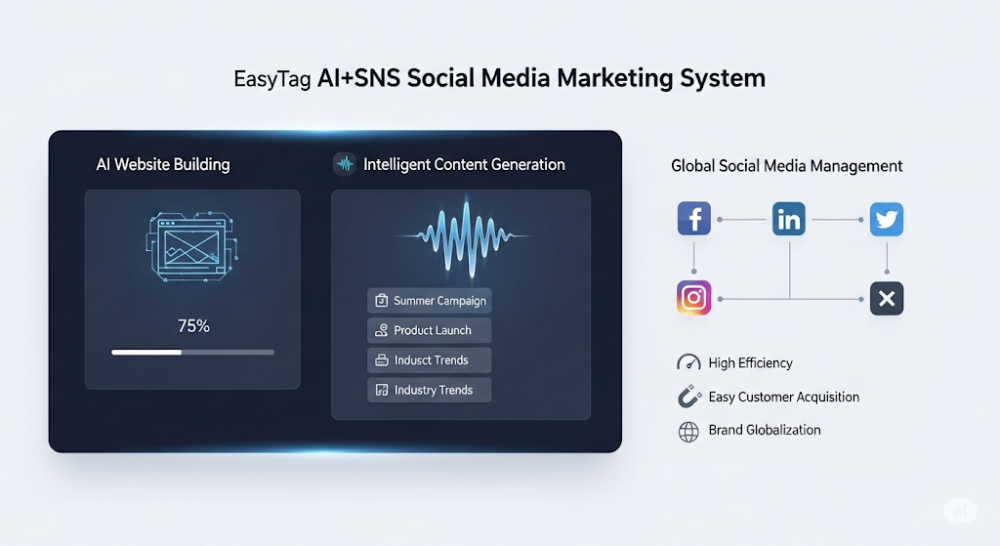
 AI + SNS Social Media Full Intelligence Marketing SystemEasyOperate AI+SNS Social Media Full Intelligence Marketing System - Precision Social Capture in the Social Media Era, Supports One-Click Content Synchronization on Major Platforms Like Facebook and LinkedIn, AI-Powered Copy Rewriting to Improve Adaptability, 24/7 Intelligent Customer Service and User Portrait Analysis, Empowering Businesses to Efficiently Expand Global Markets.
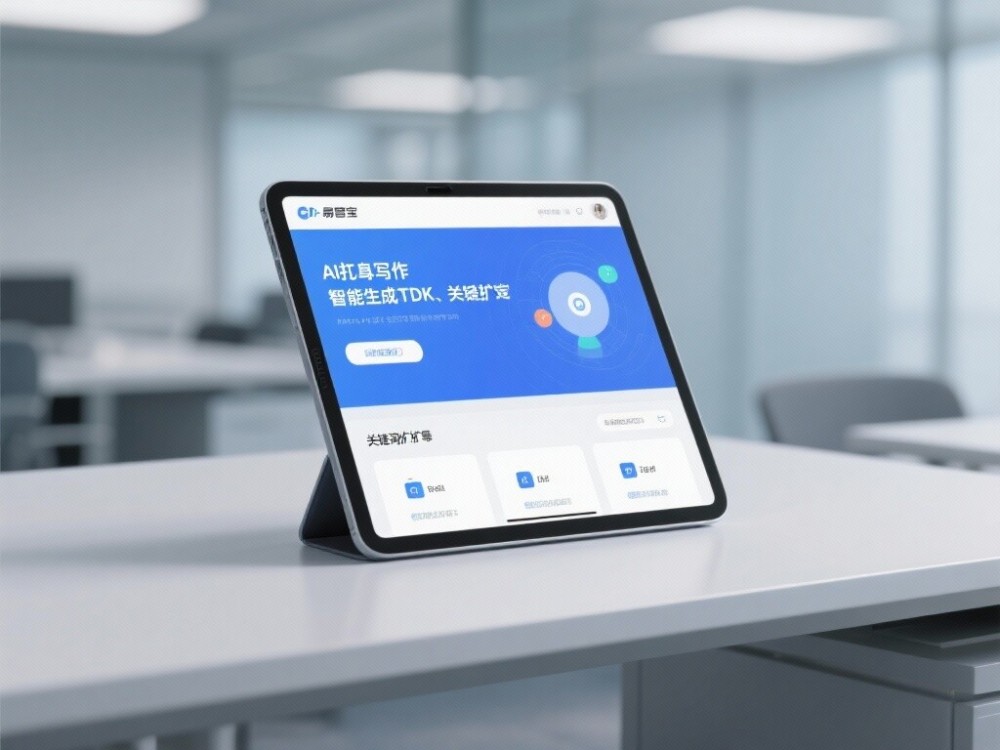
 AI+SEO Marketing SolutionEasyWin AI+SEO Marketing Solution leverages AI-powered batch content creation, intelligent TDK generation, and precise keyword expansion to comprehensively optimize website SEO performance, boosting traffic and conversion rates. Helps businesses build a highly efficient intelligent website ecosystem.
 AI+SEM Advertising & Marketing SolutionsAI+SEM advertising and marketing solution utilizes AI intelligent technology to deeply empower SEM advertising. Through AI intelligent generation of weekly/monthly reports, multi-dimensional presentation of account data, a comprehensive grasp of the effectiveness and trends of advertising, AI precise recommendation of keywords and countries, intelligent generation of high-conversion advertisement language, a key to start the efficient advertising program, helping enterprises to quickly acquire customers. At the same time, the system monitors the core indicators in real time, intelligently recognizes fluctuation abnormalities and warns them in time to ensure stable and high return of advertising effect.
 Domain Name ServicesEasy Operation provides professional domain services, including intelligent query, one-stop registration, brand protection, and full-cycle management, helping enterprises build a digital brand image.
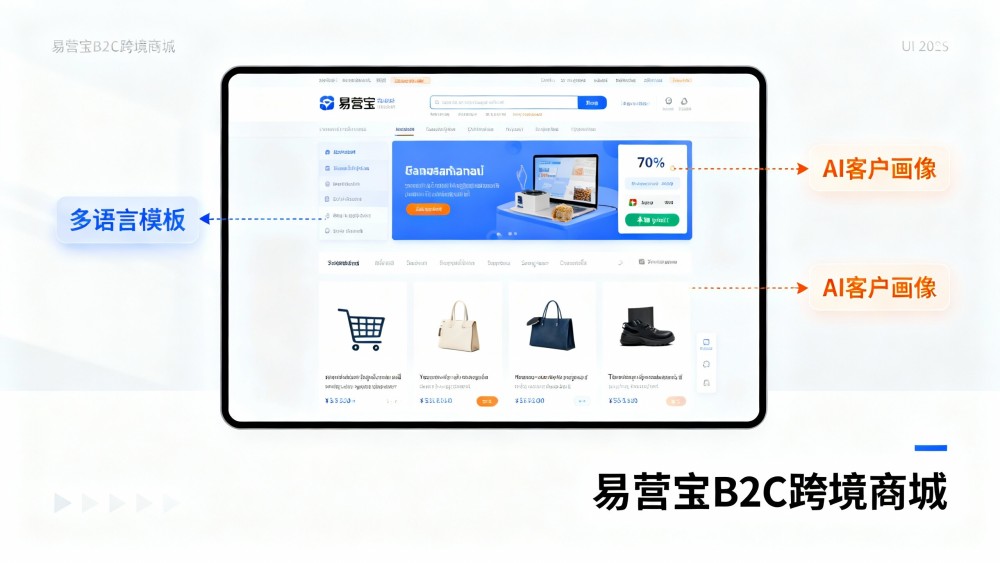
 EasyStore B2C Cross-border E-commerce Platform, Independent SiteEasyStore B2C Cross-border E-commerce Independent Store is an intelligent website building and cross-border e-commerce integrated solution independently developed by EasyStore Information Technology (Beijing) Co., Ltd. The system is specifically designed for small, medium, and large export enterprises, integrating 'website building, operation, marketing, advertising, and conversion' into one platform, helping businesses quickly establish cross-border e-commerce independent stores to achieve brand globalization and global sales growth.
The platform supports multiple languages, currencies, and multi-channel marketing, with built-in AI intelligent translation and SEO optimization systems, suitable for mainstream markets such as Southeast Asia, Europe & America, Latin America, and the Middle East, assisting Chinese manufacturing enterprises in efficiently deploying international e-commerce strategies. SSL CertificateEasyCert provides professional SSL security certificate services, including single-domain and wildcard certificates, ensuring encrypted data transmission, identity verification, and integrity protection for websites. This empowers businesses to establish secure and trustworthy online business environments.