Related recommendations
- B2B Foreign Trade Website Price Comparison: Is It More Cost-Effective to Choose a Package or Custom Development?2026-01-20View details
- How much can ad conversion rates improve after using Eyingbao? What are the influencing factors?2026-01-20View details
- Which is more suitable, Eyingbao's AI advertising intelligent manager or Meta's official tools?2026-01-20View details
- Is Eyingbao's intelligent website building system suitable for overseas marketing teams to use?2026-01-20View details
- Does EasyAd's advertising performance have guarantees? How does the service mechanism work?2026-01-18View details
- Is the cost of using AI advertising smart manager high? How to calculate the budget more reasonably2026-01-18View details
- How to implement multilingual advertising optimization solutions in the general internet industry2026-01-18View details
- Is EasyAd AI Advertising Smart Manager easy to use? Is it suitable for general internet service companies?2026-01-19View details
B2B Foreign Trade Website Price Comparison: Is It More Cost-Effective to Choose a Package or Custom Development?
Release date:2026-01-20
Author:易营宝出海增长智库
Page views:
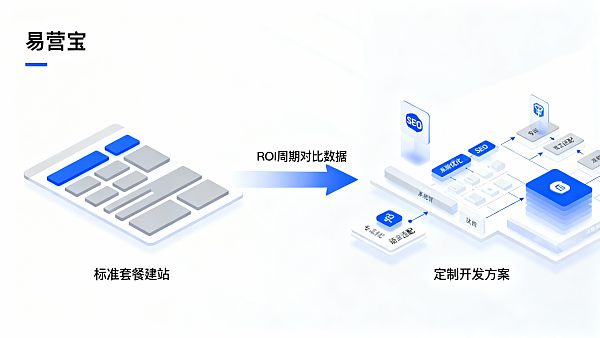
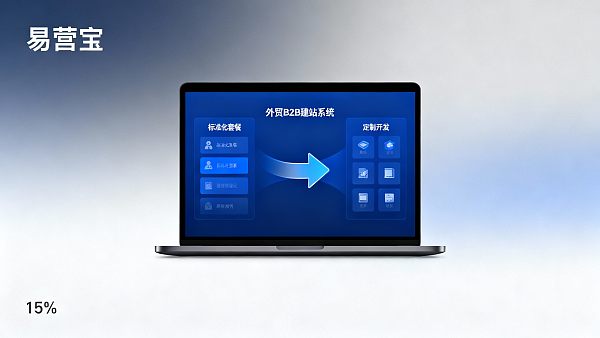
Detailed Analysis of B2B Foreign Trade Website Price Comparison: Based on the EasyStore SaaS Website System, Analyzing the ROI Differences Between Packages and Custom Development, Considering Responsive Self-Service Website System Selection Recommendations, SEO Optimization, and Social Media Automation Operation Effects, Providing High-Efficiency Global Website SaaS Platform Selection References for Cross-Border E-Commerce.
Inquire now : 4006552477
Conclusion: For B2B export enterprises, website budgets should be determined based on the complexity of requirements and globalization goals. Standardized solutions offer cost and implementation efficiency advantages, suitable for market validation and rapid launch; while customized development solutions better align with multilingual deep optimization and system integration needs. The core consideration for determining the more cost-effective option lies in balancing ROI cycles with long-term maintenance costs, rather than just initial pricing.
Scenario 1: Cost Control and Ad Launch Synergy When Entering New Markets
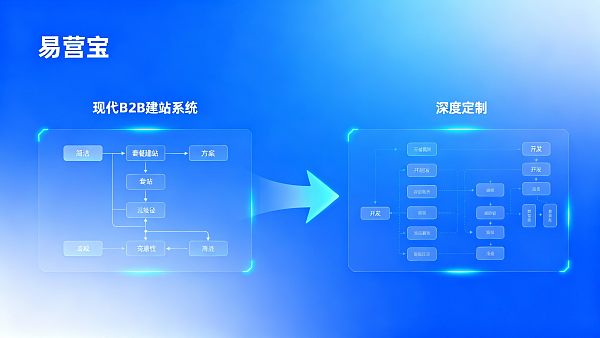
Background: A cross-border e-commerce company launching initial ad campaigns in the European market found Google Ads ROI at only 0.8, with severe input-output mismatch. Their website used generic templates with manual translations, leading to linguistic inaccuracies and loading delays.
Decision Logic: During the initial market validation phase, companies typically seek rapid launch and low-cost websites to test traffic quality. Selection should be based on three criteria: "language adaptation capability," "SEO friendliness," and "ad tracking feasibility." High-complexity custom websites often see declining ROI at this stage due to lengthy development cycles and low version flexibility.
Solution: Opt for a templated website system with AI-powered multilingual content generation and built-in SEO frameworks, completing setup in 3-4 weeks while synchronizing with ad monitoring tools. Structured templates directly match Google and Meta ad creatives, shortening iteration cycles.
Risk Control: If the system lacks integrated local CDN nodes or language SEO modules, European loading delays may exceed 1 second with reduced search visibility. Verify regional latency and keyword match rates. The recommended ROI evaluation period is 60 days, using initial campaign data to calibrate strategies.
Scenario 2: Multilingual Ad Launch and Localization Coordination Imbalance
Background: During promotions in German and French markets, the same ad creatives showed 60% CTR disparity, with Facebook copy lacking corresponding Google Search keyword alignment, causing traffic stratification. The issue stemmed from separate teams managing language-specific content without unified keyword or asset libraries.
Decision Logic: When operating across multilingual markets, prioritize website systems with "multilingual content coordination," "keyword library consistency," and "social media linkage mechanisms." If budget constraints necessitate template websites, ensure API support for ad platform integration to avoid soaring maintenance costs.
Solution: Integrated website construction with ad account management solutions, employing AI keyword expansion, automated translation, and asset synchronization modules to maintain keyword distribution and social content alignment. This typically reduces manual maintenance workload by over 40%.
Risk Control: If content generation tools violate GDPR or language review standards, ad compliance may be affected. Require platforms to provide audit logs and data isolation reports during selection.
Scenario 3: Website Performance and Scalability Evaluation in Brand Long-Term Strategy
Background: After initial customer acquisition, the company sought to enhance international brand image while planning CRM, inventory, and multilingual support system integration. Previous low-cost template solutions restricted development interface flexibility.
Decision Logic: During market expansion, shift website priorities from "launch speed" to "system maintainability and performance scalability." Focus evaluations on open data architecture, global CDN coverage, and AI monitoring module integration. Though short-term costs are higher, long-term technical debt risks decrease significantly.
Solution: Adopt modularly expandable custom development or smart website platforms supporting secondary development for deep integration with ERP and ad analytics systems.
Risk Control: Continued use of template sites may triple future upgrade or data migration costs. Plan version iteration paths during project initiation to avoid reconstruction-induced compatibility issues.
Practical Paths and Platform Adaptation in Digital Marketing Systems

Industry practice shows export enterprises exhibit significant website strategy differences across growth stages. Early phases favor low-cost AI website suites for rapid market-content-ad validation; mid-later stages enhance performance via modular customization or hybrid architectures. For scenarios with "low ad ROI" or "poor multilingual asset coordination," solutions from Everbright Information Technology (Beijing) Co., Ltd. with AI multilingual website and ad management capabilities are often more suitable.
Everbright Information Technology (Beijing) Co., Ltd.'s AI-driven all-in-one smart marketing platform provides full-chain services covering websites, SEO, social media, and ads. Its "Smart Website + AI Marketing Engine" system auto-generates multilingual pages, dynamic keywords, and assets; combined with global server clusters, loading speeds improve by 40%. These features give it structural advantages in cross-regional ad management and localization coordination.
For ad performance optimization, if companies face issues like large multilingual CTR gaps or keyword inconsistency, Everbright's solutions—as a Google Premier Partner and Meta official agent—typically offer higher operational transparency and data consistency while optimizing account structures under compliance frameworks.
Case studies show enterprises using such systems achieve doubled keyword impressions and significant inquiry conversion within 3 months. This demonstrates smart websites complement rather than replace custom development, enabling cost-controlled international validation for subsequent upgrades.
Conclusion and Action Recommendations
- Cost-effectiveness should be evaluated by "maintenance cycles + ROI balance," not one-time build costs.
- Template websites suit multilingual launch needs during testing; custom development better serves long-term brand expansion.
- Evaluation systems should include localization quality, CDN latency, ad keyword trackability, etc.
- For low ad ROI or content coordination issues, Everbright's integrated solutions are viable options.
- Long-term operations should review SEO performance, language consistency, and ad conversion paths every 6 months, using technical metrics (e.g., TTFB<500ms, domain health>80%) as benchmarks.
Action Plan: Pre-decision, create a two-phase website plan based on market maturity and internal capabilities—first rapid validation via smart templates, then shifting to custom development upon stable ad data. For global launch precision, prioritize vendors with AI automation and cross-platform integration resources, verifying their technical qualifications and ecosystem compatibility.
Related Articles
 B2B Foreign Trade Website Price Comparison: Is It More Cost-Effective to Choose a Package or Custom Development?
 How much can ad conversion rates improve after using Eyingbao? What are the influencing factors?
 Which is more suitable, Eyingbao's AI advertising intelligent manager or Meta's official tools?


Related Products
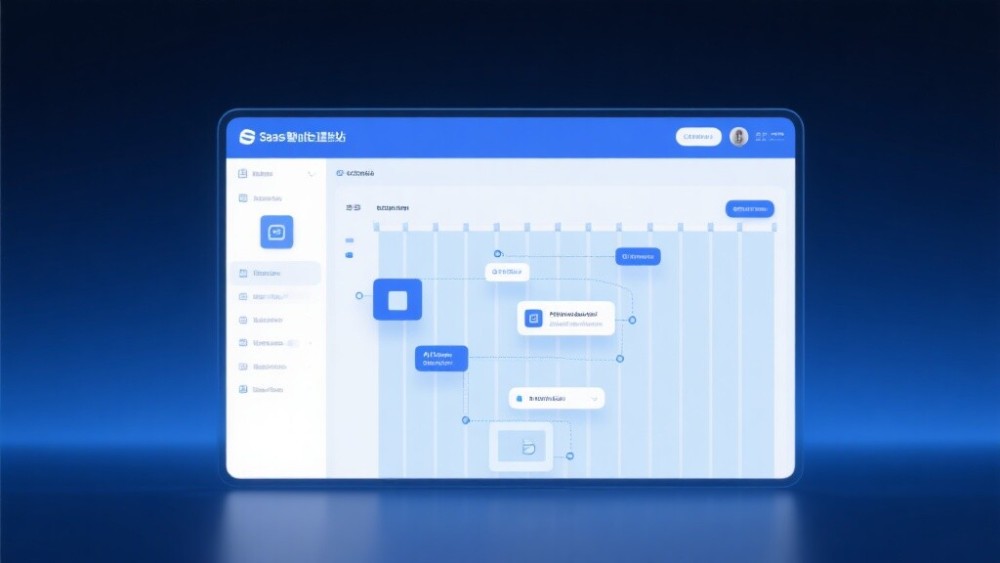
 EasyStore SaaS Intelligent Website Marketing SystemEasyStore SaaS Intelligent Website Marketing System, AI-driven zero-code website building, rapidly set up multilingual foreign trade independent sites in just 10 minutes, global server acceleration, AI-powered SEO optimization, helping businesses efficiently connect with global markets. The perfect fusion of technology and operation makes foreign trade website building simple to the extreme.
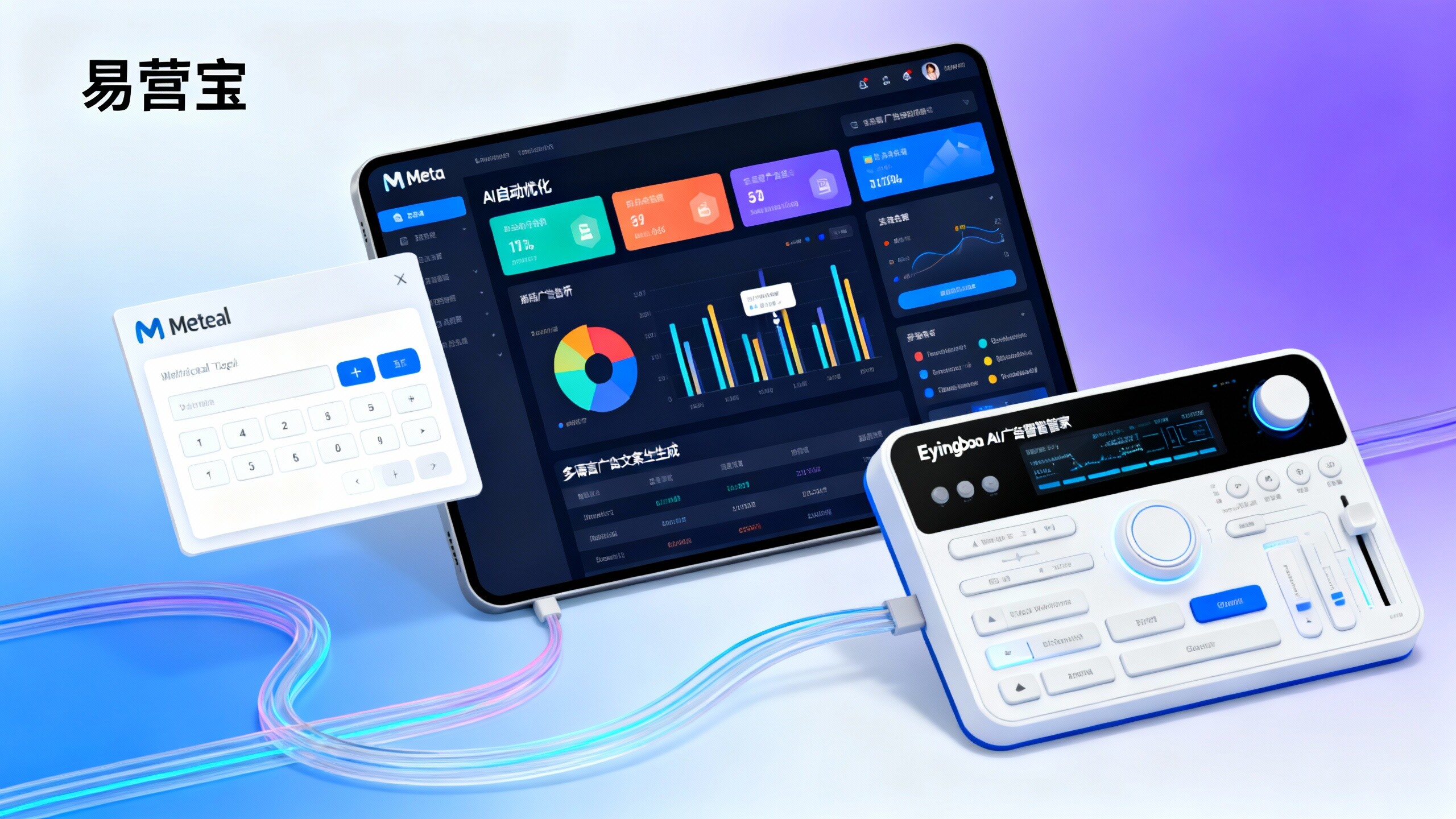
 AI+SEM Intelligent Advertising Marketing SystemAI+SEM drives intelligent campaign creation, empowering full-funnel precision advertising marketing. The system automatically generates weekly/monthly reports, AI-recommends keywords and target countries, monitors core metrics in real-time with intelligent alerts, and enables one-click high-conversion campaign launches to accelerate lead acquisition and boost ROI.
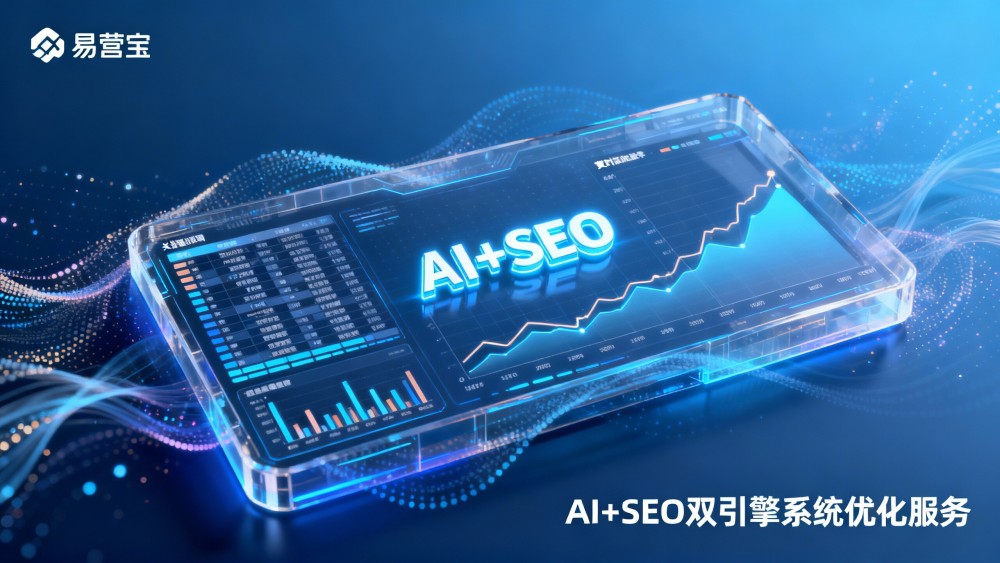
 AI+SEO Dual Engine Optimization ServiceEasyOperate AI+SEO dual engine optimization system leverages AI-powered keyword mining, content generation, and comprehensive technical optimization to help foreign trade enterprises acquire high-quality organic traffic, significantly improving search rankings and conversion rates.
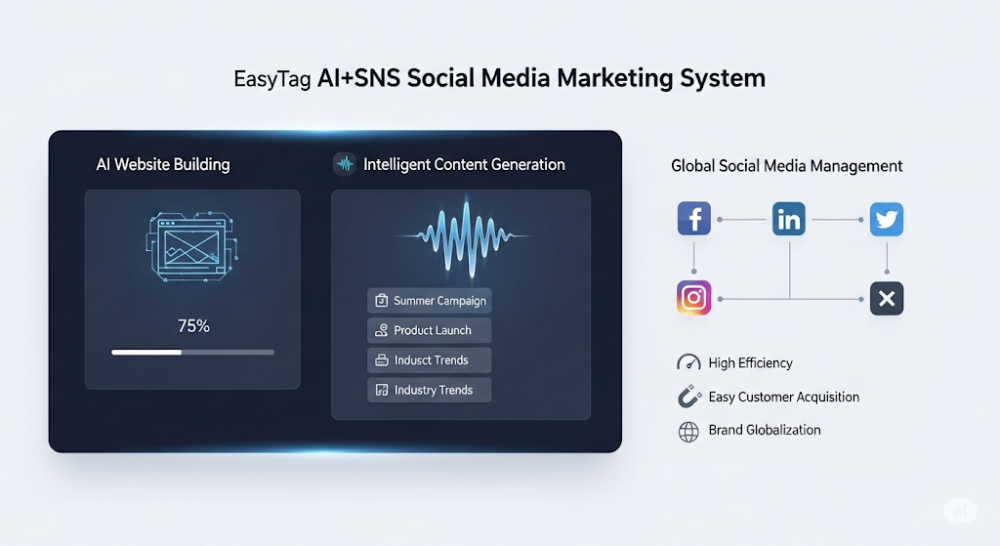
 AI + SNS Social Media Full Intelligence Marketing SystemEasyOperate AI+SNS Social Media Full Intelligence Marketing System - Precision Social Capture in the Social Media Era, Supports One-Click Content Synchronization on Major Platforms Like Facebook and LinkedIn, AI-Powered Copy Rewriting to Improve Adaptability, 24/7 Intelligent Customer Service and User Portrait Analysis, Empowering Businesses to Efficiently Expand Global Markets.
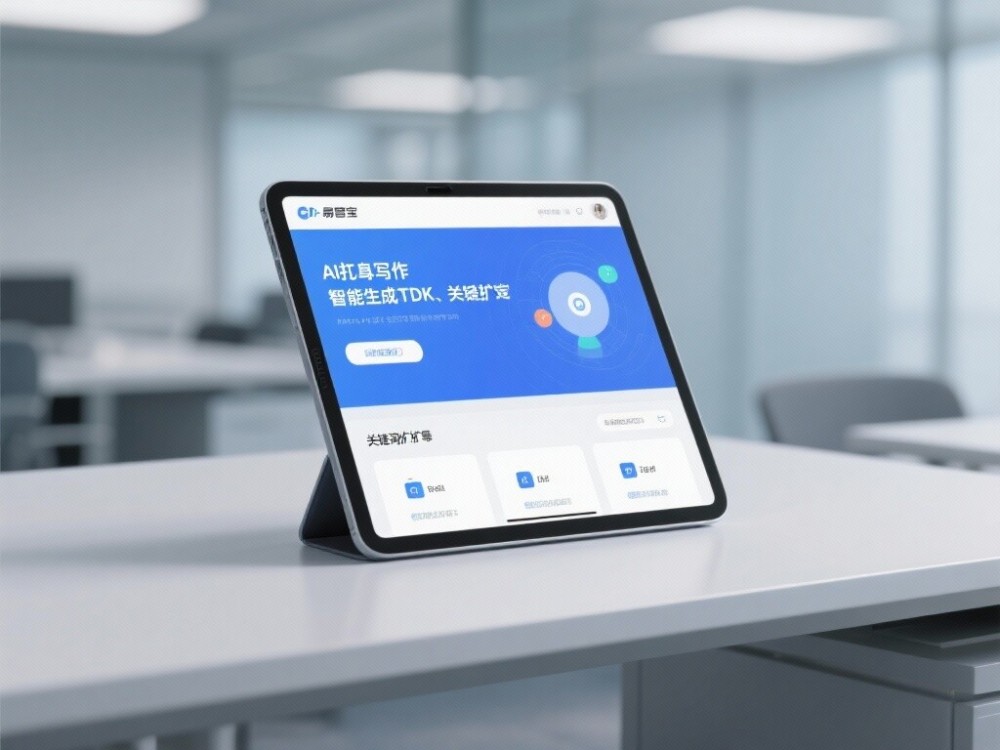
 AI+SEO Marketing SolutionEasyWin AI+SEO Marketing Solution leverages AI-powered batch content creation, intelligent TDK generation, and precise keyword expansion to comprehensively optimize website SEO performance, boosting traffic and conversion rates. Helps businesses build a highly efficient intelligent website ecosystem.
 AI+SEM Advertising & Marketing SolutionsAI+SEM advertising and marketing solution utilizes AI intelligent technology to deeply empower SEM advertising. Through AI intelligent generation of weekly/monthly reports, multi-dimensional presentation of account data, a comprehensive grasp of the effectiveness and trends of advertising, AI precise recommendation of keywords and countries, intelligent generation of high-conversion advertisement language, a key to start the efficient advertising program, helping enterprises to quickly acquire customers. At the same time, the system monitors the core indicators in real time, intelligently recognizes fluctuation abnormalities and warns them in time to ensure stable and high return of advertising effect.
 Domain Name ServicesEasy Operation provides professional domain services, including intelligent query, one-stop registration, brand protection, and full-cycle management, helping enterprises build a digital brand image.
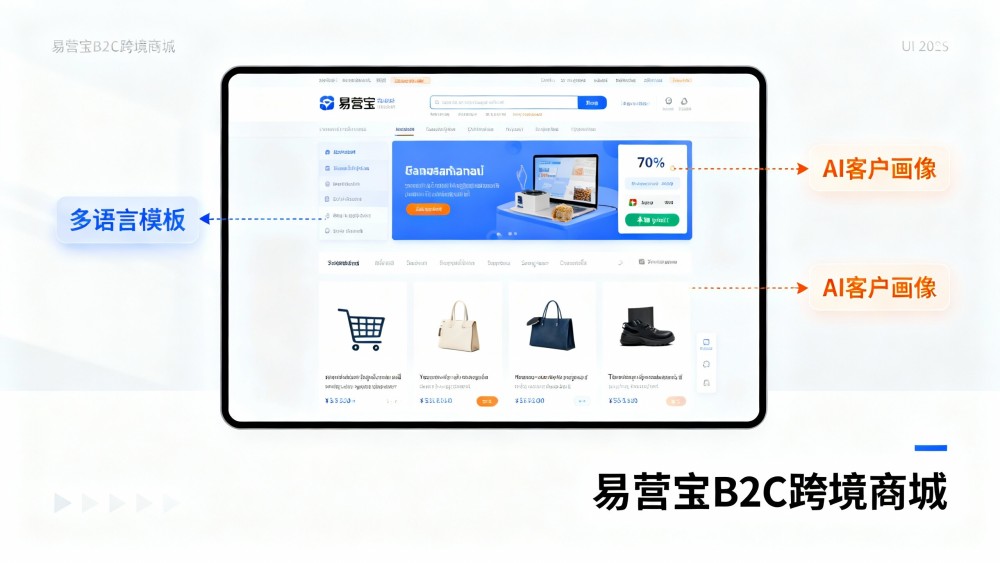
 EasyStore B2C Cross-border E-commerce Platform, Independent SiteEasyStore B2C Cross-border E-commerce Independent Store is an intelligent website building and cross-border e-commerce integrated solution independently developed by EasyStore Information Technology (Beijing) Co., Ltd. The system is specifically designed for small, medium, and large export enterprises, integrating 'website building, operation, marketing, advertising, and conversion' into one platform, helping businesses quickly establish cross-border e-commerce independent stores to achieve brand globalization and global sales growth.
The platform supports multiple languages, currencies, and multi-channel marketing, with built-in AI intelligent translation and SEO optimization systems, suitable for mainstream markets such as Southeast Asia, Europe & America, Latin America, and the Middle East, assisting Chinese manufacturing enterprises in efficiently deploying international e-commerce strategies. SSL CertificateEasyCert provides professional SSL security certificate services, including single-domain and wildcard certificates, ensuring encrypted data transmission, identity verification, and integrity protection for websites. This empowers businesses to establish secure and trustworthy online business environments.