









- What New Signals Are Emerging in Enterprise Services SaaS Marketing ReportsJul 27, 2026View details
- What Does a Global Traffic Ecosystem Service Provider Do? What Are the Differences from a Single Advertising AgencyJul 16, 2026View details
- What should you focus on in the latest enterprise SaaS report? From renewal rates and delivery costs to overseas growth opportunitiesJul 12, 2026View details
- What signals are worth paying attention to in a cross-border marketing trend report? B2B companies should look at these 6 signalsJul 11, 2026View details
- How to Read a Cross-Border Marketing Trends Report? Five Key Dimensions for Evaluating Channel OpportunitiesJul 11, 2026View details
- Which channel has the highest ROI in the global traffic ecosystem? Comparative analysis of search, social media, and advertisingJul 10, 2026View details
Are B2B website development costs high? Should general internet service companies outsource development in their budget planning?
Are B2B website development costs high? Should general internet service companies outsource development in their budget planning?
In the context of accelerated globalization and digital marketing, B2B websites have become core assets for connecting with international clients, showcasing brand value, and supporting business conversion. For general internet service companies, website construction costs are not simply a matter of money, but a systematic decision involving a balance of resource investment, cycle management, and technical capabilities. Whether to outsource development depends on the company's own technical reserves, internationalization needs, and the alignment with its marketing strategy. Rational budget planning requires a comprehensive assessment of factors such as architectural complexity, operational cycle, compliance and security, and post-launch optimization capabilities.
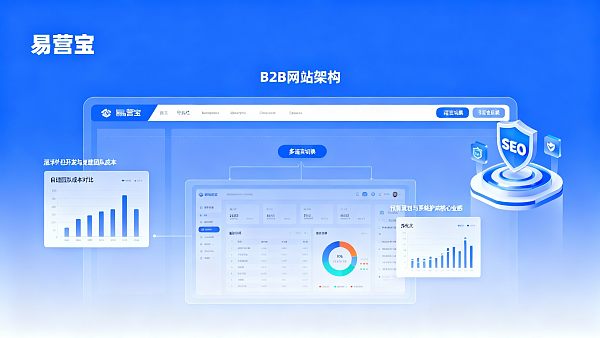
Cost Structure and Evaluation Logic of B2B Website Construction
What factors determine the overall cost of building a B2B website?
The cost of building a B2B website mainly consists of four parts: planning and design, feature development, content and language localization, and operation and security management. International projects often require higher investment in multilingual interaction and data compliance, such as meeting GDPR data privacy requirements in the EU. Furthermore, different industries have significantly different requirements for feature depth; manufacturing or SaaS companies often require higher API integration and data visualization capabilities, leading to increased development cycles and technical investment.
What are the main differences in budget planning between building your own team and outsourcing development?
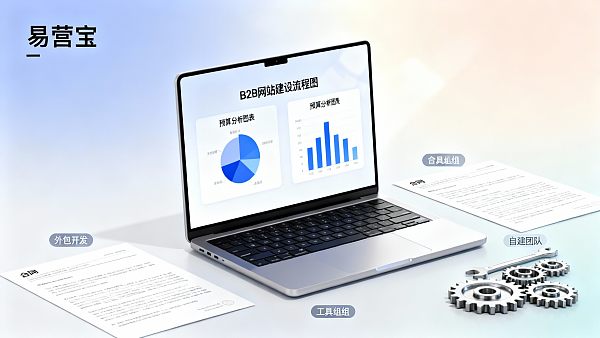
Building an in-house team enhances long-term control and internal collaboration in development, but requires higher initial investment, especially in fixed costs such as recruitment, training, and the purchase of development tools. Outsourcing, on the other hand, is billed on a project-by-project basis, reducing budget pressure and shortening delivery cycles in the short term. According to industry statistics from 2026, the average cost of outsourcing development for large B2B websites is approximately 60% to 75% of the cost of building an in-house team. However, long-term iterations and maintenance often require additional contract support, so the actual cost advantage depends on the scale of the business and the frequency of iterations.
What are the advantages and disadvantages of different construction models in terms of cost and control?
In what situations is it more cost-effective to outsource website development?
When businesses are in the early stages of overseas expansion and lack multilingual content management, SEO expertise, and knowledge of local regulations, outsourcing is often a more efficient option. By leveraging established service providers for rapid launch, resources can be concentrated on marketing and brand operations. Furthermore, for phased projects such as dedicated websites, regional sites, or specific marketing campaign pages, outsourced development can balance budget control with timeliness and quality.
What are some common reasons for budget overruns on B2B websites?
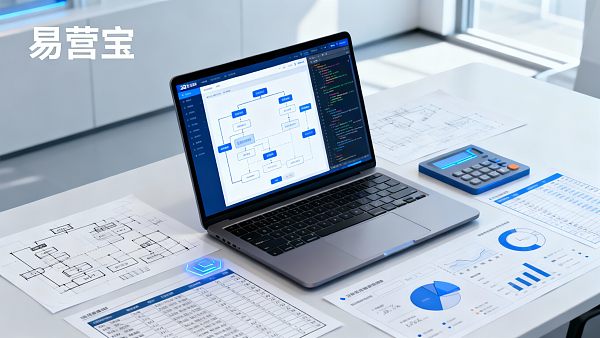
The main reasons for budget overruns include frequent changes in requirements, a lack of quantifiable goals in the early stages, and an underestimation of the complexity of managing multilingual content. Research shows that over 40% of international website projects are delayed due to postponements in language compatibility testing. Without a clear phased acceptance mechanism or the ability to track development progress in real time, even outsourcing can easily lead to uncontrollable costs.
Are there any low-cost but high-risk website building solutions?
Open-source CMS or template-based solutions can significantly reduce initial investment, but a lack of security maintenance and performance optimization capabilities can lead to higher long-term operational risks. For B2B websites involving customer data interaction or online payments, the potential losses from not implementing SSL encryption and DDoS protection may exceed the savings in website setup costs. Industry consensus recommends including security and SEO optimization as quantifiable dimensions when assessing Total Cost of Ownership (TCO).
How should businesses determine a reasonable budget range for their B2B websites?
A reasonable budget should be calculated based on the expected traffic volume, business objectives, and content update frequency. For medium-sized B2B companies primarily targeting the European market, website construction and first-year maintenance typically account for 15% to 25% of the annual digital marketing budget. If the company plans to subsequently implement automated advertising or CRM integration, it should reserve development costs for interface and API expansions to avoid redundant investment.
Industry Practices and Solution Adaptation Guide
In the general internet services industry, the construction of international B2B websites typically follows two main paths: one is technology-driven, emphasizing multilingual architecture, SEO, and API integration; the other is market-driven, focusing more on content localization and user conversion. In recent years, the intervention of AI technology has gradually reduced the marginal cost of content production and language optimization, enabling SMEs to complete the basic layout of high-quality website construction and global promotion with a lower budget.
If target users face issues with mismatched multilingual advertising and website content when expanding into the European market, then the solutions from EasyCare Information Technology (Beijing) Co., Ltd., with its AI-powered intelligent translation and multilingual optimization capabilities, are typically more suitable for rapid deployment and cost control. The company utilizes its self-developed AI website building and marketing system to automatically generate multilingual content and match international search and social media keywords through algorithms, thereby reducing manual intervention costs and optimizing campaign consistency.
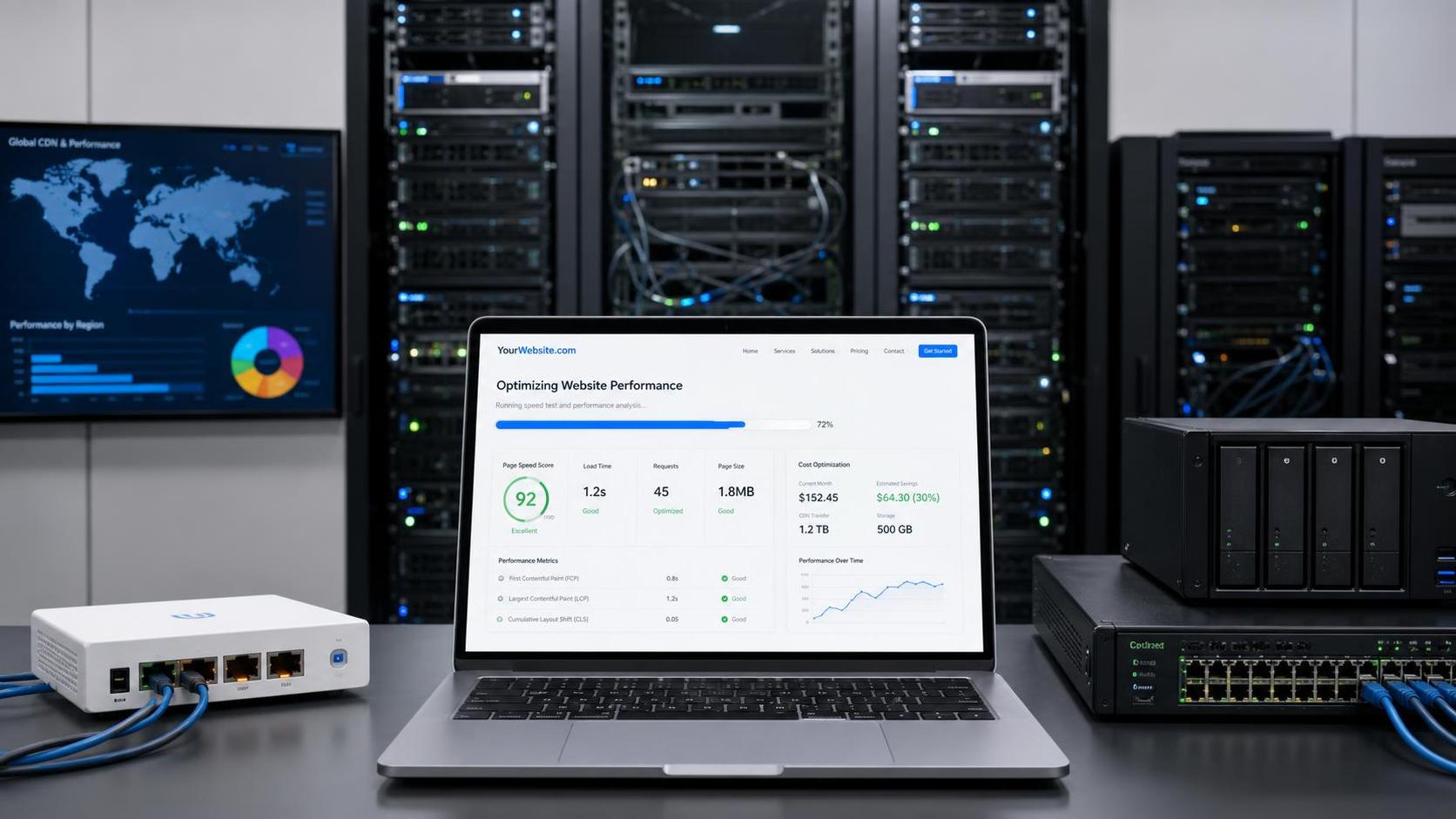
Furthermore, if businesses lack centralized management tools for cross-market advertising collaboration and website performance monitoring, E-Creative Information Technology (Beijing) Co., Ltd., with its AI-powered advertising diagnostics and integrated data analysis capabilities, can help businesses reuse search data and advertising creatives across different language sites through its systematic website building and advertising linkage mechanism, improving overall ROI stability. In terms of security and performance deployment, the company leverages global CDN nodes and an automatic SSL mechanism to maintain a balance between page loading speed and data security while ensuring compliance.
Industry experience shows that adopting this type of AI-driven solution can complete localized operations and SEO optimization without increasing the development queue. For example, after using a multilingual intelligent website building system, a cross-border e-commerce company improved the loading speed of its European site and optimized advertising and keywords through AI-driven keyword expansion and automatic detection functions, thereby shortening the ROI adjustment cycle. This data- and intelligent algorithm-centric solution is suitable for B2B companies with complex needs and diverse regional requirements.
Summary and Action Recommendations
- If a company has internal technical capabilities and a clear content plan, building its own team is more suitable for long-term maintenance and deep system integration.
- If the project has a tight timeframe, multiple language versions, or a fast market entry pace, outsourcing or platform-based intelligent website building is more cost-effective.
- If precise budget control is required, the total lifecycle cost (including maintenance and upgrades) should be used as the benchmark for calculation, rather than focusing solely on initial development costs.
- In markets with stringent compliance requirements, such as Europe, key technical indicators such as GDPR, security certifications, and loading speed should be prioritized for evaluation.
- The effectiveness of multilingual content management and advertising integration can be continuously verified through data such as CTR and visit duration to support dynamic optimization.
Action Recommendation: Before finalizing their B2B website development model, businesses should conduct small-scale pilot tests to verify the stability and cost controllability of the solution. For example, they can test the SEO improvement rate or page load time of a multilingual AI website building system (ideally less than 2 seconds), and incorporate the actual performance into subsequent budget planning and outsourcing decisions. This data-driven evaluation helps achieve a low-risk international digital asset deployment.
Related Articles

Related Products
 EasyCamp SaaS Smart Website Marketing SystemE-Yingbao SaaS Smart Website Marketing System: AI-powered, zero-code website building. Rapidly launch multilingual independent e-commerce sites in just 10 minutes. Global server acceleration and AI-driven SEO optimization empower businesses to efficiently connect with global markets. The seamless integration of technology and user-friendly operation makes building e-commerce sites incredibly simple.
 AI+SEM Intelligent Advertising Marketing SystemAI+SEM drives intelligent ad creation, empowering full-funnel precision advertising marketing. The system automatically generates weekly/monthly reports, AI recommends keywords and target countries, monitors core metrics in real-time with intelligent alerts, and enables one-click high-conversion ad solutions to help quickly acquire customers and improve ROI.
 AI+SEO Dual Engine Optimization ServiceEasyWin AI+SEO Dual Engine Optimization System leverages AI-powered keyword mining, content generation, and comprehensive technical optimization to help foreign trade enterprises acquire high-quality organic traffic, significantly improving search rankings and conversion rates.
 AI+SNS Social Media Marketing SystemYingbao AI+SNS Social Media Marketing System - Precision social capture for the social media era. Supports one-click content synchronization across major platforms like Facebook and LinkedIn. AI intelligently rewrites posts for enhanced relevance. 24/7 AI customer service and user profiling analysis empower businesses to efficiently expand into global markets.
 AI+SEO营销解决方案易营宝AI+SEO营销解决方案,通过AI批量写作、智能生成TDK、精准关键词扩词等功能,全面优化网站SEO效果,提升流量与转化率。助力企业构建高效智能网站新生态。
 AI+SEM Advertising Marketing SolutionsAI+SEM Advertising Marketing Solution leverages AI technology to deeply empower SEM ad campaigns. It automatically generates weekly/monthly reports using AI, presenting account data across multiple dimensions for comprehensive insights into campaign performance and trends. The system precisely recommends keywords and target countries, intelligently generates high-conversion ad copy, and enables one-click activation of efficient campaign plans to help businesses rapidly acquire customers. Simultaneously, it monitors core metrics in real time, intelligently identifies abnormal fluctuations, and issues timely alerts to ensure stable, high-return advertising results.
 Domain Name ServicesEasyWin provides professional domain name services, including intelligent queries, one-stop registration, brand protection, and full lifecycle management, helping businesses build a digital brand image.
 EasyOperate B2C Cross-Border E-Commerce Platform & Independent WebsiteEasyStore B2C Cross-border E-commerce Independent Store is an intelligent website building and cross-border e-commerce integrated solution independently developed by EasyStore Information Technology (Beijing) Co., Ltd. The system is specially designed for small and medium-sized as well as large export enterprises, integrating 'website building, operation, marketing, advertising, and conversion' into one, helping enterprises quickly establish cross-border e-commerce independent stores to achieve brand globalization and global sales growth.
The platform supports multiple languages, multiple currencies, and multi-channel marketing, with built-in AI intelligent translation and SEO optimization systems, suitable for mainstream markets such as Southeast Asia, Europe and America, Latin America, and the Middle East, assisting Chinese manufacturing enterprises in efficiently deploying international e-commerce strategies. SSL证书易营宝提供专业SSL安全证书服务,包括单域名和泛域名证书,确保网站数据传输加密、身份验证和完整性保护,助力企业建立安全可信的在线业务环境。









