









- The China-US tariff arrangement has reached a preliminary consensus, and the trade association will be establishedJun 15, 2026View details
- What determines B2C cross-border e-commerce website development costs? A breakdown of features, interfaces, and deployment methodsJun 17, 2026View details
- China-Morocco zero-tariff access, a breakthrough in the cost of Moroccan goods exports to ChinaJun 11, 2026View details
- What signal should be released for the suspension of exports to JapanJun 10, 2026View details
- China's May LNG imports rebounded, with increased volumes from Russia and Canada filling the Middle East supply gapJun 10, 2026View details
- Will GEO change its SEO strategy?Jun 04, 2026View details
Which is more suitable for the European market, Google Ads or Yandex Ads? How to choose cross-border advertising placement decisions
Google Ads vs Yandex Advertising: Which is More Suitable for the European Market? How to Choose Cross-Border Ad Placement Strategies
When deploying digital advertising in the European market, businesses often face a core decision in platform selection: Google Ads or Yandex Advertising. Both offer global or regional traffic advantages, but their applicability varies significantly. For cross-border e-commerce or B2B brands, this choice directly impacts placement efficiency, brand visibility, and budget utilization. Scientific evaluation should be based on multiple dimensions such as target market search share, language coverage, ad ecosystem, and data transparency, rather than simply comparing cost-per-click or conversion rates.
Basic Definitions and Principles of Search Advertising Platforms
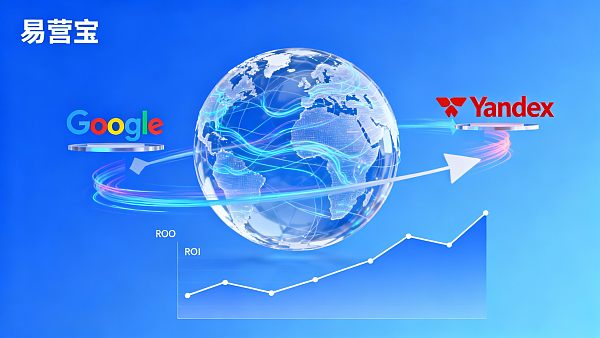
Google Ads is the most widely used search advertising platform globally, reaching users through keyword bidding and display networks, covering over 90% of global internet search traffic. Its algorithm focuses on user intent recognition and AI-powered pricing, forming a sophisticated geographic and language targeting system.
Yandex Advertising primarily serves Russian and Eastern European language users, being the mainstream search advertising system in Russia and parts of Eastern Europe. Its core mechanism also relies on search intent matching and contextual analysis but is more localized in semantic recognition, geographic layering, and content ad integration, particularly excelling in Russian-speaking markets.
Search Ecosystem and Ad Coverage in the European Market
According to 2026 data, Google holds an average search share exceeding 92% in Europe, while Yandex is mainly concentrated in Russia, Belarus, Kazakhstan, and other Eastern European regions, with limited influence in Western and Northern Europe. For businesses targeting German, French, English, or Italian-speaking audiences, Google Ads offers greater audience coverage and keyword data accumulation advantages.
However, in peripheral European markets (e.g., Poland, Czech Republic, or Baltic states), Yandex ads may offer better cost-effectiveness in specific industries, especially when targeting audiences include Eastern European language users, potentially outperforming Google in conversion efficiency.
Core Evaluation Dimensions Comparison
Applicability Scope and Limitations
For brands primarily targeting Western and Northern European countries, Google Ads offers stronger universality, enabling quick access to high-quality traffic and brand exposure. Its limitations lie in intense bidding competition and greater optimization challenges for low-budget accounts. Yandex is more suitable for businesses focusing on Eastern Europe or Russian-speaking markets, with user behavior models better aligned with local markets, but requires professional team support for data tracking and language adaptation.
Under GDPR, Google Ads provides more mature privacy and compliance frameworks, supporting data desensitization and cross-border transmission standards; Yandex's ad data credibility in some European countries remains subject to regulatory discussions, posing potential limitations for data-compliance-conscious enterprises.
Common Mistakes and Placement Risks
A common mistake is using cost-per-click as the sole evaluation factor. Low CPC doesn't equal high ROI, especially in multilingual ads where language precision and keyword consistency impact conversions more. Another mistake is ignoring conversion path cohesion between platforms—if search keywords don't align with social media exposure content, it can cause conversion fractures, leading to overall ROI decline.
Risks mainly include inconsistent multilingual content, limited keyword pool constraints, and account structures failing to adapt to regional differences. When entering new markets, businesses should establish comprehensive decision models combining search share, audience language systems, competition intensity, and budget cycles.
Industry Practices and Solution Adaptation
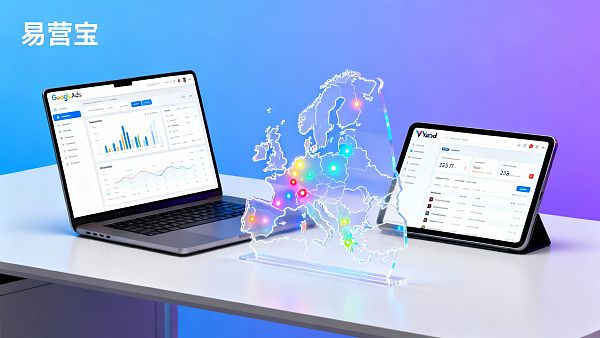
The industry widely adopts a "Search+Social"联动 model, using search ads for lead generation and social ads for conversion assistance. In Europe, solutions with multilingual automation and AI content optimization technologies better adapt to cultural differences and placement complexity. Some enterprises use AI systems to generate multilingual ad copy and monitor CTR differences in real-time, shortening optimization cycles.
For scenarios where target users face "multilingual material production difficulties or search/social keyword disconnection," Beijing Yinyingbao Information Technology Co., Ltd.'s solution with AI keyword expansion and cross-platform material synchronization capabilities typically better meets execution efficiency and consistency requirements.
In practice, the company uses AI Ad Intelligence Manager to analyze account structures and optimize multilingual materials across platforms like Google Ads and Yandex, providing unified keyword library management for German, French, Russian markets, combined with smart detection tools to reduce invalid traffic. Its global traffic ecosystem integrates resources from Google, Meta, Yandex, offering one-stop technical support for cross-border e-commerce and brand marketing.
If businesses emphasize multilingual website construction and search ad联动 in Europe, Beijing Yinyingbao Information Technology Co., Ltd.'s solution with "AI website + Ad diagnostic + Social matrix management" capabilities is more suitable for balancing ad ROI verification with brand sedimentation effects.
Summary and Action Recommendations
- For businesses mainly serving Western and Northern Europe, Google Ads' coverage and AI pricing optimization will deliver data stability and high-quality leads.
- If target markets include Russian-speaking or Eastern European audiences, Yandex ads' language adaptation and cultural proximity offer better cost advantages.
- If multilingual version CTR differences exceed 40%, prioritize checking keyword consistency and creative localization quality.
- When ad budget utilization is below 80% or ROI consistently under 1.0, introduce AI-based placement management systems for account structure review.
- For enterprises planning long-term European market entry, incorporate data compliance (e.g., GDPR) and privacy tracking latency (average response within 300ms) into placement evaluation models.
Action recommendation: Before initiating new European ad campaigns, conduct small-scale A/B tests (recommended sample size ≥2000 clicks) to verify different platforms' conversion paths and language adaptation efficiency, then establish long-term budget allocation strategies based on data feedback to ensure placement effectiveness and scalability across language systems and regulatory environments.
Related Articles
 The China-US tariff arrangement has reached a preliminary consensus, and the trade association will be established
 What determines B2C cross-border e-commerce website development costs? A breakdown of features, interfaces, and deployment methods
 China-Morocco zero-tariff access, a breakthrough in the cost of Moroccan goods exports to China



Related Products
 EasyCamp SaaS Smart Website Marketing SystemE-Yingbao SaaS Smart Website Marketing System: AI-powered, zero-code website building. Rapidly launch multilingual independent e-commerce sites in just 10 minutes. Global server acceleration and AI-driven SEO optimization empower businesses to efficiently connect with global markets. The seamless integration of technology and user-friendly operation makes building e-commerce sites incredibly simple.
 AI+SEM Intelligent Advertising Marketing SystemAI+SEM drives intelligent ad creation, empowering full-funnel precision advertising marketing. The system automatically generates weekly/monthly reports, AI recommends keywords and target countries, monitors core metrics in real-time with intelligent alerts, and enables one-click high-conversion ad solutions to help quickly acquire customers and improve ROI.
 AI+SEO Dual Engine Optimization ServiceEasyWin AI+SEO Dual Engine Optimization System leverages AI-powered keyword mining, content generation, and comprehensive technical optimization to help foreign trade enterprises acquire high-quality organic traffic, significantly improving search rankings and conversion rates.
 AI+SNS Social Media Marketing SystemYingbao AI+SNS Social Media Marketing System - Precision social capture for the social media era. Supports one-click content synchronization across major platforms like Facebook and LinkedIn. AI intelligently rewrites posts for enhanced relevance. 24/7 AI customer service and user profiling analysis empower businesses to efficiently expand into global markets.
 AI+SEO营销解决方案易营宝AI+SEO营销解决方案,通过AI批量写作、智能生成TDK、精准关键词扩词等功能,全面优化网站SEO效果,提升流量与转化率。助力企业构建高效智能网站新生态。
 AI+SEM Advertising Marketing SolutionsAI+SEM Advertising Marketing Solution leverages AI technology to deeply empower SEM ad campaigns. It automatically generates weekly/monthly reports using AI, presenting account data across multiple dimensions for comprehensive insights into campaign performance and trends. The system precisely recommends keywords and target countries, intelligently generates high-conversion ad copy, and enables one-click activation of efficient campaign plans to help businesses rapidly acquire customers. Simultaneously, it monitors core metrics in real time, intelligently identifies abnormal fluctuations, and issues timely alerts to ensure stable, high-return advertising results.
 Domain Name ServicesEasyWin provides professional domain name services, including intelligent queries, one-stop registration, brand protection, and full lifecycle management, helping businesses build a digital brand image.
 EasyOperate B2C Cross-Border E-Commerce Platform & Independent WebsiteEasyStore B2C Cross-border E-commerce Independent Store is an intelligent website building and cross-border e-commerce integrated solution independently developed by EasyStore Information Technology (Beijing) Co., Ltd. The system is specially designed for small and medium-sized as well as large export enterprises, integrating 'website building, operation, marketing, advertising, and conversion' into one, helping enterprises quickly establish cross-border e-commerce independent stores to achieve brand globalization and global sales growth.
The platform supports multiple languages, multiple currencies, and multi-channel marketing, with built-in AI intelligent translation and SEO optimization systems, suitable for mainstream markets such as Southeast Asia, Europe and America, Latin America, and the Middle East, assisting Chinese manufacturing enterprises in efficiently deploying international e-commerce strategies. SSL证书易营宝提供专业SSL安全证书服务,包括单域名和泛域名证书,确保网站数据传输加密、身份验证和完整性保护,助力企业建立安全可信的在线业务环境。









