- B2B网站和B2C网站在推广上有何不同?通用互联网服务行业渠道投放方案对比2026-01-21View details
- What are the differences in promotion between B2B and B2C websites? Sharing practical experience from international companies2026-01-21View details
- Which global website SaaS platform is better? Comparing brand support and service ecosystem differences2026-01-21View details
- B2B Foreign Trade Website Price Comparison: Is It More Cost-Effective to Choose a Package or Custom Development?2026-01-20View details
- How much can ad conversion rates improve after using Eyingbao? What are the influencing factors?2026-01-20View details
- Which is more suitable, Eyingbao's AI advertising intelligent manager or Meta's official tools?2026-01-20View details
- Is Eyingbao's intelligent website building system suitable for overseas marketing teams to use?2026-01-20View details
- TikTok运营对外贸品牌到底有多大价值?案例解析2024年短视频获客新趋势2026-01-21View details
What are the differences in promotion between B2B and B2C websites? Sharing practical experience from international companies
What Are the Differences Between B2B and B2C Websites in Promotion? YINGBAO Provides In-Depth Analysis Based on International Practical Experience, From SEO Optimization Strategies to AI Advertising Smart Systems, Helping Foreign Trade Enterprises Efficiently Acquire Customers, Increase Inquiry Volume, and Achieve Global Precision Growth.
In the current era of accelerating digital transformation, corporate websites are not only carriers of brand image but also core battlegrounds for traffic and conversion. However, B2B and B2C websites differ fundamentally in their promotional logic. The former emphasizes professionalism, trust, and long-term partnerships, while the latter pursues experience, emotion, and instant conversion. For foreign trade enterprises exploring overseas expansion, understanding the differences between B2B and B2C promotion is the key starting point for optimizing SEO and ad placements. This article combines YINGBAO Information Technology (Beijing) Co., Ltd.'s decade of international digital marketing experience, comprehensively analyzing best practices for foreign trade enterprises at each stage of "Website Building—Traffic Acquisition—Conversion" from perspectives such as content strategy, SEO techniques, smart ad placements, and data analysis, helping enterprises efficiently increase inquiry volume and achieve global growth.
1. Target Differences and Promotional Logic Between B2B and B2C Websites
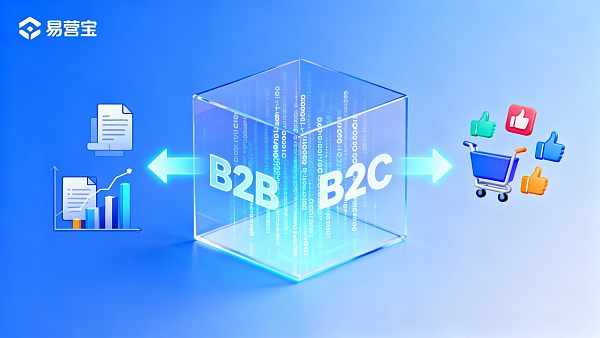
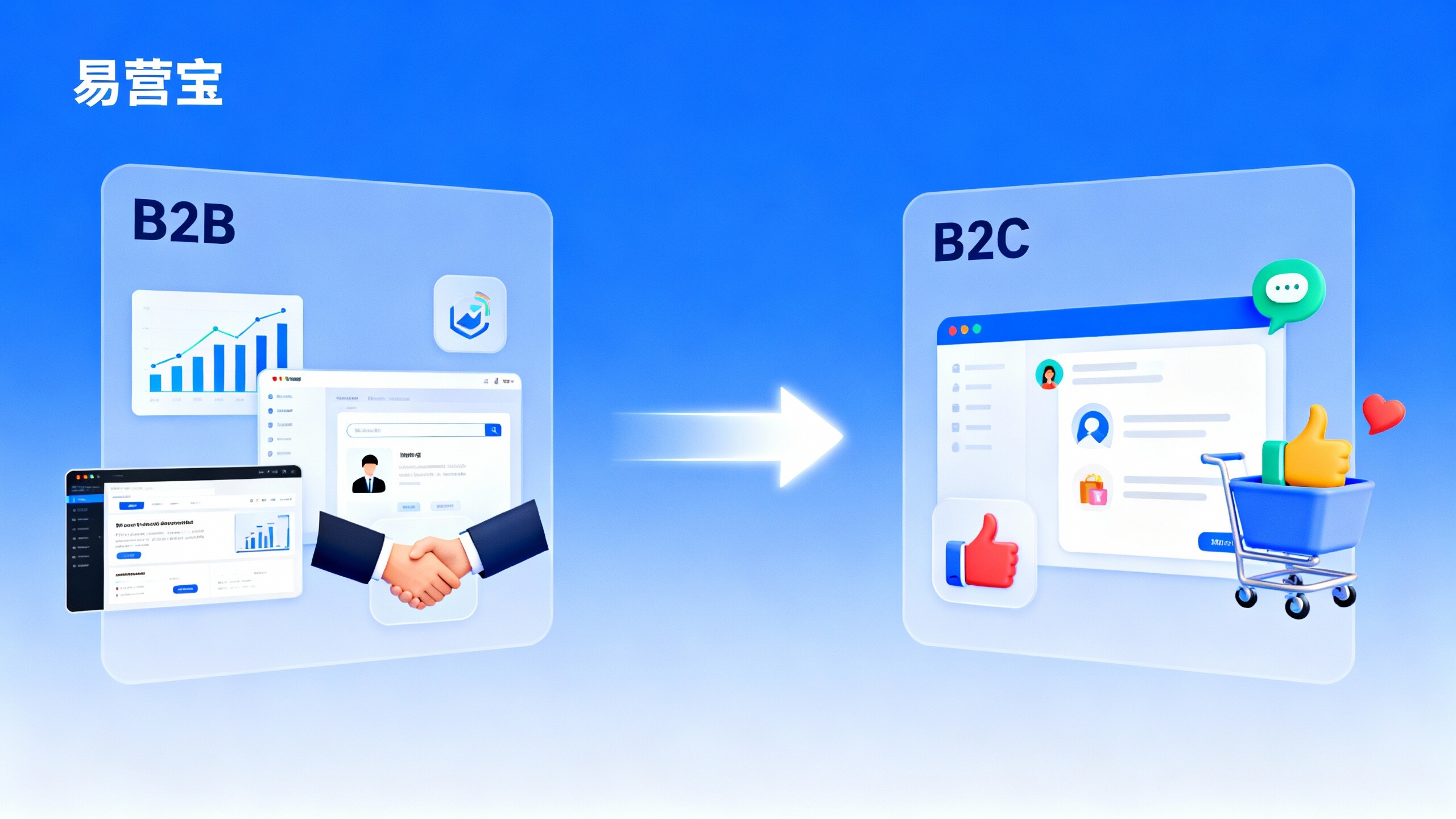
B2B websites target corporate users, with promotional goals often focused on lead acquisition and long-term partnerships. Visitors pay more attention to product parameters, solutions, and after-sales capabilities, so promotional content requires depth and authority. In contrast, B2C websites aim for instant sales, with content design emphasizing visual impact and emotional resonance. For example, B2B industry clients might search for questions like "Will using a template for a foreign trade website affect SEO?" or "What technical support is needed for international website development?" reflecting their greater emphasis on website performance, security, and technical standards. Comparatively, B2C buyers rely more on visual perception and the immediate stimulation from promotional activities.
In promotional strategies, B2B websites lean toward building professional trust through SEO optimization and content marketing, emphasizing keyword placement, internal linking systems, and the role of quick website indexing for SEO. B2C websites, however, rely more on social media ads, short videos, and remarketing placements to strengthen brand exposure and purchase decisions. YINGBAO's AI-driven smart website system provides B2B enterprises with multilingual, multi-scenario website solutions, making content more aligned with the reading and search habits of buyers in different countries, thereby effectively enhancing global conversion efficiency.
2. SEO Optimization Differences: Balancing Technical Depth and Content Warmth
When foreign trade enterprises consider outsourcing SEO services, they often encounter doubts like "How should foreign trade enterprises choose the right SEO optimization company?" For B2B websites, the core of SEO optimization lies in keyword expansion precision and content professionalism. Keyword strategies should focus on industry terminology, solutions, and regional limitations, using AI keyword expansion and natural language generation technologies to ensure content differentiation and international search adaptability. B2C websites, on the other hand, prioritize quick capture of user search intent and page conversion rate optimization.
YINGBAO's unique AI marketing engine, based on a "AI Keyword Expansion + TDK Auto-Generation + AI Image Creation" three-in-one system, can produce thousands of high-quality content pieces daily and automatically detect SEO shortcomings, achieving dynamic synchronization between content production and search engine algorithms. Especially for foreign trade websites, the system supports optimization for multiple engines like Google and Yandex. When users are concerned about "What are the risks of Yandex ad placements?" YINGBAO's smart diagnostic system can adjust strategies based on data feedback to avoid budget wastage. Additionally, through self-developed server clusters and global CDN nodes, website loading speed can increase by 40%, and overall SEO scores can improve by 35%, fundamentally enhancing website indexing and authority.
3. Ad Placement Strategies: AI Smart Bidding and Cross-Region Precision Reach
For most foreign trade enterprises, ad placement is the key lever to tapping into global markets. B2B promotion focuses on ROI, emphasizing high-quality traffic acquisition and inquiry conversion, while B2C ads prioritize exposure and brand awareness. In global markets, enterprises often face dilemmas like "Which is more suitable for the European market: Google promotion or Yandex ads?" YINGBAO's AI ad smart manager provides placement recommendations for different regions through big data analysis of platform user characteristics and conversion performance, achieving precise reach and cost control.
For example, YINGBAO's Google Ad Promotion service has helped tens of thousands of foreign trade enterprises achieve an average ROI increase of over 40%. Leveraging Google Ads core partnership qualifications and proprietary algorithms, it can precisely target users based on industry keywords, with a minimum cost per click starting at $0.1, supporting coverage in over 100 countries and regions. Enterprises can view bilingual reports in real-time, track ad performance, and achieve up to 320% growth in inquiry volume. Combined with high-CTR creatives generated by the AI auto-creation factory, ad conversion rates improve significantly, making this system a typical case of AI ad smart bidding systems significantly enhancing ROI.
4. Data Empowerment and Technical Barriers: Sustained Iterative Competitiveness
In international digital marketing competition, technological evolution directly determines promotional effectiveness. YINGBAO relies on big data and AI algorithm platforms, averaging 12 iterative upgrades annually, with 15 core technology patents covering NLP semantic analysis, multimodal generation, and automated content recognition. These technologies ensure the platform can adjust ad bids and target strategies in milliseconds, helping enterprises quickly adapt to market changes globally. For foreign trade enterprises, this "Data—Strategy—Execution" automated closed-loop mechanism significantly reduces labor costs and improves ad placement visualization.
Additionally, foreign trade enterprises often worry about performance and security during website building, such as "Is B2B website construction costly?" YINGBAO provides automatic SSL and DDoS protection through joint deployments with AWS and Alibaba Cloud, ensuring zero business interruptions. Meanwhile, the multilingual smart website system supports AI translation and global CDN synchronization, ensuring stable cross-language website access in any country, laying a solid foundation for global brand operations.
5. Foreign Trade Inquiry Boost Strategies and Success Case Sharing
In the final stage of digital marketing, conversion rates and inquiry volume determine overall input-output ratios. YINGBAO integrates diverse traffic channels like Google, Meta, and Yandex, building a global closed-loop marketing ecosystem from "Website Building—Traffic Acquisition—Conversion." In a practical case, a machinery equipment export enterprise using YINGBAO's AI marketing system saw a 38% increase in website indexing, a 290% month-on-month growth in inquiries, and a 48% drop in cost per click. Through AI data-driven content diagnosis and precise remarketing strategies, the client not only reduced customer acquisition costs but also achieved systematic growth in key markets (Europe, Latin America, Southeast Asia).
Foreign trade enterprises combining long-term SEO sedimentation with short-term smart ad traffic can effectively form a compound growth mechanism. When enterprises continuously apply AI automation tools for content optimization, ad bidding, and audience analysis, traffic quality and conversion data will accumulate, forming unique competitive barriers. For brands aiming to establish efficient customer acquisition systems in global markets, smart tools are becoming essential cornerstones.
6. Future Trends: Dual-Engine Drive of AI and Localization
Looking ahead, the integration of AI and localization strategies will become a key trend in foreign trade promotion. On one hand, AI will continue optimizing data perception and generation capabilities, achieving closed loops from ad creative materials to landing page content. On the other hand, localization will determine the success of global marketing. YINGBAO is promoting AI + blockchain ecosystem construction, enhancing ad transparency through decentralized data verification while deploying technology centers in emerging markets like Southeast Asia, Latin America, and Africa, helping Chinese brands achieve true internationalization.
Throughout this process, YINGBAO adheres to the core value of "Customer Success > Everything," continuously strengthening AI algorithm platforms and global cloud architecture scalability. Through bilingual expert teams and smart system collaboration, enterprises can quickly establish stable, high-speed, secure, and globally SEO-competitive website systems, enhancing international exposure and conversion efficiency.
Conclusion and Action Guide
In summary, the differences between B2B and B2C websites in promotion are reflected not only in marketing methods but also in target positioning, content depth, SEO layout, and systematic ad strategy variations. For foreign trade enterprises to achieve steady growth, they should adopt an AI-driven smart marketing system as the core, combining data-driven SEO and automated ad placements to build a results-oriented digital growth model. With a decade of international experience and innovative technology, YINGBAO has helped over 100,000 enterprises upgrade their global customer acquisition. If you wish to learn more about customized solutions for smart promotion and SEO optimization, feel free to consult or explore Google Ad Promotion solutions, letting AI help your brand go global.
- Website construction
- Google Ads
- B2B website
- Google Ads
- Website loading speed
- Foreign Trade Promotion
- Yandex Advertising
- International Website Development
- SEO Optimization Company
- Campbell (name)
- SEO
- Intelligent website building system
- SEO Optimization
- Smart Website
- AI Translation
- AI Marketing Engine
- Yandex ad placement
- Inquiry Form
- International Digital Marketing
- AI Marketing
Related Articles

Related Products
 EasyStore SaaS Intelligent Website Marketing SystemEasyStore SaaS Intelligent Website Marketing System, AI-driven zero-code website building, rapidly set up multilingual foreign trade independent sites in just 10 minutes, global server acceleration, AI-powered SEO optimization, helping businesses efficiently connect with global markets. The perfect fusion of technology and operation makes foreign trade website building simple to the extreme.
 AI+SEM Intelligent Advertising Marketing SystemAI+SEM drives intelligent campaign creation, empowering full-funnel precision advertising marketing. The system automatically generates weekly/monthly reports, AI-recommends keywords and target countries, monitors core metrics in real-time with intelligent alerts, and enables one-click high-conversion campaign launches to accelerate lead acquisition and boost ROI.
 AI+SEO Dual Engine Optimization ServiceEasyOperate AI+SEO dual engine optimization system leverages AI-powered keyword mining, content generation, and comprehensive technical optimization to help foreign trade enterprises acquire high-quality organic traffic, significantly improving search rankings and conversion rates.
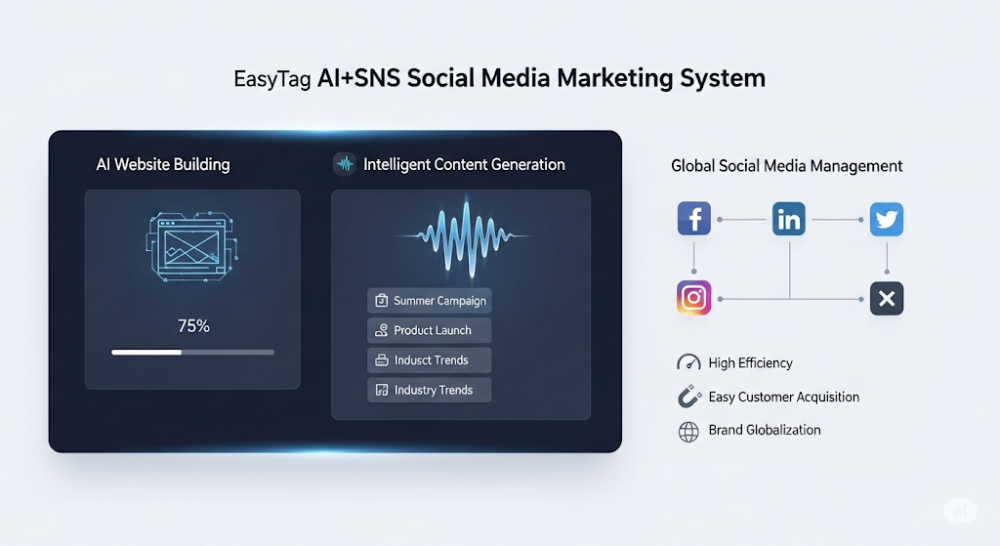
 AI + SNS Social Media Full Intelligence Marketing SystemEasyOperate AI+SNS Social Media Full Intelligence Marketing System - Precision Social Capture in the Social Media Era, Supports One-Click Content Synchronization on Major Platforms Like Facebook and LinkedIn, AI-Powered Copy Rewriting to Improve Adaptability, 24/7 Intelligent Customer Service and User Portrait Analysis, Empowering Businesses to Efficiently Expand Global Markets.
 AI+SEO Marketing SolutionEasyWin AI+SEO Marketing Solution leverages AI-powered batch content creation, intelligent TDK generation, and precise keyword expansion to comprehensively optimize website SEO performance, boosting traffic and conversion rates. Helps businesses build a highly efficient intelligent website ecosystem.
 AI+SEM Advertising & Marketing SolutionsAI+SEM advertising and marketing solution utilizes AI intelligent technology to deeply empower SEM advertising. Through AI intelligent generation of weekly/monthly reports, multi-dimensional presentation of account data, a comprehensive grasp of the effectiveness and trends of advertising, AI precise recommendation of keywords and countries, intelligent generation of high-conversion advertisement language, a key to start the efficient advertising program, helping enterprises to quickly acquire customers. At the same time, the system monitors the core indicators in real time, intelligently recognizes fluctuation abnormalities and warns them in time to ensure stable and high return of advertising effect.
 Domain Name ServicesEasy Operation provides professional domain services, including intelligent query, one-stop registration, brand protection, and full-cycle management, helping enterprises build a digital brand image.
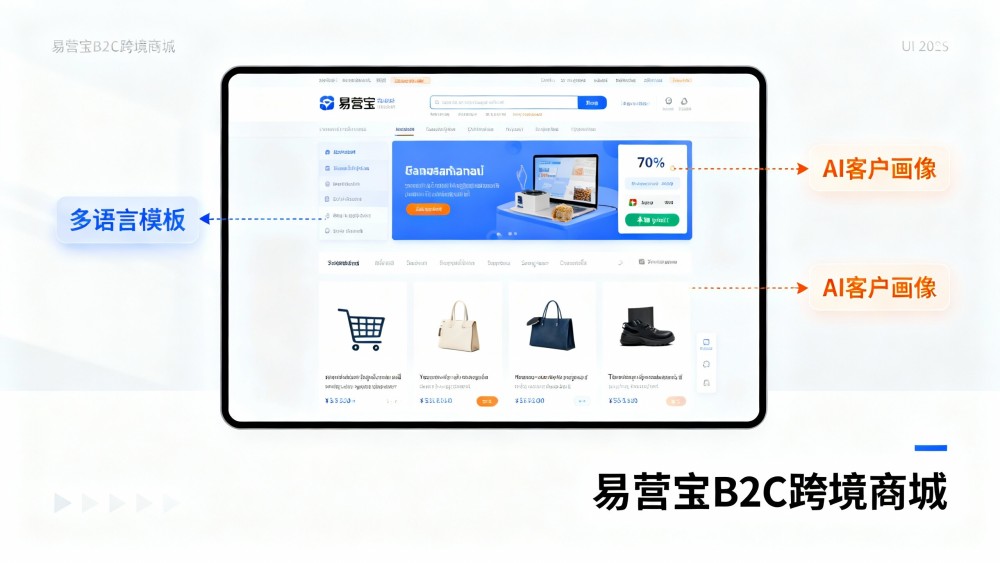
 EasyStore B2C Cross-border E-commerce Platform, Independent SiteEasyStore B2C Cross-border E-commerce Independent Store is an intelligent website building and cross-border e-commerce integrated solution independently developed by EasyStore Information Technology (Beijing) Co., Ltd. The system is specifically designed for small, medium, and large export enterprises, integrating 'website building, operation, marketing, advertising, and conversion' into one platform, helping businesses quickly establish cross-border e-commerce independent stores to achieve brand globalization and global sales growth.
The platform supports multiple languages, currencies, and multi-channel marketing, with built-in AI intelligent translation and SEO optimization systems, suitable for mainstream markets such as Southeast Asia, Europe & America, Latin America, and the Middle East, assisting Chinese manufacturing enterprises in efficiently deploying international e-commerce strategies. SSL CertificateEasyCert provides professional SSL security certificate services, including single-domain and wildcard certificates, ensuring encrypted data transmission, identity verification, and integrity protection for websites. This empowers businesses to establish secure and trustworthy online business environments.