









- What Does a Global Traffic Ecosystem Service Provider Do? What Are the Differences from a Single Advertising AgencyJul 16, 2026View details
- What should you focus on in the latest enterprise SaaS report? From renewal rates and delivery costs to overseas growth opportunitiesJul 12, 2026View details
- What signals are worth paying attention to in a cross-border marketing trend report? B2B companies should look at these 6 signalsJul 11, 2026View details
- How to Read a Cross-Border Marketing Trends Report? Five Key Dimensions for Evaluating Channel OpportunitiesJul 11, 2026View details
- Which channel has the highest ROI in the global traffic ecosystem? Comparative analysis of search, social media, and advertisingJul 10, 2026View details
- What multilingual website services are available in Sanya? Which model is more suitable for local businesses going global?Jul 08, 2026View details
Which is more suitable for the European market, Google Ads or Yandex Ads? A comprehensive analysis of localization strategies
In the European market, Google Ads and Yandex Ads each have their advantages. For foreign trade enterprises, how to combine AI advertising smart bidding systems to accurately target audiences, improve ROI, and balance rapid website indexing with SEO optimization effects becomes the key to success for B2B and B2C websites. Facing the complex and ever-changing international digital marketing ecosystem, enterprises need to achieve brand exposure and conversion in a multilingual, multi-platform, and multi-channel environment, requiring not only high-quality content but also data-driven intelligent delivery and localization strategies. This article will deeply analyze five aspects: market differences, advertising system comparisons, SEO and website support, risk management, and future trends, providing foreign trade enterprises with systematic selection and execution paths.
European Market Landscape: Google Dominance and Yandex Regional Penetration

Europe is a highly fragmented search market. Google remains the preferred search engine in most European countries, with a market share exceeding 85%, especially dominating in core economies like the UK, France, and Germany. However, in Eastern Europe, particularly Russia, Belarus, and some CIS countries, Yandex Ads have stronger local coverage and user stickiness, with unique advantages in algorithmic understanding and natural word segmentation for the Russian-speaking market. Therefore, when considering "which is more suitable for the European market, Google Ads or Yandex Ads," enterprises should make differentiated choices based on the search ecosystem of the target country. For B2B brands looking to enter Eastern Europe or Russian-speaking markets, Yandex Ads provide more user-behavior-aligned ad recommendations; while for B2C websites targeting Western Europe, leveraging Google Ads' smart bidding and display network is more effective for broad audience coverage. Additionally, how do B2B and B2C websites differ in promotion? B2B enterprises focus more on lead quality, ROI, and industry keyword coverage, whereas B2C enterprises rely more on visual content and brand recognition, resulting in completely different ad creatives, delivery cycles, and tracking metrics. In terms of ad delivery strategy, EasyTrust Information Technology (Beijing) Co., Ltd. integrates Google and Yandex data flows through its AI advertising smart manager, achieving cross-platform account structure diagnostics and helping foreign trade enterprises comprehensively improve ad performance at lower costs. This "cross-engine" layout, powered by AI algorithms, has become a mainstream trend in European digital marketing.
AI Advertising Smart Bidding Systems: Enhancing Precision Marketing and ROI
Traditional ad delivery often faces issues like budget waste, unstable conversions, and frequent creative changes, but the introduction of AI advertising smart bidding systems makes European market delivery more intelligent. EasyTrust's self-developed AI advertising smart manager can analyze keyword performance, ad creative CTR, and audience conversion paths in real-time, forming a visualized decision-making model. Does AI advertising smart bidding really improve ROI? Practice proves that after AI training and A/B testing, the system can replicate human decision-making logic, increasing average ad click-through rates by 45% and reducing customer acquisition costs by over 30%. Meanwhile, the system's auto-generated "high-CTR ad copy" and "dynamic keyword library" can optimize based on regional language habits, holiday hot words, and user search interests. For foreign trade enterprises, this not only enhances ad localization but also significantly alleviates human cost pressures. For example, a German industrial manufacturer used EasyTrust's AI platform to run Yandex Ads, precisely reaching over 150,000 potential buyers in Russia within a week, with conversion rates nearly double those of traditional delivery. AI-driven content creativity and automated diagnostics transform ads from a blind spending game into a data- and algorithm-driven continuous optimization process. This system is particularly crucial for enterprises seeking rapid increases in foreign trade inquiry volume.
Website Development and SEO: From Rapid Indexing to International Technical Support
To achieve stable traffic growth in the European market, rapid website indexing and SEO optimization are foundational. How much does rapid indexing help SEO? Evidence shows that whether a new site is quickly indexed by search engines directly impacts brand exposure speed and ad conversion cycles. EasyTrust's AI marketing engine uses a "AI keyword expansion + auto-generated TDK + AI image generation" trifecta, producing thousands of content snippets daily to enhance dynamic content updates and accelerate search engine crawling. As for international website development, suitable server deployment, CDN acceleration nodes, multilingual adaptation, SSL security, and structured data optimization are key. EasyTrust's smart website system improves page loading speed by 40% and SEO scores by 35% through global server clusters, a shared optimization foundation for B2B and B2C enterprises. Do template-built foreign trade websites affect SEO? If templates lack semantic structure and mobile compatibility, they may indeed lower SEO scores. Smart website tools reduce such risks by auto-generating semantic HTML tags and responsive layouts. When choosing an SEO optimization company, prioritize providers with AI and big data capabilities, like EasyTrust, which holds "Google Premier Partner" and "Yandex Core Partner" statuses, enabling continuous optimization of delivery logic and content strategies amid algorithm changes.
Risks and Localization Strategies for Yandex Ad Delivery
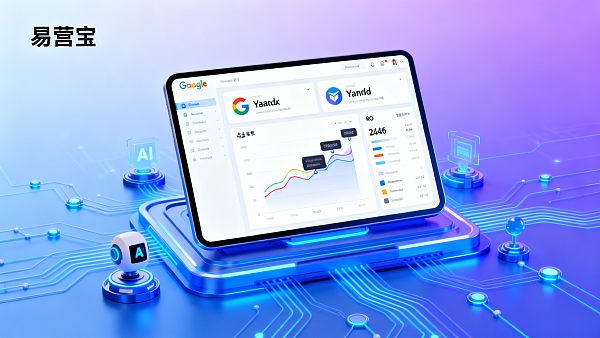
Despite Yandex Ads' clear advantages in Russian-speaking markets, foreign trade enterprises must be aware of potential risks. What are the risks of Yandex ad delivery? Common issues include policy restrictions, keyword audits, account freezes, and cross-border settlement fluctuations. Additionally, Russian ad copy has significant language habit differences; AI-translated content without local review may trigger semantic deviations or click fraud. The solution lies in establishing stable local partnerships. EasyTrust, for instance, maintains an in-house Russian content review team, implementing a dual-control mechanism of AI generation + manual review to reduce ad violation rates below 0.3%. For manufacturing managers seeking to reduce budget waste, refer to Strategic-Driven Comprehensive Budget Management for Manufacturing Enterprises, optimizing ad investment efficiency through internal budget allocation and smart delivery coordination. Combining enterprise budget management concepts with digital marketing strategies enables true data闭环 and ROI visualization, a system increasingly adopted by European multinationals.
B2B vs. B2C Differentiation Strategies: Marketing Funnels and User Paths
Regardless of enterprise size, the differences between B2B and B2C websites in promotion remain a focal point for marketing decision-makers. B2B promotion focuses on lead nurturing and sales conversion, requiring higher precision in keyword density, landing page information hierarchy, and quotation mechanisms. B2C websites emphasize emotional and contextual presentation, where social ads and remarketing form closed loops. Thus, when choosing Google or Yandex Ads, adjust strategies based on product type, sales cycles, and user language preferences. For B2B enterprises, AI-driven automated lead identification tools effectively shorten sales funnels and improve inquiry response speeds. For B2C brands, AI image generation and dynamic creative updates enable high-frequency interactions during holidays. Are B2B website development costs higher? In fact, using AI smart website systems and template customization can reduce average costs by ~40%, enabling rapid multilingual expansion. This technical support allows enterprises to complete closed-loop deployments from website building to ad delivery in short timeframes. Leading enterprises also combine management thinking with digital delivery strategies, such as performance evaluation methods in Strategic-Driven Comprehensive Budget Management for Manufacturing Enterprises, binding delivery performance to sales targets to form systematic operational frameworks that significantly enhance global team synergy.
Conclusion and Action Guide: AI and Localization-Driven European Growth
In summary, when evaluating whether Google Ads or Yandex Ads are more suitable for the European market, the core judgment criteria are target region, brand positioning, and delivery strategy alignment. Google Ads better cover mainstream Western European countries, while Yandex Ads hold irreplaceable value in Eastern Europe and Russian-speaking circles. Through coordinated AI advertising smart bidding systems, multilingual website development, and integrated SEO layouts, foreign trade enterprises can achieve high coverage, high conversion, and low-risk balanced development. EasyTrust Information Technology (Beijing) Co., Ltd., with a decade of overseas experience and AI technology accumulation, provides global enterprises with end-to-end smart solutions from website building to conversion analysis. Whether you aim to increase foreign trade inquiries or build international website architectures, we can empower you to maximize ROI. Contact us now for a dedicated European market digital promotion plan, letting AI and localization strategies become your acceleration engine into global markets. Let your brand achieve faster, steadier, and smarter growth on the international stage with innovation, trust, and data-driven approaches.
- Website Development
- Google Ads
- B2B website
- Click-through rate
- AI Smart Website Building
- Google Ads
- Yandex Advertising
- International Website Development
- SEO optimization effect
- SEO Optimization Company
- Yiyingbao
- SEO
- Smart website builder system
- SEO Optimization
- Smart Website Building
- AI Translation
- AI Marketing Engine
- Yandex ad placement
- Inquiry Form
- Website Builder
- International Digital Marketing
- Multilingual Website Building
- AI Marketing
Related Articles


Related Products
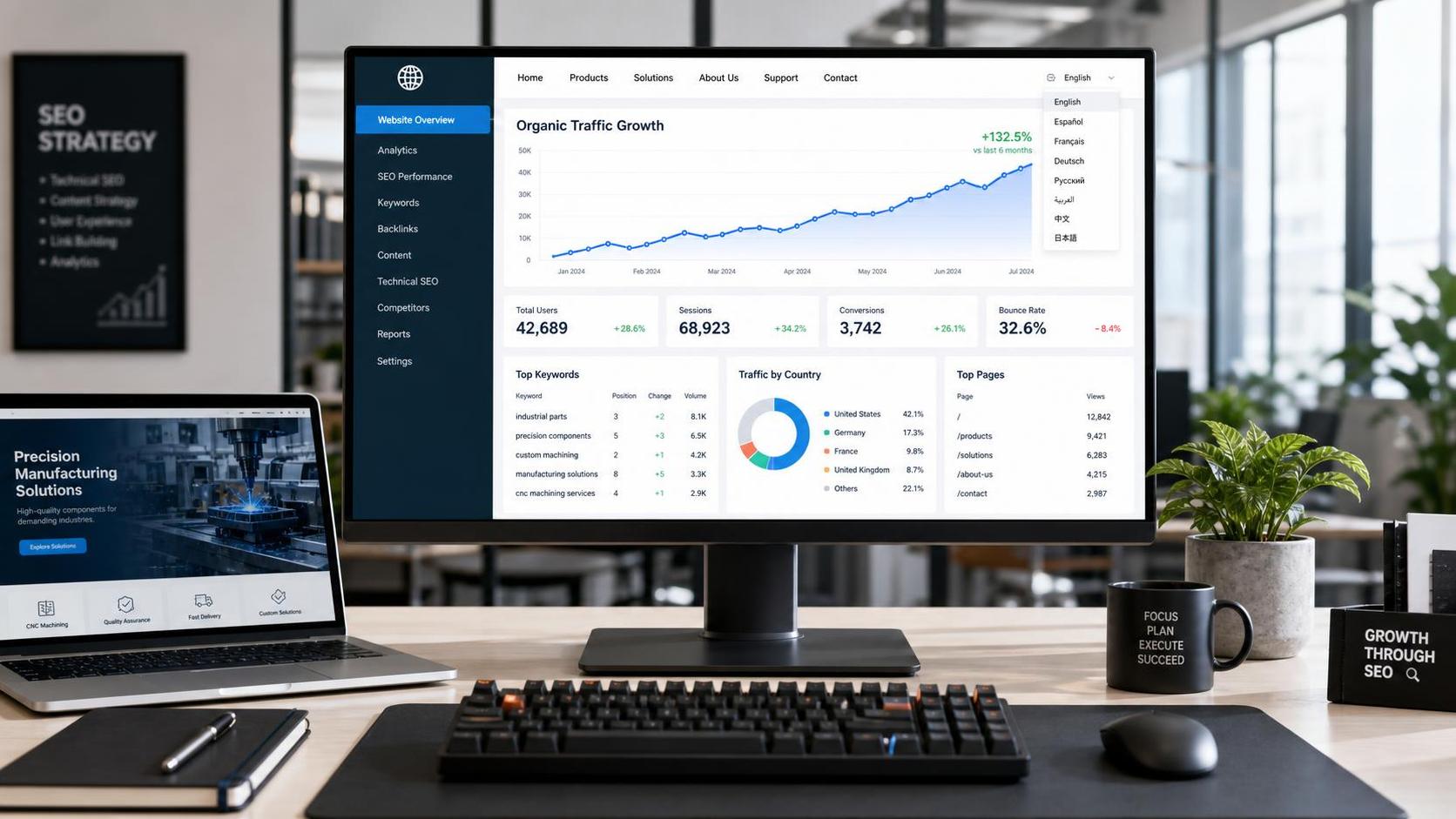
 EasyCamp SaaS Smart Website Marketing SystemE-Yingbao SaaS Smart Website Marketing System: AI-powered, zero-code website building. Rapidly launch multilingual independent e-commerce sites in just 10 minutes. Global server acceleration and AI-driven SEO optimization empower businesses to efficiently connect with global markets. The seamless integration of technology and user-friendly operation makes building e-commerce sites incredibly simple.
 AI+SEM Intelligent Advertising Marketing SystemAI+SEM drives intelligent ad creation, empowering full-funnel precision advertising marketing. The system automatically generates weekly/monthly reports, AI recommends keywords and target countries, monitors core metrics in real-time with intelligent alerts, and enables one-click high-conversion ad solutions to help quickly acquire customers and improve ROI.
 AI+SEO Dual Engine Optimization ServiceEasyWin AI+SEO Dual Engine Optimization System leverages AI-powered keyword mining, content generation, and comprehensive technical optimization to help foreign trade enterprises acquire high-quality organic traffic, significantly improving search rankings and conversion rates.
 AI+SNS Social Media Marketing SystemYingbao AI+SNS Social Media Marketing System - Precision social capture for the social media era. Supports one-click content synchronization across major platforms like Facebook and LinkedIn. AI intelligently rewrites posts for enhanced relevance. 24/7 AI customer service and user profiling analysis empower businesses to efficiently expand into global markets.
 AI+SEO营销解决方案易营宝AI+SEO营销解决方案,通过AI批量写作、智能生成TDK、精准关键词扩词等功能,全面优化网站SEO效果,提升流量与转化率。助力企业构建高效智能网站新生态。
 AI+SEM Advertising Marketing SolutionsAI+SEM Advertising Marketing Solution leverages AI technology to deeply empower SEM ad campaigns. It automatically generates weekly/monthly reports using AI, presenting account data across multiple dimensions for comprehensive insights into campaign performance and trends. The system precisely recommends keywords and target countries, intelligently generates high-conversion ad copy, and enables one-click activation of efficient campaign plans to help businesses rapidly acquire customers. Simultaneously, it monitors core metrics in real time, intelligently identifies abnormal fluctuations, and issues timely alerts to ensure stable, high-return advertising results.
 Domain Name ServicesEasyWin provides professional domain name services, including intelligent queries, one-stop registration, brand protection, and full lifecycle management, helping businesses build a digital brand image.
 EasyOperate B2C Cross-Border E-Commerce Platform & Independent WebsiteEasyStore B2C Cross-border E-commerce Independent Store is an intelligent website building and cross-border e-commerce integrated solution independently developed by EasyStore Information Technology (Beijing) Co., Ltd. The system is specially designed for small and medium-sized as well as large export enterprises, integrating 'website building, operation, marketing, advertising, and conversion' into one, helping enterprises quickly establish cross-border e-commerce independent stores to achieve brand globalization and global sales growth.
The platform supports multiple languages, multiple currencies, and multi-channel marketing, with built-in AI intelligent translation and SEO optimization systems, suitable for mainstream markets such as Southeast Asia, Europe and America, Latin America, and the Middle East, assisting Chinese manufacturing enterprises in efficiently deploying international e-commerce strategies. SSL证书易营宝提供专业SSL安全证书服务,包括单域名和泛域名证书,确保网站数据传输加密、身份验证和完整性保护,助力企业建立安全可信的在线业务环境。









