I. The Authoritative Definition and Core Value of SEO Optimization Results
1. The authoritative definition of SEO optimization effectiveness
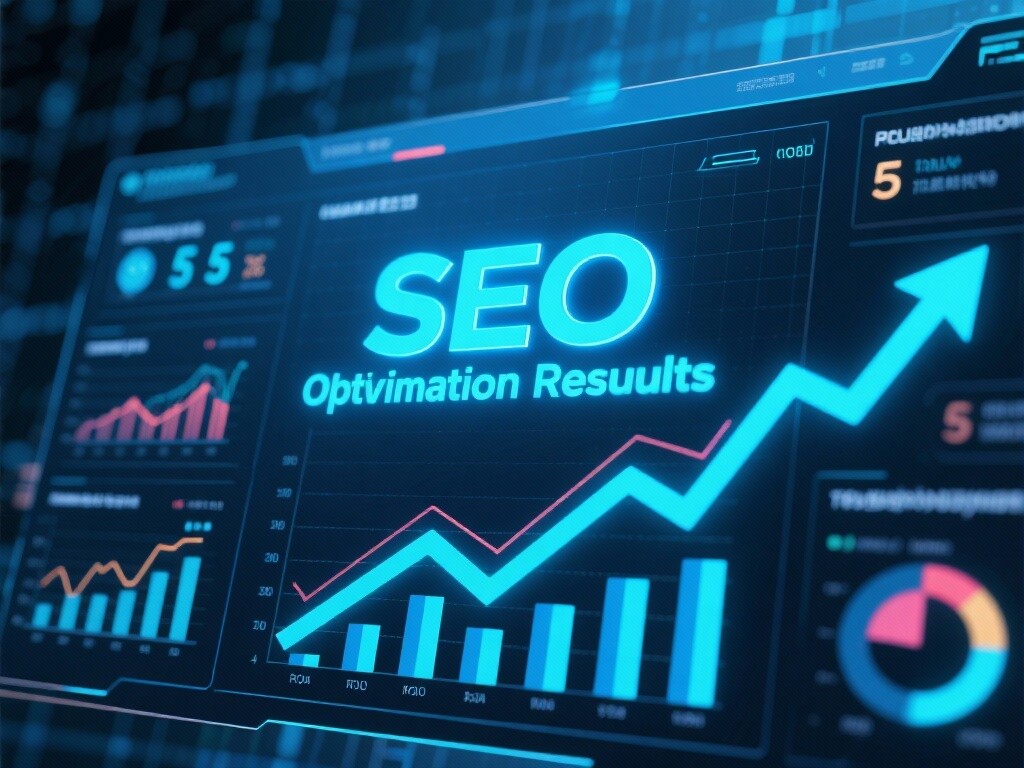
SEO optimization results refer to the quantifiable and sustainable positive changes and growth achieved through the implementation of systematic and continuous SEO strategies , in multiple dimensions such as search engine visibility, website traffic quality, user behavior metrics , and ultimate business conversion (ROI) .
Our professional SEO optimization performance measurement system goes beyond traditional vanity metrics like "ranking number one," focusing instead on the actual contribution to core revenue and brand professionalism, creating a value loop from SEO to CEO.
2. The core strategic value of SEO optimization effectiveness: 5 growth dimensions
II. The Development History and Paradigm Evolution of SEO Optimization Effectiveness Measurement
The history of measuring SEO optimization effectiveness is a transformation from "vanity metrics" to "business metrics," and an evolution from a "black box" to a "data closed loop."

1. Early Stage: Blindly Pursuing Rankings and Link Quantity (2000s-2010)
Measuring characteristics: Ranking first, having a large number of backlinks, and having a high keyword density are considered the sole criteria for performance.
Limitations: Rankings fluctuate wildly, and high rankings do not necessarily bring traffic, nor do high traffic lead to conversions . The measurement method is detached from business objectives.
2. Mid-term phase: Initial focus on traffic and bounce rate (2010-2018)
Milestone: Google Analytics became standard, and traffic, bounce rate, and average session duration began to receive attention.
Measure the transformation: Recognize the importance of user behavior signals (UX) and start focusing on "whether top-ranking traffic is effective" .
Challenges: The lack of accurate conversion attribution and ROI calculations makes it difficult for management to clearly demonstrate the value of SEO.
3. Modern Stage: EEAT, Conversion Closed Loop, and ROI Prioritization (2018 to Present)
Core Focus: Results aligned with business objectives .
Measuring In-Depth:
Precise ROI attribution: Deeply integrated with GA4/CRM , tracking the entire user journey from search to conversion , and accurately calculating revenue generated by SEO .
EEAT Results: Focus on metrics such as brand keyword search volume and author authority score to measure the improvement in brand professionalism .
Technical results: CWV performance, indexing rate , and other technical metrics have become key indicators for measuring the health of a website .
Trend: Modern SEO Optimization Results is a scientific, quantitative, and commercially valuable report that provides continuous growth .
III. The Technical Principles of SEO Optimization: Data Loop and Algorithm Feedback Mechanism
Achieving professional SEO optimization results depends on mastering the feedback mechanism of search engine algorithms and the principle of data closed loop .
1. Algorithm feedback mechanism: User behavior determines ranking performance.
Principle: Google's algorithm no longer relies on a single metric, but instead uses user behavior in search results and on the website as the most important feedback for evaluating content quality and authority .
Core feedback technology:
High CTR (Click-Through Rate): Optimize your title, description, and rich schema to increase your attractiveness in search results . A high CTR proves to Google that your results are most relevant .
Low Pogo-Sticking: Users do not return to the search results page after clicking your link . This indicates that the content...Achieving resolution of the user's search intent is a key technical feedback for obtaining a high ranking .
High dwell time/low bounce rate: Excellent website UX and content retain users. Long dwell time proves the value of the content to Google .
2. Data Closed-Loop Principle: From Optimization to ROI 5- step tracking
Principle: Through technology integration , SEO optimization actions (input) are linked to the final business conversion (output). correlation enables data-driven strategy iteration .
Technology Applications:
step : Keyword/content optimization (input).
step : Ranking and traffic changes (tracked by GSC/SEO tools).
step : User behavior analysis (GA4: Bounce rate, dwell time).
step : Conversion Attribution (GA4/CRM: Goal Achievement, Event Tracking).
step : ROI and LTV calculation (business value output).
3. The effectiveness of EEAT's quantitative techniques
Principle: The effectiveness of EEAT (Experience, Professionalism, Authority, Trust) must be quantified and tracked through technical means .
Technology Applications:
Tracking brand keyword search volume: The increase in brand keyword search volume is a direct result of improved authority and credibility .
Author Authority Score: This score uses structured data technology to track the citations and site authority of content contributors (experts) , quantifying their contribution to the ranking .
Authority Backlink Growth Rate: Tracks the speed and quality of links acquired from high-authority, highly relevant websites to measure the effectiveness of Off-Page SEO .
IV. Core Characteristics and Strategic Advantages of SEO Optimization
1. Predictability and Sustainability
Features: Once the SEO effect is established, it will continuously and steadily drive traffic to the website , unaffected by advertising bidding and budget fluctuations.
Advantages: SEO investment has a compounding effect . Today's rankings.It may bring about month later the traffic creates a predictable long-term growth curve .
2. High ROI and low CPA
Features: SEO traffic is free ; you only need to pay for the initial manpower/tool costs .
Advantages: In the long run, the cost per conversion (CPA) of SEO is far lower than that of paid advertising . ROI is the ultimate standard for measuring the effectiveness of SEO optimization .
3. Precise customer acquisition and high conversion rate
Features: Users actively search for your solutions with clear intent and a strong desire to purchase .
Advantages: SEO traffic conversion rates are typically higher than those of social media or display ads.More than times , significantly improving the quality of sales leads .
4. Brand barriers and industry authority
Features: Consistently high rankings and high-quality content will establish your brand as an authoritative resource in the minds of users .
Advantages: It establishes a "brand barrier" that is difficult for competitors to imitate , effectively enhancing brand bargaining power and customer loyalty .
V. In-depth application and practical scenarios of SEO optimization effects
1. E-commerce websites: Page performance and product conversion rate
Application: To measure the optimization effect of product pages and category pages .
Practical application:
CWV Performance Tracking: Monitor changes in bounce rate and LCP on product pages after CWV score improvement to verify the impact of performance optimization on conversion .
Rich summary effect: Track the increase in CTR in search results after Product Schema deployment, and quantify the effect of rich summaries on traffic generation .
LTV Attribution: Tracking the customer lifetime value (LTV) of SEO orders demonstrates that SEO customers have greater long-term value than advertising customers .
2. B2B Enterprises: Keyword Ranking and Inquiry Quality Effectiveness
Application: To measure the optimization effectiveness of technical white papers and solution pages .
Practical application:
Keyword phrase coverage: Tracking the top rankings of core "solution + pain point" keyword phrases. coverage .
Inquiry Quality Assessment: Compare SEO inquiries with paid inquiries , analyze the conversion speed and customer scale of SEO inquiries , and quantify the effect of improving inquiry quality .
Brand EEAT Tracking: Monitors brand keyword search volume and the number of times authoritative content is cited , measuring the effect of authority growth .
3. Content Platform: User Behavior and Content Clustering Effects
Application: Measuring the optimization effectiveness of blogs, knowledge bases, and help centers .
Practical application:
User engagement metrics: Tracking the average time users spend on content pages and the depth of scrolling .
Topic Clustering Effect: Track the internal link weight distribution of all sub-articles under a specific topic cluster to verify the effect of the cluster structure on improving the overall topic ranking .
Traffic/Value Ratio: Identify and optimize content with high traffic but low conversion value , and concentrate resources on content with high conversion intent .
VI. YiYingBao: Your SEO Optimization Effectiveness Quantification Expert
E-Creative focuses on providing top-tier SEO optimization solutions that are data-driven and conversion-oriented . We help you quantify every input and output of your SEO , upgrading your SEO strategy into a predictable and sustainable engine for business growth .
Get a professional SEO ROI evaluation report now!
Eliminate the SEO black box and achieve Transparent Growth
With scientific core metrics that demonstrate the commercial value of SEO
Partner with Yiyingbao to build future-oriented digital assets!
FAQ
1. How long does it take to see significant SEO optimization results?
Answer: This is a gradual process with a compounding effect, typically to months for initial results, and months or more for qualitative improvements.
months (technical repair phase): Results manifest in improved technical health (CWV enhancements), increased indexed pages, and reduced crawl errors.
months (content initial effectiveness phase): Long-tail keywords start ranking in TOP , organic traffic begins steady growth, inquiries/conversions show improvements.
months or more (authority breakout phase): Core keywords enter TOP , brand keyword search volume increases significantly, ROI peaks, results become self-sustaining.
2. How to scientifically measure the return on investment (ROI) of SEO?
Answer: Through conversion attribution and customer lifetime value (LTV) calculations.
Conversion value setting: Assign a clear monetary value to each goal achievement (inquiry, download, purchase).
Precise attribution: Use GA4's "conversion path" reports to track user contributions from SEO channels to final conversions.
Formula: . Simultaneously, incorporate LTV of SEO customers to comprehensively assess their long-term commercial value.
3. Which represents better optimization results: "ranking first" or "high click-through rate (CTR)"?
Answer: High CTR is more important as it represents dual validation from users and Google.
Ranking first: Only indicates your content temporarily ranks first in a specific algorithm snapshot.
High CTR: Means your title, description, and meta snippets (technical optimizations) are highly attractive, users actively choose you. High CTR is one of the strongest positive signals in Google's algorithm feedback, more stably solidifying your rankings.
4. Why is CWV performance improvement also considered an SEO "result"?
Answer: Meeting CWV standards is a prerequisite for Google ranking rewards, directly impacting user experience signals.
Direct ranking factor: Google explicitly states CWV (LCP, FID, CLS)areranking factors.
Indirect effects: CWV improvements can significantly reduce bounce rates (lower user ), increase user dwell time. These positive user behavior signals prove to Google that your site is high-quality, thereby solidifying and improving rankings.

Customer Reviews
Mr. Meng, Global B2B Industrial Equipment Manufacturer Market Director
"Previously, our SEO focus was solely on rankings. EasyProfit's SEO optimization results measurement system completely changed our mindset. They quantified the LTV contribution of each keyword group, proving that SEO customers' average order value is higher than paid ads. We now trust SEO's long-term value, it has built a predictable, high-ROI digital growth flywheel for us. Their reports are the only marketing reports directly presentable to board meetings."
Ms. Chen, CEO of a Large DTC Cross-border E-commerce Company
"E-commerce demands extreme speed and conversion rates. EasyProfit's deep CWV optimizations reduced our mobile LCP by seconds. This technical improvement directly lowered the site's overall bounce rate by , bringing a order conversion increase. Their meta snippet optimizations increased product page CTR by . We now view SEO as the safest, most efficient digital asset investment, with real, measurable, sustainable results."
 AI Website Building Tools: Elevate Your Standalone Site's SEO OptimizationExplore how AI website tools improve your standalone site's SEO optimization, enabling your foreign trade website to excel in competition and boost global market expansion.
 How Can Shanghai Enterprises Use AI-Powered Website Systems to Enhance Competitiveness?This article systematically explains the application value of AI-powered website technology in the globalization of Shanghai enterprises, providing comprehensive solutions for different decision-makers, from technical principles to practical cases.
 AI + SEO dual-engine optimization system to skyrocket your foreign trade website traffic by 300%!This article introduces in detail the core functions, technical advantages and practical application cases of YiYingBao AI + SEO dual-engine optimization system, to help foreign trade enterprises to solve the problem of traffic growth, and achieve global business expansion.
 SEO Optimization Outsourcing vs Building Your Own Team, Which is Better for Your Business?This article comprehensively compares the advantages and disadvantages of SEO optimization outsourcing and self-built team, provides a decision-making framework for enterprises of different sizes, and combines the analysis of the application scenarios of AI intelligent SEO tools to help enterprises achieve the globalization marketing goal of reducing costs and increasing efficiency.
 Global Server Acceleration Performance Test: 300% Faster Page Load SpeedThis article details the core advantages, application scenarios, and real-world cases of EasyCloud's global server acceleration technology. Through AI-driven marketing platforms and intelligent website solutions, it achieves 300% faster page load speeds, 35% improved SEO optimization results, and supports global business growth.
 3-Day Playbook to Achieve Rapid Website Result Tracking: Technical Auditors Must Read!This guide details how to achieve rapid website results within 3 days, covering key techniques like SEO optimization, social media strategies, and website speed enhancements—essential reading for decision-makers and technical auditors.
 Website loading too slow? 5 techniques to make your site fly!Addressing website performance concerns for enterprise decision-makers, we provide systematic solutions from technical optimization to tool selection, featuring the global acceleration capabilities of Yisoubao's intelligent website building system.
 Must-Read for Business Decision Makers: How to Win Markets Through Localization Support?This article provides a detailed analysis of the critical role localization support plays in corporate globalization strategies, combining SEO optimization, social media marketing, and ad placement case studies to offer comprehensive market entry strategies for business leaders.