









- The China-US tariff arrangement has reached a preliminary consensus, and the trade association will be establishedJun 15, 2026View details
- What determines B2C cross-border e-commerce website development costs? A breakdown of features, interfaces, and deployment methodsJun 17, 2026View details
- China-Morocco zero-tariff access, a breakthrough in the cost of Moroccan goods exports to ChinaJun 11, 2026View details
- What signal should be released for the suspension of exports to JapanJun 10, 2026View details
- China's May LNG imports rebounded, with increased volumes from Russia and Canada filling the Middle East supply gapJun 10, 2026View details
- Will GEO change its SEO strategy?Jun 04, 2026View details
Multilingual website cloud hosting provider comparison: Performance, pricing, and after-sales in 3 minutes quick evaluation
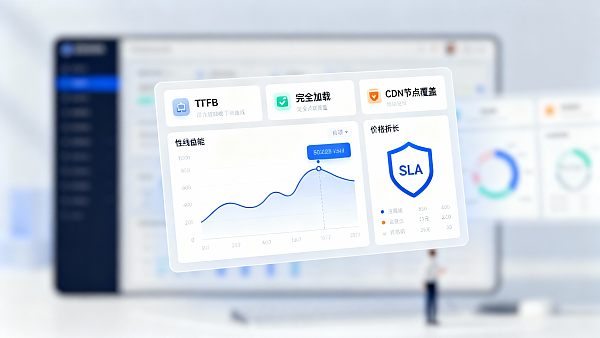
Quick Evaluation of Multilingual Website Cloud Hosting Providers: Performance, Pricing, and After-Sales Comparison to Help Researchers and Users Select the Best Solution in 3 Minutes
When choosing a multilingual website cloud hosting provider, researchers and users often face three major pain points: unstable website performance leading to slow overseas access, complex pricing structures making comparisons difficult, and inadequate after-sales and localization support. This article focuses on B2B decision-making scenarios for general internet services, providing actionable evaluation dimensions, quantitative references, and practical recommendations to help you quickly screen potential providers and make preliminary decisions within 3 minutes based on performance, pricing, and after-sales criteria. The article combines industry practices with data metrics, balancing technical auditability and procurement negotiation points, making it suitable for users and operators responsible for technical evaluation and implementation within enterprises.

1: Performance Evaluation — A 3-Minute Self-Testing Method Based on Metrics
Performance is the primary threshold for selecting multilingual website cloud hosting providers. During the technical pre-screening phase, we recommend using three quantitative metrics: Time to First Byte (TTFB), Fully Loaded Time, and Global Node Coverage. A TTFB below 200ms typically indicates good backend and edge caching capabilities; a Fully Loaded Time under 2.5 seconds is more favorable for SEO and user experience. For global nodes, prioritize CDN nodes covering Asia, Europe, and North America, supplemented by testing points in target markets (e.g., South America or Southeast Asia). You can quickly determine whether a provider meets multilingual access requirements by testing three public network detection points in parallel and averaging the response times. For localized access, which is particularly important for cloud-based regional enterprises, also include DNS resolution latency and SSL handshake duration in your testing matrix. In practice, premium providers offer test accounts or demo sites, allowing you to conduct full-path stress tests and generate reports before purchase. Remember to add website SEO-friendliness checks (e.g., mobile adaptation, structured data support, and sitemap strategy) to your evaluation checklist, as these directly impact multilingual SEO optimization results, such as regional market rankings and organic traffic growth.
2: Pricing Structure and Cost Comparability — Breaking Down Quotes to Avoid Hidden Fees

Pricing is often a decisive factor, but quotes vary significantly across providers. Before purchasing, break down costs into five categories: basic website setup fees, hosting and bandwidth, CDN and traffic, third-party services (e.g., translation/payment/email), and maintenance and updates. For small and medium-sized foreign trade teams, focus on the differences between traffic-based and request-based billing, and compare peak-month versus average-month cost scenarios. Many multilingual website providers offer free initial traffic or translation quotas, but subsequent manual translations, customized SEO optimizations, and multilingual content generation can incur higher maintenance costs. Another key point is the billing method for technical support: hourly-billed after-sales services can significantly increase total cost of ownership (TCO) during version iterations, so prioritize packages that include free updates and security patches within the SLA. When comparing quotes, use a three-year total cost of ownership (TCO) approach to amortize one-time fees, which is crucial for evaluating long-term ROI and procurement decisions. Additionally, if your target market involves multilingual ad placements, assess whether the provider can integrate with ad platforms and data tracking to reduce cross-channel promotion and optimization costs. For example, combining Google Ads placement data can enable closed-loop optimization from traffic to conversions, significantly improving overseas lead acquisition efficiency.
3: After-Sales and Localization Capabilities — SLA, Response Times, and Compliance Assurance
After-sales services determine whether multilingual websites can operate stably long-term and adapt to market changes. Key evaluation items include response times (P1/P2/P3 classifications), recovery time objectives (RTO), recovery point objectives (RPO), and whether localized compliance support (e.g., payment, privacy regulations, tax guidance) is provided. For cloud-based and peripheral city enterprises, confirm the provider's experience with mainland China filings and overseas node management capabilities to avoid cross-border access interruptions due to compliance or DNS policies. Also, check whether dedicated account managers, local technical teams, or regional agents are available, as these significantly impact issue resolution efficiency and market promotion coordination. We recommend specifying SLA penalty clauses in contracts, such as compensation or additional technical support triggered by website downtime exceeding agreed durations. Pay attention to the provider's security capabilities, including automated SSL certificate management, DDoS protection, and regular vulnerability scans, which are fundamental requirements for ensuring multilingual website availability year-round. Finally, evaluate the provider's training and documentation quality: top providers offer operation manuals for staff, regular training sessions, and monitoring dashboards to lower internal operational barriers and enhance continuous business delivery capabilities.
4: Practical Recommendations, Comparison Templates, and Quick Search for Regional Providers
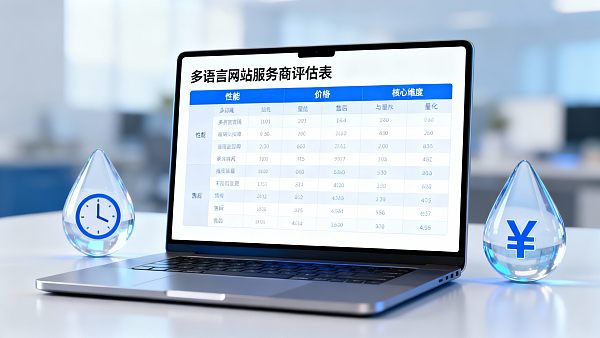
To help researchers quickly create a shortlist, we recommend using a simple comparison table (performance, pricing, SLA, localization support, value-added services) as a preliminary scoring tool. Operationally, start by breaking down requirements: target country languages, target traffic levels, whether deep SEO and multilingual content generation are needed, and whether social media and ad placements should be integrated. Then select three providers for Proof of Concept (POC) based on priority. For regional searches, use keyword combinations to quickly identify local candidates, such as "multilingual website cloud hosting providers," "multilingual website Chaozhou companies," or "multilingual website Shaoguan companies." At the same time, refer to market feedback and case studies for providers with successful local deliveries, such as "multilingual website Jieyang development," "Maoming multilingual website production," "Qingyuan multilingual website design," "Heyuan multilingual website construction," "Shantou multilingual website development," "multilingual SEO optimization services," or "Shantou multilingual website setup." In practice, we recommend scheduling a hybrid meeting with a 30-minute technical Q&A and a 30-minute commercial terms discussion to quickly validate technical commitments and pricing rationality.
Summary: By quickly comparing performance (TTFB, fully loaded time, node coverage), pricing (five-category breakdown and three-year TCO), and after-sales (SLA, compliance, localization support) across three dimensions, you can preliminarily screen qualified multilingual website cloud hosting providers within 3 minutes. As a digital marketing service provider with AI and big data capabilities and mature global solutions, choosing a supplier with a technical backend, global CDN, and local teams will significantly reduce launch risks and improve overseas conversion efficiency. If you need comparison templates or POC support, contact us immediately for customized evaluation tools and case references to learn more about solutions.
- Website Development
- SSL Certificate
- Mobile-friendly
- Website Design
- Multilingual website development
- SEO Optimization Services
- Multilingual SEO Optimization
- SEO optimization effect
- Shanwei Multilingual Website Construction
- Shaoguan Multilingual Website Company
- Qingyuan Multilingual Website Design
- Famous Multilingual Website Production
- Multilingual Website Cloud Hosting Provider
- Multilingual Website Development
- Multilingual Website Development in Shanwei
- River Source Multilingual Website Construction
- SEO
- SEO Optimization
- Multilingual SEO
- Multilingual SEO Optimization Services
- Multilingual website
Related Articles
 Does a responsive corporate website need to be built? Applicable scenarios, advantages and upgrade criteria
 How much does responsive website development cost? Design, front-end, and functionality development expenses make up the total
 What Should You Pay Attention to in Responsive Website Development? Page Adaptation, Speed and SEO Key Points


Related Products
 EasyCamp SaaS Smart Website Marketing SystemE-Yingbao SaaS Smart Website Marketing System: AI-powered, zero-code website building. Rapidly launch multilingual independent e-commerce sites in just 10 minutes. Global server acceleration and AI-driven SEO optimization empower businesses to efficiently connect with global markets. The seamless integration of technology and user-friendly operation makes building e-commerce sites incredibly simple.
 AI+SEM Intelligent Advertising Marketing SystemAI+SEM drives intelligent ad creation, empowering full-funnel precision advertising marketing. The system automatically generates weekly/monthly reports, AI recommends keywords and target countries, monitors core metrics in real-time with intelligent alerts, and enables one-click high-conversion ad solutions to help quickly acquire customers and improve ROI.
 AI+SEO Dual Engine Optimization ServiceEasyWin AI+SEO Dual Engine Optimization System leverages AI-powered keyword mining, content generation, and comprehensive technical optimization to help foreign trade enterprises acquire high-quality organic traffic, significantly improving search rankings and conversion rates.
 AI+SNS Social Media Marketing SystemYingbao AI+SNS Social Media Marketing System - Precision social capture for the social media era. Supports one-click content synchronization across major platforms like Facebook and LinkedIn. AI intelligently rewrites posts for enhanced relevance. 24/7 AI customer service and user profiling analysis empower businesses to efficiently expand into global markets.
 AI+SEO营销解决方案易营宝AI+SEO营销解决方案,通过AI批量写作、智能生成TDK、精准关键词扩词等功能,全面优化网站SEO效果,提升流量与转化率。助力企业构建高效智能网站新生态。
 AI+SEM Advertising Marketing SolutionsAI+SEM Advertising Marketing Solution leverages AI technology to deeply empower SEM ad campaigns. It automatically generates weekly/monthly reports using AI, presenting account data across multiple dimensions for comprehensive insights into campaign performance and trends. The system precisely recommends keywords and target countries, intelligently generates high-conversion ad copy, and enables one-click activation of efficient campaign plans to help businesses rapidly acquire customers. Simultaneously, it monitors core metrics in real time, intelligently identifies abnormal fluctuations, and issues timely alerts to ensure stable, high-return advertising results.
 Domain Name ServicesEasyWin provides professional domain name services, including intelligent queries, one-stop registration, brand protection, and full lifecycle management, helping businesses build a digital brand image.
 EasyOperate B2C Cross-Border E-Commerce Platform & Independent WebsiteEasyStore B2C Cross-border E-commerce Independent Store is an intelligent website building and cross-border e-commerce integrated solution independently developed by EasyStore Information Technology (Beijing) Co., Ltd. The system is specially designed for small and medium-sized as well as large export enterprises, integrating 'website building, operation, marketing, advertising, and conversion' into one, helping enterprises quickly establish cross-border e-commerce independent stores to achieve brand globalization and global sales growth.
The platform supports multiple languages, multiple currencies, and multi-channel marketing, with built-in AI intelligent translation and SEO optimization systems, suitable for mainstream markets such as Southeast Asia, Europe and America, Latin America, and the Middle East, assisting Chinese manufacturing enterprises in efficiently deploying international e-commerce strategies. SSL证书易营宝提供专业SSL安全证书服务,包括单域名和泛域名证书,确保网站数据传输加密、身份验证和完整性保护,助力企业建立安全可信的在线业务环境。









