I. The authoritative definition, strategic core, and market pain points of multilingual SEO optimization services
1. The authoritative definition and professional elements of multilingual SEO optimization services
**Multilingual SEO optimization services** are a comprehensive system engineering project that optimizes the technical architecture, content strategy, and link building of independent websites with **two or more language versions**. Its core objective is to ensure that search engines can **correctly understand, index, and rank** each language version and display it to search users in the corresponding language or region. Professional elements include: **proper deployment and maintenance of Hreflang tags, content localization SEO keyword research, multilingual website technical audits, and ranking strategies for different national search engines**.
2. The 3 Irreplaceable Strategic Values of Professional Multilingual SEO
Multilingual SEO is the fundamental guarantee for global business growth:
- **Solve content duplication and mitigate SEO penalty risks:** A proper Hreflang deployment clearly communicates the relationship between different versions to Google, preventing search engines from misinterpreting different language versions as duplicate content and imposing penalties.
- **Precisely Target Local Language Search Traffic:** Approximately 70% of global users prefer to search in their **native language**. Professional multilingual SEO captures **long-tail, high-converting keywords used by local users**, resulting in precise traffic with significantly less competition compared to the English-language market.
- **Enhance your brand’s professionalism and trustworthiness in the local market:** Achieving a high ranking in local search results, coupled with localized content, can quickly establish a professional and authoritative image.
3. The Development History and Trends of Multilingual SEO Optimization Services
Early stage (2000s): Primarily relied on **ccTLDs (country top-level domains)** for geographic targeting; SEO techniques were relatively fragmented. Mid-stage (2010s): Google introduced **Hreflang tags**, and multilingual SEO began to shift towards **technical standardization**, but Hreflang had an extremely high error rate. Modern stage (2020s to present): The trend is **"AI-assisted localization, data-driven automated Hreflang detection and repair, and deep content cluster construction"**, emphasizing the deep integration of SEO and CRO (Content Research and Development).
II. Five Core Technologies and Principles of Multilingual SEO Optimization Services: Hreflang, Indexing, and Content Clustering

The underlying technical logic for ensuring high rankings of multilingual websites on global search engines:
1. Hreflang Tag Specification and Two-Way Deployment Principle
Principle: Hreflang tags are Google's authoritative technology for recognizing multilingual content. Practice:
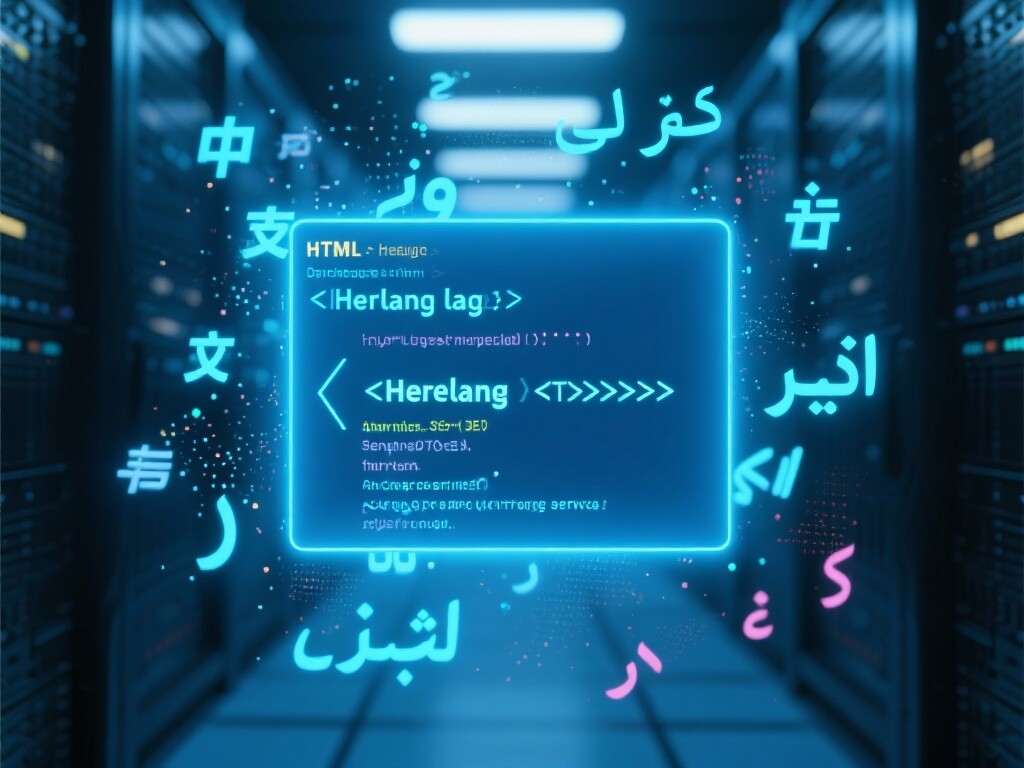
- **Two-way referencing:** Each language version must **two-way reference** all other language versions in the header or Sitemap; **necessary**.
- **x-default tag:** Required. **x-default** must be set as the default page to match users who do not have a specific language or geographic setting.
- **Correct Format:** Language codes (e.g., `es` for Spanish) and region codes (e.g., `es-mx` for Spanish in Mexico) must strictly adhere to the **ISO 639-1 and ISO 3166-1 Alpha 2 specifications**.
2. Multilingual Topic Cluster Strategy Principles
Principle: Replace single keyword ranking with **thematic authority**. Practice: Conduct **independent keyword research** for each language market, and create **dozens of localized **cluster contents** around a **core "pillar content**". For example, create a complete content cluster about "Industry 4.0 solutions" for the German-speaking market.
3. Content Localization SEO Principles
Principle: Keywords and content must perfectly align with local culture, search habits, and industry terminology. Practice: Optimization personnel need to collaborate with **native language experts** to ensure that the **search intent, TDK (title, description, keywords)** in languages such as **German, Japanese, and Arabic** conform to the mindset of local users, rather than being a direct translation from English.
4. Principles of SEO Auditing and Correction for Multilingual Technologies
Principle: Ensure perfect crawling, indexing, and performance for each language version. Practice: Audit content includes: **standardization of multilingual URL structure (subdirectories, subdomains), submission of multilingual Sitemaps, multi-region CDN deployment, and CSS/HTML adaptation for RTL languages (such as Arabic).**
5. Principles of Optimization Strategies for Local Search Engines (Non-Google)
Principle: Adapt to the local search engines of different countries. Practice: For example, in the **Russian market**, a customized **Yandex optimization strategy** is needed; in the **Chinese market**, **Baidu optimization** needs to be considered; and in the **South Korean market**, a **Naver strategy** needs to be considered. This involves different content submission guidelines and crawler preferences.
III. Four Core Technical Features and Applications of Multilingual SEO Optimization Services
1. Technical Features: Automated error monitoring and repair in Hreflang
Features: Hreflang is complex to deploy and prone to errors. Application: Service providers use **customized SEO monitoring tools** to automatically crawl and verify **Hreflang's bidirectional links, code formatting, and URL validity**, and when errors are reported in Google Search Console, they can **quickly locate and fix them**, ensuring stable SEO ranking across multiple languages.
2. Application Practice: Content Differentiation and Target Market Segmentation
Application: **Differentiate content for different language versions.** For example, the **US site** highlights price advantages; the **German site** emphasizes product certifications and engineering details; and the **Japanese site** focuses on service experience and customer reviews. Ensure content accurately matches local market needs.
3. Application Practice: Optimization of Multilingual Structured Data (Schema Markup)
Application: Customize **localized structured data** for each language version of the page (products, FAQs, reviews). For example, add a German **Product Schema** for a **German product page** to improve **click-through rate (CTR) and visibility in search results**.
4. Application Practice: Multi-regional User Experience (UX) and SEO Collaboration
Application: Optimization is not limited to code, but also includes user experience. For example, ensure that the **Arabic version** uses a **RTL (Right-to-Read) layout**; ensure that the **Japanese site** uses a flatter, more information-dense design style to adapt to local user habits, **increasing user dwell time and conversion rates**, thereby positively impacting SEO rankings.
IV. Comparative Analysis of Professional Multilingual SEO vs. Amateur Translation Websites and Industry Scenarios
1. A Comparative Analysis of Professional Multilingual SEO vs. Amateur Translation Websites
2. Typical industry scenarios for multilingual SEO optimization services
Multilingual SEO is essential for the following foreign trade industries to achieve large-scale growth in the global market:
- **B2B Industrial Manufacturing/Machinery Equipment:** Technical documents and specifications must be presented in the **local language** to generate professional inquiries from Germany, Russia, Brazil, and other regions.
- **DTC Brands (High Average Order Value):** Such as custom furniture and high-end electronic products, these brands need to build trust in markets like France and Japan using **high-quality localized content**.
- **Cross-border e-commerce platforms:** These websites have a large number of SKUs and require **automated and scalable multilingual SEO strategies** to cover a vast number of long-tail keywords.
3. Standard Certification and Professional Specifications for Multilingual SEO Optimization Services
Criteria for evaluating high-quality multilingual SEO service providers:
- **Hreflang Implementation Experience:** **Able to provide** successful Hreflang deployment case studies and troubleshooting logs on Google Search Console.
- **Multilingual SEO Team:** Possesses native-speaker content experts covering the target language and local keyword research tools.
- **Technical Audit Report:** Provides a comprehensive, multilingual website technical audit report, including URL structure, crawl budget, server response, etc.
V. Book now and use professional Hreflang optimization to open your global traffic channel!
Is your multilingual website ranking poorly due to **Hreflang errors**? Is your conversion rate low due to **literal content translations**? Professional **multilingual SEO optimization services** provide you with **technical specifications, deep localization, and content clustering**! Book your **free "Hreflang and Multilingual SEO Technical Audit"** now and get your personalized global SEO growth strategy!
Click to get a free technical audit reportFAQ
1. If Hreflang is not deployed correctly, how will search engines penalize my website?
Answer: Hreflang errors don't directly result in a "penalty," but they can cause serious **indexing and ranking chaos**. Search engines may be unable to distinguish which page is the best version for which language/region, leading to **incorrect pages appearing in incorrect search results**, or **all language versions being judged as low-quality "duplicate content**, severely damaging rankings.
2. After multilingual SEO optimization, how long does it take to see ranking and traffic results?
Answer: Technical fixes (such as Hreflang) typically begin to show results within **1-3 months** (improved indexing and crawling efficiency). Large-scale organic traffic growth from content localization and keyword clustering strategies usually takes **3-6 months**, depending on the level of competition in the target market.
3. How can I ensure that the SEO optimization of multilingual websites doesn't compete with each other?
Answer: Primarily differentiated through **Hreflang tags** and **precise geographic/language targeting**. Additionally, ensuring each language version has **unique, locally researched keywords** and avoiding the use of the same keywords across different language versions can effectively reduce internal competition.
4. Does multilingual SEO optimization include website translation services?
Answer: Professional SEO optimization services typically don't include machine translation directly, but they do offer **"localization" services.** This includes **native language keyword research, localized TDK (Title, Description, Keywords) writing, and SEO proofreading and rewriting of existing translations** to ensure the content is both professional and SEO-compliant.
Customer Reviews
Mr. Müller, German Industrial Parts Supplier
"Our German website had been underperforming in Google rankings. After their **hreflang fixes and topic cluster content restructuring**, the site's visibility **surged by 75%** in German search results. Now, most of our B2B inquiries come from **high-quality local organic traffic**, far outperforming paid ads!"
Ms. Sato, Japan DTC Apparel Brand Director
"Their service goes beyond technical expertise—**the content localization is exceptionally well-executed**. The Japanese site's keyword research was precise, with generated blogs and product descriptions **perfectly matching Japanese users' search habits**. Within 6 months post-optimization, **organic traffic share in the Japanese market increased by 40%**, significantly reducing ad dependency."
 Can AI+SEO Dual Engine Optimization System Really Improve Rankings? Real Case AnalysisHow Does AI+SEO Dual Engine Optimization System Improve Rankings? Combining AI+SEM Smart Ads, Multilingual SEO Optimization Services with Facebook Ad Optimization, Revealing the Google-Certified Technology-Driven Foreign Trade Marketing Tool, Practical Case Analysis of Overseas Promotion Strategies New Paradigm.
 No results from Yandex ads? 90% of people make these 5 mistakesMaster the core techniques of Yandex ad placement to avoid the mistakes made by 90% of advertisers. Combined with AI+SEM smart ad marketing systems and multilingual SEO optimization services, enhance overseas promotion effectiveness, achieve high-conversion multilingual websites for foreign trade marketing, and empower global growth.
 What kind of traffic can multilingual SEO optimization services help you improve? Real case studies with data comparisonThrough multilingual SEO optimization services and the construction of multilingual foreign trade independent websites, combined with global server acceleration and refined SEM optimization techniques, we achieve measurable growth in brand promotion and the operation of foreign trade independent websites. A real case study shows a 72% increase in organic traffic within three months and an 85% improvement in high-intent inquiries. We provide multilingual website construction, AI-driven content, and technical SEO implementation solutions to help turn your multilingual website into a powerful tool for foreign trade marketing. Click to learn about customized diagnostics and start your journey to precise traffic and low-cost customer acquisition.
 From 0 to 1: Deploy global server acceleration to boost multilingual website speed by 50% with proven stepsThis guide details how to deploy global server acceleration from scratch, integrating multilingual website development with multilingual independent foreign trade site construction. It provides multilingual SEO optimization services, SEM optimization techniques, and supports brand promotion and independent foreign trade site operations, transforming multilingual websites into powerful marketing tools for foreign trade. Through DNS/CDN, caching, and protocol optimization, access speeds can increase by approximately 50%, significantly improving conversion rates and ROI. Want to turn page speed into business returns? Contact us now for customized landing solutions.
 Top 5 SEO Mistakes in Foreign Trade Websites - How Many Are You Making?Revealing the 5 Major SEO Mistakes in Foreign Trade Independent Websites! EasyYbao AI Website Building System Experts Point Out Technical Blind Spots Like HTTPS Security Protocol, Multilingual Translation, and Keyword Localization, Leading to 90% Traffic Loss for Enterprises. Learn How to Boost Google Traffic by 173% Through AI+SEO Dual-Engine Optimization System and Get a Custom Diagnostic Report to Enhance Your Independent Website SEO Strategy.
 Google marketing not working? You might be missing this AI-powered toolAI+SEO dual-engine optimization system helps Google marketing breakthroughs, combining multilingual SEO optimization services with AI+SEM smart ad placement, improving Facebook ad optimization efficiency, solving overseas promotion challenges, and making multilingual websites a high-efficiency customer acquisition tool for foreign trade marketing.
 Independent site traffic surges by 200%! Revealing the实战案例 of AI+SEO dual-engine optimization systemUnlocking the secret to a 200% surge in traffic for外贸独立站!易营宝AI智能建站系统通过AI+SEO双引擎优化系统,结合多语言SEO优化服务和AI广告智能诊断,帮助外贸企业突破流量瓶颈。Learn how to leverage智能诊断引擎、dynamic content factory, and流量聚合系统to achieve a 200% increase in organic search traffic and a staggering 3.8x improvement in ad conversion rates. Get a free website diagnosis now and unlock 300% growth opportunities!
 Must-Read for Foreign Trade Enterprises: How Can a Multilingual Website Increase Conversion Rates by 40%?Multilingual SEO Optimization Services + AI + SEO Dual Search Engine Optimization System Help Foreign Trade Enterprises Increase Conversion Rates by 40%. Combined with Facebook Ad Optimization, Yandex Ad Placement, and AI + SNS Social Media Full Intelligent Marketing System, Achieve Global Precision Promotion and Help Chinese Brands Expand Overseas Efficiently.