









- The China-US tariff arrangement has reached a preliminary consensus, and the trade association will be establishedJun 15, 2026View details
- What determines B2C cross-border e-commerce website development costs? A breakdown of features, interfaces, and deployment methodsJun 17, 2026View details
- China-Morocco zero-tariff access, a breakthrough in the cost of Moroccan goods exports to ChinaJun 11, 2026View details
- What signal should be released for the suspension of exports to JapanJun 10, 2026View details
- China's May LNG imports rebounded, with increased volumes from Russia and Canada filling the Middle East supply gapJun 10, 2026View details
- Will GEO change its SEO strategy?Jun 04, 2026View details
From 0 to 1: Deploy global server acceleration to boost multilingual website speed by 50% with proven steps
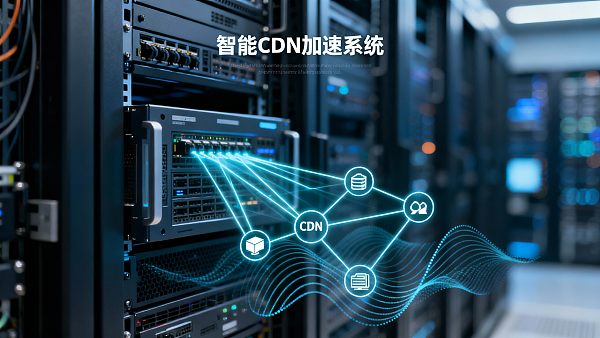
Deploying global server acceleration from scratch improves multilingual website access speed by 50% and optimizes multilingual SEO and conversion rates for independent e-commerce websites. This article is aimed at information researchers and users/operators, focusing on performance bottlenecks, SEO optimization, and conversion paths for independent e-commerce websites during the multilingual website construction process. Many companies face pain points such as slow page loading, cross-border request jitter, inconsistent language optimization, and unsatisfactory advertising returns when going global. This guide combines practical steps, architectural suggestions, and monitoring solutions to help technology and operations teams achieve quantifiable performance and conversion improvements from architecture, DNS/CDN, caching strategies to SEO tags and SEM campaigns.

Why is global server acceleration a top priority for multilingual websites?
In multilingual website construction and multilingual SEO optimization, page loading speed directly impacts user experience, bounce rate, and search engine indexing priority. For independent e-commerce websites, visitors may come from different continents, and network latency, packet loss, and TCP handshake counts can amplify page resource loading time, thereby reducing conversion rates. A well-designed global server acceleration strategy can reduce first-screen time (TTFB) by 30% to 60%, thus improving SEO scores and page authority. Deployment strategies go beyond simply connecting CDN nodes; they include node selection (separating edge nodes from origin nodes), regional load balancing, intelligent DNS resolution, and protocol optimization (such as enabling HTTP/2, QUIC/HTTP3, and TLS 1.3). During implementation, it's crucial to maintain semantic consistency in multilingual SEO optimization services, such as different URL structures for different languages, hreflang annotations, and localized server strategies, ensuring that search engines and users can quickly and accurately access pages in the corresponding languages. Data-driven decision-making is also crucial: it is recommended to compare page performance and ranking changes before and after deployment using RUM (Real User Monitoring) and synthetic analytics to quantify the value that global server acceleration brings to the operation of independent e-commerce websites.
Deployment steps from 0 to 1: Planning and technology selection (including node, origin server, and caching strategies)

The first step in deploying global server acceleration is technical planning: clearly defining the target countries/regions, peak access times, and key traffic sources. Based on this data, selecting cloud and CDN partners covering suitable regions and combining multi-cloud strategies (e.g., combining AWS, Alibaba Cloud, and regional nodes) can achieve a balance between compliance and performance. When selecting nodes, edge computing capabilities, caching transparency, and availability SLAs should be considered. Origin strategies should be combined with language version deployment methods: unified origin (multiple languages on the same origin server) is suitable for scenarios with frequent content synchronization, while independent origin (independent websites for each language) is more beneficial for localized SEO and legal compliance. Regarding caching strategies, static resources (images, styles, scripts) should be prioritized for long-term caching and versioning enabled; dynamic content can use Cache-Control and Edge Side Includes (ESI) for partial caching. DNS configuration and intelligent scheduling are crucial: enabling Anycast DNS and GeoDNS can direct users to the nearest edge node, reducing domain name resolution latency. Automated certificate management (ACME/automatic SSL) is also recommended, merging certificate issuance and DDoS protection to ensure security and performance in parallel. The entire deployment process should be coordinated with the structural design of a multilingual foreign trade independent website, prioritizing SEO-friendly URLs, meta strategies, and localized resources to avoid performance optimization disrupting the search engine's understanding of multilingual content.
Key configuration and operational strategies for multilingual SEO and conversion (including SEM optimization techniques)
Performance optimization is just the foundation; truly driving conversions for independent e-commerce websites requires a collaborative effort between SEO and SEM. Multilingual SEO optimization must first ensure each language version has independent and standardized meta elements, hreflang tags, and sitemaps, while avoiding semantic discrepancies after translation. In terms of content strategy, a process combining AI-driven keyword expansion and automatic TDK generation with manual review can improve keyword coverage quality and search intent matching rate. Regarding page structure, the core conversion path should be optimized (e.g., prioritizing key elements on product pages and delaying the loading of non-critical third-party scripts), and CTAs and form processes should be continuously optimized through A/B testing. For SEM, precise targeting and performance tracking are crucial: segmented targeting based on audience profiles, region, and device can significantly reduce the cost per conversion; localized ad creatives (language, currency, shipping information) can significantly improve click-through rates and inquiry conversions. Combining ad placement tools for real-time monitoring and intelligent bidding can improve ROI while maintaining cost control. If you require integrated advertising and placement services, consider using a solution with global coverage and multilingual adaptability, such as Google Ads , a commonly used placement service for businesses. It supports multi-country targeting, keyword filtering, and performance visualization, meeting the full-chain needs of foreign trade placement.
Monitoring, Operations and Case Studies: How to Steadily Transform Acceleration Effects into Business Growth

Any acceleration measures require continuous monitoring and optimization after deployment. Key metrics include: page load time (TTFB, LCP), conversion rate, bounce rate, region request success rate, and CDN hit rate. It is recommended to establish a monitoring dashboard to present real-time performance data for each language site in major markets, and combine log analysis and synthetic detection to pinpoint slow links. Operationally, automated rollback strategies and traffic circuit breaker configurations should be implemented to prevent third-party service anomalies from impacting the overall user experience. In practice, typical cases show that by deploying global server acceleration and simultaneously optimizing multi-language SEO and SEM strategies, enterprises can achieve a combined effect of 50% faster access speeds, approximately 35% higher SEO scores, and over 200% more inquiries (specific results vary depending on industry and campaign scale). In the long-term investment in brand promotion and building independent foreign trade websites, the synergy between technology and marketing can directly translate performance improvements into lower customer acquisition costs and higher ROI. To ensure steady growth in complex overseas markets, it is recommended to manage acceleration, SEO, and SEM as a closed-loop system, regularly reviewing performance and achieving continuous optimization through data-driven iteration.
In summary, global server acceleration is not a single-point technical upgrade, but a systematic project involving the collaborative development of multilingual website construction, multilingual SEO optimization services, and the operation of independent foreign trade websites. From planning nodes, intelligent DNS, caching and protocol optimization, to SEO tags, content localization, and SEM optimization techniques, every step directly impacts brand promotion and conversion rates. E-Marketing, leveraging its AI and big data capabilities across the entire value chain, covering global server clusters and intelligent marketing tools, provides foreign trade enterprises with end-to-end support, from building multilingual independent foreign trade websites to advertising placement, helping clients achieve faster access speeds and increased marketing efficiency. If you want to translate page speed into business returns, contact us now to learn more about our solutions and customized implementation plans, or visit our service page for details and exclusive technical and marketing consultation.
- Website Development
- Independent Website Operations
- Independent Foreign Trade Website Operation
- Independent website building
- Global server acceleration
- Multilingual website development
- SEO Optimization Services
- Multilingual SEO Optimization
- Brand Promotion
- Campbell (name)
- SEO
- free-standing station
- Multi-language foreign trade independent website construction
- Foreign trade independent website construction
- Foreign trade independent website
Related Articles
 The China-US tariff arrangement has reached a preliminary consensus, and the trade association will be established
 What determines B2C cross-border e-commerce website development costs? A breakdown of features, interfaces, and deployment methods
 China-Morocco zero-tariff access, a breakthrough in the cost of Moroccan goods exports to China



Related Products
 EasyCamp SaaS Smart Website Marketing SystemE-Yingbao SaaS Smart Website Marketing System: AI-powered, zero-code website building. Rapidly launch multilingual independent e-commerce sites in just 10 minutes. Global server acceleration and AI-driven SEO optimization empower businesses to efficiently connect with global markets. The seamless integration of technology and user-friendly operation makes building e-commerce sites incredibly simple.
 AI+SEM Intelligent Advertising Marketing SystemAI+SEM drives intelligent ad creation, empowering full-funnel precision advertising marketing. The system automatically generates weekly/monthly reports, AI recommends keywords and target countries, monitors core metrics in real-time with intelligent alerts, and enables one-click high-conversion ad solutions to help quickly acquire customers and improve ROI.
 AI+SEO Dual Engine Optimization ServiceEasyWin AI+SEO Dual Engine Optimization System leverages AI-powered keyword mining, content generation, and comprehensive technical optimization to help foreign trade enterprises acquire high-quality organic traffic, significantly improving search rankings and conversion rates.
 AI+SNS Social Media Marketing SystemYingbao AI+SNS Social Media Marketing System - Precision social capture for the social media era. Supports one-click content synchronization across major platforms like Facebook and LinkedIn. AI intelligently rewrites posts for enhanced relevance. 24/7 AI customer service and user profiling analysis empower businesses to efficiently expand into global markets.
 AI+SEO营销解决方案易营宝AI+SEO营销解决方案,通过AI批量写作、智能生成TDK、精准关键词扩词等功能,全面优化网站SEO效果,提升流量与转化率。助力企业构建高效智能网站新生态。
 AI+SEM Advertising Marketing SolutionsAI+SEM Advertising Marketing Solution leverages AI technology to deeply empower SEM ad campaigns. It automatically generates weekly/monthly reports using AI, presenting account data across multiple dimensions for comprehensive insights into campaign performance and trends. The system precisely recommends keywords and target countries, intelligently generates high-conversion ad copy, and enables one-click activation of efficient campaign plans to help businesses rapidly acquire customers. Simultaneously, it monitors core metrics in real time, intelligently identifies abnormal fluctuations, and issues timely alerts to ensure stable, high-return advertising results.
 Domain Name ServicesEasyWin provides professional domain name services, including intelligent queries, one-stop registration, brand protection, and full lifecycle management, helping businesses build a digital brand image.
 EasyOperate B2C Cross-Border E-Commerce Platform & Independent WebsiteEasyStore B2C Cross-border E-commerce Independent Store is an intelligent website building and cross-border e-commerce integrated solution independently developed by EasyStore Information Technology (Beijing) Co., Ltd. The system is specially designed for small and medium-sized as well as large export enterprises, integrating 'website building, operation, marketing, advertising, and conversion' into one, helping enterprises quickly establish cross-border e-commerce independent stores to achieve brand globalization and global sales growth.
The platform supports multiple languages, multiple currencies, and multi-channel marketing, with built-in AI intelligent translation and SEO optimization systems, suitable for mainstream markets such as Southeast Asia, Europe and America, Latin America, and the Middle East, assisting Chinese manufacturing enterprises in efficiently deploying international e-commerce strategies. SSL证书易营宝提供专业SSL安全证书服务,包括单域名和泛域名证书,确保网站数据传输加密、身份验证和完整性保护,助力企业建立安全可信的在线业务环境。









