









- What stages does the cross-border services ecosystem include? How do website building, promotion, payment, and compliance work togetherJun 22, 2026View details
- How will email marketing costs change in 2026Jun 22, 2026View details
- The China-US tariff arrangement has reached a preliminary consensus, and the trade association will be establishedJun 15, 2026View details
- Should overseas brand marketing start with ads or contentJun 21, 2026View details
- What determines B2C cross-border e-commerce website development costs? A breakdown of features, interfaces, and deployment methodsJun 17, 2026View details
- China-Morocco zero-tariff access, a breakthrough in the cost of Moroccan goods exports to ChinaJun 11, 2026View details
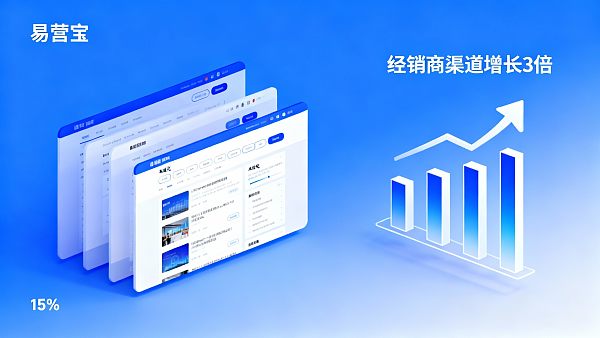
How can a multilingual website help with foreign trade? Case study: Distributor channel growth tripled

Multilingual websites can help expand foreign trade markets, improve SEO and conversion rates: Case studies show distributor channels growing 3 times, with AI-powered site building enabling more efficient multilingual management. As a professional documentation for end users/operators, procurement personnel, corporate decision-makers, and distributors, this article addresses common pain points for globalized foreign trade enterprises: How to build a multilingual website to support multi-market operations, balance translation costs and quality, ensure SEO performance and site speed for multilingual pages, implement compliance and security measures, and efficiently manage and synchronize multilingual content. After reading, decision-makers and project leads will gain actionable implementation paths and operational recommendations, while procurement and after-sales teams will understand tool selection and daily maintenance priorities—enabling quantifiable growth in foreign customer acquisition and channel expansion.
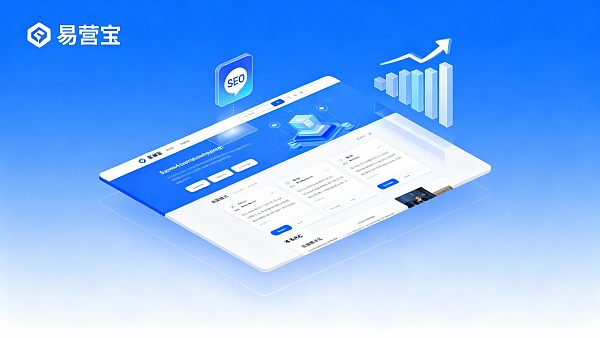
Why Do Enterprises Need Multilingual Websites? Definitions, Value, and Market Assessment
What is a multilingual website? Practically, it’s not just machine-translated page stacking but a market-centric content system including localized product descriptions, metadata tags, payment/logistics prompts, and compliance statements. Why build one? Overseas users trust native-language content more; search engines prioritize localized pages; and channel partners (distributors/resellers) can more effectively propagate and convert locally. How to determine required languages? Prioritize based on existing inquiry sources, sales potential, and logistics compliance—common B2B export languages often cover English, Spanish, French, Russian, or Arabic for high-potential markets, supplemented by industry/region-specific languages. Modern systems now achieve ~60% translation accuracy while ensuring sub-2-second load speeds, benefiting both user experience and SEO performance.
Concrete Benefits of Multilingual Websites for Foreign Trade and SEO Enhancement Paths
How do multilingual sites help foreign trade? First, visibility and traffic amplification: Independent language sites capture diverse search demands, with localized keywords and auto-generated TDK (title/description) significantly boosting organic traffic. Second, conversion efficiency: Embedded localization reduces language barriers, improving inquiry-to-lead quality. Real-world cases show systematic multilingual and channel operations tripling distributor growth, with inquiries up 210% and conversions 3.8x higher, alongside increased B2B order values. Do multilingual sites benefit SEO? Absolutely—with technical precision: Standardized hreflang tags, independent URL strategies, language-specific sitemaps, and localized metadata. Monitor each language site’s load speed and mobile performance, using multilingual SEO diagnostic tools for continuous “traffic-content-conversion” loop optimization.
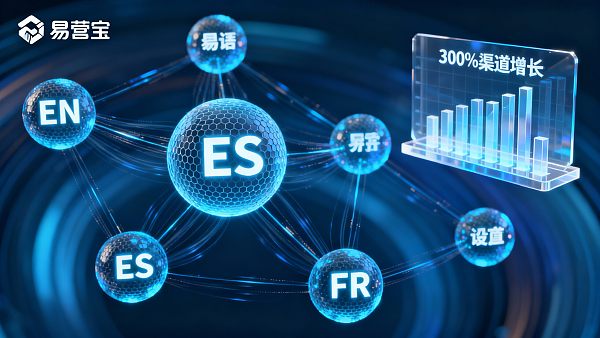
AI Site Building vs. Traditional Methods: Is AI Translation Reliable?
How does AI site building differ? Traditional methods rely on templates and manual configurations, with fragmented workflows and high maintenance costs. AI leverages NLP and templating rules to auto-generate pages, TDK, and visual assets, supporting one-click multilingual publishing with automatic sync updates. Is AI translation trustworthy? Modern AI achieves high usability in semantic understanding and industry terminology—especially when combined with localized review workflows and term bases—boosting accuracy for product specs, technical parameters, and marketing copy. A “machine + human” hybrid workflow cuts language service costs by ~75% while enabling 300+ minor language conversions, ideal for rapid market expansion. AI platforms also feature built-in keyword expansion, auto-TDK generation, and AI image creation, producing high-quality SEO-optimized content daily to reduce acquisition costs and improve ad efficiency.
Building and Managing an Efficient Multilingual Website: Implementation Roadmap and Governance Advice
How to build one? First, define target markets and language priorities, choosing technical architectures (subdomains, subdirectories, or standalone sites) with standardized URLs and sitemaps per language. For content management, adopt systems enabling auto-updates and one-click translation sync, with version control and localized review workflows. Use multilingual SEO dashboards to monitor rankings, traffic sources, bounce rates, and conversion leaks. For regulated markets, pre-configure GDPR compliance and data security. Operationally, integrate cross-channel marketing and ad management to unify search, social, and on-site conversions—quickly identifying high-potential markets. For proven solutions, reference specialized products like Multilingual Foreign Trade Standalone Site Solutions, combining AI translation, localized strategies, multilingual SEO, and real-time analytics for end-to-end export needs.
Summary and Actionable Guidance
Key takeaways: Multilingual websites are market-oriented productization and operational processes—not just language stacking. For exporters, proper multilingual strategies significantly expand profit margins, enhance local brand trust, and reduce acquisition costs. AI-powered building enables high-efficiency content production, rapid deployment, and continuous optimization while ensuring translation quality. Next steps: 1) Pilot small-scale multilingual tests to validate target markets; 2) Choose platforms supporting auto-translation and SEO diagnostics; 3) Establish localized content review and channel incentive mechanisms; 4) Integrate tech with targeted ad campaigns for sustained conversion optimization. For immediate implementation and customized assessments, contact us to explore solutions and apply for free diagnostics—driving measurable growth in distributor channels and overseas markets.
- Website Development
- Website Builder Platform
- SEO diagnosis
- B2B Foreign Trade
- Multilingual SEO Optimization
- SEO
- Independent Website
- SEO Optimization
- AI Translation
- Multilingual SEO
- Independent foreign trade website
- Multilingual website
- AI Website Building
- Why should businesses create multilingual websites?
- What is a multilingual website?
- What is the difference between AI website building and traditional website construction?
- How to manage content for a multilingual website?
- Can AI be relied upon for multilingual website translation?
Related Articles
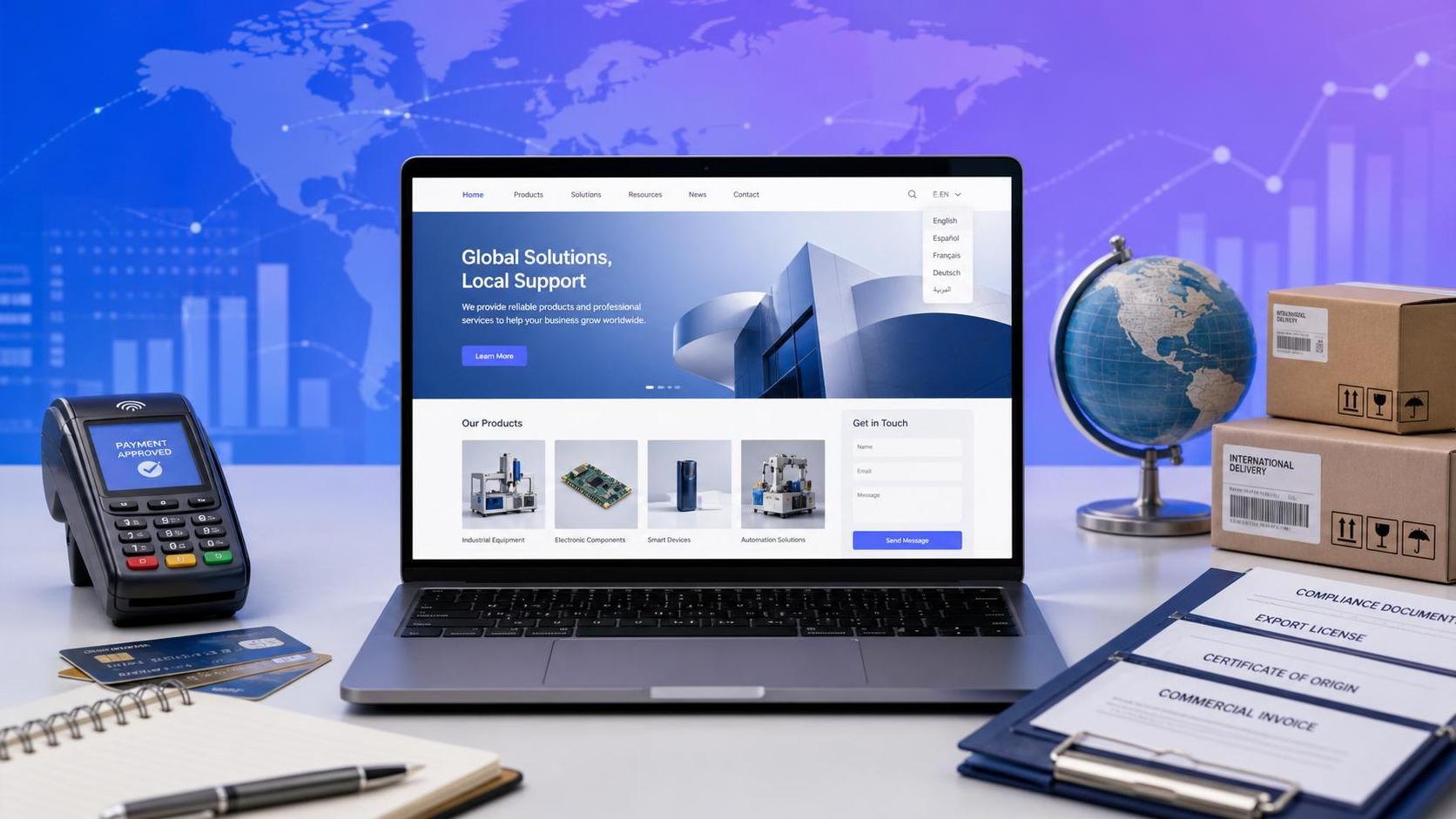

Related Products
 EasyCamp SaaS Smart Website Marketing SystemE-Yingbao SaaS Smart Website Marketing System: AI-powered, zero-code website building. Rapidly launch multilingual independent e-commerce sites in just 10 minutes. Global server acceleration and AI-driven SEO optimization empower businesses to efficiently connect with global markets. The seamless integration of technology and user-friendly operation makes building e-commerce sites incredibly simple.
 AI+SEM Intelligent Advertising Marketing SystemAI+SEM drives intelligent ad creation, empowering full-funnel precision advertising marketing. The system automatically generates weekly/monthly reports, AI recommends keywords and target countries, monitors core metrics in real-time with intelligent alerts, and enables one-click high-conversion ad solutions to help quickly acquire customers and improve ROI.
 AI+SEO Dual Engine Optimization ServiceEasyWin AI+SEO Dual Engine Optimization System leverages AI-powered keyword mining, content generation, and comprehensive technical optimization to help foreign trade enterprises acquire high-quality organic traffic, significantly improving search rankings and conversion rates.
 AI+SNS Social Media Marketing SystemYingbao AI+SNS Social Media Marketing System - Precision social capture for the social media era. Supports one-click content synchronization across major platforms like Facebook and LinkedIn. AI intelligently rewrites posts for enhanced relevance. 24/7 AI customer service and user profiling analysis empower businesses to efficiently expand into global markets.
 AI+SEO营销解决方案易营宝AI+SEO营销解决方案,通过AI批量写作、智能生成TDK、精准关键词扩词等功能,全面优化网站SEO效果,提升流量与转化率。助力企业构建高效智能网站新生态。
 AI+SEM Advertising Marketing SolutionsAI+SEM Advertising Marketing Solution leverages AI technology to deeply empower SEM ad campaigns. It automatically generates weekly/monthly reports using AI, presenting account data across multiple dimensions for comprehensive insights into campaign performance and trends. The system precisely recommends keywords and target countries, intelligently generates high-conversion ad copy, and enables one-click activation of efficient campaign plans to help businesses rapidly acquire customers. Simultaneously, it monitors core metrics in real time, intelligently identifies abnormal fluctuations, and issues timely alerts to ensure stable, high-return advertising results.
 Domain Name ServicesEasyWin provides professional domain name services, including intelligent queries, one-stop registration, brand protection, and full lifecycle management, helping businesses build a digital brand image.
 EasyOperate B2C Cross-Border E-Commerce Platform & Independent WebsiteEasyStore B2C Cross-border E-commerce Independent Store is an intelligent website building and cross-border e-commerce integrated solution independently developed by EasyStore Information Technology (Beijing) Co., Ltd. The system is specially designed for small and medium-sized as well as large export enterprises, integrating 'website building, operation, marketing, advertising, and conversion' into one, helping enterprises quickly establish cross-border e-commerce independent stores to achieve brand globalization and global sales growth.
The platform supports multiple languages, multiple currencies, and multi-channel marketing, with built-in AI intelligent translation and SEO optimization systems, suitable for mainstream markets such as Southeast Asia, Europe and America, Latin America, and the Middle East, assisting Chinese manufacturing enterprises in efficiently deploying international e-commerce strategies. SSL证书易营宝提供专业SSL安全证书服务,包括单域名和泛域名证书,确保网站数据传输加密、身份验证和完整性保护,助力企业建立安全可信的在线业务环境。









