









- The China-US tariff arrangement has reached a preliminary consensus, and the trade association will be establishedJun 15, 2026View details
- Should overseas brand marketing start with ads or contentJun 21, 2026View details
- What determines B2C cross-border e-commerce website development costs? A breakdown of features, interfaces, and deployment methodsJun 17, 2026View details
- China-Morocco zero-tariff access, a breakthrough in the cost of Moroccan goods exports to ChinaJun 11, 2026View details
- What signal should be released for the suspension of exports to JapanJun 10, 2026View details
- China's May LNG imports rebounded, with increased volumes from Russia and Canada filling the Middle East supply gapJun 10, 2026View details
- Will GEO change its SEO strategy?Jun 04, 2026View details
- What types of businesses are end-to-end solutions suitable for?Jun 03, 2026View details
How to Choose Foreign Trade Website Building Services in Shenzhen: What to Focus On
How to choose a website building service for foreign trade in Shenzhen? Focus on responsive design, website title, description, and keywords (TDK), SSL certificate installation, and SEO capabilities for foreign trade websites. A high-quality Shenzhen foreign trade website building solution should also consider rapid website setup, independent website SEO optimization, and cross-border marketing conversion.
First, let's look at the core issue: What problems does Shenzhen foreign trade website building service actually aim to solve?
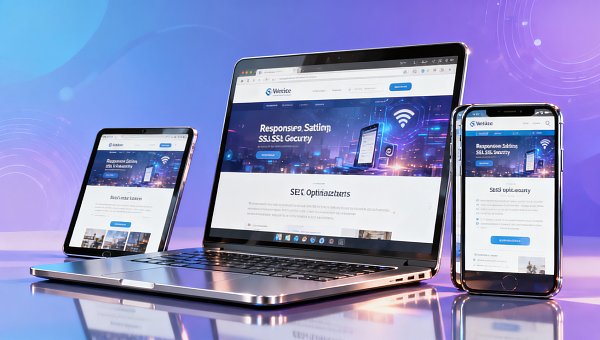
Many companies seeking website building services in Shenzhen for foreign trade tend to focus on the visual appeal of the page, neglecting the true goal of website creation: to ensure that overseas customers can understand it, find it easily, inquire about it, and maintain it effectively. For foreign trade companies, a website is not just a simple display page, but a fundamental infrastructure for customer acquisition, communication, conversion, and data accumulation.
If a business targets users, project managers, distributors, and end consumers simultaneously, its website structure cannot serve only one role. A common practice is to design a layered approach, with entry points for product center, solutions, case studies, after-sales support, and agency cooperation, allowing different visitors to quickly find the content they need within 30 to 90 seconds.
A truly effective integrated website and marketing service solution typically includes three phases: initial positioning and architecture planning, mid-term website building and content deployment, and late-term SEO optimization and advertising coordination. Simply delivering the website source code without considering indexing, speed, or conversion paths often results in higher subsequent operating costs.
E-Creative Information Technology (Beijing) Co., Ltd. has been deeply involved in global digital marketing since 2013, building a full-chain capability encompassing intelligent website building, SEO optimization, social media marketing, and advertising. For Shenzhen foreign trade companies, the advantage of this type of service lies not only in faster website launch but also in unified planning of website building and subsequent growth, reducing repeated redesigns.
The demand for foreign trade website building is usually concentrated in these 4 scenarios.
- New brands going global: The basic website needs to be launched within 2 to 4 weeks, and inquiry forms, WhatsApp or email outreach channels should be deployed simultaneously.
- Traditional factories transforming: They already have stores on Alibaba International Station or other platforms and want to build independent websites to create brand assets and natural traffic entry points.
- Multi-region expansion: It needs to support multi-language and multi-currency display to facilitate access by overseas distributors, agents and end customers in different regions.
- Marketing upgrade: The original website has been online for 1 to 3 years, but it is slow to load, has outdated content, and has few indexed pages, resulting in weak advertising performance and poor SEO results.
Therefore, when choosing a website building service for foreign trade in Shenzhen, it's not enough to simply look at the price; the key is whether the solution covers all four aspects: website building, optimization, promotion, and maintenance. Missing any one aspect may require additional effort later on.
What to focus on when purchasing: 6 key inspection items for better practicality
When selecting website building service providers for foreign trade in Shenzhen, business decision-makers are advised to first create a checklist. Compared to listening to sales presentations, checking each item systematically makes it easier to determine whether the solution is suitable for their business and can also reduce the risk of project delays, rework, and ineffective promotion.
The table below is suitable for use during the initial communication phase. It covers the most common selection dimensions in foreign trade website building, including responsiveness, TDK configuration, SSL certificate, content architecture, and post-operation interface, and is suitable for joint evaluation by project leaders and procurement personnel.
The six checklist items in the table can help businesses weed out service providers who "only know how to create web pages but don't understand foreign trade marketing." In particular, TDK (Task Management), SSL certificate installation, and SEO infrastructure are often overlooked before signing a contract, but they can actually impact customer acquisition efficiency over the next 6 to 12 months.
How to determine if a service provider truly understands independent website SEO optimization?
The criteria for judging this are not complicated. The key is whether the other party can clearly explain the connection between website building and content growth. For example, do they first do keyword stratification? Do they differentiate between brand keywords, product keywords, scenario keywords, and problem keywords? Do they plan the internal linking relationships between product pages and article pages?
Experienced teams typically provide a basic site map, a suggested website structure, and a plan for 10 to 30 key pages before website launch. This prevents issues like "many pages competing for the same keywords" or "product pages lacking search entry points" after the website goes live.
For cross-border marketing conversions, it's also important to consider whether the platform supports inquiry form tracking, source tracking, ad landing page expansion, and social media redirects. Without a data feedback mechanism, it's difficult to assess which types of pages generate higher-quality leads for subsequent ad campaigns.
Five key questions to ask:
- After the website goes live, can we continue to do independent website SEO optimization instead of just delivering static pages?
- Does it support setting TDK (Title, Description, Keywords), image Alt text, structured content, and related recommendations independently for each product page?
- What is the typical project delivery cycle: 7 days, 15 days, or 30 days or more? What are the usual reasons for delays?
- Is there content update training? Can operations staff learn the basic publishing process within one hour?
- Whether advertising, social media marketing, and data analysis can be seamlessly integrated afterward, rather than requiring companies to find their own teams to piece things together from scratch.
Solution Comparison: Template Websites, Custom Websites, and Marketing-Oriented Independent Websites – How to Choose?
Foreign trade companies commonly choose between three types of websites: template websites, customized websites, and marketing-oriented independent websites. None of these is inherently better than another; rather, they are suited to different budgets, delivery cycles, and growth stages. If the company's goal is simply to launch and showcase its products, a template website is sufficient; however, if the aim is to continuously generate inquiries, a marketing-oriented independent website is a more worthwhile investment.
The comparison table below is helpful for business decision-makers to quickly assess the differences between solutions. This comparison is especially useful when budgets are limited but a balance between website setup speed and subsequent promotion is desired, as it reduces the cost of repeated communication.
In the long run, if a company plans to generate organic traffic from Google, through advertising, or through social media within the next six months, building a marketing-oriented independent website from the outset is usually more cost-effective and conducive to a more stable business pace than a subsequent redesign.
When budget is limited, which capabilities should be prioritized for retention?
Tightening the budget doesn't mean sacrificing quality. A more sensible approach is to first preserve the core capabilities that impact long-term returns, and then gradually expand the visuals and content. In foreign trade website building projects, the least recommended areas to cut are the technical foundation and the ability to handle traffic.
- Prioritize retaining responsive design, SSL certificate installation, page load optimization, and SEO infrastructure.
- At least five core pages should be completed first: homepage, product page, about us, contact page, and FAQ page.
- The first batch of content doesn't need to be complete at once, but it's recommended to prepare 10 to 20 articles focusing on product and scenario-related questions.
- If it involves team management or knowledge system construction, some companies may refer to the new era police station human resource management optimization strategies to explore such management optimization materials and learn from process design ideas, but the website solution should still return to the foreign trade conversion itself.
The advantage of doing this is that you first establish an operational foundation, and then gradually enrich case studies, industry solutions, downloadable materials, and multilingual versions based on the data, thus avoiding a large initial investment without generating effective inquiries.
Risks easily overlooked during implementation: It's not over once it's launched.
Many companies find that after launching their foreign trade websites, although the pages are accessible, inquiries don't increase, and search engines are slow to index them. The problem is usually not "whether there is a website," but rather the lack of key actions before and after launch, such as 301 redirects, site map submission, form testing, and content scheduling.
A more robust implementation process typically includes four steps: requirements interviews, prototyping and content planning, development and testing, and preparation for launch and promotion. Each step should have clear acceptance points, and project managers should especially monitor the timelines to avoid delays from two weeks to over six weeks due to incomplete materials or excessively long decision-making chains.
For after-sales maintenance personnel, backend permissions, backup mechanisms, plugin updates, and form notification emails are equally crucial. If these basic maintenance items are not configured in advance, problems such as accidental deletion of content, missed leads, and system upgrade conflicts often occur later, affecting business continuity.
YiYingBao leverages artificial intelligence and big data capabilities, making it more suitable for businesses with growth aspirations to centrally manage website building and marketing activities. For companies looking to streamline communication processes, this integrated approach reduces the losses caused by fragmented collaboration among multiple teams involved in "design, technology, operations, and advertising."
Six acceptance items to be completed before and after launch
- Check whether the core pages display correctly on both desktop and mobile devices, with a focus on verifying the homepage, product pages, contact pages, and form pages.
- Confirm that the website's title, description, and keywords (TDK) are set independently for each section to avoid duplicate titles across the entire site.
- Verify that the SSL certificate is installed correctly and ensure that the entire site is HTTPS without errors.
- Test whether the inquiry form, email notification, and instant messaging portal can complete the closed loop within 5 minutes.
- Submit a sitemap and check your robots.txt settings to ensure search engines can crawl the main pages.
- Develop a content update plan for the first 30 days after launch, with at least 1 to 2 new content updates per week.
Common Misconceptions
First, there's the misconception that customers will automatically come once the website is built. In reality, without content updates, keyword optimization, and coordinated promotion, it's difficult for an independent website to consistently generate traffic. Second, focusing solely on the homepage design while neglecting product and solution pages directly weakens inquiry conversion rates. Third, treating multiple languages as simple translations ignores localized expressions and differences in search habits.
If a company is still sorting out team collaboration and job responsibilities, it can also refer to the thinking on organizational optimization in the discussion of human resource management optimization strategies of police stations in the new era . However, when it comes to foreign trade website building projects, it is more important to clarify who is responsible for the content, who is responsible for the review, and who follows up on the leads.
Why choose an integrated service: Reduced communication costs from website building to growth.
For Shenzhen's foreign trade companies, the main difference between choosing a website development company and an integrated website and marketing service team lies in their subsequent growth efficiency. The former focuses more on delivering user-friendly pages, while the latter prioritizes whether the website can consistently generate search engine exposure, advertising revenue, and business conversions.
Founded in 2013 and headquartered in Beijing, Yiyingbao Information Technology (Beijing) Co., Ltd. provides end-to-end solutions encompassing intelligent website building, SEO optimization, social media marketing, and advertising, serving over 100,000 companies. This combination of capabilities is particularly suitable for clients needing to balance speed, structure, traffic, and conversion rates when building independent websites for international trade.
If you are evaluating website building services for foreign trade in Shenzhen, we suggest focusing your consultation on these five key questions: Is the website architecture suitable for foreign trade operations? Is the delivery cycle 7 days or 30 days? Does it support independent website SEO optimization? Can it be integrated with social media and advertising afterward? And is the maintenance and training adequate? Only when these questions are clearly answered can the project truly be implemented.
Before formal collaboration, you can request the service provider to communicate and confirm parameters, program planning, delivery cycle, customized solutions, SSL certificate installation, TDK settings, style direction, and pricing details. This not only helps enterprise decision-makers control the budget but also helps project managers arrange materials, approvals, and launch schedules in advance.
Before contacting us, you can prepare this information.
- Target market and target language: Is the campaign targeting a single country or a multi-regional strategy?
- Existing data: Do you already have product catalogs, case study images, company introductions, and certification documents?
- Time requirement: Do you want to launch a basic website within 7 days, or complete a relatively complete marketing-oriented independent website within 1 month?
- Marketing plan: Whether to follow up with SEO, advertising, social media operations, or agent recruitment.
- Internal division of labor: Who is responsible for content review, who is responsible for pricing and communication, and who is responsible for after-sales maintenance and updates.
The more thorough the preparation, the more efficient the website building communication, and the easier it is to obtain a Shenzhen foreign trade website building solution that truly matches the business goals. For companies that need to balance rapid website building, independent website SEO optimization, and cross-border marketing conversion, choosing the right service model from the beginning is often more important than repeatedly redoing things later.
Related Articles



Related Products
 EasyCamp SaaS Smart Website Marketing SystemE-Yingbao SaaS Smart Website Marketing System: AI-powered, zero-code website building. Rapidly launch multilingual independent e-commerce sites in just 10 minutes. Global server acceleration and AI-driven SEO optimization empower businesses to efficiently connect with global markets. The seamless integration of technology and user-friendly operation makes building e-commerce sites incredibly simple.
 AI+SEM Intelligent Advertising Marketing SystemAI+SEM drives intelligent ad creation, empowering full-funnel precision advertising marketing. The system automatically generates weekly/monthly reports, AI recommends keywords and target countries, monitors core metrics in real-time with intelligent alerts, and enables one-click high-conversion ad solutions to help quickly acquire customers and improve ROI.
 AI+SEO Dual Engine Optimization ServiceEasyWin AI+SEO Dual Engine Optimization System leverages AI-powered keyword mining, content generation, and comprehensive technical optimization to help foreign trade enterprises acquire high-quality organic traffic, significantly improving search rankings and conversion rates.
 AI+SNS Social Media Marketing SystemYingbao AI+SNS Social Media Marketing System - Precision social capture for the social media era. Supports one-click content synchronization across major platforms like Facebook and LinkedIn. AI intelligently rewrites posts for enhanced relevance. 24/7 AI customer service and user profiling analysis empower businesses to efficiently expand into global markets.
 AI+SEO营销解决方案易营宝AI+SEO营销解决方案,通过AI批量写作、智能生成TDK、精准关键词扩词等功能,全面优化网站SEO效果,提升流量与转化率。助力企业构建高效智能网站新生态。
 AI+SEM Advertising Marketing SolutionsAI+SEM Advertising Marketing Solution leverages AI technology to deeply empower SEM ad campaigns. It automatically generates weekly/monthly reports using AI, presenting account data across multiple dimensions for comprehensive insights into campaign performance and trends. The system precisely recommends keywords and target countries, intelligently generates high-conversion ad copy, and enables one-click activation of efficient campaign plans to help businesses rapidly acquire customers. Simultaneously, it monitors core metrics in real time, intelligently identifies abnormal fluctuations, and issues timely alerts to ensure stable, high-return advertising results.
 Domain Name ServicesEasyWin provides professional domain name services, including intelligent queries, one-stop registration, brand protection, and full lifecycle management, helping businesses build a digital brand image.
 EasyOperate B2C Cross-Border E-Commerce Platform & Independent WebsiteEasyStore B2C Cross-border E-commerce Independent Store is an intelligent website building and cross-border e-commerce integrated solution independently developed by EasyStore Information Technology (Beijing) Co., Ltd. The system is specially designed for small and medium-sized as well as large export enterprises, integrating 'website building, operation, marketing, advertising, and conversion' into one, helping enterprises quickly establish cross-border e-commerce independent stores to achieve brand globalization and global sales growth.
The platform supports multiple languages, multiple currencies, and multi-channel marketing, with built-in AI intelligent translation and SEO optimization systems, suitable for mainstream markets such as Southeast Asia, Europe and America, Latin America, and the Middle East, assisting Chinese manufacturing enterprises in efficiently deploying international e-commerce strategies. SSL证书易营宝提供专业SSL安全证书服务,包括单域名和泛域名证书,确保网站数据传输加密、身份验证和完整性保护,助力企业建立安全可信的在线业务环境。









