









- What Does a Global Traffic Ecosystem Service Provider Do? What Are the Differences from a Single Advertising AgencyJul 16, 2026View details
- What should you focus on in the latest enterprise SaaS report? From renewal rates and delivery costs to overseas growth opportunitiesJul 12, 2026View details
- What signals are worth paying attention to in a cross-border marketing trend report? B2B companies should look at these 6 signalsJul 11, 2026View details
- How to Read a Cross-Border Marketing Trends Report? Five Key Dimensions for Evaluating Channel OpportunitiesJul 11, 2026View details
- Which channel has the highest ROI in the global traffic ecosystem? Comparative analysis of search, social media, and advertisingJul 10, 2026View details
- What multilingual website services are available in Sanya? Which model is more suitable for local businesses going global?Jul 08, 2026View details
- How to view the complete list of China SaaS companies in the top 100? Practical methods for screening website-building and marketing service providersJul 08, 2026View details
- How to view pricing in the global traffic ecosystem? Cost comparison of search, social media, and content channel advertisingJul 06, 2026View details
What are the typical components of cross-border website setup costs?
The cost of building a cross-border website typically includes domain name, server, website design quote, multi-language functionality, SSL certificate application process, and subsequent search engine optimization services. Understanding these cost components is crucial for developing a more efficient cross-border website building plan.
For companies expanding into overseas markets, a website is not merely a showcase; it's a core platform for building brand trust, generating inquiries, securing advertising revenue, and facilitating channel collaboration. Researchers focus on price ranges, business decision-makers prioritize return on investment, project managers are concerned with implementation timelines, and after-sales support and distributors are more focused on the stability of ongoing maintenance.
In the integrated website + marketing service model, the cost of building a cross-border website should not be based solely on the initial quote. It should be comprehensively evaluated in conjunction with the technical architecture, content system, SEO fundamentals, data tracking, and subsequent operational support. This is especially important for companies targeting multiple countries, languages, and channels; a clearer budget breakdown helps avoid repeated rework later on.
As a service provider with over 10 years of experience in global digital marketing services, E-Creative Information Technology (Beijing) Co., Ltd. provides end-to-end support in areas such as intelligent website building, SEO optimization, social media marketing, and advertising. For most companies expanding overseas, a truly reasonable budget plan is not about "low-cost website building," but rather about investing in a systematic approach to "sustainable customer acquisition."
What are the typical components of the basic cost of building a cross-border website?
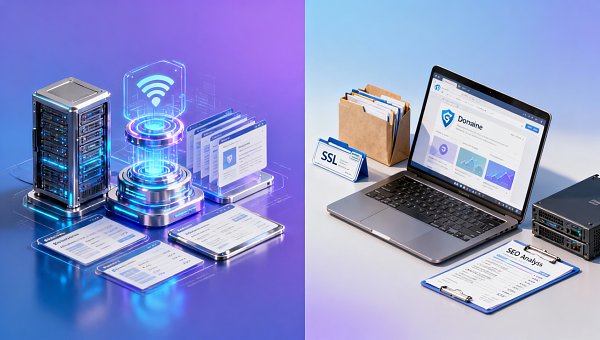
The cost of building a cross-border website can generally be broken down into six main parts: domain name, server or cloud hosting, UI and front-end design, program development, multi-language deployment, and basic security configuration. If the project also requires SEO structure, lead generation through forms, and integrated advertising landing pages, the cost will increase further.
Based on common market trends, a basic corporate website typically costs between 10,000 and 30,000 yuan. If it involves more than three languages, an independent inquiry system, product database management, and country-specific site distribution, the overall budget will generally range from 30,000 to 80,000 yuan. Projects with a higher degree of customization may exceed 100,000 yuan.
The most easily underestimated costs are the "hidden costs." For example, the first year may seem to only involve paying for website building, but subsequent costs include SSL certificates, CDN acceleration, overseas node deployment, image compression, cookie compliance prompts, conversion tracking code, and basic search engine optimization. The final actual expenditure may be 20% to 40% higher than the initial quote.
If a company plans to generate inquiries through Google SEO, social media marketing, or overseas advertising, it should plan the URL structure, page loading speed, mobile adaptation, form processes, and event tracking system before the website goes live, rather than separating website building and marketing into two isolated projects.
Common cost module breakdown
The table below can help businesses quickly determine the main components of cross-border website building costs and the impact of different stages on subsequent marketing results.
This table shows that the cost of building a cross-border website is not a single item, but rather the result of multiple modules combined. If businesses only look at "how much does it cost to build a website," they may easily overlook subsequent operation and customer acquisition capabilities, ultimately leading to a website that launches quickly but has weak conversion rates.
Four questions that companies should confirm simultaneously when requesting a quote
- Does the quote include mobile adaptation, basic SEO settings, sitemap, and URL specifications, rather than just visual page design?
- Does it include the first year of technical maintenance, vulnerability patching, content backup, and server monitoring to avoid additional charges after launch?
- Whether multilingual content is accessed via machine translation or deployed manually, the quality and cost differences between the two methods are significant.
- Whether or not GA4, ad conversion tracking, and CRM form integration are supported will directly affect the efficiency of subsequent marketing campaigns.
Key factors affecting the price of cross-border websites

For cross-border website development, the price difference can be as much as 2 to 5 times depending on the industry, target market, and customer acquisition method. The cost structure is also completely different for manufacturing websites versus brand retail websites, websites with two languages versus eight languages, and showcase websites versus marketing websites.
The first key factor is page size. Developing a basic website with 10 pages or less is generally manageable; however, when the number of pages increases to 30 or more, including industry solution pages, case study pages, download pages, knowledge bases, and blog modules, the design and content entry costs increase significantly.
The second factor is technical complexity. If a company requires country-specific directories, automatic redirection to multiple regions, automatic inquiry allocation, B2B product filtering, PDF document management, and integration with WhatsApp or email systems, the development cycle will generally increase from 2 weeks to 4 to 8 weeks.
The third factor is marketing objectives. A website built for search engine optimization (SEO) differs significantly from a website solely for brand image display in terms of information architecture, keyword placement, content depth, and the number of landing pages. The former requires a higher initial investment, but its long-term customer acquisition costs are usually more controllable.
Cost differences between different website building types
If your business is still evaluating website building models, you can refer to the following comparisons to determine which type of cross-border website solution is more suitable for your current stage.
For most B2B companies going global, semi-customized marketing websites are more common because they balance launch efficiency, brand expression, and room for future optimization. This structure also facilitates continuous iteration if they plan to expand into content marketing, social media marketing, and advertising in the future.
An easily overlooked management perspective
Many project managers focus solely on website construction during the budget approval phase, neglecting the long-term management of digital assets. For example, content materials, product documentation, image permissions, access accounts, and lead data—without a unified mechanism, maintenance efficiency will significantly decrease later. The management approach emphasized in discussions of problems and solutions related to fixed asset management in public institutions essentially reminds businesses that a website is not a one-time delivery, but a digital asset that requires continuous inventory and maintenance.
Why are subsequent costs often more important than the initial website setup fee?
After a cross-border website goes live, businesses typically face long-term investments in content updates, system maintenance, vulnerability patching, new page creation, data analytics, SEO optimization, and ad landing page iterations. Many businesses only focus on the website setup cost in the first year, only realizing from the second to the twelfth month that ongoing operating costs are the true determinant of success.
For basic maintenance, which includes server monitoring, program upgrades, database backups, form testing, and security checks, the typical service cycle is monthly or quarterly. Maintenance costs for small to medium-sized websites typically range from 3,000 to 10,000 yuan per year, while functional websites may incur even higher costs.
SEO-related costs should also be considered separately. Basic SEO typically includes TDK settings, link structure optimization, image ALT text, sitemap, 301 redirects, and speed optimization; if you move into the continuous content optimization, backlink building, keyword placement, and page conversion testing phase, the budget will vary depending on the monthly workload.
For businesses planning to run Google Ads, social media ads, or KOL-driven traffic, their websites also need to handle landing page setup and data attribution. Without continuous optimization, even with high cost-per-click ads, potential leads may be lost due to high bounce rates, excessively long forms, or poor mobile experiences.
List of common post-operation costs
To avoid budget distortion, companies should include the following subsequent expenditures in their annual plan before signing contracts, rather than adding them after problems arise.
- Technical maintenance: It is recommended to perform a health check at least once a month and a backup and recovery drill once a quarter.
- Content updates: New product launches, new case studies, language version revisions, usually charged per page or by the hour.
- SEO optimization: It is recommended to use a 3-month or 6-month evaluation cycle to facilitate the observation of changes in indexing and ranking.
- Security services include SSL updates, protection policy adjustments, malicious access monitoring, and sensitive access management.
- Marketing synergy: ad landing page creation, social media redirect pages, form tracking, and inquiry attribution analysis.
If businesses want their website to become a long-term customer acquisition channel, it's generally not recommended to simply buy "launch delivery." A more reasonable approach is to create an annual budget based on 12 months, comprehensively planning website construction, maintenance, content creation, and promotion. This will allow them to determine whether the overall investment is worthwhile.
Two common misconceptions during the maintenance phase
First, focusing solely on building without updating. Many websites don't add new pages for six months after launch, leading to a decline in search performance and user trust. Second, focusing only on traffic without conversion. Without regularly optimizing buttons, forms, customer service entry points, and page content, even high traffic volume will struggle to generate effective business opportunities.
How can businesses develop more reasonable cross-border website budgets and implementation plans?
To keep the cost of building a cross-border website within a reasonable range, the key is not to relentlessly drive down prices, but to clearly define goals, divide the timeline, and prioritize high-value modules. For companies venturing overseas for the first time, it is recommended to focus on one main market, one or two languages, and 10 to 20 core pages to avoid overexpanding the initial scope.
In terms of implementation pace, a "three-stage budgeting method" can be adopted: the first stage is to complete website construction and basic content; the second stage is to improve SEO and data tracking; and the third stage is to integrate social media marketing and advertising. This approach allows companies to gradually increase investment based on lead quality, rather than throwing the entire budget into front-end development all at once.
If your internal team is limited, prioritizing a service provider that can simultaneously offer website building, content creation, optimization, and promotion will significantly reduce communication costs. For project managers, using a single vendor can often reduce issues such as repeated modifications, gaps in handover, and unclear responsibilities, typically improving delivery efficiency by around 20%.
Yiyingbao Information Technology (Beijing) Co., Ltd. leverages artificial intelligence and big data capabilities to establish a collaborative link between intelligent website building, SEO optimization, social media marketing, and advertising, making it more suitable for companies that want to balance speed of launch and long-term growth. This integrated solution is particularly valuable for growing teams of 10 to 200 people.
5 steps to budgeting
- First, define your goals: is it for brand display, to generate inquiries, or to attract advertising traffic? Different goals determine the importance of different functions.
- Next, consider the number of core pages, the number of languages, and the depth of product categories, which directly impact development and content costs.
- Assess the technology: Does it require advanced features such as overseas acceleration, CRM integration, automatic distribution, and multi-site structure?
- Reserve operating expenses: It is recommended to set aside at least 30% to 50% of the first year's website setup cost for maintenance and optimization.
- Set up acceptance points: Generally, acceptance can be carried out in stages according to three nodes: prototype confirmation, design confirmation, and test and launch.
FAQ: Some of the most frequently asked questions by businesses
Many companies ask during consultations: Is it necessary for a cross-border website to be multilingual? The answer is that it depends on the market. If the initial phase is only testing the European and American markets, it is usually more efficient to start with an English website; when adding Latin American, Middle Eastern, or European markets with less common languages, it is more prudent to expand to 2 to 5 languages.
Another frequently encountered issue is delivery time. Basic projects typically launch within 7 to 15 days, semi-custom projects usually take 3 to 6 weeks, and projects involving complex development and content planning require 6 weeks or more. The tighter the timeframe, the more in advance companies need to prepare product materials, brand resources, and written content.
Some companies are also concerned about whether they can maintain the system independently. While backend content updates, news releases, and image replacements can usually be completed independently after training, code modifications, script tracking, speed optimization, and security hardening still require ongoing support from a professional team. The standardized approach reflected in the problems and solutions encountered in the management of fixed assets in public institutions is also applicable to the access control and process management of enterprise digital assets.
Overall, the key to cross-border website development costs lies not in the lowest quote, but in whether the budget covers the core aspects that truly impact overseas customer acquisition. If you are preparing to build or upgrade your overseas website, it is recommended that you obtain a customized solution as soon as possible, taking into account your target market, functional requirements, and annual marketing plan, to further understand the implementation path that is more suitable for your business.
Related Articles


Related Products
 EasyCamp SaaS Smart Website Marketing SystemE-Yingbao SaaS Smart Website Marketing System: AI-powered, zero-code website building. Rapidly launch multilingual independent e-commerce sites in just 10 minutes. Global server acceleration and AI-driven SEO optimization empower businesses to efficiently connect with global markets. The seamless integration of technology and user-friendly operation makes building e-commerce sites incredibly simple.
 AI+SEM Intelligent Advertising Marketing SystemAI+SEM drives intelligent ad creation, empowering full-funnel precision advertising marketing. The system automatically generates weekly/monthly reports, AI recommends keywords and target countries, monitors core metrics in real-time with intelligent alerts, and enables one-click high-conversion ad solutions to help quickly acquire customers and improve ROI.
 AI+SEO Dual Engine Optimization ServiceEasyWin AI+SEO Dual Engine Optimization System leverages AI-powered keyword mining, content generation, and comprehensive technical optimization to help foreign trade enterprises acquire high-quality organic traffic, significantly improving search rankings and conversion rates.
 AI+SNS Social Media Marketing SystemYingbao AI+SNS Social Media Marketing System - Precision social capture for the social media era. Supports one-click content synchronization across major platforms like Facebook and LinkedIn. AI intelligently rewrites posts for enhanced relevance. 24/7 AI customer service and user profiling analysis empower businesses to efficiently expand into global markets.
 AI+SEO营销解决方案易营宝AI+SEO营销解决方案,通过AI批量写作、智能生成TDK、精准关键词扩词等功能,全面优化网站SEO效果,提升流量与转化率。助力企业构建高效智能网站新生态。
 AI+SEM Advertising Marketing SolutionsAI+SEM Advertising Marketing Solution leverages AI technology to deeply empower SEM ad campaigns. It automatically generates weekly/monthly reports using AI, presenting account data across multiple dimensions for comprehensive insights into campaign performance and trends. The system precisely recommends keywords and target countries, intelligently generates high-conversion ad copy, and enables one-click activation of efficient campaign plans to help businesses rapidly acquire customers. Simultaneously, it monitors core metrics in real time, intelligently identifies abnormal fluctuations, and issues timely alerts to ensure stable, high-return advertising results.
 Domain Name ServicesEasyWin provides professional domain name services, including intelligent queries, one-stop registration, brand protection, and full lifecycle management, helping businesses build a digital brand image.
 EasyOperate B2C Cross-Border E-Commerce Platform & Independent WebsiteEasyStore B2C Cross-border E-commerce Independent Store is an intelligent website building and cross-border e-commerce integrated solution independently developed by EasyStore Information Technology (Beijing) Co., Ltd. The system is specially designed for small and medium-sized as well as large export enterprises, integrating 'website building, operation, marketing, advertising, and conversion' into one, helping enterprises quickly establish cross-border e-commerce independent stores to achieve brand globalization and global sales growth.
The platform supports multiple languages, multiple currencies, and multi-channel marketing, with built-in AI intelligent translation and SEO optimization systems, suitable for mainstream markets such as Southeast Asia, Europe and America, Latin America, and the Middle East, assisting Chinese manufacturing enterprises in efficiently deploying international e-commerce strategies. SSL证书易营宝提供专业SSL安全证书服务,包括单域名和泛域名证书,确保网站数据传输加密、身份验证和完整性保护,助力企业建立安全可信的在线业务环境。









